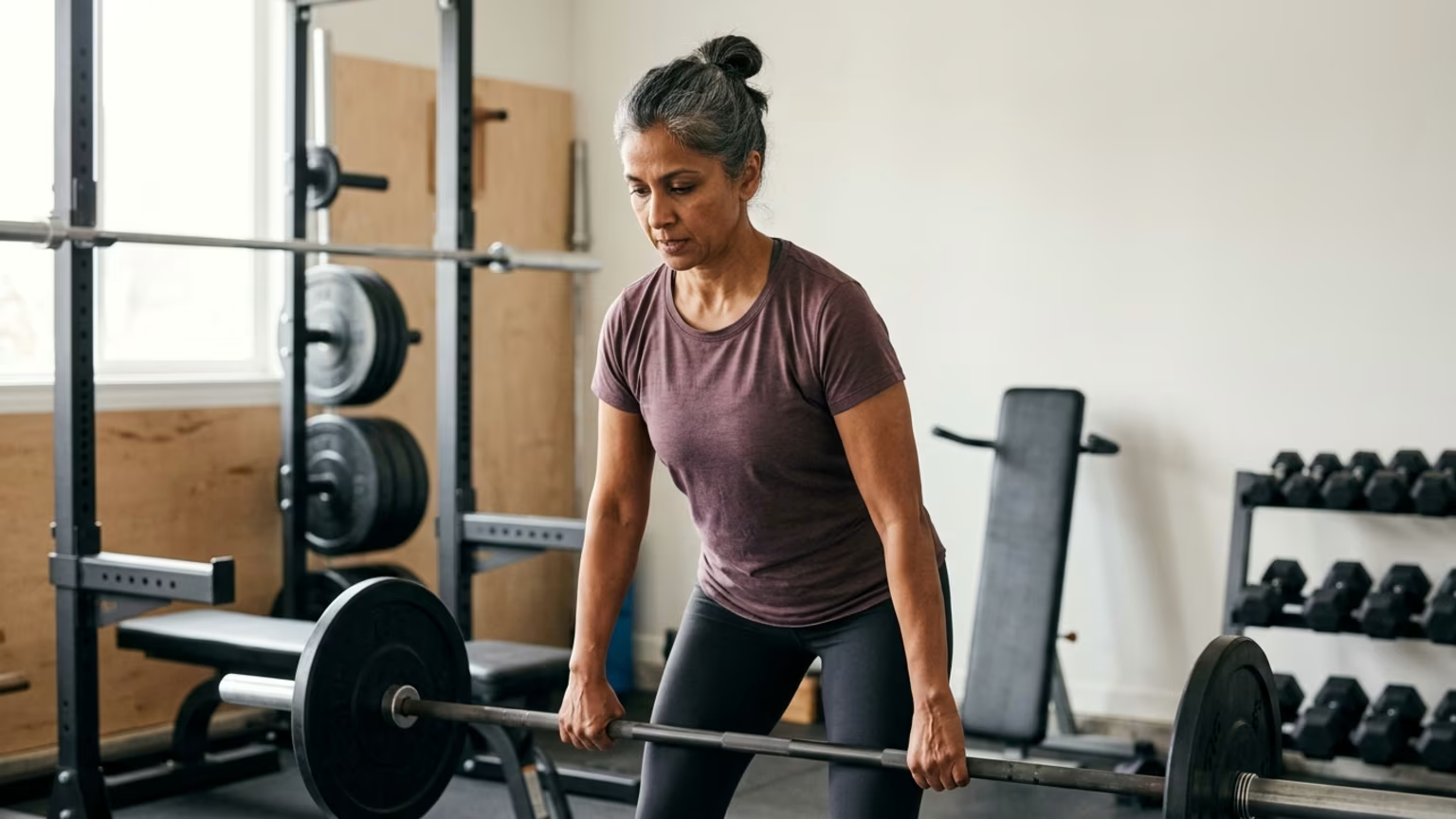

Learn how resistance training impacts midlife body composition and visceral fat, offering a sustainable strength framework without requiring extra cardio.





In 2022, a systematic review published in Sports Medicine analyzed how resistance training impacts fat mass and body composition in healthy adults.
For decades, the standard guidance for managing midlife body fat relied heavily on aerobic exercise. Clinical advice frequently treated strength training solely as a tool for preserving bone and muscle. Cardiovascular work was framed as the absolute requirement for reducing visceral adipose tissue.
Recent reports provide a more detailed picture of how resistance work functions as an independent intervention.
Many women notice physical shifts during their late thirties and forties. These changes often involve a redistribution of tissue rather than just an increase in total weight. The body may begin storing fewer lipid reserves just under the skin and more around the internal organs. This deeper storage is known clinically as visceral adipose tissue.
Visceral fat behaves differently than the softer fat found directly beneath the skin. It is metabolically active and can influence how your body processes energy. Because it sits deep within the abdominal cavity, it is not something you can pinch or easily measure at home. Standard bathroom scales provide a single number but cannot distinguish between muscle, water, and this deeper tissue.
This biological reality makes targeted exercise an important consideration for midlife health. Reading about the systemic shifts of the menopausal transition often reveals how shifting hormones influence metabolic baseline. Understanding these underlying mechanisms helps women approach fitness as a long-term strategy rather than a short-term fix.
Resistance training creates a unique metabolic demand on the human body. Lifting weights or using resistance bands requires muscle fibers to contract against an opposing force. This mechanical stress signals the body to repair and reinforce those fibers during recovery periods. Over time, this process builds stronger and more resilient lean mass.
Adding lean tissue changes how your body uses energy throughout the day. Muscle is a highly active tissue that requires continuous physiological support. Maintaining this muscle mass increases your baseline energy expenditure slightly. This shift in daily energy dynamics contributes to the broader changes in body composition observed in clinical settings.
You do not need to push yourself to extreme fatigue to secure these benefits. Consistent progressive overload is the primary driver of physical adaptation. This means gradually increasing the weight, repetitions, or difficulty of your exercises over many months. A steady and measured approach yields far better results than brief periods of punishing workouts.
The finding that strength work can reduce visceral fat independently does not render cardiovascular exercise obsolete. The human heart is a muscle that requires its own dedicated conditioning. Aerobic training improves cardiovascular efficiency, lung capacity, and general endurance. It remains a cornerstone of comprehensive physical health.
The coverage from Women’s Health explicitly notes that endurance work and high-intensity interval training are also effective for reducing visceral fat. Women are not forced to choose one definitive path. You can select an exercise modality that aligns with your preferences, schedule, and physical capabilities. A varied approach often supports better long-term adherence.
Combining resistance training with moderate aerobic activity creates a highly resilient physical foundation. Cardiovascular work improves your ability to recover between sets during a strength session. Meanwhile, the strength gained from lifting weights protects your joints during activities like running or cycling. The two systems support and reinforce each other beautifully.
Finding the right balance requires paying attention to your daily energy levels. Articles covering the intersections of muscle and metabolism frequently highlight the need for adequate recovery. Pushing hard in both strength and cardio simultaneously can lead to exhaustion if not managed carefully.
Approaching resistance training with realistic expectations prevents frustration and burnout. The fitness industry frequently markets programs with promises of spot reduction or highly targeted fat loss. The evidence outlined in the recent coverage specifically cautions against expecting localized results. Fat loss occurs systematically across the body based on genetics and overall metabolic state.
Focusing on full-body training approaches is typically more effective than isolating small muscle groups. Compound movements like squats, presses, and rows engage multiple joints and large muscle areas simultaneously. This creates a higher systemic demand and provides a more efficient use of your gym time. It also mirrors the physical requirements of daily life.
Changes in body composition move at a completely different pace than simple water-weight fluctuations. Building new muscle tissue is a slow physiological process that requires sustained nutritional support. Women who start lifting weights might notice their clothes fitting differently long before the scale registers a change. Patience is an absolute requirement for this process.
Nutritional habits deeply influence how your body responds to a new training stimulus. Adequate protein intake supports the repair and growth of muscle fibers after a workout. Discovering reliable daily eating habits provides the necessary fuel for these adaptations. Restrictive dieting often works against the goal of building strength.
Resistance training offers protective benefits that extend far beyond the measurement of adipose tissue. The menopausal transition brings significant shifts in estrogen levels, which directly impacts skeletal density. The same mechanical stress that forces muscle fibers to adapt also stimulates bone remodeling. Bones become denser and stronger when they are regularly subjected to controlled physical loads.
Relying exclusively on cardiovascular exercise often misses this critical skeletal stimulus. Walking and cycling are wonderful for the heart and lungs, but they provide limited resistance against the skeleton. Lifting weights, performing loaded squats, or pressing overhead forces the skeletal system to bear substantial weight. This proactive approach helps preserve bone architecture during a highly vulnerable biological window.
Improving bone strength drastically reduces the likelihood of future fractures and mobility issues. A strong skeleton serves as the literal foundation for an active and independent life. Women who prioritize this physical resilience often find themselves more confident in their daily movements. The peace of mind that accompanies a capable body is deeply valuable.
Many women approach fitness with an all-or-nothing mindset that practically guarantees failure. They attempt to overhaul their entire lifestyle overnight by committing to grueling daily workouts. This aggressive strategy usually crashes within a few weeks when physical exhaustion inevitably sets in. The resulting disappointment often keeps them away from the gym for months.
The reality of physical adaptation heavily favors mild but relentless consistency over sporadic intensity. Performing a moderate strength routine twice a week for a year produces far better results than training daily for a month. The body responds best to a predictable and manageable stimulus that allows for adequate repair. You do not need to leave the gym feeling completely depleted to secure a positive outcome.
Building an exercise habit requires lowering the barrier to entry on your most difficult days. A twenty-minute session focused on basic compound movements is infinitely better than skipping the workout entirely. Giving yourself permission to scale back when life gets complicated protects the underlying habit. This flexible mindset allows you to navigate busy periods without completely abandoning your physical foundation.
Shifting your focus from weight loss to body composition requires a significant mental adjustment. Decades of diet culture have trained women to view the bathroom scale as the ultimate judge of health. This narrow perspective completely fails to capture the complex physiological changes occurring during resistance training. It is entirely possible to drop a dress size while your total body weight remains completely unchanged.
Muscle tissue is noticeably denser than adipose tissue. A pound of muscle occupies significantly less space than a pound of fat. As you build lean mass and lose lipid stores, your physical dimensions will shrink even if the scale refuses to move. Tracking your progress through how your clothes fit or how strong you feel provides a far more accurate picture.
Learning to trust the physical process over the digital readout takes deliberate practice. It helps to remember that true metabolic health is measured by your strength, stamina, and resting energy expenditure. The scale cannot quantify your improved endurance, your denser bones, or your improved capability. Stepping away from daily weigh-ins often brings a profound sense of psychological relief.
The narrative surrounding women's health in midlife is frequently tangled with aggressive cosmetic marketing. Exercise is routinely sold as a way to reverse aging or reclaim a younger physique. This framing completely ignores the profound functional benefits of maintaining a strong and capable body. Resistance training is about expanding your physical capacity rather than shrinking your footprint.
Treating exercise as a biological tool rather than a cosmetic obligation changes the entire experience. Feeling strong enough to carry heavy items, hike steep trails, or move without pain is deeply empowering. This physical confidence often radiates into other areas of personal and professional life. It shifts the focus from what you look like to what you can successfully accomplish.
The medical community continues to investigate how specific exercise protocols serve midlife demographics. The identification of trials focusing on middle-aged women points to a growing recognition of this unique life stage. Health recommendations are gradually shifting away from generic advice toward more nuanced and demographic-specific guidance.
Creating a lasting exercise habit requires a realistic assessment of your available time and energy. A plan that looks perfect on paper is useless if it causes immense stress to execute. Starting with two or three focused strength sessions a week is completely sufficient for most women. Consistency over years matters far more than intensity over weeks.
Listening to your body's recovery signals is a critical skill to develop. Muscle soreness is a normal part of adapting to a new routine, but sharp pain or persistent exhaustion is a warning sign. Midlife recovery often requires more intentional rest, better sleep, and proper hydration. Ignoring these requirements usually leads to injury or complete burnout.
Working with a qualified professional can help you establish a safe baseline if you are new to lifting weights. Learning proper technique minimizes the risk of joint strain and maximizes the benefit of each movement. A structured program removes the guesswork and allows you to simply execute the plan. Over time, these movements become familiar and comfortable.
Clinical practice will likely position resistance training as an independent pillar for improving body composition, allowing patients to pursue metabolic health without mandating heavy cardiovascular additions to every program.
Believing that intense cardiovascular exercise is the only way to manage midlife body composition often leads women to abandon their fitness routines out of sheer exhaustion. Refemina addresses the conflicting information about perimenopause, menopause and postmenopause by translating credible evidence into clear adult guidance, helping you build a sustainable physical foundation without wellness hype. Explore Resources

Follow Refemina for research-led insights on menopause, strength, metabolism, nutrition, skin, intimacy and confidence through midlife. New articles turn complex topics into clear, useful context.






Keep learning about the changes that shape energy, strength, confidence and wellbeing through midlife.
Explore Resources