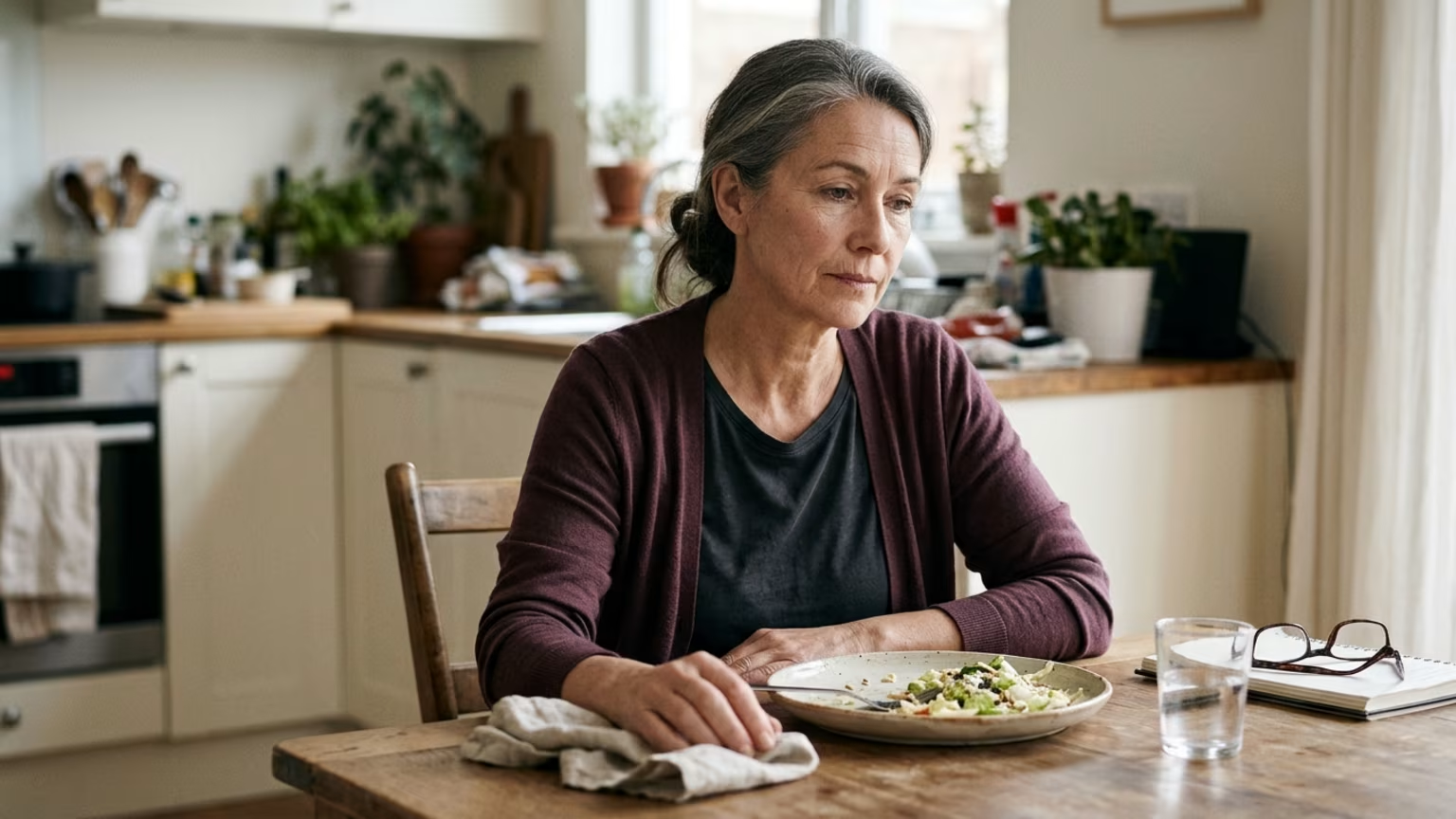

Experts call for better recognition of eating and body-image distress in midlife, without treating menopause as a single cause.





On November 5, 2026, ABC News reported calls from experts for better recognition of eating-disorder and body-image concerns among midlife and older women. The report also described resources and screening tools developed for GPs by Dr Karen Spielman and colleagues.
The assumption being challenged is that eating disorders mainly concern young women or have a recognisable appearance. In separate reporting, The Medical Republic described clinicians urging GPs to look beyond those stereotypes. The proposed shift concerns recognition and clinical attention rather than a change to diagnostic criteria.
Danielle Dougherty of the Butterfly Foundation told that publication that eating disorders can affect people of any age or body size. For a woman in midlife, neither being older nor looking a certain way should close down a conversation about distress. The relevant question is what is happening with eating, body-image concerns and everyday life.
That focus changes the starting point for care. Rather than waiting for someone to fit an expected profile, clinicians are being encouraged to ask questions and listen to concerns that may not be volunteered.
ABC's report places perimenopause and menopause within a wider midlife picture. Its experts describe pressures that may overlap, alongside reasons why women can struggle to obtain recognition and support.
The call for better recognition belongs within a broader discussion about whether midlife care is equipped to hear women's concerns. In this case, the issue is whether eating and body-image distress enters the consultation at all.
ABC News reported that 42% of women with eating disorders were aged 35 or older and 16% were aged 50 or older. Those figures describe the ages of women with eating disorders. They do not describe the proportion of all midlife or older women who have an eating disorder, and they should not be read that way.
ABC also described a small Butterfly Foundation survey in which fewer than one in ten respondents aged 61 to 80 felt positive about their bodies. That compared with one in five women under 45. The finding gives body confidence a place in this discussion without making body dissatisfaction interchangeable with an eating-disorder diagnosis.
The ABC article did not provide the underlying study details for its age figures or the sample size and methodology for the small survey. These numbers therefore need to remain attributed to the report rather than treated as precise population estimates. Locandro also called for more research to understand the extent of concerns among older women.
The central causal question remains open. The reporting describes menopause-related changes occurring alongside body-image distress and other pressures; it does not establish that hormonal changes directly cause an eating disorder. Nor does it establish how common eating disorders are specifically during perimenopause or postmenopause, or whether rates are rising in those groups. That distinction protects women from having every difficulty assigned to hormones.
Broader research offers context rather than a menopause-specific answer. The Medical Republic summarised a 2026 JAMA Psychiatry Global Burden of Disease analysis that estimated 18.1 million people worldwide were living with anorexia nervosa or bulimia nervosa in 2023. It covered 204 countries and territories but excluded binge-eating disorder and other specified feeding or eating disorders. Differences in data quality also affect comparisons, so it does not capture the full eating-disorder burden.
The reported GP tools need a separate qualification. ABC did not name them or describe their operation, validation results or access arrangements. It did not establish that they are menopause-specific or that they are the same resources discussed by The Medical Republic. Screening is not a diagnosis, and the available reporting does not support recommending a particular instrument or protocol.
For readers, the practical message is more straightforward than the research gaps. Eating, exercise, weight or body-image concerns that cause distress or affect daily life are reasonable subjects to raise with a GP or another qualified health professional. Neither age nor body size needs to justify bringing them into the conversation.
The starting point can be what has changed and how it is affecting daily life. That might mean describing anxiety around meals or how much attention food and body-image concerns are taking up. The aim is not to arrive with a diagnosis. It is to make the concern visible enough for a qualified clinician to assess it.
If a consultation focuses only on weight or appearance, it is reasonable to bring the discussion back to eating, mood and day-to-day functioning. A woman can ask what assessment or support is appropriate when her concerns remain unaddressed. This keeps the conversation centred on the difficulty she is experiencing rather than whether she matches an expected profile.
For readers thinking about changes in body composition rather than scale weight alone, the distinction here matters. A changing body and distress about that body are related subjects, but they are not the same question. The concern raised by these reports is whether the distress and its effects receive attention alongside the physical change.
That does not require turning every dissatisfaction into an illness. It means allowing room for a woman to say that food or body concerns are becoming difficult, then taking that account seriously. Personal decisions about assessment and care belong with qualified professionals. The reporting supports opening that conversation rather than dismissing it as an inevitable part of getting older.
For health services, the corresponding task is to make inquiry part of recognition rather than leaving the entire burden of disclosure with the patient. Locandro’s call for questions about mental health and Spielman’s focus on GP education point in the same direction. Better attention begins with hearing the concern before deciding what explains it.
The clearest clinical direction is toward earlier conversations about eating and body-image distress in midlife, without allowing age or appearance to determine whose concerns receive attention.
Bringing eating concerns into a GP conversation, rather than judging them by body size, is the decision Refemina places in a wider editorial context. For women facing conflicting explanations of midlife change, its research-led coverage connects hormonal transition with nutrition and confidence while leaving room for causes beyond hormones.

Follow Refemina for research-led insights on menopause, strength, metabolism, nutrition, skin, intimacy and confidence through midlife. New articles turn complex topics into clear, useful context.





Keep learning about the changes that shape energy, strength, confidence and wellbeing through midlife.
Explore Resources