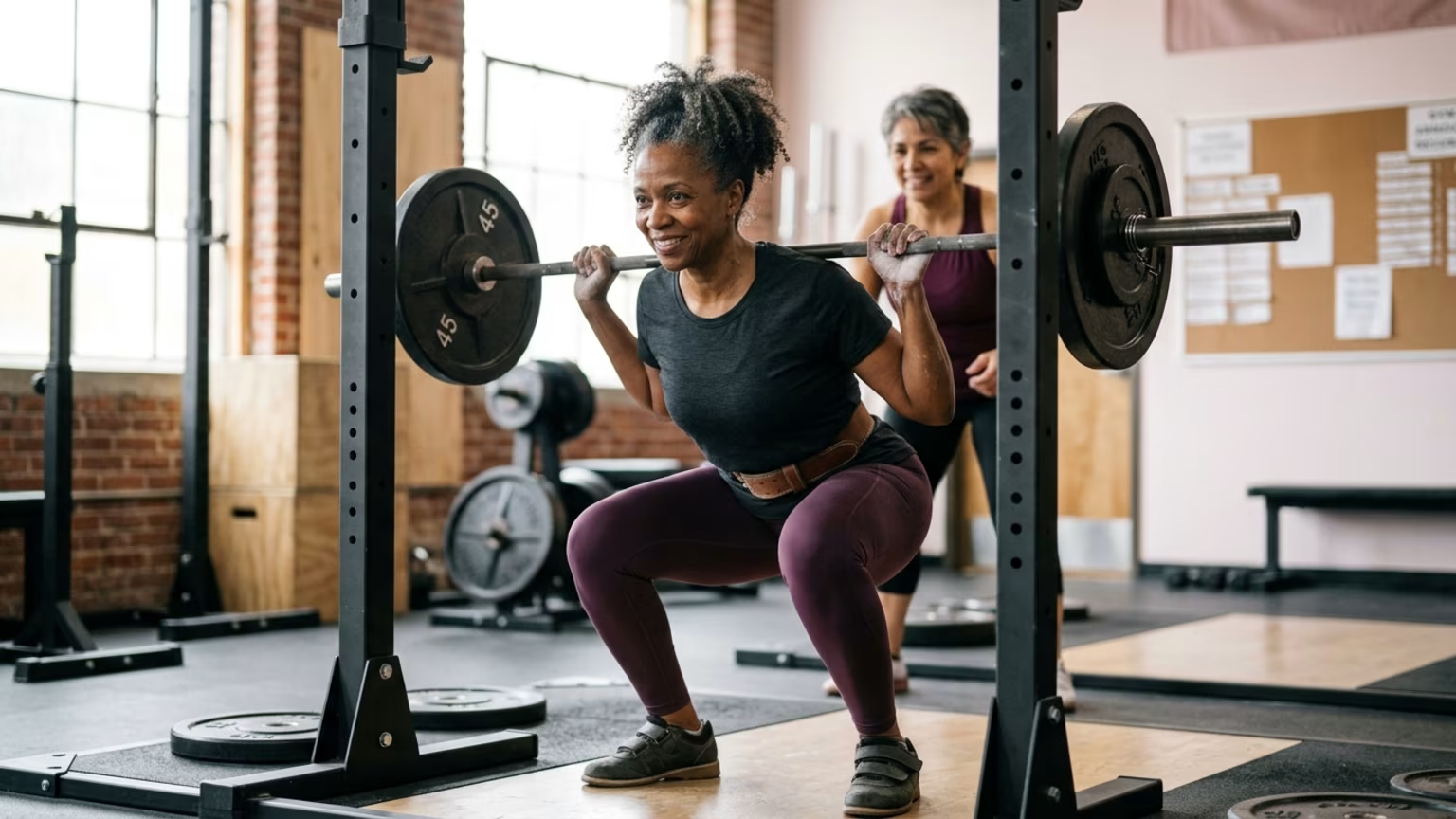

Coverage of a 65-year-old world powerlifting champion highlights how women can utilize strength training to build functional capability during and after menopause.





On September 14, 2026, 65-year-old Martine Barons won her age division at the AWPC World Powerlifting Championships in Manchester. The event was hosted by the British Powerlifting Union and concluded her journey to a third federation world title after she began lifting weights during lockdown roughly two and a half years ago.
For decades, the standard medical consensus for women navigating physical changes prioritized aerobic activity almost exclusively. Clinical recommendations focused heavily on walking and cardiovascular exercise to manage weight and protect heart health. While aerobic activity remains a crucial component of daily wellbeing, this historical paradigm largely ignored the specific musculoskeletal demands of the menopausal transition. Women were rarely prescribed heavy resistance training as a primary intervention for the rapid structural shifts that occur when estrogen levels decline.
This narrow focus created widespread confusion about which midlife physical changes were inevitable and which could be actively managed. Without clear guidance on preserving muscle mass, many women experienced a gradual loss of physical capability that was incorrectly dismissed as a normal part of aging. The lack of focus on progressive strength training left patients vulnerable to accelerated bone loss while contributing to a loss of confidence. Health guidance frequently treated physical symptoms as an opportunity for weight loss rather than a signal to build functional strength.
Navigating this fragmented medical system became difficult for midlife patients seeking realistic solutions. Fitness marketing compounded the problem by pushing rigid rules and restrictive routines that failed to address actual biological needs. Because the absence of comprehensive strength protocols left many women struggling with demanding daily tasks, finding practical strategies became critical. Shifting the clinical focus toward measurable strength building was necessary to help women reclaim their long-term capability.
The recent AWPC World Powerlifting Championships in Manchester offer a clear example of how strength training is evolving for older adults. The championships ran from September 9 to 14 at the Pendulum Hotel and Conference Centre. The event included lifters ranging from teenagers to masters competitors. Masters age divisions are organized in five-year bands, which illustrates that competitive strength sport can accommodate a very wide age range.
Barons competed specifically in the women’s raw full-power format within the M6 masters age division and the 82.5-kilogram weight class. OpenPowerlifting recorded her as first in her division at this 2026 event. Her competition record also includes earlier AWPC world-title wins in Ireland in 2024 and the United States in 2025. She also secured a European title in Ireland in June 2026.
The British Powerlifting Union reports that the AWPC federation has expanded rapidly over the past five years, with the UK fielding its largest contingent worldwide. This growth suggests a rising interest in measurable strength goals rather than purely cosmetic fitness pursuits. However, the title of world champion is federation-specific. The AWPC is one of several international powerlifting federations operating with its own rules and championship systems.
While Barons’ three AWPC titles in three years are notable, they represent one woman's experience in a specialized sport rather than an average outcome for post-menopausal women. Her journey serves as an inspiring narrative for women interested in strength and body composition, but it does not mean that every woman must lift maximal weights to see benefits. The core lesson is about building physical capability rather than chasing a specific athletic status.
Barons told the BBC that she began her weight training after a menopause seminar advised women to run less and lift more. This memorable phrase helped prompt her transition into strength training. A University of Warwick colleague, who was also a personal trainer, taught Barons how to deadlift and recognized her potential. From there, she experienced significant changes in her physical capability.
Barons reported feeling that her body was at least 20 years younger following her consistent training. It is crucial to view this statement as her subjective experience rather than an objectively measured reversal of biological aging. Treating strength training as a fountain of youth risks introducing the very cosmetic pressure that midlife women are trying to escape. Instead, the focus should remain on how increased strength translates to practical daily functions.
She connected her resistance training directly to tangible lifestyle improvements. Barons described being able to move furniture, touch her toes in the morning, and play actively with her grandchildren. She also noted feeling more capable and confident in her daily life. These outcomes reflect a shift away from aesthetics and toward functional independence. Measuring progress through carrying, reaching, and getting up from the floor provides a much healthier metric for success than stepping on a scale.
The functional improvements described by older lifters align closely with updated clinical understanding regarding menopause and bone density. A recent review discussing post-menopausal bone-health guidance highlights significant shifts in how exercise is prescribed. The review reports that the UK’s 2024 osteoporosis guideline supports combining weight-bearing and resistance exercise. This combination is specifically recommended to help reduce bone loss at the femoral neck and the lumbar spine.
During the menopausal transition, declining estrogen accelerates the reduction of bone mineral density. This physiological reality makes progressive resistance training particularly relevant for women after menopause. By loading the skeleton through targeted muscular effort, women can stimulate bone remodeling processes that help mitigate this natural decline. This structural biology provides a concrete, evidence-based reason to prioritize heavy lifting over restrictive cardiovascular routines.
The same recent review details that UK exercise guidance now recommends muscle-strengthening activity two to three days per week. This guidance explicitly calls for progressive resistance training that targets all major muscle groups. Following these protocols can help women protect their long-term physical capacity. Beginners with osteoporosis, significant joint pain, or cardiovascular symptoms should seek individualized professional assessment before adopting heavy loading.
Readers should remember that resistance exercise is not a universal cure for every midlife concern. The cited evidence concerns resistance and weight-bearing exercise for post-menopausal bone health specifically. It should not be stretched into claims that lifting weights independently fixes fatigue, mood, sleep disruption, or issues related to sexual wellbeing and intimate confidence. Connecting hormonal change with credible evidence means clearly separating established clinical outcomes from exaggerated wellness claims.
Health content frequently treats every midlife physical shift as a supplement, hormone, or weight-loss opportunity. This commercial framing ignores the clinical reality of functional muscle, making it harder for women to rebuild physical capacity. Women in their 40s, 50s, and early 60s often notice that their bodies and energy levels are changing. They want better explanations than restrictive routines or social media slogans can provide.
The shift toward measurable strength goals offers a profound psychological benefit for midlife women. Experiencing a loss of confidence or identity is common during a period of physical and personal change. While stepping into a gym environment can initially feel intimidating, reframing exercise around capability provides an opportunity for mental fitness and reinvention. Lifting weights connects physiological adaptation with mental resilience, proving that the next chapter of life can still contain growth.
Recent updates to exercise guidelines and observational outcomes from masters athletes reveal several practical insights:
You do not need to become a competitive powerlifter to reap the benefits of resistance training. While the phrase about running less and lifting more is memorable, it is not a rigid universal prescription. Aerobic activities like running, walking and cycling remain highly valuable depending on your personal health profile. The goal is to integrate strength work thoughtfully so you can navigate perimenopause and hormonal change without symptom panic or physical burnout.
For women tired of aggressive fitness marketing, finding a practical entry point is often the biggest hurdle. Barons’ suggested entry points offer relatable pathways for midlife women considering this change. She specifically identified a gym-based program tailored with a coach as an excellent way to begin. Because she learned demanding compound movements like the deadlift from a personal trainer, beginners may reasonably consider seeking professional instruction on technique and load progression.
For people who prefer privacy, Barons suggested beginning gently at home with resistance bands and a structured program. Controlled exercises using body weight, dumbbells, or resistance bands count as highly effective resistance training. Testing these options can help you feel stronger, more energetic, and more at home in your changing body. Finding reliable evidence is critical to establishing a safe routine.
Maintaining a balanced perspective on midlife health is crucial as you build your physical capacity. The available reporting on masters powerlifting is a human-interest story demonstrating one woman’s experience rather than a clinical trial measuring average outcomes. Readers can treat these achievements as an invitation to experiment gradually with resistance exercise. By judging progress on personal confidence and the ability to handle daily demands with ease, women can approach the years beyond menopause with genuine optimism.
As clinical frameworks increasingly prioritize functional muscle and bone preservation, prescribing progressive resistance training will become a foundational standard of care for women navigating the menopausal transition.
Translating updated bone-health guidelines into a practical weekly exercise routine requires separating genuine physiological needs from aggressive fitness marketing. Refemina provides clear context when you face a loss of confidence or identity during a period of physical and personal change. We translate credible evidence into adult guidance, helping you build strength, understand shifting body composition, and regain your functional capability without symptom panic. Explore Resources

Follow Refemina for research-led insights on menopause, strength, metabolism, nutrition, skin, intimacy and confidence through midlife. New articles turn complex topics into clear, useful context.



Keep learning about the changes that shape energy, strength, confidence and wellbeing through midlife.
Explore Resources