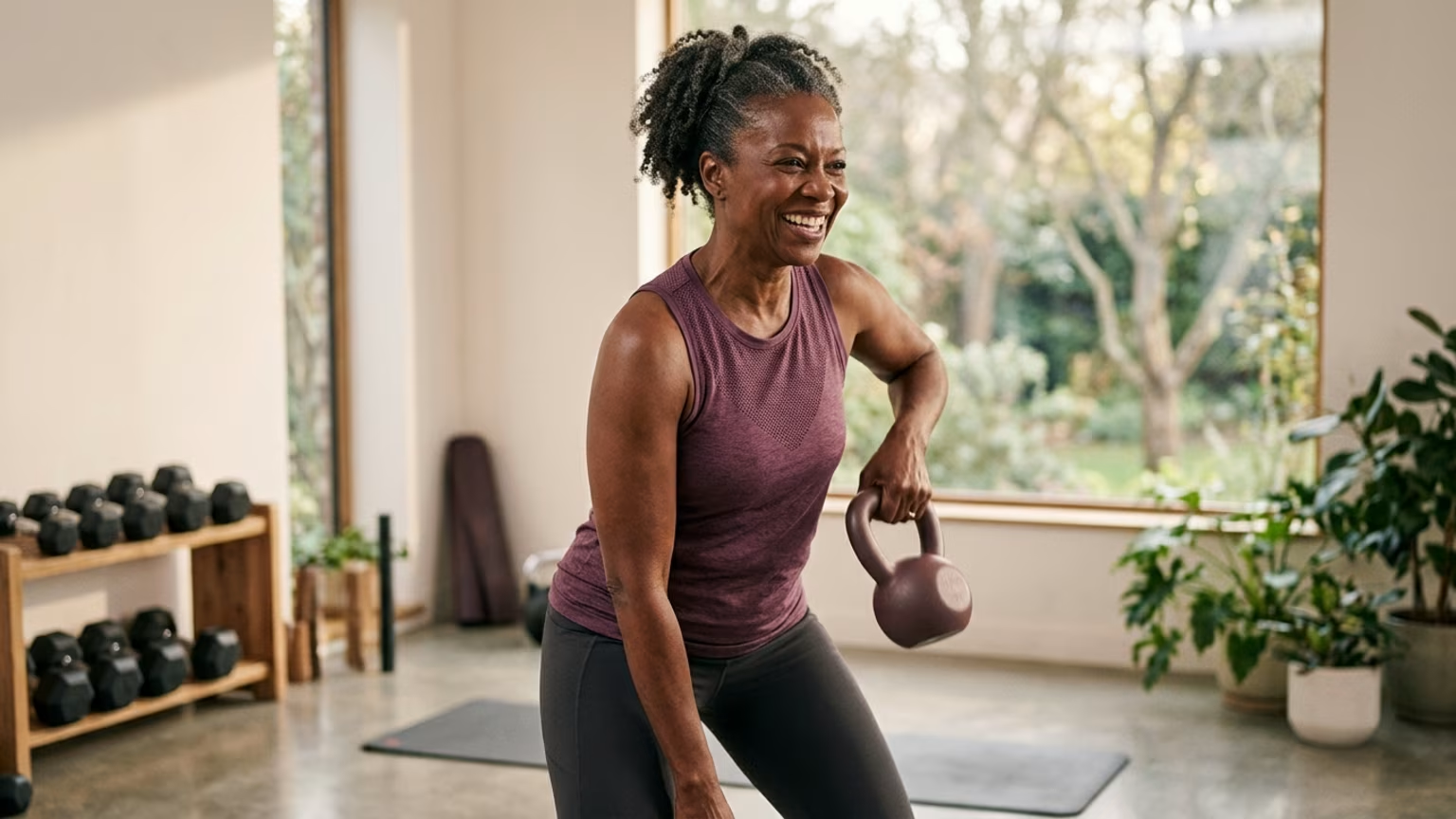

A new whole-health framework positions progressive strength training and targeted nutrition as fundamental medical care for preserving midlife bone density.





On September 16, 2026, LMH Health published a whole-health clinical guidance piece titled "Beyond hot flashes: A whole-health approach to menopause." The framework was written by Diane Morgan and draws on clinicians from Lawrence OB-GYN Specialists, LMH Health primary care and Lawrence Endocrinology.
Previous standards of care for midlife women frequently reduced the menopausal transition to a short-term period of acute symptom management. Medical visits routinely focused only on temporary discomforts rather than long-term structural changes. Exercise recommendations were often framed as cosmetic interventions intended strictly for weight control. Women were frequently left with standardized treatment packages that ignored their personal health histories.
The physical changes of midlife were often treated as isolated events rather than interconnected systemic shifts. Clinicians sometimes dismissed a woman's physical complaints as an unavoidable part of getting older. This outdated paradigm left women without clear strategies for preserving their physical capacity. It failed to address the significant metabolic and musculoskeletal changes that occur as estrogen levels decline.
The LMH Health guidance redefines the transition by framing menopause as an ongoing clinical continuum. The updated framework shifts the medical focus toward functional preservation and individualized assessment.
The central clinical message of the updated framework is the need to aggressively protect musculoskeletal health. LMH Health links the decline in estrogen during the menopause transition with significant physiological changes. Estrogen plays a critical role in maintaining bone density and regulating muscle tissue. As hormone levels drop, the body loses its natural protective buffer against structural decline.
This biological shift leaves women at a higher risk for structural weakness and a loss of physical function. The guidance notes that prioritizing strength training helps women preserve their physical capability as they age. This positions resistance work as a fundamental requirement for healthy aging. It moves exercise out of the purely aesthetic category and into the classification of foundational medical maintenance.
The LMH Health article is a health-system education piece rather than a formal clinical guideline. It does not prescribe a specific number of weekly workouts, training duration, load or repetition range. However, broader clinical literature provides context on how to effectively load the body during this stage of life. The wider medical consensus supports progressive loading to stimulate tissue adaptation.
A 2026 review in the Journal of Clinical Endocrinology & Metabolism describes a specific resistance-training approach. The review outlines a protocol intended to support both muscle and bone health during midlife. The authors suggest at least two training sessions per week. They recommend higher-intensity loads of at least 80 percent of a one-repetition maximum, utilizing a complete range of motion.
This review-level recommendation highlights the need for mechanical tension to stimulate bone growth. However, this specific protocol is not a universal prescription for every woman. Beginners, women with osteoporosis or those with significant joint pain require individualized exercise guidance. Progressive loading remains the safest way to introduce the body to heavy resistance over time.
Measuring the actual impact of exercise on bone density requires looking at long-term clinical data. Healthspan Intel published a report summarizing 17 controlled trials involving postmenopausal women. The evidence found pooled improvements in bone density at the lumbar spine, total hip and femoral neck. The report notes that subgroup analyses could not establish one single best training recipe.
A separate 2026 research summary provides further context on combining different exercise modalities. The summary reports that a meta-analysis found progressive resistance training produced the largest lumbar-spine bone-mineral-density gains among assessed interventions. These gains were particularly pronounced when resistance training was combined with some impact exercise. Impact work introduces dynamic ground reaction forces that further stimulate skeletal remodeling.
The available evidence strongly supports a combined model of care for aging women. Strength work yields the best results when paired with suitable weight-bearing activity and proper nutrition. Relying on cardiovascular exercise alone does not provide sufficient mechanical stress to trigger protective skeletal remodeling. Women should treat resistance exercise as a health behavior with several possible functional goals.
The whole-health approach described by LMH Health heavily incorporates targeted nutrition and hydration. Women navigating the hormonal shifts of perimenopause and menopause often face aggressive marketing for restrictive weight-loss programs. The LMH Health guidance explicitly warns against these approaches. The framework cautions against drastically cutting carbohydrates or adopting overly restrictive diets for weight management.
Instead, its nutrition guidance highlights consuming sufficient calories and adequate protein. Protein provides the necessary amino acids required to repair muscle tissue after heavy strength training. The guidance also notes the utility of fiber, calcium, magnesium and vitamin D. Proper hydration is listed as a core component of this comprehensive biological support system.
This approach aligns with treating nutrition and weight management as a supportive foundation for physical activity. Depriving the body of energy makes it incredibly difficult to build muscle or maintain bone density. Restrictive diets also increase the risk of nutrient deficiencies that directly harm structural integrity. A well-fueled body recovers faster and remains more resilient against the physical stress of aging.
Shifting the focus from aesthetics to physical capability represents a significant psychological change for many women. The fitness industry has spent decades selling women on the idea of shrinking their bodies through endless cardiovascular exercise. The updated guidance challenges this narrative by prioritizing mass, strength and structural resilience. When physical activity is measured by strength gained rather than pounds lost, the relationship with exercise improves.
This mindset shift directly influences long-term adherence to a training program. When exercise is viewed purely as a punishment for eating, it becomes difficult to maintain over the course of decades. Viewing resistance training as a tool for preserving long-term independence creates a far more durable motivation. A woman lifting weights to maintain her ability to carry heavy objects at age eighty is building a resilient future.
A critical component of the LMH Health framework is the careful evaluation of physical complaints. The medical transition away from treating menopause as a blanket explanation for all midlife discomfort is a major advancement. The article explicitly cautions that persistent fatigue, joint pain, hair loss and brain fog should not automatically be attributed to menopause. This careful differentiation is especially vital when physical symptoms begin to interfere with daily life.
Keeping symptom interpretation broad protects women from missed diagnoses. When every physical change is blamed on hormones, underlying medical issues can go unnoticed for years. Joint pain could be related to hormonal shifts, but it could also indicate osteoarthritis or an autoimmune condition. Clinicians must conduct comprehensive evaluations to determine the true root cause of persistent physical symptoms.
Dr. Michele Bennett of Lawrence OB-GYN Specialists argues against a one-size-fits-all medical model. Bennett says treatment should account for the patient's most bothersome concerns, health history, long-term goals and family history, rather than follow a standardized menopause package. Bennett also describes menopause care as a continuum requiring ongoing medical oversight. She notes that what a woman needs at age 45 may differ from what she needs at age 55, making regular reassessment important.
Heather Yates, a physician assistant with LMH Health primary care, reinforces this comprehensive diagnostic view. Yates cautions against dismissing a woman's experience as "just menopause" and says every symptom deserves consideration. Yates points out that an average woman spends 30 years in the menopause transition or postmenopause. She argues that healthy aging requires attention to the underlying risk factors associated with this life stage.
Registered dietitian Kim McAuley addresses the psychological aspect of midlife health guidelines. McAuley recommends shifting attention from how the body looks to what it can do. This clinical framing positions physical activity as a tool for function, confidence and long-term independence rather than only body composition.
Standardized treatment packages fail because they treat menopause as a monolithic condition with identical symptoms. A woman's health history, genetic background and daily lifestyle heavily influence her physical experience. Dr. Michele Bennett notes that these personal factors must guide the creation of any medical treatment plan. A woman with a family history of osteoporosis requires a different strategy than someone prioritizing cardiovascular health.
Personal goals dictate the most effective clinical approach. A treatment protocol looks completely different for a woman aiming to hike mountains versus someone focused on basic functional movement. This individualized medical model respects the biological complexity of the female body. It treats women as capable adults actively managing their health rather than passive recipients of standardized care.
Menopausal hormone therapy is presented as potentially appropriate for some women within this personalized framework. It is not offered as a universal solution for all symptoms. The decision to use hormone therapy depends heavily on an individual risk assessment. The continuum of care model means that symptom management and medical treatments may need to evolve over the decades.
The combination of strength training, targeted nutrition and careful medical management provides a robust framework for midlife health. Treating strength, body composition and metabolism as modifiable factors gives women more control over their physical trajectory. Women can approach midlife exercise as a form of capacity-building. This functional model removes the expectation of inevitable physical decline.
Building a sustainable routine requires patience, consistency and adequate physical recovery. Women who are new to lifting should begin with manageable loads that allow controlled technique. Slowly increasing the weight over time helps tissues adapt safely to the mechanical stress. Seeking guidance from a qualified professional can help those with a history of inactivity navigate safe loading parameters.
Going forward, clinicians will increasingly prescribe heavy resistance training and adequate nutrition as baseline medical care for preserving midlife independence.
Preserving long-term mobility and bone density requires progressive strength training rather than restrictive weight-loss programs. For women managing changes in strength, muscle, body composition, metabolism or weight, Refemina translates credible evidence into clear adult guidance that supports building physical capacity without symptom panic or wellness hype.

Follow Refemina for research-led insights on menopause, strength, metabolism, nutrition, skin, intimacy and confidence through midlife. New articles turn complex topics into clear, useful context.






Keep learning about the changes that shape energy, strength, confidence and wellbeing through midlife.
Explore Resources