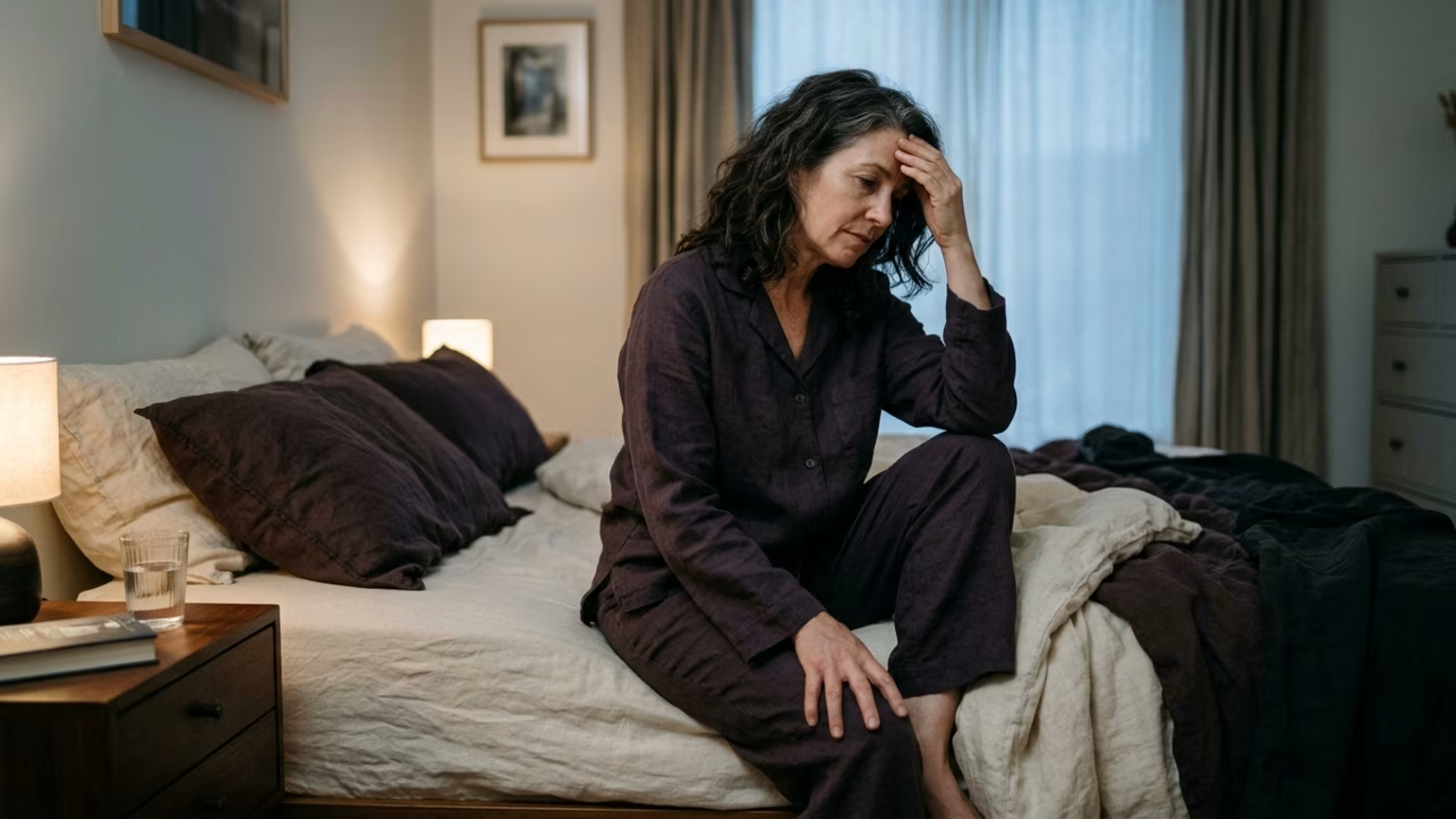

Perimenopause and night sweats can disrupt sleep. Learn what to track, which other factors matter and when to discuss persistent problems with a clinician.





Yes, sleep difficulties are associated with perimenopause and night sweats can disrupt rest, but medicines and other health conditions may also contribute.
The Grove Medical Group's NHS guidance describes perimenopause as the period leading up to menopause when hormone levels change and symptoms may begin. Symptoms can start before periods stop and may continue after menopause.
Sleep problems during this transition can include difficulty getting to sleep or waking during the night. The same NHS guidance identifies these difficulties among the symptoms associated with perimenopause and menopause.
A useful starting point is to describe what has changed. Is falling asleep difficult, is sleep repeatedly interrupted or is returning to sleep the main problem? Those are different observations to bring to an appointment rather than grouping everything under poor sleep.
Period changes and other symptoms can sit alongside that description. You do not need to decide which symptom explains another before discussing them with a clinician. The aim is to present the pattern clearly enough for a wider assessment.
The Government of Jersey notes that sleep problems are common during menopause and perimenopause, and that night sweats can make them worse. NHS Devon's Talkworks guidance also identifies hot flashes and night sweats as symptoms that can disrupt sleep.
When recording a disturbed night, note whether you felt hot or sweaty and roughly when it happened. If you noticed a night sweat, record whether it woke you or whether you were already awake. These details describe the experience without asking you to interpret its biology.
The practical question is not simply whether night sweats are present. It is also how they fit into the sleep problem you want help with. Recording night symptoms alongside awakenings gives the clinician a clearer account than reporting each in isolation.
Yes. Talkworks cautions that medical conditions and medicines or treatments can contribute to symptoms that resemble menopause-related problems. Stress and anxiety may also coexist with sleep difficulties.
That makes the surrounding context worth discussing. A change in medicines belongs in the conversation, just as a stressful period or a changed sleep routine does. Mention supplements too, including anything recently started or changed.
Daytime effects matter alongside possible contributors. The Government of Jersey notes that insufficient rest may worsen irritability, difficulty concentrating and anxiety. Describing those effects helps explain why the sleep problem matters to you rather than leaving the discussion focused only on nighttime awakenings.
The available sources do not establish how often each contributor explains disturbed sleep or identify one as the most common. A useful next step is to organize your observations rather than try to rank possible causes yourself.
Keep a concise record of sleep, symptoms and daytime effects. The Government of Jersey recommends making notes about symptoms and how and when they affect you to support discussions with a GP or healthcare specialist.
The following template is an editorial tool for organizing that information. It is not a validated diagnostic test.
Note your approximate bedtime and wake time. Record whether it was hard to fall asleep, stay asleep or return to sleep after waking. Add how rested you felt the next day.
Approximate observations are enough for this template. Its purpose is to help you describe the experience, not to turn sleep into a performance target.
Record whether you felt hot or sweaty or woke with a night sweat. Include roughly when it happened and whether the symptom woke you. Add any other symptom you noticed rather than deciding in advance that it must belong to perimenopause.
Note energy, concentration and mood. Describe how much the poor sleep affected your usual activities. This gives space to the consequences of sleep disruption rather than documenting only what happened overnight.
Include stressful events and changes in your sleep routine. Note caffeine or alcohol alongside medicines and supplements you take or have recently changed. These entries are discussion points, not instructions to stop or alter a treatment.
If relevant, record period dates or notable changes alongside the sleep notes. This keeps the menstrual pattern available for the same conversation without using it to assign a cause to every difficult night.
Bring the notes to an appointment and use them to describe what is most disruptive. You can also read about the wider menopause-treatment discussion for context before talking through your options.
The Grove Medical Group's NHS guidance suggests a regular sleep routine and a cool bedroom. It also recommends noticing whether caffeine or alcohol affects symptoms.
These are practical topics for review rather than a rigid routine everyone must follow. The source-supported starting points are straightforward:
Keep these observations with the rest of the log. That allows the conversation to include daily habits without separating them from night sweats, stress or medicines.
Reviewing habits should not become a reason to postpone help when sleep is persistently disruptive. NHS guidance supports speaking with a GP about symptoms affecting daily life or anything new or worrying. You do not have to arrive with a perfected routine before describing a problem that needs attention.
Speak with a GP or another qualified clinician if sleep problems persist, feel concerning or interfere with daily life. The Grove Medical Group and Talkworks advise seeking help for symptoms affecting daily life or for something new or worrying.
Bring the log if you have one. Begin with the difficulty you most want addressed, whether that is repeated waking or the effect of poor sleep on your day.
The research supports using questions such as these to guide the discussion:
No. On October 15, 2026, the American College of Obstetricians and Gynecologists (ACOG) announced updated guidance covering menopause-related vasomotor symptoms and changes in sleep and mood. It discusses hormone and nonhormonal treatments alongside nonpharmacologic options.
The conversation therefore need not be framed as a choice between hormones and no support. A clinician can discuss the relevant approaches in the context of your symptoms rather than treating poor sleep alone as a reason for one particular treatment.
ACOG says hormone-therapy decisions should be individualized through shared decision-making. The discussion takes account of symptoms, medical history, baseline risks and treatment goals.
If hormone therapy comes up, the useful question is how it fits your particular situation and goals. Refemina's guide to preparing for a hormone-therapy discussion offers further context for those questions.
Perimenopause may be part of why your sleep has changed, but recording the pattern and discussing persistent or disruptive symptoms leaves room for the right explanation and individualized support.
Poor sleep calls for careful explanation, not an immediate shopping list; Refemina approaches that tension through evidence-led editorial coverage. For readers faced with hormone or supplement claims, Refemina clarifies the research behind midlife changes and keeps the discussion focused on health, personal priorities and realistic expectations.

Follow Refemina for research-led insights on menopause, strength, metabolism, nutrition, skin, intimacy and confidence through midlife. New articles turn complex topics into clear, useful context.





Keep learning about the changes that shape energy, strength, confidence and wellbeing through midlife.
Explore Resources