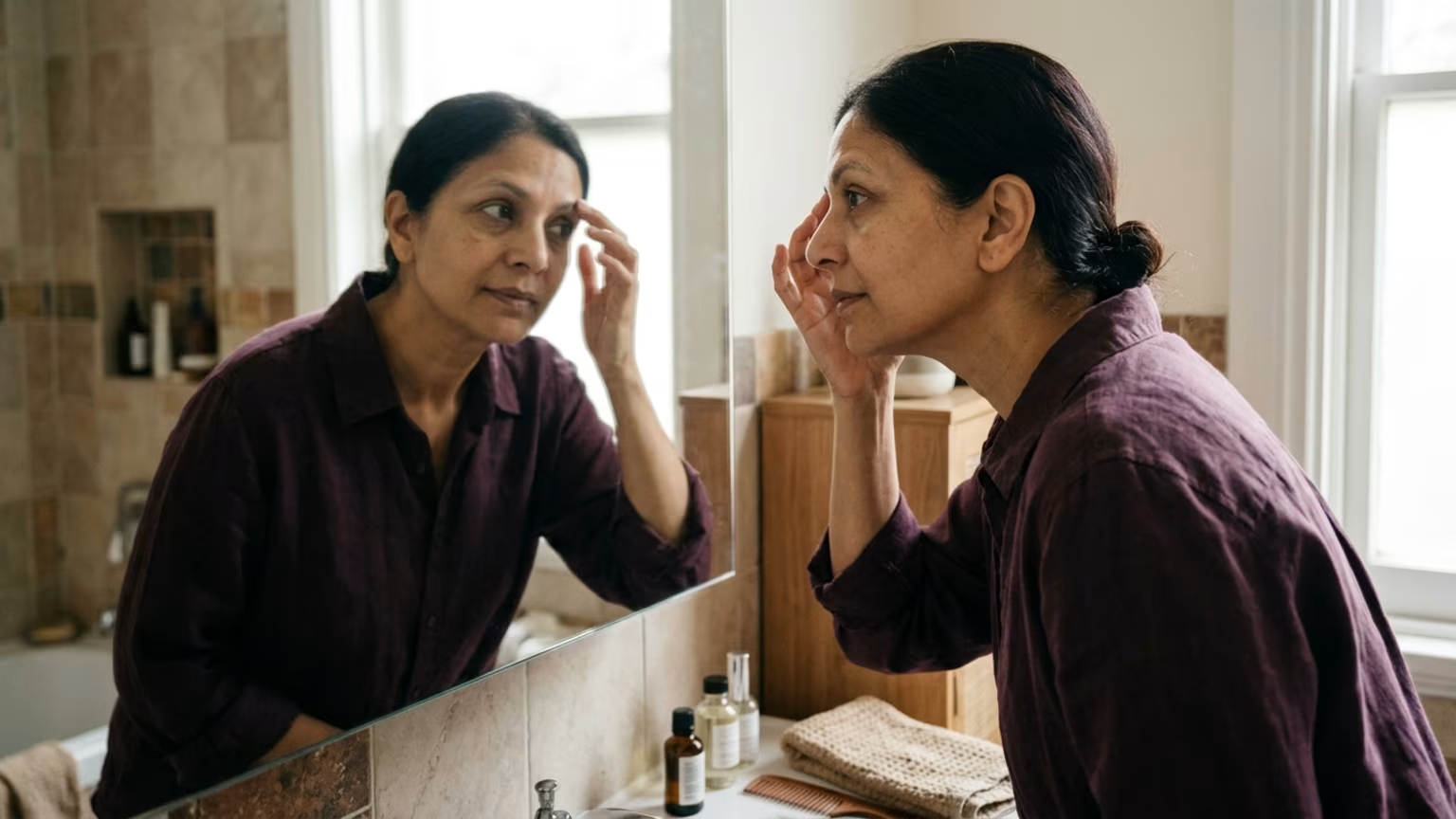

Dermatologists discuss possible causes of thinning brows in midlife, gentle care and clinician-supervised off-label treatment considerations.





On October 9, 2026, Woman’s World published an advice article in which dermatologists Nupur Patel and Ariel Ostad discussed possible causes of thinning eyebrows and clinician-guided treatment considerations. Their discussion placed menopause-related estrogen changes alongside thyroid disorders and other possible explanations.
The established medical approach remains cause first. The American Academy of Dermatology (AAD) advises identifying the reason for hair loss before choosing treatment and says no single treatment works for everyone.
The Woman’s World article does not replace that approach: it is consumer health advice rather than a new clinical trial, guideline or treatment approval. Its contribution is to bring that existing principle to a familiar midlife concern.
The assumption being challenged is not a medical consensus. It is the shortcut that thinner brows during the menopause transition must be hormonal or simply require a growth product.
The distinction is between describing a possible influence and identifying the reason for an individual change. Midlife timing provides context for a conversation with a clinician. It does not select a cause on its own. That leaves room for hormonal influences without making them the whole story or treating every change in appearance as a menopause symptom.
These are possibilities for a clinician to assess, not diagnoses to choose from a list. The practical message is neither to dismiss the change as age nor to assume that thinning brows mean illness. A list of possible causes gives an assessment direction. It does not predict which explanation will apply to one woman or establish how common each cause is among women noticing thinner brows in midlife.
For persistent or concerning thinning, the useful decision is whether to seek a dermatologist’s assessment rather than which growth product to try next. Questions about when the change began and how it has developed fit the evaluation the AAD describes. This cause-first perspective also connects with the broader question of looking beyond hormones in midlife hair loss. The aim is a clearer explanation before a treatment discussion, not testing for its own sake.
These are practitioner recommendations rather than demonstrated regrowth treatments. Their role in the discussion is modest: gentler handling can be part of brow care without being sold as a way to restore density. For someone seeking advice, the distinction matters because ordinary grooming and treatment serve different purposes. Reducing unnecessary hair removal is not the same decision as starting a medication, and neither should be presented as a guaranteed route to fuller brows.
That is a discussion about nutritional adequacy and possible deficiency. It is not evidence that a marketed brow supplement will help an individual reader. The useful distinction is between meeting nutritional needs and buying a product that promises a visible result. Whether a deficiency is part of the picture belongs within the assessment rather than being assumed from the appearance of the brows.
This makes them possible considerations for selected patients rather than a standard brow routine. The meaningful question is whether a clinician thinks either option fits the identified problem. Their appearance in a beauty-and-health article is not a personal recommendation to use them.
Any decision about suitability belongs with qualified care. This distinction also belongs within the wider task of weighing aesthetic options and their risks. A cosmetic concern can deserve careful attention without turning every available intervention into the next necessary purchase.
The estimates are more useful for setting a measured conversation than for marking a deadline. They should not become a promise that a particular woman’s brows will respond on schedule. The article’s title uses the word “fast,” but the timeframes described by its expert are slower and more variable. For readers comparing hopeful product language with clinical advice, that difference is worth keeping in view.
That boundary matters when reading across different kinds of hair-loss advice. A treatment mentioned for scalp hair does not become an eyebrow recommendation simply because both concerns involve thinning. Keeping those questions separate makes the clinical conversation more precise. The brow-specific discussion should remain with a dermatologist who can assess the area and decide whether any treatment is appropriate, rather than being assembled from directions written for another use.
In practice, this advice should reinforce cause-first brow consultations rather than change the treatment standard or make menopause the default explanation.
Deciding whether thinner brows call for gentler grooming or a clinical conversation is where Refemina adds research-led context. Its coverage helps women separate skin and hair concerns from aggressive anti-aging marketing through clear explanations of hormonal influences and the wider midlife picture, without reducing a change in appearance to a single product-led answer.

Follow Refemina for research-led insights on menopause, strength, metabolism, nutrition, skin, intimacy and confidence through midlife. New articles turn complex topics into clear, useful context.


Keep learning about the changes that shape energy, strength, confidence and wellbeing through midlife.
Explore Resources