
Updated clinical reviews outline current targets for midlife bone density. Learn how calcium, resistance training and screening protect your structural health.





On September 21, 2026, Food Revolution published the article "Bone Health at 50+: What You Need to Know," which was updated on September 27 to outline current nutritional targets for skeletal strength.
For decades, the standard medical approach treated female bone density as an unavoidable casualty of aging. The previous medical consensus often separated weight management from skeletal preservation. Women were routinely encouraged to pursue lower numbers on the scale without recognizing how weight-loss methods might compromise bone tissue. This separation left many postmenopausal women focusing purely on cardiovascular exercise while unknowingly neglecting their structural foundation.
Recent evaluations bring clarity to midlife bone preservation by moving past generalized advice. Instead of treating skeletal health as an afterthought, updated clinical reviews outline precise parameters for nutrition, screening, and movement. These findings establish clear targets for women managing their physical transitions.
Understanding your changing biology means separating established evidence from commercial supplement hype. When discussing nutritional targets, the 2026 review in The Journal of Clinical Endocrinology & Metabolism lists clear general-population recommendations. These guidelines point to 1,200 milligrams of calcium daily for women over 50. The same publication lists 600 IU of vitamin D for adults, which rises to 800 IU after age 71.
Relying on whole foods is a practical starting point for reaching these nutritional goals. The Food Revolution article also provides a daily calcium target of 1,200 milligrams for women over 50. Readers should evaluate their own dietary patterns to see if they meet this threshold naturally. Many women find that a balanced approach to meals provides significant amounts of calcium without immediate reliance on pills.
General nutrient recommendations are not interchangeable with individualized medical advice. Supplementation might be required for those who do not consume adequate calcium through their regular meals. A clinical consultation can help determine the right personal strategy for your specific physiology. This thoughtful approach aligns with our focus on practical nutrition guidance that works for real life.
The confusion surrounding midlife nutrition often stems from conflicting information about what female bodies actually require. Finding practical dietary support that is not based on restriction is a common challenge for women in their forties and fifties. The focus should shift toward nourishment and structural support rather than caloric deprivation. Meeting the stated calcium targets provides a tangible goal that centers on adding value to your daily routine.
Discussing dietary choices openly with a healthcare provider can reveal surprising insights about your daily habits. Many adults underestimate the volume of nutrient-rich foods required to maintain their skeletal framework. Charting your intake for a short period can highlight missing elements in your routine. Making small adjustments based on these observations yields substantial rewards for your physical longevity.
This simple pivot can change how you view your meals and your overall health management. Women deserve clear explanations about their shifting physiology to make confident choices. Building a sustainable dietary foundation supports your long-term physical independence. It removes the stress of navigating endless commercial fads.
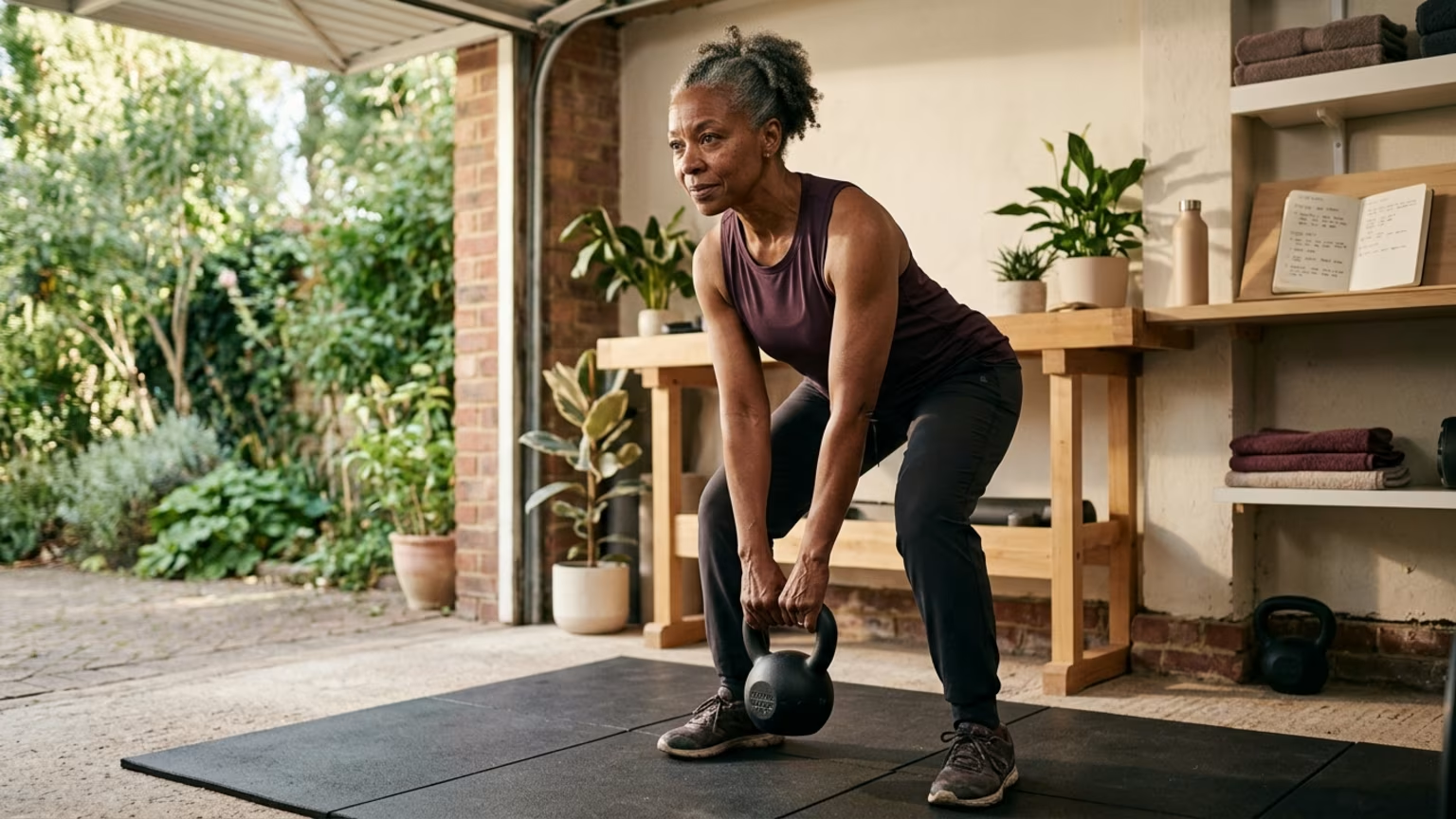
Physical movement during midlife carries implications far beyond aesthetic changes. It directly influences how your structural system maintains itself during the hormonal transition. The Journal of Clinical Endocrinology & Metabolism reports that resistance training may improve bone-density measures at the lumbar spine, hip and femoral neck in postmenopausal women. This finding frequently involves pairing resistance work with impact exercise.
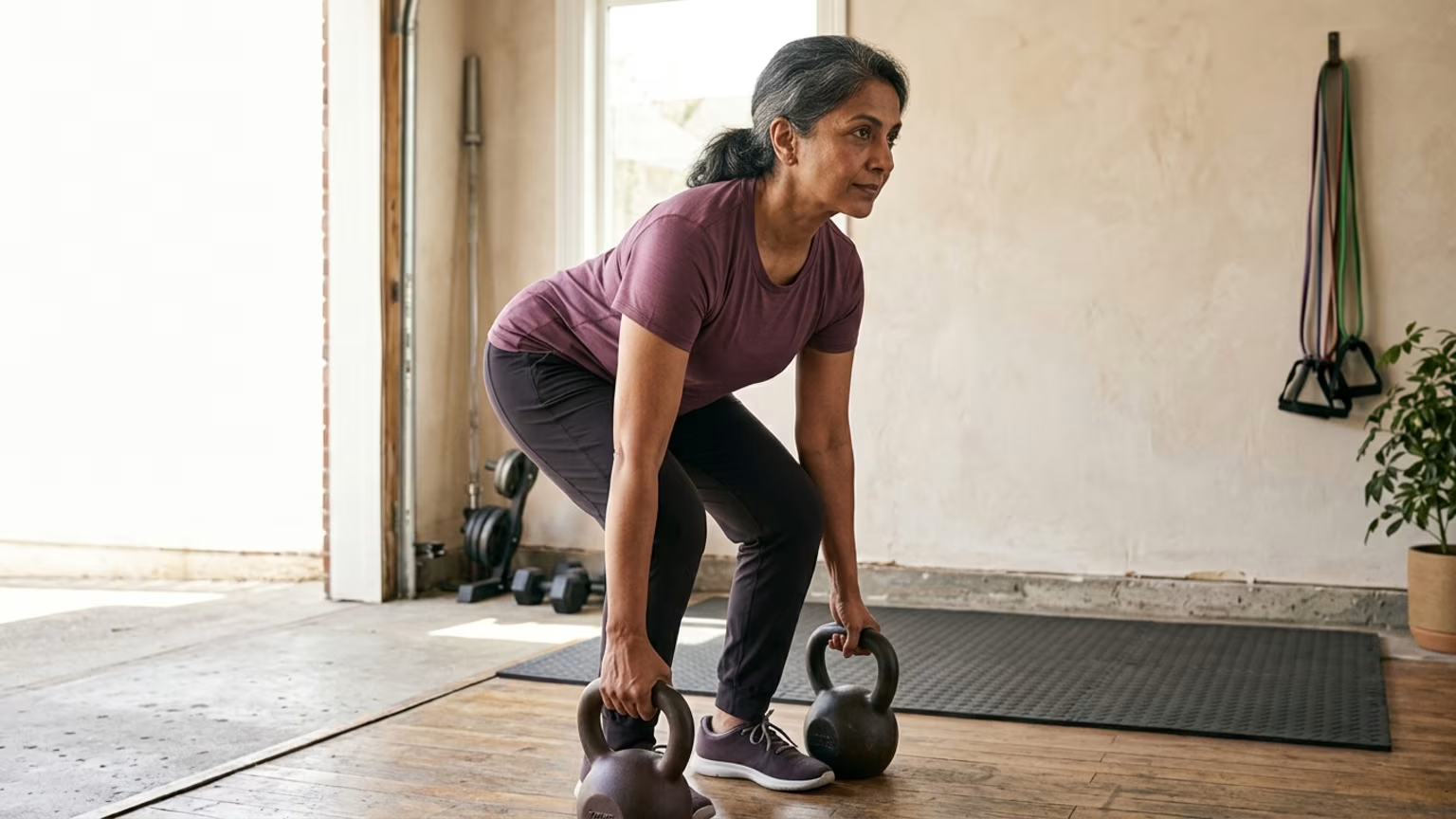
Translating this data into a weekly routine requires evaluating changing biology accurately. Lifting weights or engaging in bodyweight exercises challenges the skeletal system to adapt and grow stronger. This biological response is crucial for women who want to feel energetic and capable in their daily lives. Building a consistent movement practice builds a foundation for lasting physical confidence.
Women face confusing messages about which exercises are safe after menopause. The evidence supports a noticeable bone-density benefit from resistance training in postmenopausal women. Choosing activities that load the skeleton properly can change how you navigate the years beyond menopause. Such practices form the physical basis for a robust and active future.
Establishing a new physical routine requires patience and a willingness to learn proper mechanics. Working with a qualified professional can help you introduce weight-bearing movements safely and effectively. This structured introduction minimizes the risk of injury while supporting the biological benefits for your bones. Treating exercise as a long-term investment changes your relationship with daily physical activity entirely.
Integrating resistance training into your weekly schedule offers profound benefits for your overall sense of self. Women who lift weights often report feeling more grounded and resilient in their daily environments. The physical adaptation that improves your bone-density measures simultaneously builds functional muscle tissue. This dual benefit supports your metabolism while improving your ability to perform demanding tasks effortlessly.
It shifts the narrative away from exercising merely to shrink the body. The focus becomes building a body capable of fully participating in the next chapter of life. We view this perspective as a vital component of mental fitness and reinvention during midlife. Claiming your physical strength provides momentum for personal growth.
The relationship between weight management and skeletal strength requires careful attention. A women’s health pharmacy review identifies low body weight as a specific osteoporosis or fracture risk factor. This highlights why pursuing an arbitrary number on the scale can sometimes work against your broader wellbeing. A complete understanding of midlife health requires treating your structural integrity as a priority.
The intersection of weight-loss interventions and structural health demands thoughtful navigation. A review indexed at PubMed Central summarizes a trial involving the medication liraglutide and exercise after diet-induced weight loss. The review reports that the exercise-and-liraglutide combination preserved bone-density measures at several sites. This demonstrates how maintaining physical activity during weight changes can protect vital tissues.
The trial data offers a sobering contrast for those who skip resistance work. The review reports that liraglutide alone reduced hip and spine bone-density measures compared with exercise alone. This occurred while both groups experienced similar weight loss. These findings show that protecting your lean tissue and structural foundation is a non-negotiable part of any physical transition.
The societal pressure to maintain a specific size ignores the biological reality of aging tissues. Recognizing low body weight as a clinical risk factor challenges the dominant aesthetic narratives sold to adult women. A thinner frame does not automatically equate to a healthier structural system. Preserving bone and muscle mass must take priority when evaluating any shift in body composition.
The broader conversation about body composition must evolve beyond simple caloric math. Our biological systems require substantial energetic support to maintain dense structural tissues. Restricting intake too aggressively strips the body of the materials it needs to repair daily wear. This reality highlights the profound difference between getting smaller and getting stronger during midlife.
This clinical reality gives women permission to focus on physical capability over restrictive standards. Medications designed for weight management introduce new complexities into this physiological landscape. The trial reviewing the effects of liraglutide demonstrates that chemical interventions require corresponding physical effort. Relying on medication without concurrent structural loading can leave the skeletal system vulnerable.
Protecting your hip and spine density requires active and deliberate movement strategies. Women navigating these choices need credible evidence to construct routines that safeguard their long-term vitality. A balanced approach recognizes both the benefits and the structural demands of intentional weight loss.
Understanding your personal risk profile empowers you to make informed decisions about clinical care. The women’s health pharmacy review lists several variables that affect your long-term skeletal outlook. It identifies postmenopausal status, a parental history of hip fracture and smoking as fracture risk factors. Knowing these elements helps you seek personalized medical support.
Timely screening provides the objective data needed to track changes in your body composition over time. The U.S. Preventive Services Task Force recommends bone-density screening for women aged 65 and older. This scheduled evaluation offers a clear picture of your internal architecture. Having accurate information allows you to adjust your lifestyle or clinical strategies proactively.
Younger women should also pay close attention to their unique medical histories. The USPSTF recommends bone-density screening for postmenopausal women younger than 65 who have increased fracture risk. Discussing your specific situation with a clinician can clarify when you should begin tracking your metrics. We consistently cover the importance of understanding perimenopause and menopause through this lens of personalized care.
Engaging with the healthcare system for preventive screening marks a proactive approach to midlife wellness. Far too often, women discover their skeletal vulnerabilities after experiencing an unexpected injury. Advocating for a timely bone-density evaluation based on USPSTF guidelines removes the guesswork from your health strategy. It places you firmly in control of your physical future.
The peace of mind that comes from understanding your medical baseline cannot be overstated. Acknowledging physical changes allows you to address them directly rather than avoiding the subject out of fear. Clear data transforms an abstract worry into a manageable aspect of your overall health routine. This pragmatic stance helps you move confidently through your forties, fifties and beyond.
Knowing your baseline metrics allows you and your clinician to build a highly individualized care plan. Conversations about parental history and lifestyle factors should happen long before a critical event occurs. Acknowledging habits like smoking or high alcohol intake provides an opportunity for honest self-reflection and adjustment. Addressing these elements is not about assigning blame or inviting symptom panic into your life.
It is simply about understanding the variables that influence your shifting physiology. Equipping yourself with this knowledge builds true physical and emotional confidence. Women who understand their risk factors can take concrete steps to support their skeletal health year after year.
Future clinical practice will increasingly require treating skeletal preservation and muscle loading as inseparable components of any midlife weight-management strategy.
Deciding how to balance active weight management with the critical need to preserve skeletal integrity often leaves women seeking trustworthy guidance. Refemina addresses the loss of confidence or identity during a period of physical and personal change, helping you build a resilient physical foundation grounded in credible evidence. Explore Resources

Follow Refemina for research-led insights on menopause, strength, metabolism, nutrition, skin, intimacy and confidence through midlife. New articles turn complex topics into clear, useful context.





Keep learning about the changes that shape energy, strength, confidence and wellbeing through midlife.
Explore Resources