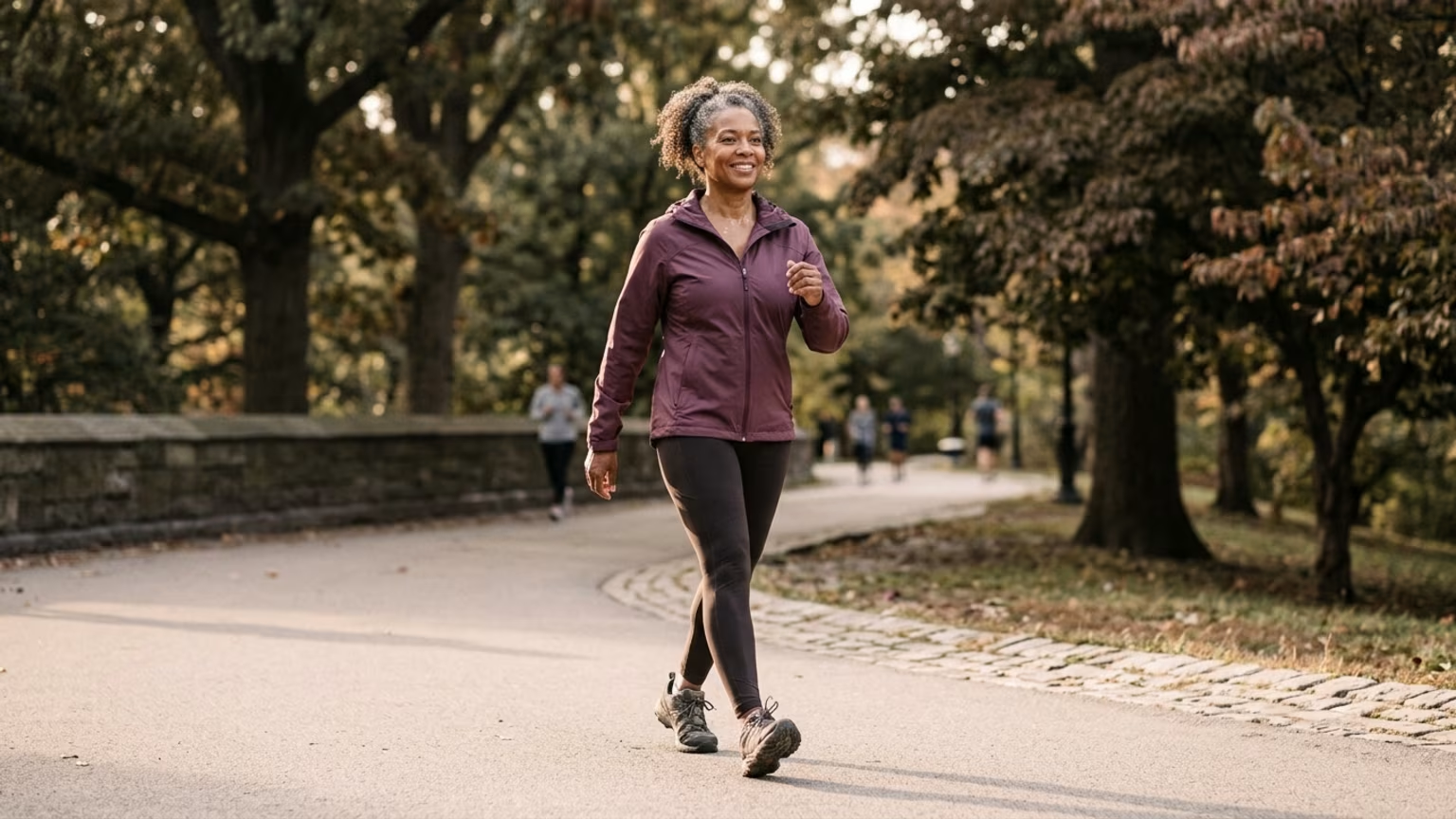

A 2026 BMJ meta-analysis shows brisk walking and jogging may help attenuate age-related bone loss. Learn how two to three weekly hours support skeletal health.





In September 2026, a comprehensive hierarchical network meta-analysis published in The BMJ reported that brisk walking and jogging can help attenuate age-related bone mineral density declines in adults aged 40 and older.
Previous clinical endocrinology reviews often cautioned that walking had no meaningful effect on total hip or femoral neck bone density among individuals with low bone mass. Consequently, standard osteoporosis guidance has heavily prioritised structured muscle-strengthening routines alongside distinct weight-bearing activities for postmenopausal women. This clinical consensus frequently left midlife women assuming that only intensive gym-based resistance training could protect their aging skeleton. The belief that ordinary brisk walking lacks structural value is now being updated by broader data.
The new analysis evaluated how different exercise categories affect skeletal health across a large population. The findings highlight practical ways to protect bone integrity without relying exclusively on specialised fitness facilities.
The study relies on a measurement called MET-minutes to quantify the volume of physical activity. A Metabolic Equivalent of Task, or MET, simply compares the energy you expend during an activity to the energy you burn while resting. Walking briskly demands significantly more energy than sitting, which increases your MET score for that specific duration. Accumulating 600 MET-minutes per week might sound like a complex mathematical equation, but it translates easily into normal human behaviour. It is just a scientific way of measuring regular, moderate-intensity movement throughout the week.
The researchers conducted a dose-response analysis to identify when these skeletal benefits become clinically meaningful. They estimated that positive physical changes frequently emerge at approximately 600 MET-minutes per week. A report from Women's Health translated this specific metric into a highly practical daily routine. The resulting recommendation is roughly two to three hours of brisk walking or jogging each week. This breaks down neatly to roughly 20 to 30 minutes of intentional movement on most days.
The study analysis identified a slightly lower threshold for lumbar spine benefits at approximately 400 MET-minutes per week. The femoral neck and total hip required the full 600 MET-minutes per week to show significant change. More exercise is not automatically better for skeletal preservation once you reach a sustainable volume. Women can achieve meaningful results with a moderate weekly routine that fits into a normal schedule.
For individuals who are currently inactive, the most cautious approach is to build gradually toward that weekly target. The available sources support the approximate weekly dose but do not provide a validated beginner progression plan. Starting with ten minutes a day is a perfectly valid way to build the habit. Establishing a consistent physical rhythm matters more than hitting a rigid numeric target immediately.
Many women struggle to maintain intense workout schedules while managing careers, families and personal health changes. Formal gym sessions often require significant time commitments, travel and mental energy. Brisk walking removes many of these common barriers to entry because it requires no specialised equipment or venue. Getting outside for a regular walk supports mental clarity and a broader sense of mental fitness and personal confidence during periods of physical change. You can step out of your front door and immediately begin accumulating positive structural benefits.
Brisk walking also offers a highly flexible way to integrate movement into a busy social calendar. You can schedule a weekend walk with a friend instead of sitting in a coffee shop. Combining physical activity with social connection makes the routine significantly easier to maintain over time. Building these durable habits helps you continue moving well into your postmenopausal years.
The study population included adults aged 40 and over rather than a strictly menopausal cohort. This age range heavily overlaps with perimenopause and the postmenopausal years. Bone loss accelerates noticeably around the menopausal transition because of shifting hormone levels. Women seeking perimenopause and menopause resources often look for practical ways to manage this phase of life. Maintaining physical activity during these years provides a reliable foundation when your body is experiencing rapid changes.
While the new BMJ study is highly relevant to this demographic, it is not definitive proof that walking completely prevents postmenopausal bone loss. It simply positions brisk walking as a highly accessible physical tool during a critical phase of physical change. A consistent movement habit becomes a highly accessible physical anchor during this critical window.
Many women find that their energy levels or joint comfort fluctuate during their forties and fifties. Having a flexible physical strategy helps maintain consistent daily activity when formal workouts feel overwhelming. Walking provides a realistic foundation that can be scaled up or down based on how you feel. Supporting your skeletal structure does not require pushing through pain or exhaustion.
The study authors carefully qualified their conclusions by noting that the evidence certainty ranged from low to moderate. The findings indicate a probable or possible skeletal benefit rather than an absolute clinical guarantee. The results do not suggest that walking outperforms structured resistance training for every woman or every bone site. Combined aerobic and resistance programmes also performed favourably for lumbar spine density in the analysis.
Brisk walking and jogging place distinctly different mechanical demands on the human body. Jogging introduces significantly more impact and ground reaction force with every single stride. This higher impact may not be appropriate for women with diagnosed osteoporosis, pelvic floor symptoms or a history of falls. Women with substantial bone loss or persistent pain should seek individualised physiotherapy advice before starting higher impact activities.
Taking a steady approach helps women avoid common overuse injuries when starting a new exercise block. Pushing too hard early on often leads to joint irritation or unnecessary fatigue. Your skeletal system adapts slowly to new mechanical loads over several months of consistent work. Treating exercise as a lifelong practice removes the pressure to achieve perfect workouts every single week.
The strongest headline finding from the research concerns bone mineral density rather than concrete proof of fracture prevention. The fracture-related findings for mixed aerobic exercise and mind-body exercise were explicitly described as low-certainty evidence. Women should not assume that walking completely eliminates the risk of future fragility fractures. Routine clinical assessment and bone-density testing remain central to a proactive midlife health strategy.
Current UK osteoporosis guidance recommends a broad and varied approach to skeletal health. Postmenopausal women at risk of fragility fractures benefit most from a mix of weight-bearing activity and muscle-strengthening exercise. Activities like body-weight routines, stair climbing, hiking and dancing all play a valid role. Walking fits perfectly into this broader framework without having to carry the entire burden of bone preservation.
Many midlife women want to improve their strength and body composition alongside supporting their bone density. A combined exercise approach offers the most comprehensive physical support for the aging body. Resistance training builds muscle mass and provides a targeted mechanical stimulus to the bones. Brisk walking supports cardiovascular health and adds frequent, moderate weight-bearing activity to the week. Structuring your week to include both modalities provides a robust defence against age-related physical decline.
Mind-body exercises also showed low certainty evidence for reducing fracture risk in the recent analysis. Balance-focused movement serves as a complementary addition rather than a proven substitute for heavy weight-bearing work. A well rounded routine helps women feel capable, balanced and strong in their daily lives. You can build a physical strategy that supports both your skeleton and your overall quality of life.
Physical activity is only one part of a comprehensive approach to skeletal preservation. A structured exercise routine works best when supported by adequate fuel and appropriate medical care. Women often face difficulty finding practical nutrition guidance that is not based on restriction or fads. Meeting daily requirements for protein and vital micronutrients is critical for tissue repair and bone maintenance. Calcium and vitamin D specifically play a massive role in how well your body builds and retains bone tissue.
The recent findings should not be interpreted as evidence that walking replaces clinical osteoporosis management. The study evaluated exercise interventions rather than testing walking as a complete disease management strategy. Women with a diagnosed skeletal condition may still require prescribed medication and close medical supervision. Exercise improves the effects of proper nutrition and medical care but cannot entirely replace them.
Evaluating the clinical evidence helps midlife women make informed decisions about their daily routines. Taking a daily walk is a simple habit that yields measurable physiological returns over time. It allows you to step outside, clear your mind and protect your skeletal health simultaneously.
Future clinical protocols will likely position brisk walking as a highly accessible foundational habit rather than a replacement for targeted resistance training.
While a trusted physiotherapist or doctor owns the clinical monitoring of your skeletal health day to day, building a sustainable movement routine changes when Refemina clarifies the research. We address the difficulty finding practical nutrition guidance that is not based on restriction or fads, helping you navigate perimenopause, menopause and the years beyond with confidence. Explore Resources

Follow Refemina for research-led insights on menopause, strength, metabolism, nutrition, skin, intimacy and confidence through midlife. New articles turn complex topics into clear, useful context.




Keep learning about the changes that shape energy, strength, confidence and wellbeing through midlife.
Explore Resources