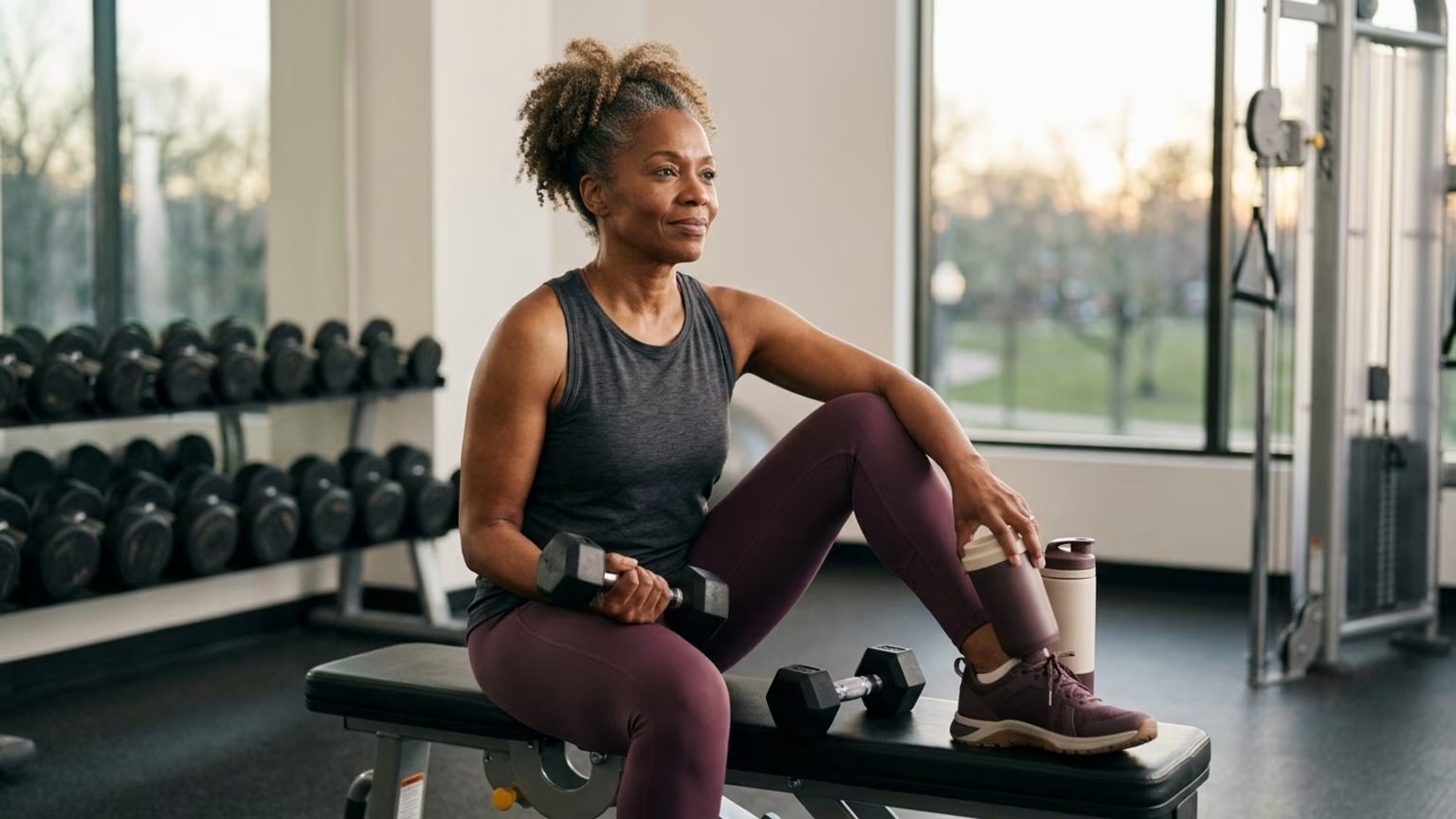

A 2026 meta-analysis shows combining 5 grams of creatine daily with resistance training modestly improves lean mass and strength in postmenopausal women.





A 2026 systematic review and meta-analysis published from six major databases examined seven randomized trials to evaluate how creatine supplementation affects postmenopausal women. The study found that combining at least 5 grams of creatine daily with resistance training produced modest improvements in lean mass and leg-press strength.
Medical and fitness guidance for midlife women historically centered on cardiovascular exercise and weight management. Creatine was largely viewed as an athletic supplement for younger male athletes rather than a tool for everyday functional strength. Women navigating hormonal changes were rarely advised to use ergogenic aids to support their physical capability. This paradigm meant that specific strategies for preserving lean mass after menopause often overlooked safe nutritional tools.
Healthcare practitioners typically directed postmenopausal women toward walking, calcium supplementation and low-impact aerobic exercise. The idea of intentionally building new muscle tissue through heavy lifting and sports nutrition simply did not feature in standard medical advice. Consequently, women experiencing shifting body composition and metabolic changes were left without targeted protocols for maintaining their functional power. These historical limitations make the latest clinical investigations into targeted ergogenic aids especially relevant for modern midlife health.
The meta-analysis revealed specific advantages for women who used creatine compared to those who received a placebo.
A 2026 systematic review and meta-analysis provided new clarity for women seeking evidence-based ways to support their physical health. The researchers searched six major databases including MEDLINE and Embase. They also pulled data from Scopus, Web of Science, SPORTDiscus and Cochrane CENTRAL. They looked for studies published from 2000 through August 2025. This thorough screening process isolated seven randomized, placebo-controlled trials focusing specifically on postmenopausal women.
The review included 608 randomized participants with an average age of approximately 62 years. The durations of these studies ranged broadly, spanning from 12 to 104 weeks of observation. By evaluating specific measurable outcomes, the researchers aimed to understand exactly how supplementation affects this demographic. Eligible outcomes for the review included DXA-measured lean mass and one-repetition-maximum strength. Researchers also tracked bone mineral density, physical function and safety markers.
The most common question about supplementation is whether it actually builds muscle. Across five studies involving 338 participants, creatine was associated with a mean difference of 0.37 kilograms more lean mass than placebo. The 95 percent confidence interval for this outcome ranged from 0.05 to 0.69 kilograms, indicating a consistent but small physiological advantage.
While this average effect is encouraging, the statistical modeling provided additional context. The 95 percent prediction interval ranged from negative 0.10 to positive 0.84 kilograms. This means that a new comparable study could theoretically yield results ranging from a small negative effect to a larger positive effect. An additional 0.37 kilograms of lean mass is biologically meaningful over time, but it is not a major body-composition transformation.
Lean mass only tells part of the story when evaluating physical capability. The meta-analysis also examined how supplementation impacts raw strength, which is highly relevant for women focused on their changing body composition. Across three studies involving 111 participants, the research showed a 7.5-kilogram improvement in leg-press one-repetition maximum for the creatine groups.
The 95 percent confidence interval for this strength gain ranged from 2.2 to 12.8 kilograms. Statistical heterogeneity for the leg-press result was zero, which suggests consistent outcomes among those specific trials. Because this specific estimate involved only 111 participants across three studies, it should not be viewed as a guaranteed outcome for every postmenopausal woman.
The clinical evidence paints a clear picture regarding the necessity of exercise. The clearest pattern of benefit appeared when creatine was taken at doses of 5 grams or more per day alongside a structured resistance training program. Simply consuming the powder without providing a physical stimulus did not yield the same results. Trials using doses of 3 grams per day or less without resistance training showed no measurable effect in the review.
This dose threshold is an important takeaway for individuals designing their nutritional habits. Supplementing below the active threshold of 5 grams, or relying on passive consumption, fundamentally misaligns with the reviewed evidence. Resistance training acts as the required mechanical signal that allows the muscle tissue to utilize the nutritional support. The combination of targeted physical stress and specific nutritional timing creates the environment necessary for building measurable lean mass.
The Muscle & Fitness coverage reinforces this important distinction. The publication frames the findings as evidence that creatine can provide a modest edge when repeatedly paired with demanding training. It is not characterized as a dramatic transformation or a standalone miracle supplement. The coverage notes that combining the supplement with inactivity is not equivalent to pairing it with structured exercise.
Women navigating hormonal changes during menopause frequently seek clarity on weight management. It is highly relevant that the 2026 review did not establish creatine as a weight-loss intervention. The primary outcomes analyzed were lean mass and strength, rather than reductions in fat mass or total body weight. The supplement acts as an ergogenic aid that provides a training advantage, not as a fat-burning compound.
The Muscle & Fitness article offered practical commentary on this topic. It cautioned against interpreting creatine-related water retention as sudden fat gain or dramatic muscular bulking. This commentary provides helpful explanatory context for women who might notice minor scale fluctuations. Readers evaluating their nutrition and midlife health resources should track their progress using functional capability rather than relying strictly on body weight.
Replacing the scale with performance metrics offers a healthier psychological approach to midlife fitness. A slight increase in body weight from initial water retention is a normal physiological response to supplementation. This shift does not reflect an increase in body fat, nor does it counteract the metabolic benefits of resistance training. By focusing on adding weight to the leg press and feeling more capable during daily tasks, women can reframe their expectations around functional strength.
Protecting skeletal health is a primary priority for women in their sixties. The review recorded positive data for muscle, yet it found no overall change in bone density. The paper's abstract characterized the evidence regarding bone-density effects as unclear. The current evidence does not support presenting creatine as a bone-building treatment for postmenopausal women.
The safety profile analyzed in the review provides reassuring data for this specific age group. Reported adverse events were mild and appeared similar to those in the placebo groups. Additionally, renal indices were unchanged in the included evidence. These findings apply directly to the populations and protocols studied, though they should not be expanded into a medical claim for every condition.
Evaluating clinical research requires acknowledging study limitations. The authors stated that most of the analyzed studies had some risk-of-bias concerns. The review itself was not prospectively registered, which represents an additional methodological limitation worth noting. The exact training protocols were not fully summarized in the accessible record, making it difficult to prescribe one universal routine from this paper alone.
Industry relationships also require transparent disclosure. The publication stated that the authors had no conflicts related to the work itself. The disclosures noted that one author serves as chair of a creatine-related scientific advisory board supported by Alzchem. The authors also acknowledged that Alzchem provided support for the remaining article-processing charge after a publisher waiver. Readers should view the results as encouraging while recognizing the need for replication by independent research teams.
The International Society of Sports Nutrition sometimes receives funding from companies that manufacture, market or sell creatine. Disclosing these relationships is standard practice in nutritional research, but it adds necessary context for consumers evaluating the data. Medical professionals rely on this transparency to weigh the potential benefits of supplementation against the need for more diverse clinical testing. The findings provide a strong foundation for future trials that can further isolate the effects of different formulations and exact resistance training loads.
This focused review sits within a larger 2026 conversation about evidence-based nutrition for women. Muscle & Fitness separately reported on a broader review evaluating women participating in exercise or structured training. That larger project screened more than 13,000 records and used 21 studies in its primary statistical analysis. It included 34 studies representing 692 female or female-eligible participants.
That broader review found small pooled effects for performance and body-composition outcomes. The article reported that the authors rated the overall certainty of evidence as very low, and the performance evidence as low. The studies in that broader review varied widely in participants, sports, doses and testing methods. Those findings concern a different evidence base and a broader population, which clarifies why the postmenopausal-specific review is so valuable.
By focusing on women averaging 62 years of age, the smaller review provides highly targeted insights for midlife physical health. General sports nutrition advice often falls short for older women because it draws heavily from mixed-sex or predominantly male cohorts. The postmenopausal analysis separates the biological reality of aging women from the broader athletic population. This distinction helps practitioners deliver precise guidance tailored to the exact demographic facing age-related muscle decline.
For women in their fifties and sixties, the practical implications of this research are highly actionable. If a postmenopausal woman is already participating in consistent resistance training, creatine monohydrate is a reasonable supplement to discuss with a doctor. The evidence supports small improvements in selected outcomes, but it does not support sweeping promises about athletic performance or menopause management. Reading the latest midlife health research helps separate proven clinical strategies from aggressive commercial marketing.
A sensible approach places the emphasis on consistent physical effort. The studied dose pattern associated with benefit was at least 5 grams per day alongside resistance training. Women should track their progress using progressive training performance, functional confidence and how daily physical activities feel. The most balanced framing is that creatine may offer a modest assist to a well-designed strength routine, serving as a supplement to adequate food, recovery and individualized medical care.
Clinical guidance for postmenopausal body composition will increasingly integrate specific ergogenic aids into standard resistance training protocols rather than treating strength as a purely exercise-driven outcome.
While translating clinical study data into a practical supplement routine requires careful attention to dosage and effort, building an evidence-based physical regimen does not have to feel overwhelming. We address changes in strength, muscle, body composition, metabolism or weight, helping you apply focused research to your daily life without symptom panic or fitness hype.

Follow Refemina for research-led insights on menopause, strength, metabolism, nutrition, skin, intimacy and confidence through midlife. New articles turn complex topics into clear, useful context.





Keep learning about the changes that shape energy, strength, confidence and wellbeing through midlife.
Explore Resources