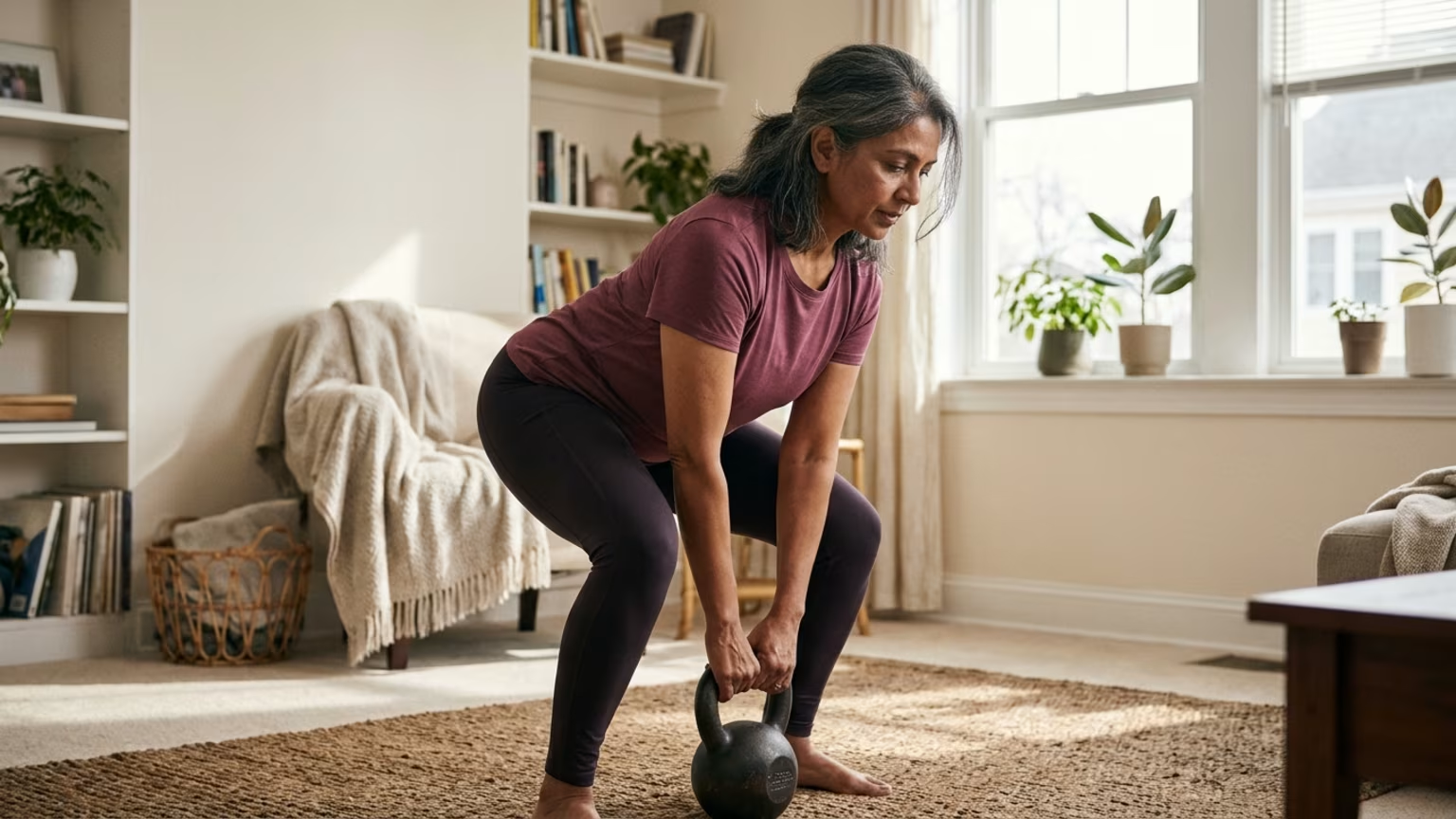

A closer look at eight menopause strength exercises, their everyday relevance and the evidence behind claims about muscle, bone and metabolic health.





Everyday Health presented eight compound strength exercises for women navigating menopause in its feature “8 Moves to Build Muscle and Boost Metabolic Health During Menopause,” which appeared in search results dated October 22, 2026.
The feature sits within an established approach to physical activity rather than replacing it. Everyday Health's related menopause coverage cites CDC adult guidance that includes at least 150 minutes of moderate aerobic activity per week, or 75 minutes of vigorous activity, plus muscle-strengthening activity on two days.
That baseline already gives resistance work a place alongside aerobic exercise. A separate 2026 U.S. News report describes a mixed approach involving strength, flexibility and cardio. It also highlights weight-bearing activity in discussions of bone health.
The update here is therefore practical rather than a reversal of medical advice. Everyday Health turns a broad recommendation to build strength into a recognisable selection of movements. Its emphasis is on exercises involving several muscle groups and joints, with relevance to everyday activity.
For women trying to understand changing strength or body composition, that distinction matters. An exercise feature offers a way into the subject without establishing a new menopause treatment. Refemina's coverage of how to interpret menopause muscle research provides further context for reading such advice.
Everyday Health describes compound movements as exercises that use multiple muscle groups and joints. Its selection brings together lunging, hinging, pushing, pulling and stepping patterns. The list also includes machine exercises rather than relying on a single training format.
The actual selection is worth spelling out because a broad reference to compound exercise does not identify which movements a feature recommends:
The useful organising idea is the movement pattern, not the number of exercises in the headline. For someone discussing training with a qualified professional, those categories provide clearer language than a general wish to work on “menopause metabolism.”
Everyday Health connects strength training with muscle, bone health and body composition. It also discusses metabolic markers such as insulin sensitivity, particularly when strength work is combined with cardio.
Its broader claims fall into three areas:
This framing gives strength a purpose beyond changing appearance. The article's practical emphasis is on movements that connect with daily activities, including stepping and other ordinary physical tasks. That is a useful editorial focus for women whose priorities include capability rather than a particular body shape.
The feature does not report numerical effect sizes for its broad claims about muscle, bone or metabolic health. It also does not demonstrate that this particular eight-exercise routine produces those outcomes.
The reported links between activity and later muscle or bone outcomes are associations, not proof that exercise alone caused the differences. The article does not provide enough study detail to assess those findings further. Its discussion of muscle and calorie use should not be read as a guarantee of weight loss or a particular metabolic change.
Those limits belong together because they answer one central question: how much does the headline establish? It offers a practical exercise example supported by broader discussion of strength training. It is not evidence that one fixed combination of movements will deliver a predictable result for every woman.
The sound practical reading is to separate exercise selection from promises about outcomes. Refemina's discussion of placing muscle preservation ahead of scale weight offers a related perspective on keeping those goals distinct.
Everyday Health supplies several concrete training examples. These include three sets of eight reverse lunges per side, three sets of ten Romanian deadlifts and three sets of eight weighted step-ups per side. For some machine exercises, it recommends a load that makes the final repetitions challenging while allowing good form.
Those details describe the feature's examples rather than an individual prescription. Its accompanying advice makes room for differences in experience and health:
The U.S. News report adds a related expert perspective on progression. It describes starting with a load that is manageable for several repetitions but challenging by around ten, then increasing the weight when that becomes easy.
The common thread is controlled effort that can change with the person. Personal decisions about exercise selection and progression belong with qualified exercise support, with medical input where health conditions or injuries affect participation. A published list supplies discussion material for that process rather than replacing it.
The feature is most useful when read as a menu of movement patterns. Stepping, pushing, pulling and hinging give a woman and her exercise adviser something concrete to discuss. That conversation can focus on how strength work fits her activities and goals.
This also keeps the wider activity picture intact. The related guidance includes aerobic activity alongside resistance work, while U.S. News includes flexibility in its mixed approach. A menopause-focused strength feature sits inside that broader framework.
For readers interested in the connection between activity and wider health, Refemina's coverage of strength within a broader midlife health picture offers another route into the subject.
The editorial priority is straightforward: understand the movements before attaching a body-transformation promise to them. Everyday capability is a legitimate reason to be interested in strength work. It does not need to be presented as a campaign against the changing midlife body.
This feature's useful contribution to future clinical conversations is a more concrete discussion of strength movements within broader activity guidance, with individual needs shaping the exercise choices.
Training choices stay with each woman and her exercise adviser; Refemina's role is to give those discussions a clearer research context. For readers puzzled by changing muscle or body composition, its coverage brings strength and nutrition into the midlife picture without making weight loss the measure of a woman's health.

Follow Refemina for research-led insights on menopause, strength, metabolism, nutrition, skin, intimacy and confidence through midlife. New articles turn complex topics into clear, useful context.


Keep learning about the changes that shape energy, strength, confidence and wellbeing through midlife.
Explore Resources