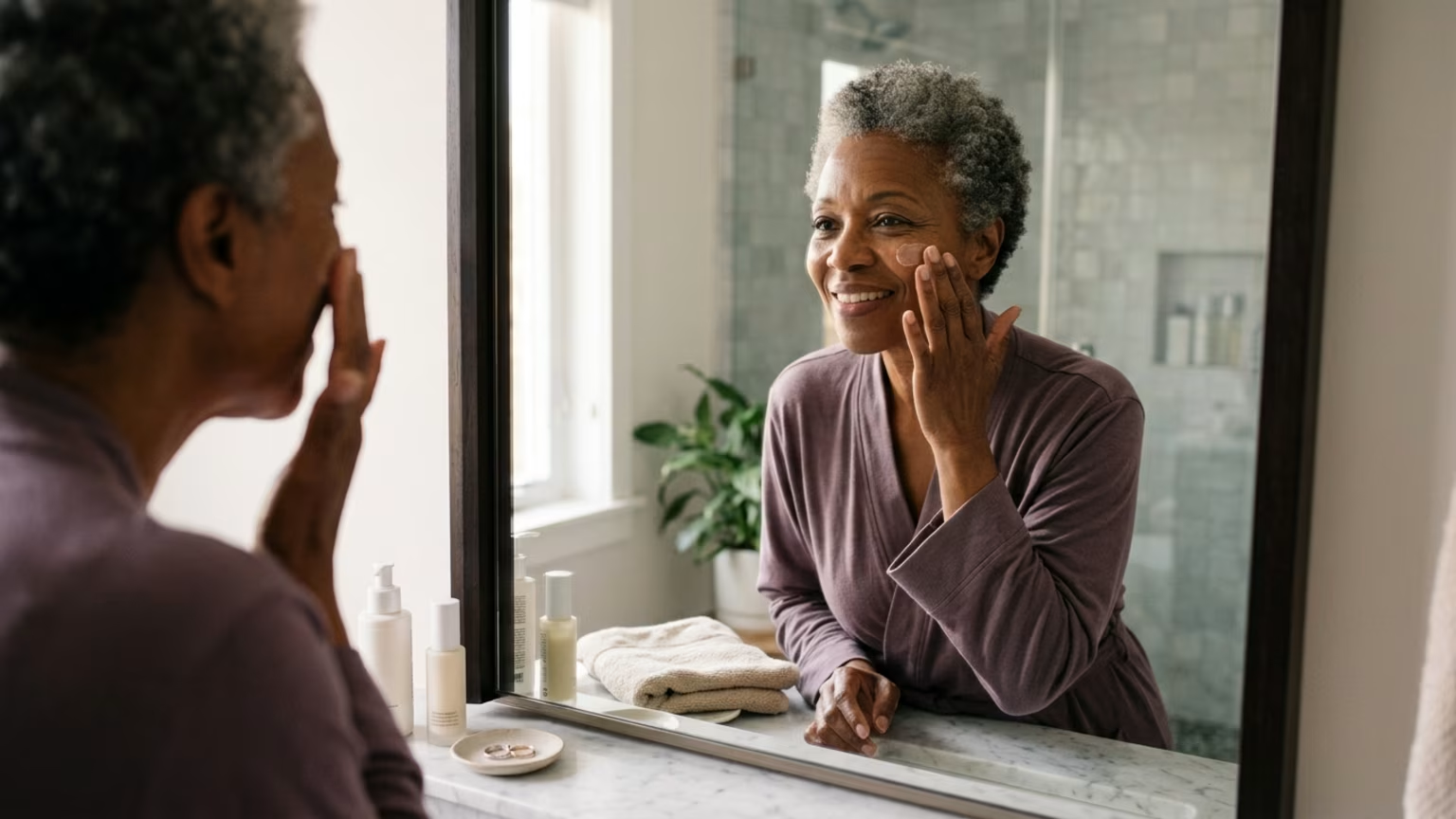

Forbes reports Murad's new ReSculpt collection targets midlife skin changes. We explain how to separate marketing claims from independent clinical evidence.





On October 1, 2026, Forbes reported that the skincare company Murad introduced its ReSculpt collection, a product line positioned around treating the hands, neck and décolleté alongside a dietary supplement.
For decades, the commercial skincare industry focused overwhelmingly on facial treatments. Standard protocols largely ignored the hands and the chest until visible signs of aging became advanced. When companies did address midlife skin changes, the messaging relied heavily on aggressive marketing pressure rather than acknowledging biological shifts. The established standard of care for midlife women treated skin changes as cosmetic problems to reverse.
Products were rarely formulated or marketed specifically for the hormonal transitions of perimenopause and menopause. Standard regimens and dietary supplements were traditionally treated as entirely separate categories in both retail and clinical settings. Women in their 40s and beyond were expected to adapt standard facial products for their body. This often led to irritation, because the skin on the neck and chest responds differently to potent active ingredients.
The previous medical consensus focused on broad sun protection and generic moisturization for these neglected areas. There was little mainstream recognition of how hormonal changes specifically affect the elasticity of the skin on the body.
The recent Forbes coverage provides a detailed look at how brands are beginning to shift their focus. The publication outlines several specific elements of the new Murad product line.
The introduction of the ReSculpt line represents a highly visible commercial effort to connect product positioning with menopause. Murad marketing executive Ale Fiecconi told Forbes that the collection is part of a broader effort to reconnect with the brand’s foundational principles. Fiecconi characterized women in their 40s and beyond as a relevant audience for this collection. She noted that the brand wants to serve women experiencing changes that the company associates with hormonal transitions.
Fiecconi told Forbes that Murad’s aim is not to "reverse aging" but to offer targeted support. This positioning aligns with a growing industry trend where brands attempt to move away from traditional youth-obsessed rhetoric. Midlife women want realistic guidance about their physical changes without the symptom panic. Women evaluating these products must distinguish between a company’s marketing narrative and independent clinical evidence.
The Forbes article serves as an industry signal about how products will be sold to midlife women. It does not provide published trials or independent clinical data substantiating the efficacy of the collection. Understanding this distinction helps consumers make informed decisions without falling for wellness hype.
The Forbes report notes that both the neck serum and the hand treatment contain retinal. Retinal is a potent derivative of vitamin A used widely in dermatology. Murad advises users to apply these topical treatments at night. The brand also strongly recommends using daily SPF on the treated areas to protect the skin.
These directions reflect standard safety practices for retinoid use, because these ingredients can increase sensitivity to ultraviolet light. Protecting the skin from the sun remains a fundamental part of managing midlife skin health.
Interestingly, Forbes reports a specific Murad suggestion regarding product layering. The brand advises against layering the new neck-and-décolleté serum with an existing facial retinol product. Instead, the company suggests opting solely for the neck serum in that specific area. This guidance highlights the distinct needs of the skin below the jawline.
Women navigating midlife skin changes often find that the neck and chest require different tolerability thresholds than the face. Attributing this specific advice to the company is necessary, because it should not be generalized as a universal medical rule.
The inclusion of the CollagenSculpt Skin Support Dietary Supplement represents another significant aspect of the launch. Forbes describes this combination of topical skincare and a dietary supplement as a holistic approach. The supplement reportedly combines marine collagen peptides and vitamins. Murad positions this ingestible product as supporting skin renewal, elasticity, hydration and resilience.
This inside-out approach is becoming increasingly common in the beauty industry. The claims about the supplement supporting skin hydration and resilience are product-positioning claims reported by Forbes. They do not constitute independent evidence of clinical efficacy. While marine collagen peptides are a popular ingredient, individual results can vary significantly.
Midlife women should separate precise nutritional facts from broad retail marketing when evaluating such supplements. Any dietary addition should be considered within the broader context of nutrition and weight management resources.
The reported product benefits of the ReSculpt collection include firming, smoothing, tightening and barrier support. These should be clearly attributed to Murad as intended benefits rather than established medical outcomes. For example, Forbes reports that the hand treatment is intended to improve the appearance of hands in as little as two weeks. The available event coverage does not include an independent clinical assessment validating this specific timeframe.
Readers should not mistake commercial product descriptions for rigorous trial results. Evaluating these assertions critically is a core part of maintaining mental fitness and confidence during midlife. Murad identified the hands, neck and décolleté as areas to address after observing discussions on social media and Reddit. This origin story explains the commercial demand but does not represent independently verified consumer-demand research.
The available source base for this launch is thin, with Forbes providing the primary account of the product and executive details. The search results did not yield independent product testing or verified market-size data. Consequently, the clinical validity of these specific formulations remains unverified by third-party dermatological studies.
The physical shifts that occur during perimenopause and menopause can noticeably affect skin texture and elasticity. As estrogen levels decline, many women observe changes in skin hydration and firmness. Reading perimenopause, menopause and hormonal change articles helps clarify how these shifts influence collagen production across the entire body. It is completely normal to see these changes reflected first in frequently exposed areas like the hands and the chest.
Acknowledging these biological realities helps women feel recognized without being medicalised. It is vital to recognize that hormonal changes do not explain every individual’s skin presentation. Sun exposure, genetics, stress and general health also play substantial roles. While Murad associates its new collection with hormonal transitions, the available sources do not establish that these specific products address hormonal mechanisms clinically.
Women reviewing skin, hair and aesthetic aging articles should maintain realistic expectations regarding over-the-counter cosmetics. True skin longevity requires a comprehensive approach rather than relying on a single product launch.
Changes in skin elasticity are often discussed in isolation. In reality, they are closely linked to broader changes in muscle mass and body composition during midlife. Maintaining muscle tone through resistance training can influence how the skin sits on the body, particularly on the neck and chest. Women navigating these years often find that a comprehensive approach to physical strength yields better long-term results than cosmetics alone.
The focus should remain on building a resilient body rather than just treating the surface. Reviewing strength, body composition and metabolism resources provides a grounded perspective on these physical transitions. Hormonal shifts affect the structural integrity of the skin just as they affect muscle synthesis. While topical serums address the outermost layers, true resilience comes from supporting the body's overall foundational health.
Recognizing this connection helps women shift their focus away from anti-aging panic and toward functional longevity. Skincare routines should complement a broader commitment to physical wellbeing rather than replacing it.
The skincare industry is clearly recognizing the purchasing power and specific needs of women in their 40s, 50s and beyond. Launches like ReSculpt demonstrate a commercial pivot toward recognizing midlife as a distinct phase requiring tailored products. Ale Fiecconi’s assertion that the relevant audience includes women in perimenopause and menopause reflects this new marketing reality. This shift offers women more targeted options but also introduces new forms of targeted marketing.
Understanding this landscape is crucial for midlife women seeking credible health information. For readers considering this or similar product lines, a practical distinction is necessary. You must separate what is known about the launch and its instructions from what remains unverified about its efficacy. Over-the-counter topical treatments can certainly improve skin hydration and appearance.
Framing them as a definitive solution for hormonal transitions overstates the current independent evidence. Approaching these products with an informed perspective allows women to care for their changing skin without succumbing to commercial pressure.
This specific launch indicates that commercial skincare protocols will increasingly target hormonal transitions and neglected body areas through combined topical and ingestible regimens, shifting industry practice toward menopause-aware marketing even before independent clinical validation becomes the standard.
Navigating skin and hair changes mixed with aggressive anti-aging marketing often leaves midlife women struggling to separate objective facts from commercial product claims. Refemina clarifies this confusion by translating credible evidence into clear adult guidance, helping you understand your physical transitions and make informed choices without relying on wellness hype. Explore Resources

Follow Refemina for research-led insights on menopause, strength, metabolism, nutrition, skin, intimacy and confidence through midlife. New articles turn complex topics into clear, useful context.





Keep learning about the changes that shape energy, strength, confidence and wellbeing through midlife.
Explore Resources