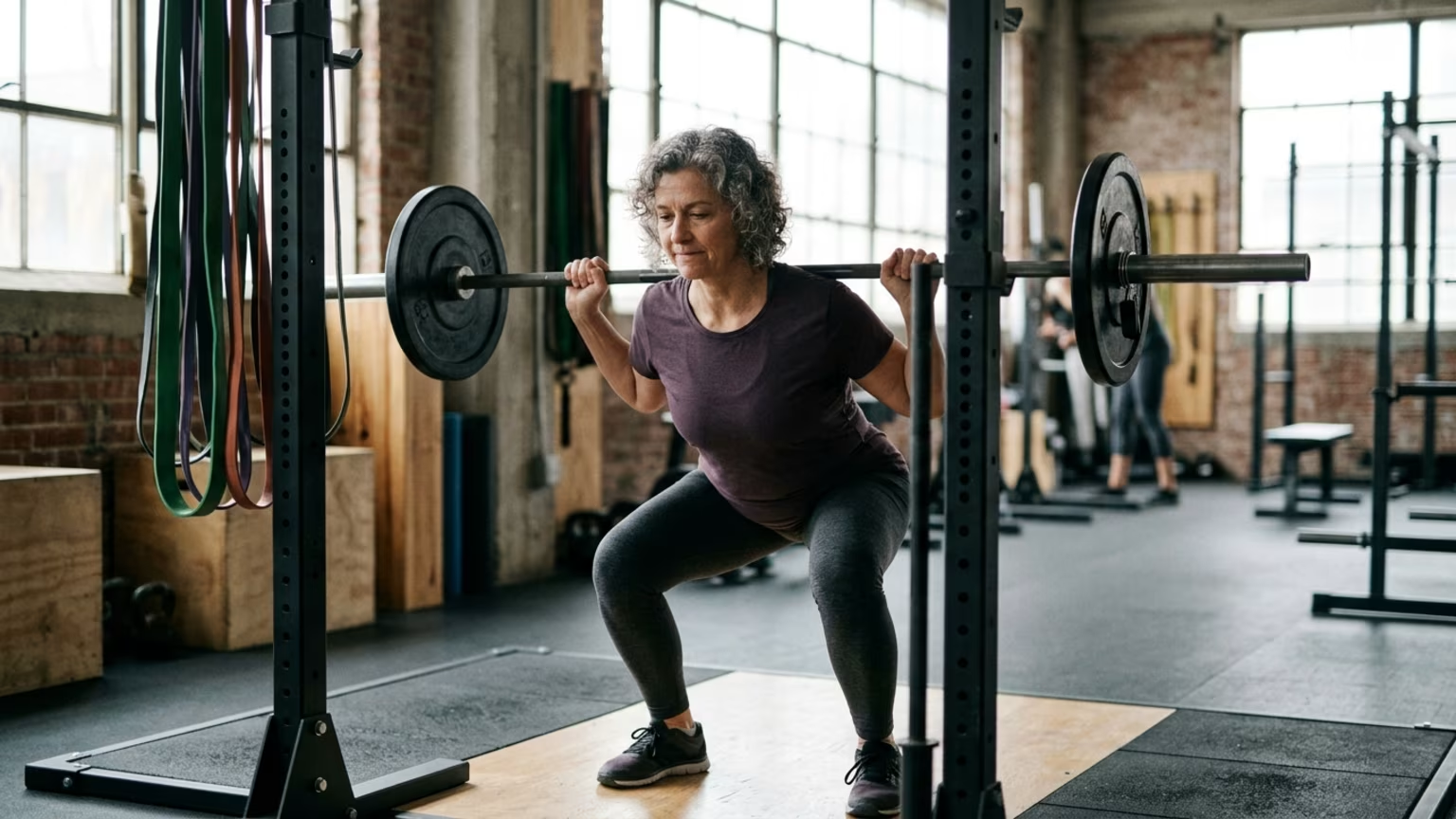

Learn how one woman began strength training at 57 and developed a consistent routine by age 64. Explore her approach to lifting, frequency, and daily movement.





On October 3, 2026, Women’s Health UK published a primary report detailing the first-person account of Tina Lacy, a woman who began strength training at 57 and shared the exact routine she follows at 64.
For decades, the standard medical consensus for aging women centered almost entirely on light cardiovascular activity and gentle mobility work. Women in their fifties and sixties were rarely advised to lift heavy weights or pursue structured progressive overload. Instead, health guidance typically framed midlife movement around minimizing strain. This outdated standard of care often overlooked the physiological necessity of maintaining muscle mass.
The assumption was that strenuous resistance training was inappropriate or unnecessarily risky for women navigating their late fifties and sixties. Consequently, many individuals entered their postmenopausal years without a clear framework for building physical power. Heavy lifting was seen as the domain of younger athletes rather than a fundamental component of longevity. Now, emerging personal accounts challenge this cautious approach. They highlight that building strength later in life is both possible and profoundly beneficial for long-term capability.
The Women’s Health UK report provides concrete details about how strength training applies to a midlife individual. This updated personal protocol outlines a highly specific approach to weekly exercise.
The detailed six-day routine provides an interesting look at an established physical practice. However, it is not presented as an entry point for beginners. Lacy says she started with just two strength sessions a week before building up her training frequency over several years. She initially worked with a trainer to learn proper form and grasp the concept of progressive overload. For someone feeling intimidated, this account supports a modest and manageable starting point. She says she began with two weekly sessions because that felt doable to her.
Over time, she increased her sessions with the coach to four days a week. It was only after her trainer moved away in early 2025 that she began programming her own workouts. This gradual progression illustrates how an individual can safely develop independence in the weight room. Women considering a new fitness regimen should not infer that they need her exact exercise list or weekly schedule right away. Developing a consistent habit requires finding a rhythm that fits your current capability. Working with a professional initially can provide the foundation needed for long-term safety.
Lacy’s use of staple exercises points to a focus on foundational movement patterns. These compound movements engage multiple muscle groups simultaneously. A typical midlife resistance plan often relies on these basics because they mimic everyday physical tasks. Squatting translates directly to standing up from a low chair. Deadlifting mirrors the mechanics of picking heavy items safely off the floor.
Targeting the back and shoulders through presses and lat pulldowns also serves a practical purpose. Upper body strength often declines rapidly during midlife if left untrained. Maintaining capability in the shoulders and back supports better posture and makes carrying heavy items significantly easier. Connecting physical movement with mental fitness and confidence is crucial for long-term adherence. Taking the time to master these mechanics removes much of the anxiety associated with heavy lifting.
Many midlife women feel overwhelmed by the expectation to perform high-intensity cardio alongside heavy lifting. Seeing a real-world example of a regimen that omits traditional cardio in favor of walking and lifting can be reassuring. The report says Lacy walks 10,000 to 12,000 steps a day and stretches for 30 minutes three to four times a week. She manages to accomplish this high activity level without relying on traditional aerobic sessions. This combination of resistance work, daily movement, and active recovery offers a comprehensive template for physical maintenance.
You do not necessarily need to spend hours on an elliptical machine to maintain health. A structured lifting practice combined with regular walking provides substantial physiological benefits. Supporting this level of activity requires thoughtful attention to consistent nutrition and energy balance. Providing the body with adequate fuel to recover is vital when managing a high step count alongside frequent lifting.
Committing to a six-day training split requires significant recovery capacity. Lacy’s routine is highly structured. She designates specific days for the lower body, shoulders, glutes, chest and back. This level of frequency represents an advanced personal practice rather than a medical recommendation for the general public. For most women navigating the physical changes of midlife, working out nearly every day may not align with their energy levels. Rest and recovery are crucial components of any physical protocol.
Lacy intentionally programs a full rest day on Monday. However, the report does not detail how she manages fatigue or makes adjustments for minor injuries. Because her account omits the specific loads she lifts or her proximity to muscular failure, readers cannot fully evaluate the physical toll of her program. Trying to replicate a six-day schedule without a long history of adaptation could easily lead to overtraining. Building up slowly allows tendons and ligaments adequate time to adapt to new mechanical stress.
Lacy describes feeling increased strength, confidence, and muscle definition following her routine. She also highlights the practical benefit of being able to play with her grandchildren. While the article does not report clinical measurements establishing those specific outcomes, her self-reported experiences reflect common motivations for midlife women. The desire to stay independent as you get older often drives the decision to start lifting weights. Physical capability translates directly into daily freedom and improved quality of life.
Women in their late thirties through their sixties often face a barrage of conflicting information about exercise. Much of the available media treats every bodily change as a problem requiring a specific, aggressive intervention. Understanding the measurable impact of treatments on changes in midlife strength and body composition requires separating medical facts from commercial marketing. Lacy’s story illustrates a grounded path centered on building muscle to maintain physical autonomy.
Another critical element of Lacy's success is her training environment. She reports completing her six weekly sessions in a home gym. For many midlife women, the atmosphere of a commercial fitness facility can feel intimidating or inconvenient. Having a dedicated space at home removes the barrier of travel time and allows for complete privacy during a workout. This setup often makes it easier to maintain consistency, especially on days when motivation is low or schedules are tight.
A home gym does not necessarily require a massive financial investment or extensive square footage. While the report does not detail the specific equipment Lacy uses, staple movements like squats and shoulder presses can easily be performed with a set of dumbbells or kettlebells. Building a functional home setup allows women to integrate movement and hormonal change management seamlessly into their daily lives. The convenience factor plays a massive role in whether a fitness habit survives beyond the first few months.
One notable aspect of Lacy’s reported routine is her strategy for variation. The report notes that she changes her specific exercises every six weeks. This periodic adjustment is a common technique in strength training to prevent plateaus and maintain muscular adaptation. Changing movements alters the mechanical stress placed on the body, forcing the nervous system to coordinate slightly different firing patterns. This approach keeps the workouts challenging without requiring a completely new program every time you exercise.
However, variation does not mean abandoning the basics. Even when switching exercises, maintaining foundational movement patterns like pushing, pulling, and hinging is highly effective. Lacy’s continued reliance on core lifts demonstrates that you can achieve variety while still honoring the fundamental mechanics of the human body. Finding this balance helps sustain interest and motivation over a multi-year training journey.
Building meaningful muscle mass in midlife does not happen overnight. Lacy’s journey from starting at age 57 to her current routine at 64 represents seven years of dedicated effort. This timeline is an excellent reminder that physical transformation is a long-term commitment. Many commercial fitness programs sell the promise of rapid results, which often leads to disappointment and early dropout. True structural changes to the body demand months and years of persistent, repetitive effort.
Accepting this longer timeline can actually relieve much of the daily pressure associated with exercise. If a single workout goes poorly, or if you miss a few days due to travel, it does not derail a multi-year process. Lacy’s ability to maintain her regimen through her late fifties and into her sixties highlights the power of stubborn consistency. Treating strength training as a permanent addition to your lifestyle changes how you view progress and physical resilience.
These documented personal accounts and shifting fitness narratives will encourage clinicians to prescribe structured, progressive resistance training as a foundational medical intervention for healthy aging rather than relying solely on gentle aerobic movement.
Once you decide to incorporate structured weight training into your weekly routine, understanding how physical exertion interacts with your shifting biology becomes critical. Health content that treats every problem as a supplement, hormone or weight-loss opportunity often obscures the practical reality of maintaining muscle, but Refemina translates credible evidence into clear adult guidance to help you build physical capability on your own terms.

Follow Refemina for research-led insights on menopause, strength, metabolism, nutrition, skin, intimacy and confidence through midlife. New articles turn complex topics into clear, useful context.






Keep learning about the changes that shape energy, strength, confidence and wellbeing through midlife.
Explore Resources