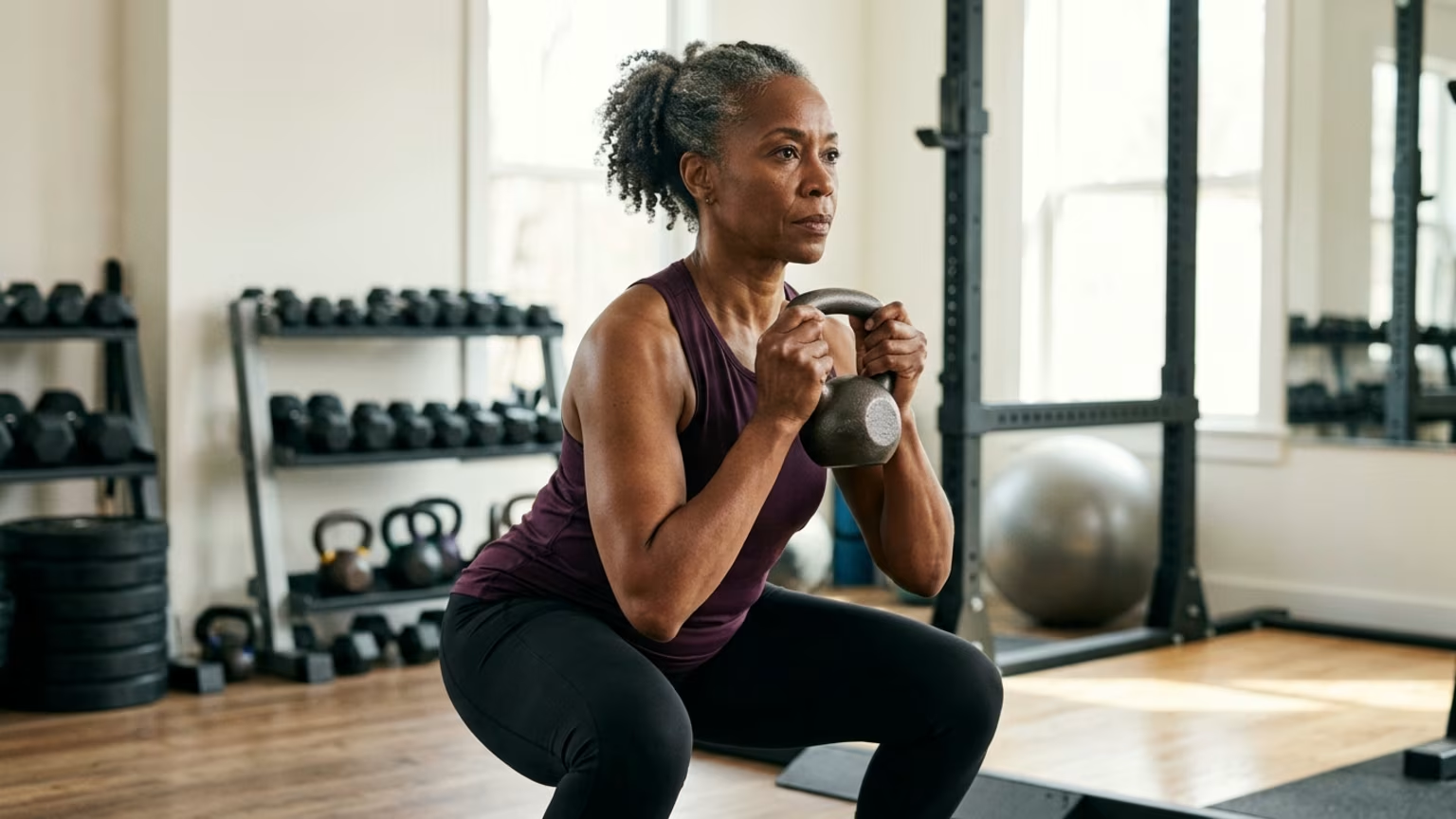

A practical guide to strength training through menopause, detailing clinical evidence on resistance, impact exercise, and building a sustainable routine.





The most notable data point from recent clinical research is the 2.9 percent increase in lumbar-spine bone mineral density observed during the LIFTMOR trial. Researchers compared this outcome against a 1.2 percent decrease in the control group. They also tracked hip measurements during the intervention. They found that femoral-neck density changed by 0.3 percent in the training group versus a 1.9 percent decrease in controls.
These figures show that specific loading protocols can influence skeletal health after menopause. The LIFTMOR randomized controlled trial studied postmenopausal women with osteopenia or osteoporosis using supervised high-intensity resistance and impact training. This clinical context dictates how we interpret the results. The supervised environment meant that vulnerable participants lifted heavy loads safely. These findings highlight what is possible under professional guidance, but they do not represent a universal beginner prescription.
Researchers gather data by tracking participants over extended periods. Clinical trials often place postmenopausal women into supervised exercise groups to monitor their form and progressive load. A supervised setting isolates the physiological effects of resistance training from other lifestyle factors. Measuring bone mineral density before and after the intervention provides concrete evidence of skeletal changes.
General guidance bodies review these clinical outcomes to establish baseline health targets. Bupa gives 150 minutes of moderate-intensity activity per week as an example target. This aerobic recommendation is typically paired with regular strength-building sessions to support overall function. Reviewing multiple trials helps organizations determine which combinations of movement yield the highest physical returns. Researchers consistently find that mixing different exercise modalities creates a robust defense against physical decline.
Understanding patient demographics helps clarify which recommendations apply to your life. The women in the LIFTMOR trial already presented with documented low bone mass. These specific patients required strict professional oversight to safely execute high-intensity resistance and impact training. Applying their exact protocol to a healthy beginner without supervision would be inappropriate.
General exercise guidelines target a much broader demographic of midlife women. The recommendations apply to individuals navigating hormonal transitions who want to preserve their muscle mass and physical independence. Two non-consecutive weekly sessions provide a reasonable starting rhythm for many beginners. Women dealing with significant joint pain or severe pelvic-floor symptoms require individualized advice before attempting heavy lifting. Consulting a professional helps these individuals modify exercises to suit their specific capabilities.
Starting a new physical routine requires a focus on habit formation rather than extreme effort. A practical starting point for many women is two or three full-body resistance sessions per week. You do not need to train every single day to see physical improvements. Two non-consecutive weekly sessions provide a reasonable starting rhythm for many beginners, which leaves ample time for rest and normal daily activities.
During your first two weeks, the primary goal is movement practice. For a beginner, two or three work sets of roughly six to twelve repetitions is a commonly used starting range in menopause-focused strength programmes. You should pick a weight that allows you to complete every repetition with strict control, leaving a few repetitions in reserve to prevent extreme muscle soreness. You can read articles on strength and body composition to better understand how your body adapts to these initial workouts.
Clinical guidance prioritizes how the body moves in daily life. These movement examples are consistent with exercise recommendations that include squats, lunges, step-ups, deadlifts or hip hinges, calf raises, presses and rows. You do not need complex machines to train these foundational movement patterns. A balanced programme targets all major muscle groups through simple mechanics.
You can organize a full-body workout around several foundational categories. Knee-dominant exercises like squats or step-ups build foundational leg strength. Hip-dominant movements like deadlifts train the posterior chain. Push and pull exercises develop upper body capability for daily tasks. Carry or trunk work supports the core stability required for lifting heavy objects.
Your body will adapt to a new exercise routine over time. You must increase the physical challenge gradually to continue seeing improvements in muscle tissue. Adding a small amount of resistance is one practical way to force further physical adaptation. You can also add one repetition to your sets or focus on improving your range of motion.
Progress does not mean pushing your body to complete physical failure. A load is appropriate when it makes the final repetitions in a set meaningfully challenging. You can alternate harder training days with lighter sessions focused entirely on technique. Adjusting your effort based on your sleep quality is a sustainable long-term strategy. Bupa gives 150 minutes of moderate-intensity activity per week as an example target, which you can meet through gentle walking on your recovery days.
Strength training addresses muscle force, but you also need neurological control to prevent falls. Functional exercise teaches your nervous system how to manage physical force while moving through space. Clinical reviews note that effective bone-health programmes frequently integrate balance practice alongside resistance training. This combination offers a comprehensive approach to maintaining your physical longevity.
You can easily integrate balance practice into your daily schedule. Simple options include standing on one leg near a kitchen counter or practising slow step-downs on a staircase. You might also try heel-to-toe walking along a clear hallway for several minutes. Practising balance exercises a few times a week yields meaningful improvements in physical stability. Exploring midlife health resources can offer more ideas for integrating movement into a busy day.
Skeletal loading involves more than just lifting dumbbells. Impact exercise can include brisk walking, stair climbing, dancing, jogging, hopping, skipping or changes of direction. These movements ask your skeletal system to absorb and adapt to physical forces. You can introduce impact gradually based on your current fitness and joint comfort.
Not all impact is appropriate for every single person. Exercise recommendations specifically identify hopping, jumping, skipping and changes of direction as higher-impact options that must be appropriate for the individual. You should skip jumping entirely if you have poor landing control or joint pain. A brisk walk or a lively dance session provides excellent physical benefits with far less joint stress.
Hormonal transitions can introduce sleep disruption and fluctuating energy levels that impact your physical capacity. You must adjust your training to your actual energy on any given day rather than forcing a rigid schedule. On days when fatigue is high, choosing machine exercises or supported variations provides a safer training environment. A lighter session maintains your training habit without turning temporary exhaustion into a multi-day setback.
Persistent pain or recurrent injuries warrant clinical assessment rather than simply changing your workout variables. Recovery is not a reason to avoid strength training entirely, but it dictates how much space you leave between sessions. Two non-consecutive weekly sessions provide a reasonable starting rhythm for many beginners because they accommodate this need for recovery. Listening to your body means that you can sustain your physical practice across the years.
Understanding the research helps you make informed choices about your physical boundaries. The LIFTMOR randomized controlled trial studied postmenopausal women with osteopenia or osteoporosis using supervised high-intensity resistance and impact training. The professional supervision meant that vulnerable participants executed the movements safely. You should seek similar individualized guidance if you have a history of bone loss.
Exercise provides a foundation for confidence, resilience and physical independence. It is not a guaranteed remedy for hot flashes or natural physiological aging. Keeping your expectations grounded in clinical reality helps you maintain a positive relationship with movement. Finding trustworthy guidance on midlife health helps you separate evidence-based practices from aggressive fitness marketing.
When health content treats every problem as a supplement, hormone or weight-loss opportunity, building a sustainable strength routine can feel unnecessarily complicated. Refemina clarifies the clinical data on resistance and impact training, helping you improve your physical capability without symptom panic or anti-aging pressure. Explore Resources

Follow Refemina for research-led insights on menopause, strength, metabolism, nutrition, skin, intimacy and confidence through midlife. New articles turn complex topics into clear, useful context.




Keep learning about the changes that shape energy, strength, confidence and wellbeing through midlife.
Explore Resources