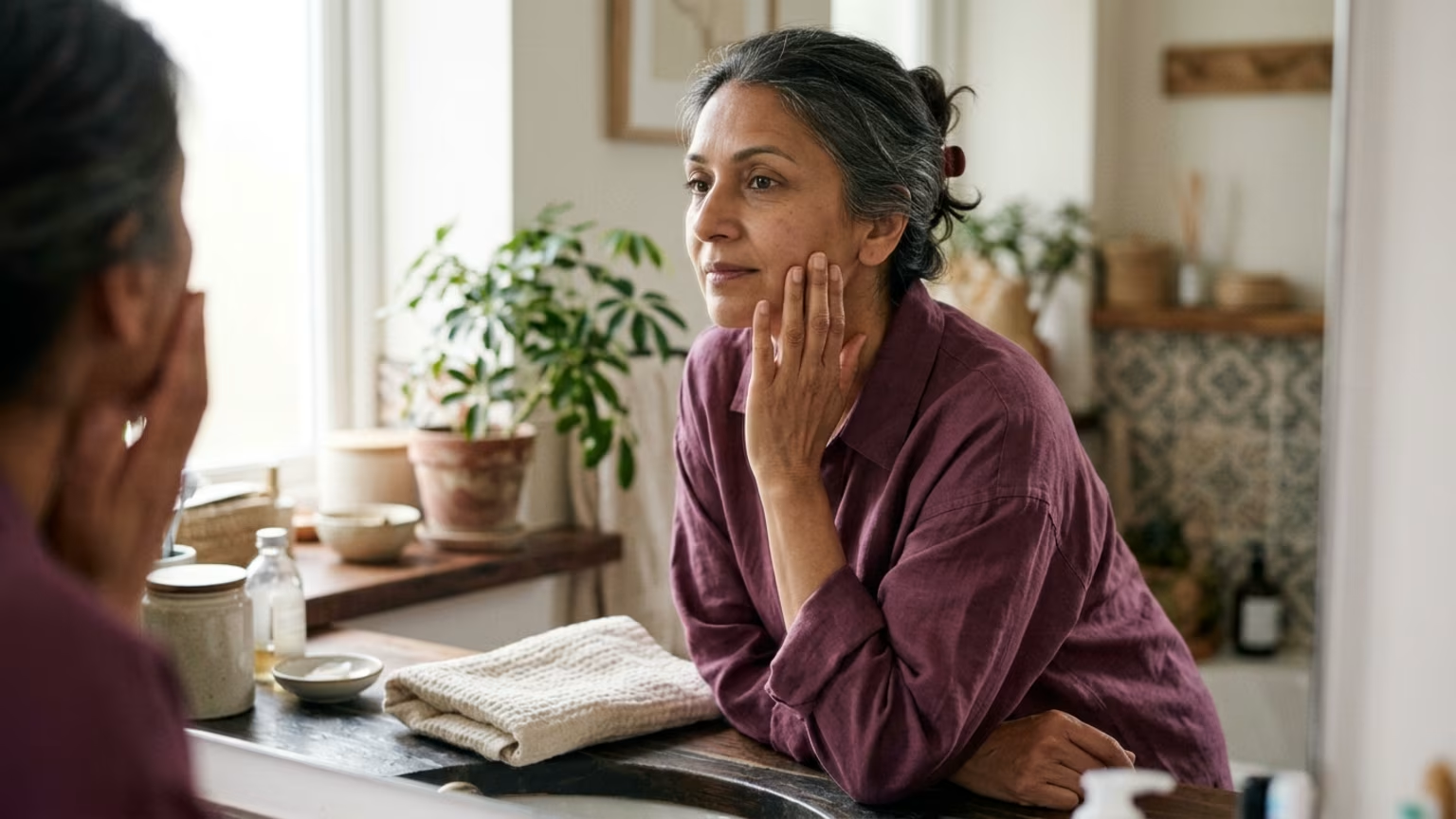

WHO’s early-menopause feature calls for stronger long-term evidence. Here is how to read its relevance to skin changes and treatment claims.





On 16 October 2026, the World Health Organization (WHO) published a feature on early menopause that recognised skin changes among its possible effects and called for stronger long-term evidence on the safety and effectiveness of menopause care.
The earlier research picture described in WHO’s feature was centred on menopause at a more typical age. Priya Satalkar-Götz, the physician and scientist interviewed for the story, says her review of literature from 2012 to 2015 found very little evidence directly addressing younger women. She says most research involved women reaching menopause around 51 in the European context.
The question raised is whether that evidence base adequately answers the needs of women experiencing menopause younger. WHO describes how uncertain evidence and missing guidance can leave clinicians taking different approaches. Its call updates the foundations for decision-making rather than overturning an established skin-care standard: research needs to reflect the women receiving care and the concerns they want addressed.
The WHO feature’s research priorities connect individual experiences with questions that studies and future guidance need to answer. For readers interested in skin health, these are the most relevant parts of the announcement:
The feature is framed around early menopause. Its research concerns should not be assumed to apply in exactly the same way to every menopause population. Recognition of skin symptoms also does not establish that hormonal change is the only explanation for an individual woman’s dryness or fragility.
In the interview, Satalkar-Götz describes very dry and fragile skin alongside disrupted sleep and emotional vulnerability. She says she began combined estrogen and progesterone replacement therapy 1.5 years after diagnosis and later experienced a significant improvement in physical and emotional wellbeing. That is a personal treatment account, not a controlled study showing that this therapy improves fragile skin or produces the same outcome in other women.
Personal experience has a place in understanding care. Here, it conveys the difficulty of making decisions when clear evidence is lacking and the value Satalkar-Götz places on being heard. It serves a different purpose from research designed to establish treatment effects.
The feature itself does not provide a skin-treatment protocol or criteria for choosing a particular therapy. Nor does its call for better research establish that existing treatments are unsafe or ineffective. Those distinctions leave room for useful discussion without turning the story into either a treatment endorsement or a warning against all treatment.
For persistent or troubling skin changes, especially when other symptoms are present, the practical next step is a discussion with a qualified clinician. WHO’s research priorities offer a useful framework for that conversation. They help move the discussion from whether something is marketed for menopause towards what evidence supports it for the concern at hand.
Useful questions include:
These are questions for shared decision-making rather than a way to select a treatment independently. A clinician can relate them to the person’s symptoms and circumstances. The purpose is to make the evidence discussion more specific without requiring a woman to arrive at an appointment having already solved the medical question herself.
For a broader skin-focused discussion, see Refemina’s coverage of dryness and sensitivity in midlife. Keeping the concern clearly described gives the conversation a starting point beyond the general label of menopause.
The practical value of WHO’s recognition is that skin concerns can be named within menopause care without becoming a demand for younger-looking skin. Dryness or fragility that feels troubling deserves a clearer conversation than whether a product carries a menopause label. The starting point is the experience a woman wants addressed rather than the category printed on packaging.
From an editorial perspective, comfort and confidence are legitimate reasons to take a skin concern seriously. Neither requires treating appearance as a problem to be corrected. The useful distinction is between giving a concern proper attention and assuming that attention must lead to a purchase or a particular medical treatment.
That is also a reason to read claims at the level of the promised outcome. A broad reference to hormones is not the same question as evidence for a specific intervention. Refemina’s guide to assessing menopause-related product claims offers related reading on keeping research and marketing separate.
WHO’s agenda gives this discussion a clear direction: define the concern and ask what evidence supports the proposed response. For skin health, that is a more useful standard than expecting one hormonal explanation to settle every question about appearance or comfort.
WHO’s research agenda points towards menopause care that matches each concern to relevant population evidence and longer-term safety findings, with skin health included in that assessment.
After the research priorities comes the task of reading everyday claims about menopause and skin; Refemina offers evidence-led context for that stage. For women repeatedly offered hormones, supplements or weight loss as the answer to physical change, its coverage connects skin and hair with the wider midlife experience without selling fear or youth.

Follow Refemina for research-led insights on menopause, strength, metabolism, nutrition, skin, intimacy and confidence through midlife. New articles turn complex topics into clear, useful context.


Keep learning about the changes that shape energy, strength, confidence and wellbeing through midlife.
Explore Resources