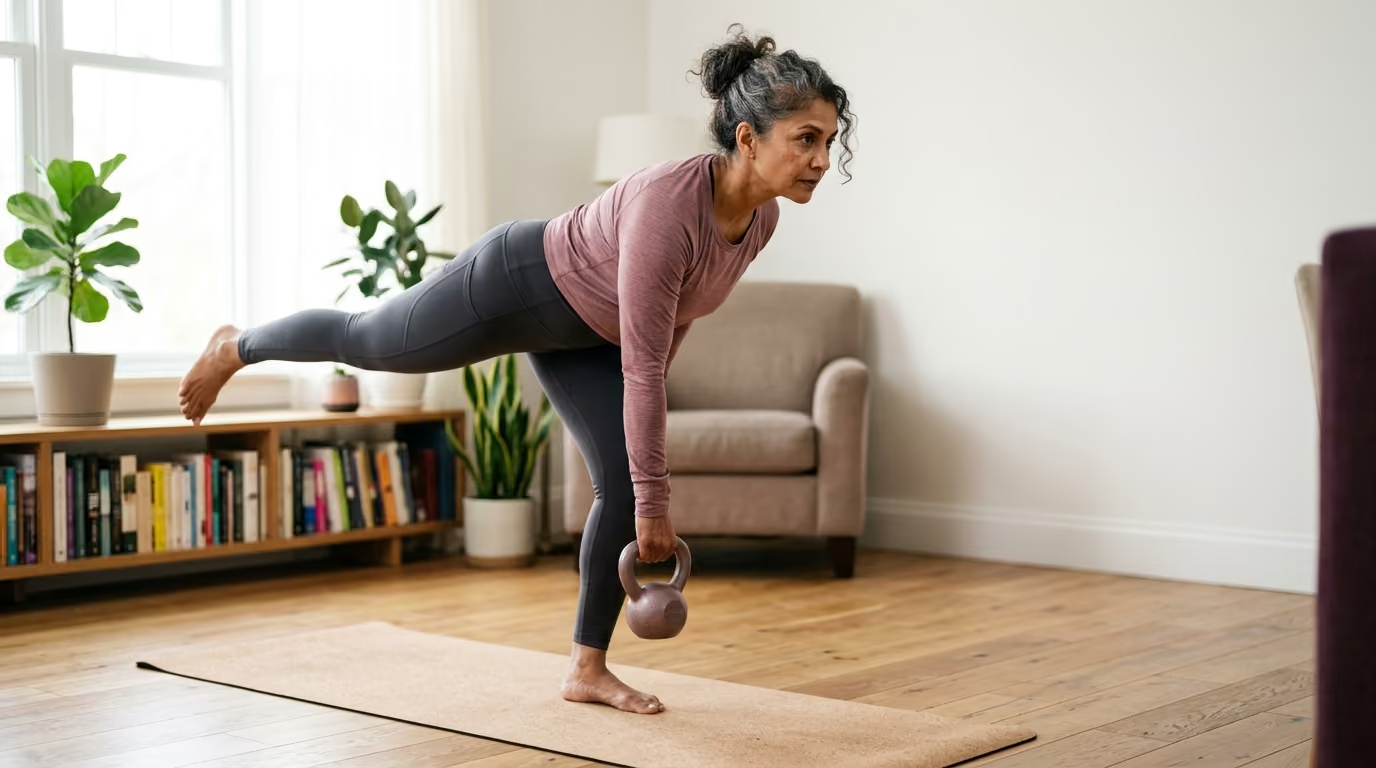
Many women in their forties and fifties search online for phrases like "why is my balance suddenly worse" after catching a foot on an uneven sidewalk or feeling hesitant while walking down a steep flight of stairs. It is common to wonder whether these moments are an inevitable sign of aging or an early loss of coordination. The clear, evidence-based answer is that balance is not an unchangeable trait. It is a trainable physical skill supported directly by muscular strength, joint control, and sensory integration.
When you treat balance, stability, and lower-body strength as connected components of the same system, you can move with authority across changing terrain, stairs, and daily tasks. This guide outlines the physiological foundations of stability, explains how the body adapts during the midlife transition, and provides a structured strength framework to build lasting physical reserve.
Scientific Foundations of Midlife Stability
Current clinical evidence shows that balance, stability, and lower-body strength work as a unified physical system. Strength provides the raw force required to move your body. Balance organizes your center of mass over your base of support. Stability allows you to control that force while your limbs move or your environment shifts.
Systematic reviews demonstrate that multicomponent training programs combining progressive resistance training, dynamic balance, gait drills, and functional movement produce the greatest improvements in physical capacity. World health guidelines recommend that adults participate in muscle-strengthening activities involving all major muscle groups at least two days per week. For aging populations, adding multidirectional functional balance challenges on three or more days per week significantly reduces fall rates.
- MULTICOMPONENT TRAINING FOUNDATION
- Strength (Force) Balance (Alignment) Stability (Control)
Research examining resistance training in midlife and older adults confirms that skeletal muscle retains its capacity to adapt well into the postmenopausal years. Middle-aged women who participate in progressive resistance training twice weekly demonstrate measurable increases in lean muscle mass, improved squat strength, and enhanced motor recruitment. Clinical trials evaluating low-impact resistance programs show that hormonal shifts during the menopause transition do not prevent women from making meaningful gains in hip strength and standing balance.
Meta-analyses also indicate that low to moderate resistance training volumes can substantially improve everyday physical function and support lean tissue. Higher training volumes may produce greater absolute strength increases, but even minimalist programs create a protective physical reserve. Resistance training builds the capacity to handle high-demand moments, such as catching your footing after a stumble or carrying heavy bags up a flight of steps.
Physiological Changes and Midlife Motor Control
Midlife brings biological shifts that influence how your muscles, joints, and nervous system communicate. Understanding these physiological mechanisms removes fear and allows you to target your training effectively.
Muscular Architecture and Force Development
Beginning in the late thirties, natural age-related processes lead to a gradual reduction in muscle mass and muscle fiber quality if resistance training is not present. This shift particularly affects fast-twitch muscle fibers, which are responsible for rapid force production. When you trip over a rug, your nervous system must recruit muscle fibers within milliseconds to plant your foot and arrest your forward momentum.
During the menopause transition, fluctuations and eventual declines in circulating estrogen can influence muscle protein synthesis and tendon stiffness. Estrogen receptors are present throughout female skeletal muscle and connective tissue. While lower hormone levels can alter baseline tissue recovery, they do not stop muscle fibers from responding to mechanical tension. By applying progressive overload through structured strength and body composition training, you stimulate muscle protein synthesis and maintain rapid force development.
Sensory Integration and Balance Systems
Your brain maintains balance by continuously integrating signals from three distinct systems:
- The visual system: provides spatial reference points and tracks horizon changes.
- The vestibular system: located in the inner ear, detects head position, tilt, and rotational acceleration.
- The proprioceptive system: sensory receptors located within your joints, muscles, ligaments, and the soles of your feet that report body position in space.
In midlife, subtle changes can occur across all three streams of information. Changes in near vision or depth perception can make negotiating curbs under low lighting more challenging. Reductions in joint proprioception can delay the micro-adjustments your ankles make on cobblestones or gravel. Structured movement training forces these three sensory systems to practice working together under controlled conditions.
Foot and Ankle Mechanics
Your feet are your primary interface with the ground. Each foot contains dozens of joints, muscles, and specialized nerve endings that sense pressure distribution. Footwear with narrow toe boxes or rigid soles can reduce the natural mobility of the foot tripod, which consists of the heel, the base of the big toe, and the base of the little toe.
When foot intrinsic muscles lose strength, the ankle joint must compensate. This compensation often reduces dorsiflexion, which is the ability to draw your toes upward toward your shin. Limited ankle mobility directly affects stair navigation and squat depth. Training the muscles of the lower leg, ankle, and foot restores the foundation required for whole-body stability.
Real-World Movement and Everyday Mechanics
Static balance, such as standing motionless on one leg on a flat studio floor, is only the beginning of functional capability. Real life is dynamic, unpredictable, and multidirectional. Daily activities require you to control force while moving, turning, carrying uneven loads, and reacting to changing surroundings.
Stair Navigation and Eccentric Force
Walking down stairs is one of the most mechanically demanding daily activities for midlife women. Descending stairs requires eccentric strength, where the quadriceps and gluteal muscles lengthen under load to brake your body weight against gravity.
- Stair Descent Demand
- Body Weight Gravity
- Single-Leg Stance
- Eccentric Muscle Lengthening / Braking
If eccentric strength is insufficient, your body relies on joint structures, which can cause knee discomfort or a feeling of instability. Descending stairs also reduces visual feedback because your leading leg temporarily blocks your view of the step below. Building single-leg eccentric strength removes the feeling of falling into the next step and gives you smooth, controlled braking power.
Variable Terrain and Reactive Stepping
Walking on packed dirt trails, grass, icy sidewalks, or broken concrete requires rapid, subconscious adjustments. When your foot hits an unexpected slope, your ankle must articulate while your hip abductors, primarily the gluteus medius, stabilize your pelvis.
If your hip abductors are weak, your pelvis drops on the unsupported side, throwing your torso off balance. Training lateral movement patterns and single-leg stability ensures your hips can hold your pelvis level during every single stride.
Carrying Loads and Locomotion
Everyday life rarely distributes weight evenly. Carrying a heavy tote bag on one shoulder, holding a bag of groceries in one hand, or carrying a grandchild on one hip creates rotational and lateral pulling forces on your spine.
Controlling these asymmetrical forces requires strong core integration. Your abdominal wall, deep spinal stabilizers, and hips must resist unwanted twisting or side-bending while your legs continue to walk forward. Exercises like offset carries prepare your body directly for these daily tasks.
Floor Transfers and Spatial Confidence
The ability to get down to the floor and return to standing with ease is an essential marker of long-term functional autonomy. Floor transitions require a combination of hip flexion, knee range of motion, toe extension, and upper-body pushing strength.
Women who avoid getting down to the floor often lose the specific mobility and strength patterns needed to get up smoothly. Practicing half-kneeling transitions, lunges, and controlled floor transfers restores physical confidence and reduces the anxiety associated with losing balance. Exploring these practical movement strategies is a central theme within our menopause and midlife health resources.
The Four-Layer Training Framework
To build a resilient physical foundation, training should follow a clear architectural hierarchy. Jumping straight into complex balance exercises on unstable surfaces before establishing baseline strength can limit your progress. The framework below organizes movement into four progressive layers.
- LAYER 4: Force Under Uncertainty (Reactive Drills)
- LAYER 3: Force Under Movement (Carries, Locomotion)
- LAYER 2: Force Control (Eccentric & Unilateral Work)
- LAYER 1: Force Production (Bilateral Strength Base)
Layer 1: Force Production
Force production is your baseline capacity to generate muscular tension against resistance. Without sufficient raw strength, balance strategies cannot succeed because your muscles lack the power to push you back to center.
- Primary objective: Increase the maximum force capacity of the quadriceps, glutes, hamstrings, and calves.
- Core movements: Chair sit-to-stands, goblet squats, Romanian deadlifts, glute bridges, and standing double-leg calf raises.
- Key focus: Maintaining a stable foot tripod, tracking knees over toes, and maintaining a neutral spine under load.
Layer 2: Force Control
Force control is the capacity to apply and absorb force slowly, smoothly, and without unwanted joint collapse. This layer develops eccentric braking power and unilateral stability.
- Primary objective: Control movement speed, stabilize the pelvis on one leg, and eliminate dynamic knee collapse.
- Core movements: Slow-tempo box squats, supported split squats, low step-downs, and assisted single-leg Romanian deadlifts.
- Key focus: Lowering under control for three to four seconds before returning to the start position.
Layer 3: Force Under Movement
Force under movement introduces locomotion, load asymmetry, and changes of direction. This layer bridges the gap between traditional gym exercises and real-world walking mechanics.
- Primary objective: Maintain trunk and pelvic alignment while the base of support travels through space.
- Core movements: Suitcase carries, farmer walks, lateral band walks, multidirectional lunges, and walking step-ups.
- Key focus: Resisting torso lean, keeping steps smooth, and maintaining steady breathing.
Layer 4: Force Under Uncertainty
Force under uncertainty trains the nervous system to react to unexpected disturbances, varied foot positions, and dual-task demands.
- Primary objective: Improve reactive stepping speed, recovery mechanics, and spatial orientation.
- Core movements: Controlled perturbation holds, multidirectional step-and-holds, obstacle step-overs, and walking with head turns.
- Key focus: Stepping quickly to re-establish a stable base of support without panic.
Self-Assessment and Functional Benchmarks
Before beginning a new strength and balance program, objective self-assessments can help you identify your current baseline. These screening tools provide clear performance markers that you can retest every eight to twelve weeks to track your functional gains.
Perform all self-assessments near a sturdy wall, counter, or stable chair so you can reach out for support if you feel unsteady.
The 30-Second Chair Stand Test
This validated functional measure evaluates lower-body force, movement speed, and muscular endurance.
- 30-Second Chair Stand Setup
- 1. Standard sturdy chair (approx. 17 inches high), placed against a wall.
- 2. Sit tall with feet flat on the floor, hip-width apart.
- 3. Cross your arms across your chest so your hands rest on opposite shoulders.
- 4. On a timer, rise to a full standing position and sit back down as many times as possible in 30 seconds.
- 5. Count only completed repetitions where you reach full hip and knee extension.
Completing fewer than 12 to 14 stands in 30 seconds suggests that building basic knee and hip extension strength should be your initial training priority.
The Four-Stage Balance Test
Developed by the Centers for Disease Control and Prevention as part of functional fall-risk assessment tools, this test evaluates static postural control across progressively narrower bases of support.
Stand near a wall or solid counter. Attempt to hold each of the following four positions for 10 seconds without holding onto support:
- Feet Together: Stand with your feet side by side, touching at the ankles and big toes.
- Semi-Tandem Stance: Place one foot slightly forward so the instep of your front foot touches the side of your back big toe.
- Full Tandem Stance: Place one foot directly in front of the other, with the heel of the front foot touching the toes of the back foot.
- Single-Leg Stance: Lift one foot off the ground without allowing your legs to touch, holding your weight entirely on one leg.
If you cannot hold the tandem stance or single-leg stance for 10 seconds without grabbing support, your program should emphasize ankle stability, hip abductor strength, and supported single-leg progressions.
The Step-Down Quality Audit
This test assesses eccentric quadriceps strength, ankle dorsiflexion, and hip stability.
- Stand on a low step or yoga block (two to four inches high).
- Place your hands on your hips.
- Slowly lower your non-weight-bearing heel toward the floor in front of you by bending your standing knee and hinging slightly at the hip.
- Lightly tap your heel to the floor without shifting your weight onto it, then push through your standing foot to return to the top.
Observe whether your standing knee caves inward toward the midline, whether your pelvis drops downward on the floating side, or whether you drop suddenly onto the lower heel. Controlled, smooth execution confirms good eccentric force control.
Progressive Movement Architecture and Exercise Design
The following comprehensive movement library is organized by movement pattern. Each exercise includes step-by-step execution cues, regression options for beginners, and progression options for experienced lifters.
Knee-Dominant Strength Patterns
Knee-dominant movements build the quadriceps and gluteal strength necessary for rising from deep seating, climbing steep inclines, and descending stairs.
1. The Goblet Box Squat
This movement teaches symmetrical force production and safe hip-hinge mechanics while providing a reliable depth target.
- Setup: Stand four inches in front of a sturdy chair or workout bench with feet shoulder-width apart, toes turned outward 15 degrees. Hold a light dumbbell or kettlebell vertically against your sternum with both hands.
- Execution: Inhale, brace your midsection, and push your hips back while bending your knees. Lower yourself under control for three seconds until your glutes lightly contact the chair seat without relaxing your torso. Exhale, drive your feet through the floor, and stand up tall, fully extending your hips and knees.
- Regression: Perform the movement without added weight, using a slightly higher chair or placing a firm cushion on the seat.
- Progression: Remove the chair target, increase the dumbbell weight, or pause for two seconds just above the seat before standing.
2. The Supported Split Squat
Split squats build unilateral leg strength while keeping both feet on the ground, creating a stable environment for building hip and quadriceps power.
- Supported Split Squat Mechanics
- Hand on Wall for Light Balance
- Front Foot Flat
- Back Foot on Ball of Toes
- Descend Straight Down: 90-degree Front Knee & 90-degree Back Knee
- Setup: Stand next to a wall or sturdy railing. Step your left foot back three to four feet, resting on the ball of your left foot with your heel elevated. Place your right hand lightly on the wall for balance.
- Execution: Lower your torso straight down toward the floor by bending both knees simultaneously. Lower until your back knee hovers two to three inches above the floor, keeping your front shin relatively vertical and your front heel firmly planted. Push through your front heel and midfoot to return to the starting position.
- Regression: Reduce the depth of the lunge, or place a yoga block under your back knee as an elevation target.
- Progression: Remove hand support from the wall, hold light dumbbells at your sides, or elevate your front foot on a two-inch plate to increase range of motion.
Hip-Dominant Strength Patterns
Hip-dominant movements strengthen the posterior chain, including the gluteus maximus, hamstrings, and spinal extensors, which power forward propulsion and protect the lower back.
1. The Romanian Deadlift
The Romanian deadlift trains hip-hinge mechanics and builds the eccentric hamstring strength needed to steady your upper body over your pelvis.
- Setup: Stand tall with feet hip-width apart, holding a pair of dumbbells in front of your thighs with an overhand grip. Soften your knees slightly and pull your shoulder blades gently back.
- Execution: Keeping your back flat and your shins vertical, push your hips straight back toward the wall behind you. Slide the weights down along the front of your thighs until you feel a moderate stretch in your hamstrings, typically around knee to mid-shin height. Squeeze your glutes and drive your hips forward to return to an upright standing posture.
- Regression: Perform the movement with a light dowel or broomstick held along your spine to learn the hip hinge without external load.
- Progression: Increase the weight of the dumbbells, or use a barbell while maintaining strict three-second lowering tempos.
2. The Assisted Single-Leg Romanian Deadlift
This exercise develops unilateral posterior chain strength, challenges foot stability, and builds rotational control through the pelvis.
- Setup: Stand on your right leg with a light wall or chair support on your left side. Hold a light dumbbell in your left hand.
- Execution: Soften your right knee. Hinge at your right hip, reaching your left leg straight back behind you as a counterweight while your torso lowers toward the floor. Keep your hips square to the ground without letting your left hip flare open toward the ceiling. When your torso is roughly parallel to the floor, push through your right foot to return to standing.
- Regression: Use a "kickstand" stance where your back left toes remain resting lightly on the floor ten inches behind you to provide balance assistance.
- Progression: Remove hand support, increase the weight held in the hand, or perform the movement with the weight in the same hand as the working leg to alter rotational demands.
Lower Leg, Ankle, and Foot Integration
Lower-leg exercises improve foot mechanics, strengthen the Achilles tendon, and build the ankle stiffness needed for rapid balance recovery.
1. The Deficit Heel Raise with Controlled Lowering
Strengthening the gastrocnemius and soleus muscles supports ankle stability and push-off power during walking.
- Deficit Heel Raise Phasing
- 1. Concentric: Drive onto balls of feet (1 second)
- 2. Peak: Hold top contraction, full ankle extension (1 second)
- 3. Eccentric: Lower heel below step level under strict control (3 seconds)
- Setup: Stand with the balls of your feet on the edge of a sturdy step or wooden block, holding a railing for balance. Allow your heels to drop slightly below the step level.
- Execution: Drive through the balls of both feet, lifting your heels as high as possible while keeping your weight evenly distributed across your big and little toes. Hold the top contraction for one full second, then lower your heels back below the level of the step over a slow three-second count.
- Regression: Perform the heel raise flat on the floor without a deficit.
- Progression: Transition to a single-leg deficit heel raise, or hold a dumbbell in one hand while using the other for light balance.
2. The Tibialis Anterior Wall Raise
The tibialis anterior muscle runs down the front of your shin and lifts your foot during walking, preventing your toes from catching on rugs and uneven surfaces.
- Setup: Lean your upper back flat against a smooth wall with your feet placed approximately twelve to eighteen inches out in front of you, legs straight.
- Execution: Keeping your heels planted firmly on the floor and your knees straight, pull your toes and forefeet upward toward your shins as high as possible. Hold the top position for one second, feeling the muscles along the front of your lower legs contract, then slowly lower your toes back to the floor.
- Regression: Move your feet closer to the wall to decrease leverage.
- Progression: Move your feet further away from the wall, or perform the exercise standing on one leg.
Dynamic Stability and Locomotion Patterns
These movements train your body to maintain posture and alignment while walking, carrying loads, and navigating obstacles.
1. The Suitcase Carry
The suitcase carry challenges lateral core stability, grip strength, and single-leg support mechanics during walking.
- Setup: Pick up a moderately heavy dumbbell or kettlebell in your right hand only. Stand tall with your shoulders level, your ribs pulled down, and your left arm resting comfortably at your side.
- Execution: Walk forward in a straight line for 30 to 50 feet with slow, deliberate, heel-to-toe steps. Do not allow the weight to pull your torso to the right, and avoid leaning to the left to compensate. Turn around carefully, switch the weight to your left hand, and walk back.
- Regression: Use a lighter weight, or perform a two-handed farmer carry with equal weights in both hands.
- Progression: Increase the weight, narrow your walking path as if walking on a tightrope, or pause for two seconds on one leg during each step.
2. Multidirectional Step-and-Hold Drills
This drill trains reactive balance, hip deceleration, and spatial orientation across multiple movement planes.
- Clockface Stepping Vectors
- 12:00 Forward
- 9:00 Left
- Center
- 3:00 Right
- 6:00 Backward
- Setup: Stand tall in an open room with clear flooring, wearing supportive athletic shoes.
- Execution: Step your right foot forward firmly (12:00 on an imaginary clock face), immediately absorb the landing by bending your right knee, and hold a balanced, frozen stance for two full seconds. Push off your right foot to return to center. Repeat by stepping diagonally forward (1:30), directly to the side (3:00), diagonally backward (4:30), and straight backward (6:00). Complete a full cycle with the right leg, then repeat with the left leg.
- Regression: Keep the steps smaller and closer to center, with a hand hovering near a wall.
- Progression: Increase step distance and speed, or close your eyes during the two-second hold once your foot is firmly planted.
Structured Weekly Training Templates
Building strength and balance does not require hours of daily training. A structured program performed two to three days per week provides the stimulus needed for skeletal muscle and motor control adaptation. Explore our strength and metabolism articles for further programming context.
Two-Day Comprehensive Full-Body Program
This template is ideal for busy schedules or beginners establishing a regular resistance training habit. Allow at least 48 hours of recovery between sessions.
Session A (e.g. Tuesday)
- Warm-up: Ankle mobility circles, 10 bodyweight squats, 10 glute bridges, 30 seconds of tandem stance holds per side.
- Goblet Box Squat: 3 sets of 8 to 10 repetitions (Layer 1).
- Romanian Deadlift: 3 sets of 8 to 10 repetitions (Layer 1).
- Supported Split Squat: 2 sets of 8 repetitions per leg (Layer 2).
- Deficit Heel Raise: 3 sets of 12 to 15 repetitions (Layer 1/2).
- Suitcase Carry: 3 sets of 40 feet per side (Layer 3).
Session B (e.g. Friday)
- Warm-up: Standing hip openers, 10 wall squats, 10 marching steps with knee hugs, 10 tibialis wall raises.
- Assisted Single-Leg Romanian Deadlift: 3 sets of 8 repetitions per leg (Layer 2).
- Low Step-Downs (2 to 4-inch box): 3 sets of 8 to 10 repetitions per leg (Layer 2).
- Tibialis Anterior Wall Raise: 3 sets of 15 repetitions (Layer 1).
- Multidirectional Step-and-Hold Drill: 2 full clockface cycles per leg (Layer 4).
- Two-Handed Farmer Carry: 3 sets of 60 feet (Layer 3).
Three-Day Progressive Movement Program
This template allows for dedicated focus across strength, unilateral control, and dynamic stability.
Day 1: Force Base and Bilateral Strength
- Goblet Squat (Free-standing): 3 sets of 6 to 8 repetitions.
- Dumbbell Romanian Deadlift: 3 sets of 8 to 10 repetitions.
- Double-Leg Calf Raise on Step: 3 sets of 12 repetitions with a 3-second lowering tempo.
- Standing Anti-Rotation Press (Pallof Press): 3 sets of 10 repetitions per side.
Day 2: Unilateral Control and Deceleration
- Supported Split Squat or Reverse Lunge: 3 sets of 8 repetitions per leg.
- Assisted Single-Leg Romanian Deadlift: 3 sets of 8 repetitions per leg.
- Single-Leg Step-Down: 3 sets of 8 repetitions per leg.
- Single-Leg Balance on Firm Floor: 3 sets of 20-second holds per side with head turns.
Day 3: Locomotion, Carriage, and Reactive Control
- Suitcase Carry (Heavy): 4 sets of 40 feet per side.
- Lateral Band Walks: 3 sets of 12 steps in each direction.
- Multidirectional Clockface Stepping: 3 full cycles per leg.
- Floor-to-Standing Transition Practice: 5 controlled repetitions per side.
Common Misconceptions and Training Adjustments
Navigating balance and strength training in midlife requires clear separation between evidence-based methods and popular fitness trends.
The Unstable Surface Myth
A common misconception is that effective balance training requires performing exercises on unstable equipment like wobble boards, foam pads, or inflatable balance domes.
Meta-analyses examining resistance training on unstable surfaces in older and midlife adults show that while these tools can produce small improvements in static sway, they significantly reduce the amount of external load you can lift. Lifting lighter loads limits your gains in muscle mass, bone density, and maximal force production. True functional stability is developed by applying substantial loads while standing on a firm, predictable surface, then progressing to unilateral and dynamic tasks.
The "Core Only" Misunderstanding
Another common belief is that poor balance stems entirely from weak abdominal muscles. While trunk control is important, balance relies heavily on the feet, ankles, quadriceps, and hips. If your hip abductors cannot stabilize your pelvis, or if your calves cannot generate braking force, strong abdominal muscles alone cannot keep you upright. Balance training must address the entire kinetic chain from the foot upward.
- Common Balance Misconceptions vs. Evidence-Based Realities
- Myth: Stand on wobble boards to build stability.
- Reality: Lift challenging loads on stable ground to build force reserve.
- Myth: Balance is just having strong abdominal muscles.
- Reality: Balance requires foot sensation, ankle mobility, hip strength, and sensory integration.
- Myth: Balance training is just standing on one foot.
- Reality: Balance is dynamic and requires stepping, turning, and eccentric braking.
Underloading and the Fear of Heavy Resistance
Many midlife women are advised to stick exclusively to very light hand weights and high repetitions. While light movement is an accessible starting point, staying with light weights forever fails to create the progressive overload needed to maintain bone density and fast-twitch muscle fibers.
Building physical reserve means gradually increasing resistance over time so that everyday tasks, such as carrying a 30-pound suitcase, require only a fraction of your maximum capacity. Maintaining this type of strength supports lifelong resilience and personal agency, topics we explore within our mental fitness and midlife confidence resources.
Real-World Training Adjustments
To see how these principles apply to different starting points, consider these practical training adjustments:
- Pattern 1: Strong on two legs, unsteady on one. A woman who squats with good form but stumbles when walking down stairs lacks unilateral eccentric control. Adjustment: Prioritize supported split squats, slow step-downs, and single-leg calf raises before adding more weight to bilateral squats.
- Pattern 2: Good static balance, low muscular force. A woman who holds a single-leg tree pose for a minute but struggles to stand up from a low couch has adequate balance reflexes but insufficient lower-body force. Adjustment: Shift focus from stationary balance holds to progressive goblet squats, deadlifts, and loaded carries.
- Pattern 3: Hesitation on outdoor surfaces. A woman who feels anxious walking on trails or grass can build confidence through progressive exposure. Adjustment: Begin with clockface stepping drills on flat indoor floors, progress to weighted suitcase carries, and introduce outdoor walking on predictable packed dirt before attempting rough trails.
Clinical Context and Medical Screening
While progressive strength training supports balance and stability, certain symptoms require formal medical evaluation before you begin exercise. Balance is closely linked to cardiovascular, neurological, and inner-ear health.
Consult a qualified healthcare provider or physical therapist if you experience any of the following:
- Unexplained fainting, lightheadedness, or sudden loss of consciousness.
- True vertigo, which is a sensation that the room is spinning around you.
- Sudden, unexplained weakness, numbness, or tingling in your legs or feet.
- Two or more unexplained falls, or frequent near-falls, over the past six to twelve months.
- Joint swelling, severe pain, or balance changes that alter your normal walking gait.
- A history of fragility fractures or diagnosed severe osteoporosis requiring individualized loading guidelines.
A physical therapist can conduct specialized balance testing, evaluate inner-ear vestibular function, and design individualized exercise modifications for joint conditions or neuropathy. For an overview of our editorial philosophy and approach to midlife wellbeing, visit about Refemina.
Where the Evidence Is Limited
Maintaining an evidence-informed approach means recognizing the boundaries of current research. While the connection between resistance training, balance performance, and functional capacity is well documented, several areas require careful interpretation:
- Fall Prevention Data Specific to Midlife: Most large-scale clinical trials on fall reduction have been conducted in adults aged 65 and older. While the biomechanical principles of force production, sensory integration, and eccentric braking apply directly to midlife adults, direct trial data measuring long-term fall reduction starting in perimenopause are limited.
- Hormone Therapy and Functional Strength: Evidence regarding whether menopausal hormone therapy directly improves muscle strength or balance independent of exercise remains mixed. Research confirms that exercise stimulates muscle protein synthesis and motor control regardless of hormone status, making physical training the primary intervention.
- Body Composition versus Fat Loss: While resistance training consistently increases lean muscle mass and functional capacity in postmenopausal women, systematic reviews show that lifting weights alone does not consistently produce substantial fat loss without dietary adjustments and overall activity changes.
- Transfer of Unstable-Surface Training: Studies evaluate balance adaptations using specific laboratory measures like force plates. Demonstrating that improvements in laboratory balance tests directly translate to fewer injuries on ice or uneven terrain in everyday life remains challenging to prove in general populations.
The Takeaway
Balance and stability in midlife are not fixed traits that decline without recourse. They are physical capabilities built through lower-body strength, eccentric control, and adaptable movement. When you train your body to produce and control force across everyday patterns, you build a lasting physical reserve that keeps you confident, capable, and grounded wherever you move.
Next Steps: A Five-Point Checklist for This Week
- Perform your baseline assessments. Set up a chair and complete the 30-second chair stand test and four-stage balance test next to a wall. Note your scores in a notebook.
- Audit your daily footwear. Spend time walking around your home barefoot or in flat, wide-toe-box shoes to stimulate the sensory receptors and intrinsic muscles of your feet.
- Add lower-leg training to your routine. Complete three sets of 12 slow calf raises and 15 tibialis anterior wall raises twice this week.
- Practice controlled step-downs. Use the bottom step of your staircase to practice slow, three-second step-downs, focusing on keeping your knee aligned over your foot.
- Schedule two weekly strength sessions. Choose two non-consecutive days this week to complete the beginner full-body template, focusing on movement quality and steady control.
Sources
- Effectiveness of exercise interventions on fall prevention in ...
- World guidelines for falls prevention and management ... - PMC
- Muscle and bone strengthening and balance activities for ...
- A systematic review and meta-analysis of randomized controlled trials
- A Systematic Review and Meta-Analysis of Resistance Training ...
- Effects of Resistance Training Volume on Physical ...
- Resistance training alters body composition in middle-aged ...
- A review of the components of exercise prescription for sarcopenic older adults
- Assessment The 4-stage Balance Test