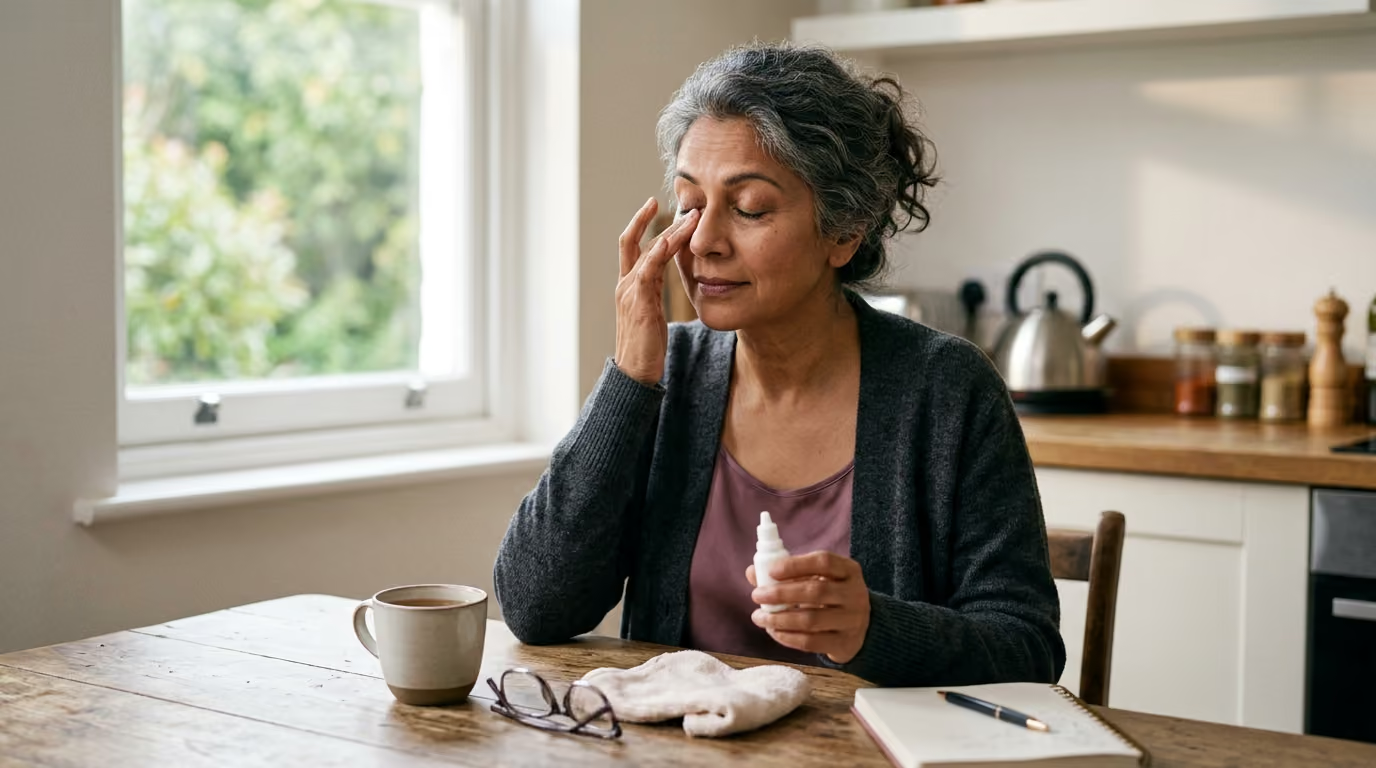

Waking up with stinging, gritty eyes every morning signals hormonal shifts that alter tear production, which can be managed effectively with targeted eyelid routines and treatments.





Many women find themselves searching online for why their eyes suddenly feel gritty, irritated, or constantly watery in their late forties and fifties. You might wake up with burning eyelids, struggle with contact lenses that used to feel comfortable, or find that computer screens leave your vision blurry by midday.
These changes are common during the midlife transition, yet they often receive little attention compared to vasomotor symptoms or sleep disturbances. This guide provides a clear explanation of how shifting hormones interact with the ocular surface. It covers practical daily strategies, clinical treatments, and the specific signs that warrant an evaluation by an eye care specialist.
The surface of the eye is a delicate, integrated functional unit. It relies on the cornea, the conjunctiva, the lacrimal glands, the eyelids, and the meibomian glands working in harmony. Together, these structures maintain the tear film, which protects the eye from infection, nourishes surface cells, and provides a smooth optical surface for clear vision.
The tear film consists of three primary components: an inner mucin layer, a middle aqueous layer, and an outer lipid layer. The lacrimal glands produce the watery aqueous layer. Meanwhile, the meibomian glands, located inside the upper and lower eyelids, secrete lipids that prevent this aqueous fluid from evaporating too quickly into the surrounding air.
Sex hormone receptors are present throughout these ocular tissues, especially within the meibomian and lacrimal glands. Androgens, such as testosterone and dehydroepiandrosterone, support healthy meibomian gland architecture and stimulate regular oil secretion. Estrogen and progesterone also interact with these tissues, though their mechanisms are more complex.
During the menopausal transition, circulating androgen and estrogen levels shift considerably. A reduction in androgenic stimulation is one of the clearest hormonal factors linked to meibomian gland dysfunction. When these eyelid glands produce less oil, or when their secretions become thick and stagnant, the protective lipid seal breaks down.
Without an adequate lipid shield, tears evaporate at an accelerated rate. This creates hyperosmolarity, an abnormal concentration of salts within the remaining tear fluid. Hyperosmolar tears trigger inflammatory signaling cascades across the ocular surface, irritating the epithelial cells of the cornea and conjunctiva. Over time, chronic low-grade inflammation can damage surface cells and alter local nerve sensitivity.
Understanding dry eye disease requires looking beyond the simple volume of liquid in the eye. Clinical consensus groups, such as the Tear Film and Ocular Surface Society (TFOS), define dry eye as a multifactorial disorder characterized by a loss of tear film homeostasis.
A thorough framework for understanding midlife ocular changes includes seven interrelated factors:
This framework explains why you might experience intense grittiness even if your eyes produce plenty of water. If the tear composition is imbalanced, the liquid will evaporate rapidly, leaving the ocular surface unprotected.
Ocular surface symptoms are widespread among women navigating midlife. An international study of 1,947 peri- and postmenopausal women found that 64 percent experienced ocular surface disease symptoms. Among postmenopausal participants, the prevalence reached 66.8 percent. That same investigation noted that symptom probability increased with advancing age, whereas a later natural age at menopause was associated with lower symptom rates.
Across broader scientific literature, prevalence estimates vary significantly depending on study design. Different trials use distinct symptom questionnaires, clinical tests, and diagnostic thresholds. A national health survey in Korea reported dry eye symptoms in 14.2 percent of postmenopausal women. In contrast, specialized clinical studies have reported rates between 39.75 percent and 47.5 percent.
These variations reflect differences between broad population surveys and focused clinical cohorts. They confirm that ocular discomfort is a frequent midlife concern, even if exact prevalence numbers fluctuate across regions.
Comparative studies demonstrate measurable differences in objective ocular markers between premenopausal and postmenopausal groups. Postmenopausal women consistently show higher rates of corneal and conjunctival staining. Fluorescein dye highlights areas of cellular disruption on the cornea, where postmenopausal cohorts have shown mean staining scores of 3.74 compared to 2.58 in premenopausal controls. Conjunctival staining scores show a parallel rise, moving from 2.22 to 2.80.
A pooled analysis of available data estimated that postmenopausal women face roughly twice the odds of developing dry eye disease compared with premenopausal and perimenopausal women combined. While some of these comparative models continue to undergo peer review, the broader body of research shows a clear pattern. The physiological shifts of midlife increase the vulnerability of the ocular surface to evaporative stress and inflammation.
Dry eye disease does not present identically in every person. Recognizing specific patterns helps clarify what is happening on the ocular surface and informs daily care.
The classic experience of dry eye involves a persistent feeling of sand or eyelashes caught beneath the eyelid. This sensation occurs when the delicate nerve endings of the cornea become exposed to friction and hyperosmolar tear fluid.
As the protective tear film breaks apart between blinks, the dry corneal epithelium rubs directly against the inner lining of the eyelids. This mechanical friction creates burning, stinging, and scratchiness that typically intensifies as the day progresses.
Many women find it confusing when an eye care provider diagnoses dry eye after they complain of constant tearing. Excessive watering is actually a standard clinical sign of ocular surface disease.
When the ocular surface becomes dry, irritated, or inflamed, sensory nerves send emergency signals to the brainstem. The lacrimal gland responds by releasing a flood of reflex tears. However, these reflex tears are mostly water. They lack the balanced mixture of mucins, electrolytes, and meibomian oils required to stick to the eye and protect it. The excess water simply runs down the cheeks, leaving the underlying cornea just as dry and vulnerable as before.
Clear vision depends on a smooth, uniform tear film acting as the primary refractive surface for light entering the eye. When the lipid layer is deficient, the tear film breaks up into uneven patches within seconds of opening the eyelids.
This causes visual acuity to fluctuate. You may notice that words on a page or road signs look blurry, but a single deliberate blink temporarily sharpens your focus. If blinking temporarily clears your vision, an unstable tear film is a probable contributor.
Soft contact lenses act like small sponges on the eye. They require continuous hydration from the surrounding tear film to maintain their shape, suppleness, and comfort.
As hormonal changes decrease tear stability or reduce oil production, contact lenses dry out rapidly during wear. The lens begins to drag across the cornea, causing irritation, redness, and a sensation of tightness. Many women in their late forties find they can no longer wear lenses for a full workday, shifting to glasses or reducing their wear schedule.
Meibomian gland dysfunction often causes symptoms centered on the eyelid margins. When the tiny gland openings along the base of the eyelashes become clogged with hardened oils, bacteria can accumulate.
This leads to blepharitis, a condition marked by red, swollen eyelid edges, flaky crusts upon waking, and itchy eyes. Morning discomfort is especially common because closed eyelids trap inflammatory byproducts against the ocular surface overnight.
Modern work environments present significant challenges for midlife eyes. When concentrating on computers, tablets, or smartphones, normal blink rates drop by half to two-thirds.
Furthermore, many of those blinks become incomplete, meaning the upper eyelid fails to make full contact with the lower eyelid. This leaves the lower portion of the cornea continually exposed to air. When combined with air conditioning, overhead fans, and age-related lipid changes, extended screen time frequently triggers severe afternoon eye fatigue and burning.
Consider an illustrative scenario of a 49-year-old project manager who spends seven hours a day on video calls. She noticed that by 3:00 PM, her eyes felt raw and her screens appeared hazy. She assumed her vision prescription was changing rapidly. An eye examination revealed an unstable tear film driven by infrequent blinking and early meibomian gland blockage rather than a change in lens power. Adjusting her workstation habits, using targeted eye drops, and applying eyelid heat helped resolve her workday fatigue.
Managing dry eye symptoms effectively requires addressing external triggers alongside physiological factors. Small changes to daily routines can lower evaporative stress on the eyes.
Because focused visual work suppresses spontaneous blinking, deliberate habits are necessary to protect the ocular surface during work:
Surrounding air quality directly influences how quickly tears leave the ocular surface. Modifying physical spaces helps preserve natural moisture:
If you wear contact lenses and notice worsening discomfort during perimenopause, several adjustments can help restore comfort:
Anyone navigating physical midlife changes can explore supportive nutrition and lifestyle choices that support general wellness, tissue resilience, and metabolic balance.
Topical lubricants and proper eyelid hygiene form the foundation of at-home dry eye care. Selecting the correct formulations ensures effective symptom management without unintended irritation.
Not all ocular drops serve the same clinical purpose. Understanding their differences prevents common pitfalls:
Warm compresses are a primary home therapy for meibomian gland dysfunction. Applying sustained, gentle heat softens hardened oils within the eyelid glands, allowing them to flow freely:
Keeping the lash margins clean helps control bacterial overgrowth and removes inflammatory debris:
For women seeking a broader understanding of bodily shifts, our articles on skin, hair, and aesthetic changes in midlife offer comprehensive perspectives on dermatological and structural wellness.
When daily environmental adjustments and non-prescription drops are insufficient, eye care specialists can recommend advanced medical therapies. These treatments target underlying chronic inflammation and direct physical gland blockages.
Chronic dry eye frequently involves an ongoing cycle of ocular surface inflammation. Prescription medications help break this cycle:
Tears naturally drain away from the eye through small openings in the inner corners of the eyelids called puncta, which lead into the nasal cavity. Punctal occlusion is a minor in-office procedure that slows this drainage, keeping natural and artificial tears on the ocular surface longer.
An eye care provider may first insert temporary, dissolvable collagen plugs to evaluate whether preserving tear volume improves comfort without causing excessive watering. If temporary occlusion helps, semi-permanent silicone plugs can be placed into the punctal openings.
Punctal plugs are most effective for aqueous-deficient dry eye. They should generally be placed after ocular surface inflammation has been calmed, ensuring that inflammatory tears are not trapped against the cornea.
For moderate to severe meibomian gland dysfunction, automated in-office procedures clear obstructed glands more effectively than home compresses:
Because dry eye symptoms frequently appear or intensify alongside perimenopause, many women wonder whether starting menopausal hormone therapy (MHT) will resolve their ocular discomfort. The relationship between systemic hormones and eye health is nuanced, and current research does not support using hormone therapy solely as a treatment for dry eyes.
Large epidemiological trials, including the Women's Health Study, observed an increased risk of dry eye symptoms among women using systemic hormone therapy, particularly those using estrogen alone. Further surveys have found that extended use of systemic hormone replacement was associated with an elevated likelihood of dry eye diagnoses.
Conversely, some laboratory investigations indicate that balanced hormones support cellular health within the lacrimal and meibomian glands. Estrogen appears to exert varying effects depending on dosage, receptor subtypes, and local tissue conversions. Meanwhile, androgens consistently promote healthy lipid secretion.
Systematic reviews and meta-analyses examining hormone therapy have found that while some women experience short-term improvements in tear volume within the first month of therapy, these benefits are rarely sustained at longer follow-ups. Broader analyses conclude that systemic hormone therapy does not produce consistent, statistically significant improvements in tear breakup time, corneal staining, or subjective comfort scores.
The clinical consensus from leading menopause and ophthalmological societies is straightforward:
To gain clearer context on systemic health during this life phase, explore our resources on the hormonal changes of perimenopause and menopause.
Ocular discomfort should not be dismissed as a minor inconvenience of aging. A comprehensive professional examination identifies the specific mechanisms driving your symptoms and rules out other significant medical conditions.
An optometrist or ophthalmologist utilizes specific diagnostic tools to assess the health of your ocular surface:
Dry eye symptoms can overlap with or be influenced by other systemic conditions that arise in midlife:
While typical dry eye causes fluctuating, mild to moderate discomfort, certain symptoms indicate serious ocular conditions, such as corneal ulcers or acute infections, that require urgent medical attention:
If you wear contact lenses and experience sudden redness, pain, or blurred vision, remove the lenses immediately and contact an eye doctor.
Readers seeking reliable, research-backed information across midlife health topics can review our full library of evidence-based health guidance.
While science has clarified many aspects of ocular surface disease, several areas of research remain early, mixed, or limited:
Dry eye during perimenopause and menopause is a physical, multifactorial change driven by shifting hormones, tear instability, and environmental stress. With a systematic approach combining daily eyelid care, proper lubrication, behavioral adjustments, and professional clinical guidance, you can protect your ocular surface and maintain clear, comfortable vision.

Follow Refemina for research-led resources on hormonal change, strength, metabolism, nutrition, skin, intimate wellbeing and confidence through midlife.


Keep learning about the changes that shape energy, strength, confidence and wellbeing through midlife.
Explore Resources