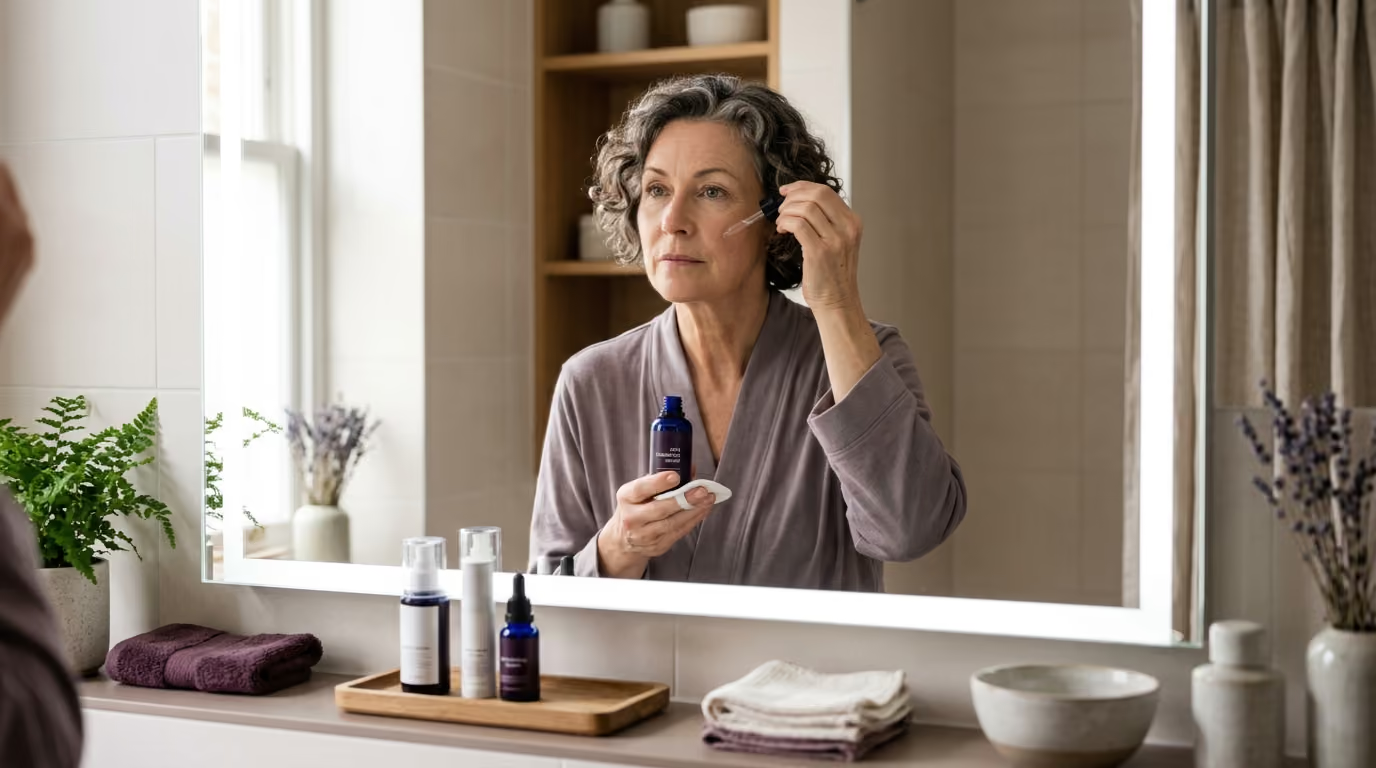

Midlife skin benefits from evidence-based chemical and mechanical exfoliation strategies that safely improve cell turnover without compromising the delicate epidermal barrier.





Exfoliation is the intentional acceleration or removal of superficial dead skin cells from the stratum corneum. It is not a cure for deeper structural aging, a fix for chronic dehydration, or an everyday requirement for healthy skin. When used thoughtfully, it can smooth rough surface texture, lift dullness, and clear follicular congestion. When overused, it can strip natural lipids, provoke chronic inflammation, and compromise the skin barrier.
Navigating the skin care market after 40 requires understanding how your biology is shifting. As hormonal levels change during perimenopause and postmenopause, the skin undergoes noticeable structural and physiological shifts. Approaches that worked in your twenties or thirties may suddenly provoke burning, flaking, or persistent redness. This resource breaks down the science behind alpha hydroxy acids, beta hydroxy acids, polyhydroxy acids, physical scrubs, and professional peels. It provides clear, clinical insight into what these interventions can achieve, what they cannot fix, and how to protect your skin barrier through midlife.
The fundamental purpose of exfoliation is shedding excess surface corneocytes. The American Academy of Dermatology divides exfoliation into two primary categories: mechanical and chemical. Mechanical exfoliation relies on friction from tools such as washcloths, brushes, sponges, or granular scrubs to manually dislodge loose cells. Chemical exfoliation uses acids, enzymes, or related topical compounds to loosen the bonds holding surface cells together.
The cosmetic benefit of exfoliation is rooted in surface light reflection. When dead skin cells accumulate unevenly, light scatters across the face, creating a flat or dull appearance. Removing that microscopic layer restores a smoother optical plane, creating an immediate perception of brightness. In clinical evaluations, certain chemical exfoliants demonstrate deeper biological activity beyond surface shedding.
Research on alpha hydroxy acids demonstrates that specific formulations can influence epidermal and dermal architecture. Controlled trials using a 12 percent topical lactic acid formulation showed measurable increases in epidermal and dermal firmness and thickness. The same study noted visible improvements in surface smoothness alongside reductions in the appearance of fine lines and wrinkles. Earlier clinical reviews confirm that regular application of properly formulated alpha hydroxy acids can soften signs of photoaging by encouraging cell turnover.
Chemical exfoliants also interact directly with cellular cohesion in the stratum corneum. Research published on the dual effects of alpha hydroxy acids indicates that high concentrations of glycolic acid reduce corneocyte cohesion. While this detachment produces smoothing, excessive disruption can damage the protective barrier and cause severe irritation.
The Food and Drug Administration has evaluated the safety profile of consumer alpha hydroxy acid formulations. The Cosmetic Ingredient Review expert panel concluded that consumer products containing glycolic or lactic acid are safe when formulated at concentrations of 10 percent or less with a final pH of 3.5 or higher. Products intended for brief, discontinuous professional use can reach concentrations up to 30 percent with a pH as low as 3.0 when applied by trained professionals.
Clinical data also highlights distinct properties for other chemical families. Studies examining polyhydroxy acids show that these larger molecules offer mild exfoliation along with humectant properties. Research indicates polyhydroxy acids help reinforce barrier function and protect against chemical challenge while delivering anti-aging improvements comparable to traditional acids. Salicylic acid, the primary beta hydroxy acid, demonstrates unique efficacy for acne and follicular congestion because its lipophilic nature allows it to penetrate lipid-rich pores.
Understanding these mechanisms clarifies that exfoliation is an active, biological intervention. It alters the outermost shield of your body. Approaching it with clinical respect prevents unwanted tissue damage and supports long-term skin health.
To care for mature skin effectively, you must recognize that midlife changes are physiological rather than personal failures. During perimenopause and the menopausal transition, declining systemic estrogen levels cause distinct alterations in skin structure, hydration, and repair capability. Exploring articles on perimenopause, menopause, and hormonal change can provide broader context on how systemic shifts influence external tissues.
Estrogen receptors are distributed throughout human skin, residing in keratinocytes, fibroblasts, and sebaceous glands. When estrogen levels decrease, several interrelated changes occur across multiple dermal layers:
These physiological shifts directly alter how skin tolerates chemical and physical exfoliants. A thinner epidermis with reduced lipid content offers less buffering capacity against low-pH acids. Ingredients that caused mild tingling in your thirties may provoke significant burning or contact dermatitis after 40. Lower baseline hydration means acidic topicals can penetrate unevenly, causing localized irritation. Slower wound healing also means that recovering from over-exfoliation takes considerably longer than it once did.
Dullness in midlife skin is frequently caused by dehydration and structural thinning rather than a thick accumulation of dead cells. When dehydrated skin lacks water, the enzymes responsible for natural desquamation stop functioning efficiently. This creates a rough, flaky surface that feels dry to the touch. If you treat this flakiness by applying strong acids or physical scrubs, you strip away the remaining barrier lipids. This worsens internal moisture loss and triggers a cycle of chronic inflammation.
Understanding the physical mechanisms of different exfoliation methods helps you choose the right approach for your skin type. Both chemical and mechanical techniques aim to remove surface corneocytes, but their modes of action, depth, and safety profiles differ considerably. Reviewing guides on skin, hair, and aesthetic aging can help you align your topical routine with the biological realities of midlife skin.
Mechanical exfoliation involves physical friction to abrade the stratum corneum. Common modalities include:
The primary advantage of mechanical exfoliation is immediate tactile smoothness. You control where the physical friction is applied, and no active chemical residue remains on the skin afterward. For women who react poorly to low-pH topical acids, a gentle manual approach can offer mild surface smoothing.
Mechanical exfoliation carries notable disadvantages for mature skin. Controlling friction, pressure, and particle uniformity is difficult. Scrubs formulated with irregular, jagged particles can cause microscopic surface abrasions. This friction disrupts the stratum corneum lipid matrix, worsens underlying rosacea, and triggers inflammatory acne flares. The American Academy of Dermatology notes that individuals with dry, sensitive, or acne-prone skin often find mechanical exfoliation overly irritating and may achieve better results using a soft washcloth or gentle chemical options.
Chemical exfoliants do not rely on friction. Instead, they interact biochemically with the bonds that secure dead cells to the skin surface. By lowering the surface pH or interacting with cellular lipids, these agents dissolve the protein bridges between corneocytes, allowing old cells to shed naturally during washing.
The primary advantage of chemical exfoliation is uniform, non-abrasive action across the applied area. Chemical agents can be formulated at specific concentrations, buffered to defined pH ranges, and paired with soothing humectants. Specific acids can also target particular concerns, such as congested pores or photodamage, without physical rubbing.
Chemical exfoliants introduce distinct safety considerations. Because they are left on the skin, their activity continues until the product is neutralized, washed away, or fully absorbed. Inappropriate concentrations, overly acidic pH levels, or excessive application frequencies can provoke severe chemical irritation, erythema, and post-inflammatory hyperpigmentation.
Chemical exfoliants are organized into distinct families based on their molecular structure, solubility, and penetration depth. Selecting the correct acid family depends on whether you are addressing surface roughness, clogged pores, or sensitive, dehydration-prone skin.
Alpha hydroxy acids are water-soluble organic carboxylic acids derived from natural sources or produced synthetically. They primarily work on the skin surface to dissolve corneocyte cohesion and encourage cellular turnover.
Salicylic acid is the primary beta hydroxy acid used in dermatology. Unlike water-soluble AHAs, salicylic acid is lipid-soluble, meaning it can mix with and penetrate sebum.
Polyhydroxy acids represent the next generation of hydroxy acid technology. Common examples include gluconolactone, lactobionic acid, and maltobionic acid.
One common mistake in midlife skin care is misinterpreting irritation as a sign that a product is working. The phrase "over-exfoliation" refers to the acute or chronic barrier breakdown caused by excessive chemical strength, high application frequency, or harsh physical friction. When the stratum corneum is stripped beyond its regenerative capacity, the skin enters a state of persistent vulnerability.
Recognizing the clinical signs of a damaged barrier allows you to pause active treatments before developing chronic contact dermatitis or pigmentary complications:
If you observe these symptoms, stop all active chemical and mechanical exfoliants immediately. Continuing to exfoliate in an attempt to buff away flakiness or smooth rough patches will deepen the barrier injury. For additional perspectives on supporting long-term health and vitality during midlife, explore Refemina resources on midlife health.
Designing an evidence-aligned exfoliation routine after 40 requires restraint, patience, and careful observation. The goal is to support natural cellular turnover without triggering an inflammatory response.
Never apply an exfoliating acid or physical scrub to skin that is already compromised. Before introducing an exfoliant, confirm that your baseline skin care routine is supportive:
Avoid products that combine high-strength AHAs, BHAs, and physical particles into a single step. Introducing one active agent at a time lets you monitor your tolerance clearly:
Cosmetic product instructions often suggest daily or twice-daily application, which is frequently too aggressive for midlife skin. Start conservatively by applying your chosen exfoliant once per week, in the evening, on clean, completely dry skin.
Maintain this once-weekly cadence for three to four weeks. If your skin remains calm, supple, and free from irritation, you may cautiously increase frequency to twice weekly. For most mature skin types, exfoliating one to two times per week is sufficient to maintain clarity and smoothness.
After applying an exfoliating acid, allow it to settle for several minutes before following with barrier-supportive ingredients. The American Academy of Dermatology recommends applying a rich moisturizer immediately after exfoliating to counteract potential moisture loss.
Look for restorative moisturizers formulated with:
Alpha hydroxy acids thin the protective layer of dead surface cells, increasing ultraviolet light penetration. The Food and Drug Administration warns that topical AHA use can increase sun sensitivity during use and for up to a full week after stopping the product.
Protecting your skin requires applying a broad-spectrum sunscreen with an SPF of 30 or higher every morning. Pair sunscreen with physical sun protection, including wide-brimmed hats and shade, especially during peak daylight hours. Using sunscreen is not a reason to increase exfoliation frequency, but an essential step to prevent new UV-induced photoaging.
Professional chemical peels represent a distinct clinical category that differs significantly from at-home cosmetic serums. While at-home products work primarily on the surface stratum corneum, professional peels produce a controlled chemical injury to specific depths of the epidermis or dermis to stimulate tissue regeneration.
Dermatologists classify chemical peels into three primary depth categories:
Professional chemical peeling requires specialized clinical expertise when treating richly pigmented skin. The American Academy of Dermatology confirms that individuals with skin of color can safely undergo chemical peels, provided the practitioner has documented experience treating darker skin tones.
The primary risk in melanin-rich skin is post-inflammatory hyperpigmentation (PIH). Deep inflammation or aggressive peeling can trigger melanocytes to overproduce pigment, leaving dark patches that persist for months. In rare cases, melanocyte destruction can cause permanent loss of pigment (hypopigmentation) or scarring. For skin of color, clinicians generally recommend superficial peels using gentler agents such as mandelic acid, salicylic acid, or low-concentration glycolic acid, combined with careful pre-treatment protocols.
Undergoing a professional chemical peel requires disclosing your complete medical and skin care history to your provider. Key contraindications and precautions include:
Examining realistic scenarios illustrates how to tailor exfoliation strategies to specific midlife skin presentations. These scenarios serve as illustrative models rather than diagnostic prescriptions.
A 52-year-old postmenopausal woman notices that her complexion appears dull and feels rough to the touch. Her face regularly feels tight after washing. In response, she uses a physical apricot scrub twice a week and an AHA exfoliating toner three evenings a week. Over the past month, her skin has become increasingly tight, red, and flaky.
A 46-year-old woman in perimenopause develops hormonal blackheads and congestion along her nose and chin. Her cheeks, however, remain thin, dry, and easily irritated. She applies a broad 10 percent glycolic acid serum across her entire face every other evening. While her T-zone improves slightly, her cheeks develop persistent burning and redness.
A 55-year-old woman uses prescription tretinoin cream three nights per week to address photoaging. Hoping to accelerate her results, she purchases a high-strength at-home chemical peeling solution (30 percent AHA) to use on her off-nights. After her first application, she develops significant erythema, swelling, and localized blistering.
Sorting evidence from marketing trends helps you protect your skin from common mistakes and avoid counterproductive habits:
While cosmetic roughness and minor congestion can often be managed with adjustments to your home routine, several skin presentations warrant professional evaluation by a board-certified dermatologist. Certain underlying conditions mimic simple dryness or aging, and applying exfoliants to these issues can worsen the underlying disease.
Schedule a professional medical evaluation if you encounter any of the following clinical scenarios:
If you are navigating complex skin changes, reviewing Refemina's editorial mission and standards can provide helpful reassurance on separating reliable clinical facts from cosmetic marketing claims.
Maintaining an evidence-led perspective requires acknowledging the boundaries of current dermatological research regarding midlife skin and cosmetic exfoliants.
First, substantial research on hydroxy acids focuses on younger populations or broader adult cohorts without isolating perimenopausal and postmenopausal hormone dynamics. While hormonal effects on dermal thinning and moisture loss are well-documented, specific comparative trials testing distinct acid concentrations across different menopausal stages remain limited. Much of the clinical guidance for mature skin relies on extrapolations from general dermatology and barrier biology.
Second, notable variability exists between laboratory clinical studies and commercial product formulations. Research papers frequently evaluate single, unbuffered chemical solutions under controlled laboratory conditions. In contrast, consumer skin care products combine acids with thickeners, penetration enhancers, botanical extracts, preservatives, and fragrances. These additional ingredients can alter the tolerability and free-acid delivery of the final product in ways that isolated studies do not capture.
Third, long-term data regarding the cumulative impact of multi-decade chemical exfoliation is sparse. While short-term studies demonstrate epidermal thickening and increased cell turnover, few clinical trials have tracked barrier function, microbiome diversity, and cutaneous immunity over decades of continuous acid use.
Finally, clinical trials assessing polyhydroxy acids and novel peeling agents are frequently sponsored by ingredient manufacturers or cosmetic formulators. While these studies provide valuable safety and efficacy insights, independent, head-to-head comparative research remains essential to confirm relative benefits across diverse skin tones and health profiles.
Midlife skin care calls for an intentional shift away from aggressive resurfacing toward targeted, barrier-conscious support. Exfoliation should be a selective step tailored to your skin's current barrier strength rather than an automatic daily habit. Prioritizing hydration, sun protection, and physiological barrier repair keeps your skin balanced, resilient, and healthy throughout perimenopause and beyond.
Applying an alpha hydroxy acid or beta hydroxy acid at the same time as a topical retinoid significantly increases your risk of barrier irritation, redness, and flaking. Retinoids accelerate cellular turnover from the deeper epidermal layers, while chemical acids loosen surface corneocytes. Using them together can overwhelm your skin's natural recovery capacity. It is safer to separate these actives by using your retinoid on designated evenings and reserving a mild chemical exfoliant for an alternate night, ensuring your skin has at least one or two rest nights each week.
If an exfoliating product causes an immediate, intense burning sensation, rinse it away thoroughly with cool or lukewarm water. Avoid using harsh soaps or washcloths. Gently pat the skin dry with a soft towel and apply a plain, fragrance-free barrier moisturizer rich in ceramides, squalane, or petrolatum. Discontinue all exfoliating acids, scrubs, retinoids, and vitamin C serums for at least two weeks, focusing entirely on gentle cleansing, deep moisturization, and daily mineral sunscreen until the stinging resolves completely.
Body skin, particularly on the shins, forearms, and chest, undergoes notable thinning and moisture loss during midlife. Coarse, granular body scrubs can cause micro-abrasions and exacerbate dry, itchy patches on these delicate areas. If you experience rough texture or keratosis pilaris on your body, look for a gentle moisturizing body lotion formulated with low-concentration lactic acid (5 to 10 percent) or urea instead of physical scrubs. These ingredients soften roughness and support natural hydration without the mechanical trauma of abrasive particles.
Perform a simple barrier check after washing your face with a mild, non-foaming cleanser. If your skin feels tight, parched, or uncomfortable within five minutes of cleansing, your primary issue is dehydration and barrier depletion rather than an excess buildup of dead cells. In this case, introducing an exfoliating acid will worsen your symptoms. Focus on applying humectant-rich essences and ceramide creams for two weeks. If your skin feels comfortable, supple, and hydrated but still appears visually flat or feels slightly rough, a gentle PHA or low-strength lactic acid can be introduced cautiously once per week.

Follow Refemina for research-led resources on hormonal change, strength, metabolism, nutrition, skin, intimate wellbeing and confidence through midlife.


Keep learning about the changes that shape energy, strength, confidence and wellbeing through midlife.
Explore Resources