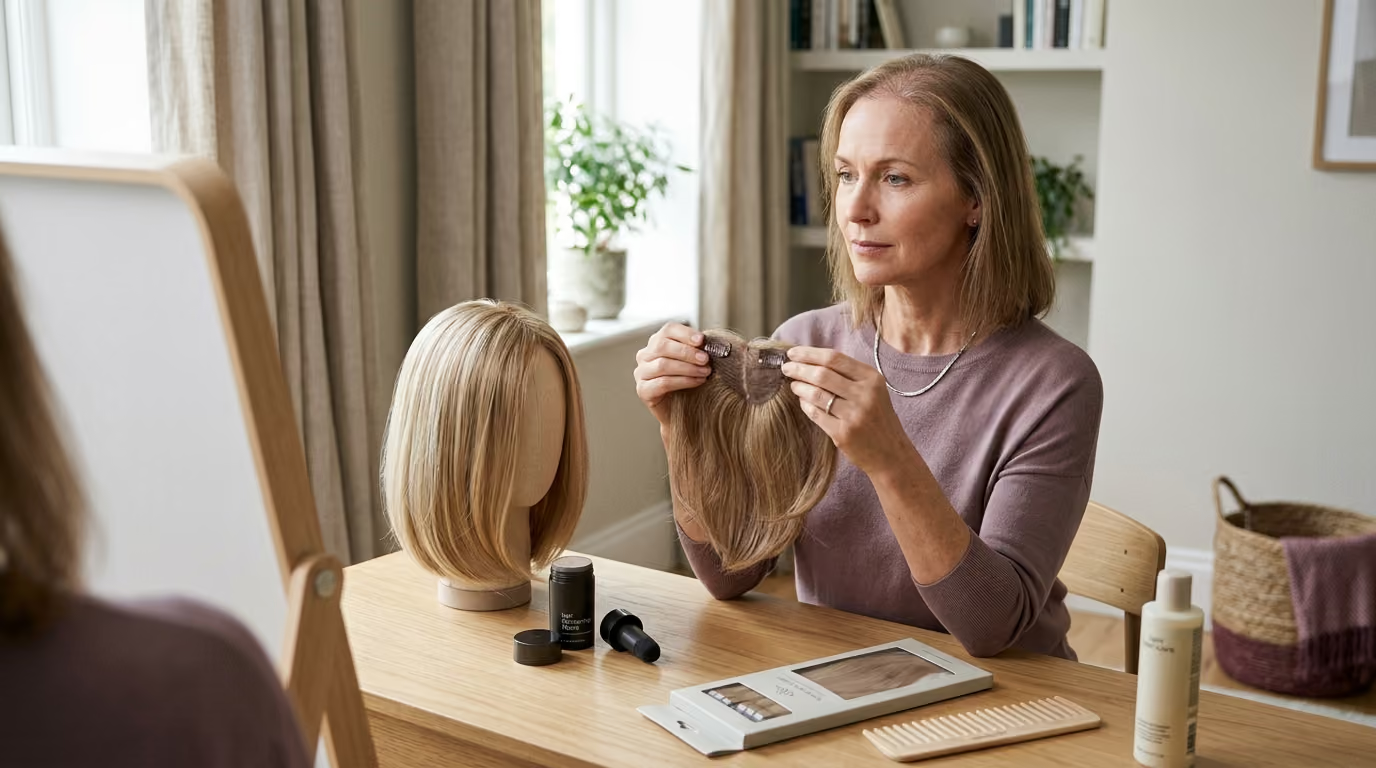
Hair-Thinning Solutions Compared: Wigs, Toppers, Fibres, Extensions and Styling

Over 52 percent of postmenopausal women experience pattern thinning, making cosmetic tools like fibres, concealers, toppers, and wigs practical solutions for restoring visual hair density.

Share
White Reddit alien mascot face icon on transparent background.White paper airplane icon on transparent background.White stylized X logo on black background, representing the brand X/Twitter.
September 21, 2026
Skin, Hair & Aesthetic Aging

Cosmetic hair camouflage is a set of practical tools designed to alter the visual appearance of hair thinning immediately. It is not medical treatment, and it does not reverse follicular changes or treat biological causes of shedding. Understanding this boundary allows women to choose styling methods, hairpieces, and cosmetic concealers that protect their scalp health while pursuing clinical evaluation when appropriate.

This resource compares every major cosmetic option across comfort, daily maintenance, financial cost, scalp tolerance, and traction risk. It offers an objective guide to selecting methods that conceal thinning without damaging existing hair.

What Does the Evidence Show About Cosmetic Camouflage?

Clinical research indicates that cosmetic camouflage methods reduce the visual contrast between the scalp and remaining hair. These tools provide an immediate aesthetic change that medical therapies cannot match in speed. Medical treatments often require six to twelve months before noticeable shifts in density appear.

Studies show that hair camouflage falls into distinct categories based on attachment mechanics and scalp contact. Loose products like keratin fibres and tinted sprays sit on the hair shaft or skin surface without mechanical anchoring. Structural options like toppers, wigs, and extensions attach via clips, weaves, adhesives, or friction bands.

Research published in dermatology journals shows that hair density differs fundamentally from hair calibre. A person can have a stable number of active follicles while experiencing progressive calibre reduction, known as follicular miniaturisation. When individual hair shafts become finer, the scalp becomes visible even without large bare patches.

Cosmetic products address the visual outcome of miniaturisation by coating the shaft or covering the area. Clinical guidance emphasizes that cosmetic tools should run parallel to proper diagnosis rather than replacing it. Applying cosmetic products over an undiagnosed, inflammatory scalp condition can delay necessary medical care.

Why Does Hair Thin in Midlife and Menopause?

Midlife hair thinning involves complex biological shifts across follicular cycling, scalp microcirculation, and hormonal sensitivity. The perimenopause and menopause transition coincides with changes in the anagen growth phase. Hairs spend less time actively growing and shed more rapidly.

Female pattern hair loss, also called androgenetic alopecia, is the most common cause of progressive thinning in adult women. Its prevalence rises steadily with age, affecting more than half of women over eighty. Research in postmenopausal women shows that over 52 percent exhibit measurable female pattern thinning.

This condition typically creates diffuse thinning over the crown and vertex while preserving the frontal hairline. Miniaturisation causes terminal hairs to transform into fine vellus-like hairs across the top of the scalp. Menopause can also alter hair diameter distribution and slow overall growth rates.

Not every midlife hair change stems from female pattern hair loss or shifting estrogen levels. Telogen effluvium is a diffuse shedding disorder triggered by physiological stress, severe illness, rapid weight loss, or nutritional deficits. Scarring conditions like frontal fibrosing alopecia and lichen planopilaris also present during midlife, causing permanent follicular loss. Women seeking clarity on these physiological changes can browse Refemina skin and hair resources for deeper biological context.

How Do Hair Fibres and Scalp Concealers Compare?

Hair fibres and topical scalp concealers are low-commitment cosmetic products designed to reduce scalp show-through. They work best where remaining hair can hold the product or where minor colour correction restores visual fullness.

Hair-Building Fibres

Hair fibres consist of tiny keratin, cotton, or synthetic particles carrying an electrostatic charge. These particles cling to existing hair shafts, thickening the individual strand's diameter and building immediate volume.

  • Best application: Mild to moderate thinning along the central part, crown show-through, or localized diffuse thinning.
  • Required foundation: Must have sufficient natural hair present to serve as an anchor for the fibres.
  • Attachment mechanics: Purely electrostatic with no clips, adhesives, or mechanical tension on follicles.
  • Scalp impact: Minimal follicular stress, though loose particles settle onto the scalp surface.

Fibres perform poorly on smooth, completely bare patches because they need hair shafts to cling to. Humidity, heavy rain, intense sweating, or friction from hats can cause fibres to shift or run. Setting sprays help secure the fibres, but these sprays require gentle washing to prevent product accumulation.

Scalp Concealers, Powders, and Sprays

Scalp concealers are pigmented formulations applied directly to the skin surface to match natural hair colour. They come in pressed powders, liquid creams, and aerosol sprays.

  • Best application: Broadening part lines, contrast reduction on pale scalps with dark hair, and exposed temple areas.
  • Required foundation: Works on bare scalp surfaces where fibres cannot anchor.
  • Attachment mechanics: Topical skin adherence via pigments, waxes, and cosmetic binders.
  • Scalp impact: Direct, continuous contact with the epidermal barrier and follicular openings.

These products mask the pale background of the scalp, making existing hair look thicker by removing high-contrast gaps. Sprays and powders can transfer onto pillowcases, clothing, or fingers when touched. Heavy product build-up can trap sebum and sweat, irritating individuals prone to seborrhoeic dermatitis.

Comparing Fibres and Concealers

  • Initial financial investment: Low. Both options cost significantly less upfront than custom hairpieces.
  • Daily preparation time: Fast. Application takes between two and five minutes once practiced.
  • Durability: Moderate. Requires reapplication after every wash and can rub off during active exercise.
  • Removal process: Simple shampooing with standard cleansers clears the scalp easily.
  • Traction risk: Zero. Neither method exerts physical pulling force on existing roots.

How Do Hair Toppers Compare to Full Wigs?

When thinning progresses beyond what fibres or concealers can disguise, partial or full hair systems provide reliable structural coverage. Choosing between a topper and a full wig depends on the location of hair loss, the strength of perimeter hair, and lifestyle demands.

Hair Toppers

A hair topper, or partial hairpiece, covers a specific zone of the head, such as the crown, parting line, or vertex. It blends directly with the wearer's remaining natural hair along the sides, front, and back.

  • Targeted coverage: Conceals localized top-of-head thinning while leaving natural perimeter hair visible.
  • Base constructions: Features monofilament bases that mimic natural skin, open wefting for airflow, or lace perimeters.
  • Attachment methods: Pressure-sensitive clips, silicone friction bands, medical tape, or liquid adhesives.
  • Blending requirements: Requires precise colour, texture, and density matching with remaining biological hair.

Toppers offer a lighter, cooler experience than full wigs because the biological scalp remains partially exposed. They allow women to keep their natural hairline and perimeter. A major risk involves clip placement. Fastening metal clips repeatedly onto the exact same miniaturised follicles creates localized mechanical tension that can accelerate hair loss.

Full Wigs and Cranial Prostheses

A wig provides complete coverage over the entire scalp, concealing biological hair beneath a specialized cap. Medical-grade prostheses are designed specifically for individuals managing extensive alopecia, chemotherapy-related loss, or widespread scarring disorders.

  • Targeted coverage: Full scalp coverage from the frontal hairline down to the nape of the neck.
  • Base constructions: Hand-tied caps for natural movement, lace fronts for realistic hairlines, and monofilament tops.
  • Attachment methods: Adjustable elastic bands, silicone wig grips, velvet bands, or perimeter adhesives.
  • Blending requirements: Zero blending with biological hair, enabling instant shifts in style, colour, or length.

Wigs eliminate the need to blend cosmetic pieces with natural hair. They protect existing follicles from daily heat styling and chemical dyes. Full caps can feel warm during summer months, require regular cleaning routines, and need careful fitting to prevent pressure headaches.

Human Hair Versus Synthetic Construction

Both toppers and full wigs are constructed using either processed human hair or engineered synthetic fibres. Each material presents distinct performance characteristics.

  • Synthetic fibres: Synthetic hair features pre-set memory styles that survive washing and damp weather without losing shape. They cost less initially and require minimal daily styling. They cannot tolerate standard heat tools unless labeled heat-friendly, and friction against collars can cause fibre frizzing.
  • Human hair: Human hair provides authentic movement, tactile softness, and complete flexibility with blow-dryers or curling irons. It can be custom-coloured by professional stylists to match natural hair tones. It carries a higher financial cost, requires regular conditioning, and reacts to humidity just like biological hair.

Base Construction and Realism

The realism of a hairpiece depends heavily on its base mechanics:

  • Monofilament tops: Individual hair strands are hand-tied into a fine mesh, creating the illusion of hair growing directly from the scalp. This allows multidirectional parting.
  • Lace front edges: Sheer lace along the forehead creates an invisible transition, allowing hair to be styled away from the face.
  • Hand-tied caps: Soft, flexible foundations where every hair moves independently, reducing overall weight and friction.
  • Machine-wefted caps: Strips of hair sewn onto elastic ribbons that provide structural durability and budget-friendly volume, though with less parting freedom.

Are Hair Extensions and Weaves Safe for Thinning Hair?

Hair extensions and weaves add cosmetic volume and length by anchoring supplemental strands directly onto existing biological hair. While widely marketed for fullness, they represent the highest-risk option for women managing progressive thinning.

The Biomechanics of Traction Damage

Extensions attach extra weight to individual strands or small sections of natural hair. When added hair moves, gets wet, or is brushed, it exerts a continuous downward pulling force on the underlying follicle.

Constant mechanical tension causes follicular inflammation and can separate the hair shaft from its root sheath. Dermatological literature documents that this tension leads directly to traction alopecia. This process begins as nonscarring shedding around the anchor sites. If the pulling force continues, it can destroy the follicular stem cells permanently, causing irreversible scarring alopecia.

Common Extension Methods and Their Relative Risks

  • Clip-in extensions: Temporary wefts clipped into natural hair for occasional wear. They carry moderate risk if worn infrequently, but daily use on fragile hair causes localized traction spots.
  • Tape-in extensions: Thin wefts sandwiched around sections of natural hair using medical adhesive. They distribute weight more evenly than beads, but removing them requires solvents that can snap weakened shafts.
  • Sewn-in weaves: Natural hair is braided tightly against the scalp into cornrows, and wefts are stitched onto the braids. This method creates intense, continuous tension across the perimeter and crown.
  • Keratin-bond or fusion extensions: Small bundles attached to individual strands with heated polymer glue. They place high pinpoint weight on single follicles, making them unsuitable for miniaturised hair.
  • Micro-ring or beaded extensions: Small hair bundles clamped onto natural hair using metal rings. The metal clamps can cause mechanical breakage along fragile midlife hair shafts.

Risk Profiles for Vulnerable Hair

Extensions are particularly hazardous for women with female pattern hair loss, active shedding, or chemically treated hair. Miniaturised follicles lack the structural root anchorage necessary to hold supplemental hair weight safely.

If extensions are used, dermatological recommendations suggest using the lightest possible weight and keeping installations loose. Braided weaves should never remain installed longer than two to three months. Glued or taped extensions should be removed after six to eight weeks, followed by mandatory rest periods without extensions.

Which Styling Techniques Add Fullness Without Follicular Stress?

Strategic styling techniques create the visual appearance of thicker hair without adding weight, glue, or mechanical tension to the scalp. Thoughtful cuts and non-damaging styling habits form a safe cosmetic baseline.

Precision Haircuts and Layering

The right haircut fundamentally alters how light passes through hair, reducing the appearance of thinning.

  • Blunt base lines: Cutting the bottom perimeter blunt creates the visual impression of density at the ends, preventing stringy edges.
  • Soft interior layering: Light surface layers add movement and root lift without removing needed weight from the perimeter.
  • Shorter overall lengths: Bobs, lobs, and textured pixie cuts reduce the downward gravitational pull on roots, helping hair stand taller at the scalp.
  • Strategic fringe: Soft bangs or side-swept fringes disguise receding temples and frontal hairline sparseness effectively.

Low-Tension Daily Styling Practices

  • Alternating parting lines: Parting hair in the exact same spot daily exposes the same scalp line to sun and visual scrutiny. Shifting the part by half an inch creates instant root volume and conceals widening gaps.
  • Avoiding tight updos: Slicked-back buns, high ponytails, and tight braids pull directly on fragile temple and forehead hair. Soft, low gathers secured with silk scrunchies prevent traction stress.
  • Gentle detangling tools: Wide-tooth combs and flexible-bristle brushes reduce mechanical snapping. Detangling should always start at the ends and work gently upward toward the roots.
  • Volumising styling products: Lightweight mousses, texturizing sprays, and root-lifting foams deposit polymer films that separate strands. These products add temporary body without leaving heavy residues that weigh hair down.

Heat and Chemical Management

Excessive thermal heat and harsh chemical treatments degrade the hair's outer cuticle, leading to mid-shaft breakage that mimics shedding.

  • Moderate blow-drying: Use warm or cool air settings rather than maximum heat, holding the dryer at least six inches away from the scalp.
  • Large ceramic rollers: Setting damp hair on large, smooth rollers under gentle warmth provides root lift without the aggressive friction of round-brush pulling.
  • Avoiding aggressive backcombing: Teasing hair damages the protective cuticle scales, causing strand breakage that worsens visible sparseness over time.
  • Gentle colour placement: Multi-tonal highlights and lowlights create dimension that tricks the eye into seeing depth, making thinning less obvious. Bleaching entire sections should be avoided because it weakens fine hair shafts.

How to Choose the Right Solution for Your Daily Routine

Selecting the right cosmetic approach requires matching coverage needs with personal lifestyle, physical tolerance, and maintenance capacity. Readers can consult the Refemina health and lifestyle resources for holistic guidance on navigating midlife physical changes.

Step 1: Identify the Location and Pattern of Thinning

Examine your scalp in bright, indirect light to determine where coverage is most needed:

  • Widening central part line: A combination of parting adjustments, hair fibres, or scalp powder provides simple camouflage.
  • Crown and vertex thinning: A lightweight clip-in topper or targeted fibres offer natural coverage.
  • Receding temples and frontal hairline: Soft styling, low-tension bangs, or lace-front partial pieces disguise frontal loss safely.
  • Diffuse all-over thinning: A lightweight full wig or precision blunt haircut avoids placing weight on fragile remaining strands.
  • Smooth, distinct bare patches: Avoid clip-in pieces that pull adjacent hairs; consider scalp powders or full cranial prostheses.

Step 2: Evaluate Anchor Hair Strength

Before selecting any clip-in or attached system, inspect the strength of the biological hair that will support it:

  • Robust, thick perimeter hair: Can comfortably support lightweight clip-in toppers or temporary halo hairpieces.
  • Fine, miniaturised, or fragile hair: Cannot tolerate metal clips or glued extensions without risk of traction loss.
  • Active, heavy shedding: Avoid any clipped or bonded hair systems until shedding stabilizes, relying instead on loose fibres or loose-fitting wigs.

Step 3: Match the Solution to Your Activity Level and Climate

  • High-intensity exercise and heavy sweating: Fibres and heavy scalp sprays can streak when exposed to moisture. Breathable, open-wefted caps or low-tension styling paired with sweatbands perform better.
  • Hot, humid climates: Full human-hair wigs can feel heavy and warm. Monofilament toppers, synthetic lace wigs, or styling powders offer cooler daily comfort.
  • Professional or public speaking demands: High-definition monofilament toppers or custom lace-front wigs provide complete visual confidence under harsh lighting.

Step 4: Follow the Low-Tension Safety Principle

Always select the lowest-tension attachment method capable of achieving your aesthetic goal. Never attach supplemental hair weight directly to the weakest follicles on your head.

  • Rotate clip locations: If wearing a topper daily, reposition clips slightly every few days to prevent constant tension on identical follicular groups.
  • Use friction bands over clips: Consider wearing a velvet or silicone wig grip band beneath toppers and wigs to distribute weight evenly without using metal clips or glue.
  • Never sleep in clip-in systems: Remove toppers, clip-in extensions, and wigs before sleeping to eliminate nighttime friction and pulling.
  • Listen to scalp sensations: Pain, tenderness, itching, or small bumps around attachment points are warning signs of tissue strain. Remove the piece immediately if these symptoms appear.

Step 5: Preserve Scalp Access for Medical Therapies

If you are using topical dermatological treatments, your cosmetic routine must accommodate proper application.

  • Allow complete drying: Apply topical minoxidil or prescription scalp solutions to a clean, dry scalp and allow the medication to dry completely before applying fibres, powders, or hairpieces.
  • Maintain daily hygiene: Wash cosmetic powders, sprays, and fibre residues from the scalp regularly to prevent follicular clogging and ensure medication penetrates effectively.
  • Inspect the scalp weekly: Remove hair systems regularly to examine the underlying skin for redness, irritation, or shifts in hair patterns.

Illustrative Daily Scenarios

The following models illustrate how different women balance cosmetic camouflage with scalp protection.

Scenario A: The Gradual Part Widening

A woman in her early fifties notices that her central parting has widened over two years. Her perimeter hair remains dense and strong, and her scalp shows no redness, itching, or pain.

She chooses a two-step cosmetic routine: applying colour-matched keratin fibres along the part line for workdays and shifting her part slightly to the side. She schedules an evaluation with a dermatologist to establish a baseline for female pattern hair loss while enjoying immediate visual density without tension risk.

Scenario B: Crown Thinning with Fragile Strands

A woman experiences progressive thinning concentrated over the crown. Her individual hair strands are fine and snap easily when styled with heat.

She avoids hair extensions because the added weight would accelerate traction damage on her fragile hair. Instead, she selects a lightweight synthetic topper with a monofilament base. She attaches the piece using a soft velvet grip band rather than pressure clips, giving her full crown coverage without placing mechanical strain on her follicles.

Scenario C: Sudden Diffuse Shedding

A woman experiences sudden, heavy shedding three months after a severe viral illness and significant weight loss. Hair comes out in large amounts during washing, causing diffuse scalp show-through.

Recognizing the signs of telogen effluvium, she avoids clip-in pieces or extensions that could stress her shedding follicles. She uses a tinted scalp spray for important events, switches to a shorter blunt bob, and consults her physician to check ferritin, thyroid parameters, and vitamin levels. She chooses a gentle, low-manipulation routine while waiting for the shedding cycle to resolve naturally.

Scalp Health, Adhesives and Contact Dermatitis

Cosmetic hair systems sit directly against or near the scalp, creating microclimates of warmth, moisture, and chemical exposure. Maintaining scalp health requires understanding potential contact allergens and hygiene demands.

Allergic Contact Dermatitis from Wigs and Adhesives

Liquid adhesives, fixing tapes, and synthetic hair dyes can trigger allergic contact dermatitis in sensitive individuals.

  • Acrylate sensitivity: Adhesives containing cyanoacrylates, ethyl acrylates, or 2-ethylhexyl acrylate are common culprits behind intense scalp itching, redness, and flaking along attachment borders.
  • Latex and rubber accelerators: Elastic bands and cap borders containing rubber compounds can cause localized contact eczema around the ears and nape.
  • Synthetic dyes and processing chemicals: Preservatives and disperse dyes used on synthetic hair fibres can leach onto the scalp through perspiration, triggering inflammatory reactions.

If you experience persistent itching, burning, fluid-filled bumps, or scaling beneath an adhesive or hairpiece, remove the product immediately. A dermatologist can perform patch testing to identify the specific chemical trigger. Switching to non-adhesive silicone grip bands or hypoallergenic medical tapes resolves most irritation issues.

Hygiene and Cleansing Protocols

  • Wig and topper hygiene: Wash hairpieces every ten to fifteen wears using gentle, sulphate-free cleansers designed for the specific fibre type. Air-dry pieces thoroughly on open stands to prevent mildew or bacterial growth within the cap mesh.
  • Scalp cleansing: Wash your natural scalp at least two to three times weekly, even when wearing full wigs daily. Exfoliate gently with fingertips to remove trapped sweat, natural sebum, and cosmetic product residues.
  • Cap liners: Wear breathable bamboo or cotton wig liners beneath full caps to absorb perspiration, reduce direct friction against the skin, and keep the wig cap clean.

When Is Medical Evaluation Necessary?

Cosmetic camouflage offers visual solutions, but certain hair and scalp symptoms indicate underlying medical conditions that require clinical diagnosis. Women can read the Refemina midlife health blog for further educational context on healthcare discussions.

Seek evaluation from a board-certified dermatologist or qualified healthcare provider if you observe any of the following warning signs:

  • Sudden, dramatic shedding that begins abruptly over days or weeks.
  • Distinct, smooth, round or oval patches of complete baldness.
  • Scalp sensations including persistent burning, tenderness, tingling, or severe itching.
  • Visible skin changes such as redness, flaking, crusting, scaling, or fluid-filled pustules.
  • Loss of follicular openings, where the scalp skin appears shiny, smooth, and scarred.
  • Recession of the frontal hairline accompanied by thinning or loss of the eyebrows.
  • Signs of systemic androgen excess, such as adult cystic acne, facial hair growth, or irregular menstrual cycles.
  • Hair thinning that does not improve after removing tight hairstyles or heavy extensions.

Dermatologists use non-invasive tools like dermoscopy to examine follicular openings, measure hair diameter diversity, and identify early miniaturisation. Blood tests evaluating thyroid function, serum ferritin, vitamin D levels, and hormone profiles help rule out reversible systemic contributors.

Medical therapies run parallel to cosmetic camouflage. Topical minoxidil stimulates follicle activity and slows loss over time. Antiandrogens such as spironolactone help select women manage androgenetic thinning under physician supervision. Cosmetic camouflage bridges the visual gap safely while these medical therapies take effect.

Where Is the Evidence Limited?

While cosmetic camouflage methods are widely used, scientific literature on these products carries specific limitations:

  • Lack of comparative clinical trials: Very few head-to-head clinical trials directly compare the psychosocial or dermatological outcomes of different cosmetic camouflage brands. Most available data comes from observational reviews, cosmetic chemistry studies, and clinical consensus guidelines.
  • Commercial claims on hair growth: Many cosmetic shampoos, fibres, and styling serums claim to stimulate follicle growth without robust clinical evidence. Volumising shampoos alter the hair shaft's surface texture temporarily but do not alter biological hair density.
  • Underreported adhesive allergies: The true prevalence of allergic contact dermatitis from wig tapes and bonding glues remains underreported because many consumers self-manage scalp rashes without seeking patch testing.
  • Individual quality-of-life variability: While hairpieces improve confidence and wellbeing for many women, research notes that poorly fitting pieces can cause social anxiety regarding displacement, physical discomfort, and financial strain.

Frequently Asked Questions

Does wearing a wig or topper every day stop natural hair from growing?

Wearing a wig or topper does not suppress natural follicular growth beneath the scalp. Follicles continue their biological cycles regardless of whether the head is covered.

Damage only occurs if the hairpiece is secured with excessive tension, tight clips, or harsh adhesives that pull roots or inflame skin. Choosing breathable caps, using non-tension grip bands, and maintaining clean scalp hygiene ensures natural hair remains healthy under a hairpiece.

Can I apply hair fibres while using topical minoxidil?

Yes, hair fibres can be used alongside topical minoxidil, but timing is critical. Apply your topical minoxidil directly to a clean, dry scalp first.

Allow the medication to absorb and dry completely, which typically takes thirty to sixty minutes, before shaking fibres onto the hair. Applying fibres to a wet, medicated scalp causes the particles to clump unnaturally and can interfere with proper drug absorption.

How do I know if my scalp is reacting negatively to wig tape or glue?

An adverse reaction usually begins as mild itching, warmth, or localized redness directly beneath the taped or glued area. If the reaction progresses, the skin may develop raised bumps, flaking, or clear fluid weeping.

These symptoms indicate irritant or allergic contact dermatitis. If you notice these signs, stop using the adhesive immediately, cleanse the area gently, and consult a doctor if the rash does not clear within several days.

Will changing my part really make my hair look thicker?

Yes, shifting your parting line is an effective styling technique for creating instant visual fullness. Hair follicles adapt to the direction they are repeatedly combed, lying flatter against the scalp over time.

Moving your part half an inch to either side forces the hair shafts to stand up against their customary direction, generating immediate root lift. Shifting the part also conceals the specific scalp line that has received the most sun exposure and mechanical styling stress.

The Takeaway

Cosmetic camouflage offers immediate, safe visual fullness when chosen with care and worn without mechanical tension on fragile follicles. Prioritise low-tension styling and scalp comfort while pursuing clinical guidance to protect your long-term hair health.

Sources

  1. hairstyles are not created equal: Scalp-pulling and hair loss
  2. Hair camouflage: A comprehensive review - PMC - NIH
  3. Do Wigs Affect Hair Growth? Dermatologist Insights
  4. Wigs and Hair Loss: Dermatologist Advice (2026) — Beauty ...
  5. Female pattern hair loss: Current treatment concepts - PMC
  6. Considerations and recommendations on camouflage in alopecia in ...
  7. British Association of Dermatologists living guideline for ...
  8. Antiandrogen therapy for the treatment of female pattern hair loss
  9. do they contribute to a 'midlife hair crisis' in women?
  10. Menopause and hair loss in women: Exploring the ...
  11. EMBARGOED UNTIL 12:01 A.M. EST WEDNESDAY, FEBRUARY 16, 2022 ...
  12. Cosmetic and Camouflage Techniques for Hair Loss: From Fibres to ...
  13. Allergic contact dermatitis from 2-ethylhexyl acrylate contained in a wig-fixing adhesive tape and its 'incidental' therapeutic effect on alopecia areata - PubMed
  14. Hair camouflage: A comprehensive review
  15. Hair camouflage: A comprehensive review
YOUR NEXT CHAPTER

Feel informed, strong and at home in your changing body

Keep learning about the changes that shape energy, strength, confidence and wellbeing through midlife.

Explore Resources