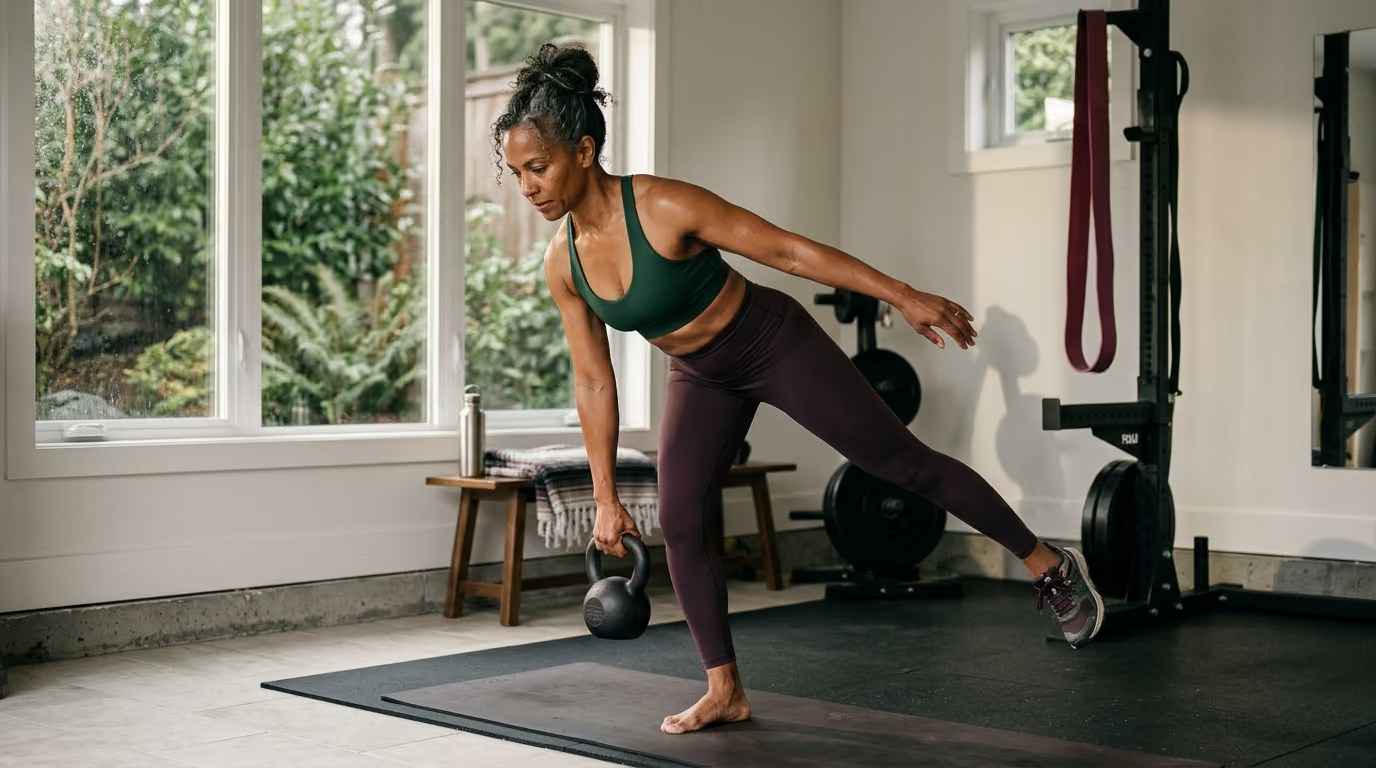

Twelve consecutive months without a menstrual cycle define menopause, requiring tailored resistance training adaptations to protect bone density, muscle mass, and workout consistency.





Adapting your physical routine during midlife is not about lowering your expectations or giving up on fitness goals. It is about matching your training choices to your current physiological capacity. Menopause brings shifts in estrogen levels, vascular control, sleep quality, and tissue repair. These shifts can make workouts feel different from week to week or even day to day.
Consistency during perimenopause and postmenopause does not mean completing the exact same workout with the exact same weight every session. Consistency means maintaining a regular habit of appropriate movement that adjusts as physical symptoms fluctuate. Modifying the dose, timing, environment, or exercise selection protects your overall fitness without forcing your body through severe fatigue or joint discomfort.
Current scientific consensus shows that physical activity supports cardiovascular health, metabolic stability, bone density, and muscle mass during midlife. Clinical guidance from major medical organizations confirms that regular aerobic and strength training can improve functional capacity and overall wellbeing. However, research also reveals clear boundaries regarding what movement can achieve. Physical training is not a direct cure for hot flashes, nor does it automatically prevent all midlife body composition changes.
Understanding what credible research supports, where evidence remains mixed, and how to apply practical exercise modifications allows you to build a resilient movement strategy. You can review our research-led publishing standards to learn more about how we evaluate medical evidence for midlife women.
The midlife transition involves distinct reproductive stages that influence how your body responds to exercise, recovery, and daily stress.
Perimenopause is the stage leading up to menopause, characterized by variable menstrual cycles and wide fluctuations in hormone levels. Menopause is defined retrospectively after 12 consecutive months without a menstrual period. Postmenopause refers to all the years following that point. Hormonal fluctuations during perimenopause can feel unpredictable, whereas postmenopause involves a lower, more stable hormonal baseline.
Estrogen receptors are located throughout the central nervous system, blood vessels, skeletal muscle, bone tissue, and joint cartilage. As ovarian estrogen production declines, multiple physiological systems adjust:
Recognizing these physiological shifts helps shift your perspective. Experiencing extra fatigue or joint stiffness after a standard workout is a sign of shifting recovery capacity, not a personal failure or loss of discipline. When you are looking for structured educational tools to navigate these changes, our midlife movement guidance offers additional practical frameworks.
To maintain fitness while managing symptoms, separate your overarching training goal from the specific exercise used to achieve it. Your training goal is the physiological adaptational stimulus you want, such as lower body strength or cardiorespiratory endurance. The delivery method is the specific movement, piece of equipment, or session structure you select.
If a barbell back squat aggravates joint stiffness on a given day, the goal of lower body strength remains valid. The delivery method can adapt to a goblet squat, a leg press machine, or a chair sit-to-stand. You preserve the beneficial muscle activation while removing excess stress from sensitive joints.
You can adjust ten specific training variables to match your daily readiness:
Modifying these variables keeps you active without overtaxing your nervous system or aggravating physical symptoms.
Managing midlife symptoms requires matching specific workout adaptations to the physical challenges you face on any given day.
Vasomotor symptoms include hot flashes and night sweats. Physical exertion naturally raises core body temperature, which can trigger an acute hot flash during a workout.
To reduce friction during thermal flare-ups:
Research evaluating exercise and vasomotor symptoms indicates that regular aerobic and resistance training can reduce how bothersome hot flashes feel in daily life. However, physical training does not consistently eliminate the physical occurrence or frequency of hot flashes. Viewing exercise as a tool for overall physical resilience rather than an instant cure for hot flashes sets realistic expectations.
Poor sleep from night sweats leaves you with reduced energy, slower reaction times, and higher perceived exertion. Pushing through a heavy, high-volume workout after a night of broken sleep increases injury risk and recovery time.
A three-level readiness model helps guide your training decisions:
Having a pre-planned Yellow Day workout prevents a poor night of sleep from ending your exercise habit. You still complete a session, but at a dose your body can absorb.
Midlife joint stiffness often presents early in the morning or at the start of a workout. Connective tissues require thorough warm-up strategies to increase joint fluid lubrication and muscle temperature.
Structure your warm-up to prepare stiff joints gradually:
When joint discomfort limits specific movements, substitute lower-impact or joint-friendly variations:
If joint stiffness warms up and decreases during movement, continuing the workout is generally safe. If joint pain worsens, causes limping, or forces you to alter your technique, stop the movement and adjust the load or exercise selection.
Brain fog can make planning, remembering multi-step routines, or operating complex equipment feel frustrating.
To lower cognitive stress during workouts:
Keeping exercise selection straightforward protects your safety and ensures you complete your session without feeling overwhelmed. You can explore additional approaches for staying consistent in our section on mental fitness and confidence strategies.
General adult exercise guidelines recommend at least 150 minutes of moderate-intensity aerobic activity per week, or 75 minutes of vigorous activity, alongside muscle-strengthening activities on two or more days per week. Clinical guidelines focused on menopause emphasize a balanced physical program including aerobic exercise, resistance training, balance work, and power development.
These weekly targets are long-term benchmarks rather than strict rules for every single week. If you are starting from low physical activity levels or recovering from severe symptom disruption, you can break activity into short, manageable blocks.
A 10-minute walk or a brief 15-minute resistance session provides clear physiological benefits. These short sessions build physical capacity gradually without overwhelming your recovery energy.
On days when fatigue or schedule constraints make a full 45-minute workout unmanageable, a short minimum effective session maintains physical strength and routine consistency.
A minimum effective session includes one exercise for each major movement pattern:
This entire session takes under 15 minutes. It maintains nervous system activation, stimulates muscle tissue, and preserves your workout habit without creating excessive physical stress.
Body composition often shifts during the menopause transition. Estrogen decline influences fat storage patterns, encouraging more fat accumulation around the abdomen, while total muscle mass naturally declines unless actively stimulated.
Scale weight alone fails to capture these physiological changes. You can lose skeletal muscle mass while gaining fat tissue without seeing significant changes on a standard bathroom scale. Tracking physical capabilities, strength levels, garment fit, and functional energy provides a far more accurate assessment of health than daily weight fluctuations.
Exercise modes play complementary roles in managing body composition and physical capability:
Combining resistance training with regular aerobic activity produces superior body composition outcomes compared to relying on either mode alone. Longitudinal studies show that middle-aged women who engage in regular strength training experience lower rates of midlife fat gain and better maintenance of skeletal muscle over time.
A common misconception is that resistance training must involve heavy, high-impact movements to produce results. Research on postmenopausal women demonstrates that low-impact resistance training programs using controlled movements, machines, or resistance bands produce clear improvements in lower-body strength and balance. Even with reduced circulating estrogen, muscle and connective tissue retain the capacity to adapt to physical strength training.
To learn more about preserving lean tissue and supporting metabolic health, review our articles on building physical strength and metabolic health.
Bone mineral density declines acceleratedly during perimenopause and the early postmenopausal years. Preserving bone strength and preventing falls requires specific movement stimuli.
Bone responds to dynamic mechanical loading. Weight-bearing physical activity puts stress on skeletal structures, signaling bone cells to maintain tissue density. However, jumping or high-impact exercises are not suitable for everyone, particularly those dealing with joint pain or lower baseline fitness.
A progressive, graded approach builds bone and joint resilience safely:
Musculoskeletal power, which is the ability to generate force quickly, declines faster with age than maximal physical strength. Power is essential for daily functional agility, such as catching your balance after a trip or stepping quickly off a curb.
Integrating power training into midlife workouts does not require heavy, dangerous movements. It can involve performing the concentric (lifting) phase of a lighter resistance exercise with intent and speed, while controlling the eccentric (lowering) phase. Examples include rising quickly from a squat and taking three seconds to lower back down, or performing fast chest presses with a light resistance band.
Balance training completes this foundation. Simple drills, such as single-leg stands during daily tasks, tandem stance walking, or stepping over low obstacles, strengthen the neuromuscular connections that prevent falls.
To maintain movement habits amidst fluctuating symptoms, use adaptable weekly templates designed for different physical scenarios.
Use this template during weeks when sleep is restorative, joint pain is minimal, and energy levels are steady.
Use this template when elevated core temperature triggers frequent hot flashes or sweating episodes.
Use this template during weeks marked by severe night sweats, insomnia, or systemic tiredness.
Use this template when joint aches or connective tissue discomfort make high-impact loading uncomfortable.
If you are looking for more symptom-specific strategies across different stages of midlife, browse our articles on understanding hormonal transition stages.
While exercise modifications can help manage day-to-day fluctuations in energy, joint comfort, and thermoregulation, physical training is not a substitute for clinical medical evaluation. Certain symptoms require professional assessment by an obstetrician-gynecologist, general practitioner, or appropriate healthcare provider.
You should seek clinical medical assessment if you experience any of the following:
Clinical options for managing significant menopause symptoms include hormonal medical treatments, nonhormonal medications, and targeted physical therapies. Modifying your workouts is a tool for supporting physical capability, not a requirement to suffer through severe medical symptoms without professional support.
Understanding what scientific studies can and cannot tell us helps protect you from unproven commercial claims and fitness fads.
Current exercise research in midlife women shows specific limitations:
Regular exercise remains one of the most effective tools for supporting cardiorespiratory fitness, muscle strength, metabolic health, and mental confidence. Treating physical movement as a health-supporting habit rather than a total cure for hormonal shifts allows for a healthy, sustainable relationship with exercise.
An adaptable exercise routine relies on objective self-monitoring. Tracking a few key variables helps you decide when to push, when to modify, and when to rest.
Before starting a workout, evaluate these five variables on a simple 0 to 10 scale:
Use your daily scoring to select your workout modification:
Instead of relying strictly on fixed weight values or precise heart rate zones, use the Rating of Perceived Exertion (RPE) scale from 1 to 10:
During perimenopause and postmenopause, aiming for an exertion level of RPE 5 to 7 on most training days maintains fitness while keeping recovery demands manageable.
Adapting your physical training during midlife protects your long-term fitness by matching movement stress to your body's changing daily capacity. Consistency is achieved not by forcing your way through severe symptoms, but by repeatedly choosing exercise modifications that keep you moving safely over time.
Start with short movement sessions lasting 10 to 15 minutes, two to three days per week. Focus on low-impact walking and simple bodyweight exercises, such as sit-to-stands or elevated push-ups. Slowly increase workout duration and frequency as your physical tolerance improves over several weeks.
Not permanently. Training capacity fluctuates based on sleep quality, symptom intensity, and hormonal shifts. Experienced athletes benefit from using flexible, auto-regulated programming that allows them to lift heavier on well-rested days and reduce loads when sleep or fatigue is impaired.
Hormone replacement therapy can relieve symptoms such as hot flashes and sleep disruption for many women, but it does not eliminate the need for intelligent workout progression. Exercise management principles regarding progressive overload, warm-ups, and recovery timing remain important regardless of hormone therapy status.
Low-impact strength training using machines, dumbbells, or resistance bands effectively builds muscle strength, supports balance, and improves joint stability. While higher loads provide a stronger stimulus for bone density, low-impact strength training delivers substantial musculoskeletal and metabolic health benefits without excessive joint stress.

Follow Refemina for research-led resources on hormonal change, strength, metabolism, nutrition, skin, intimate wellbeing and confidence through midlife.


Keep learning about the changes that shape energy, strength, confidence and wellbeing through midlife.
Explore Resources