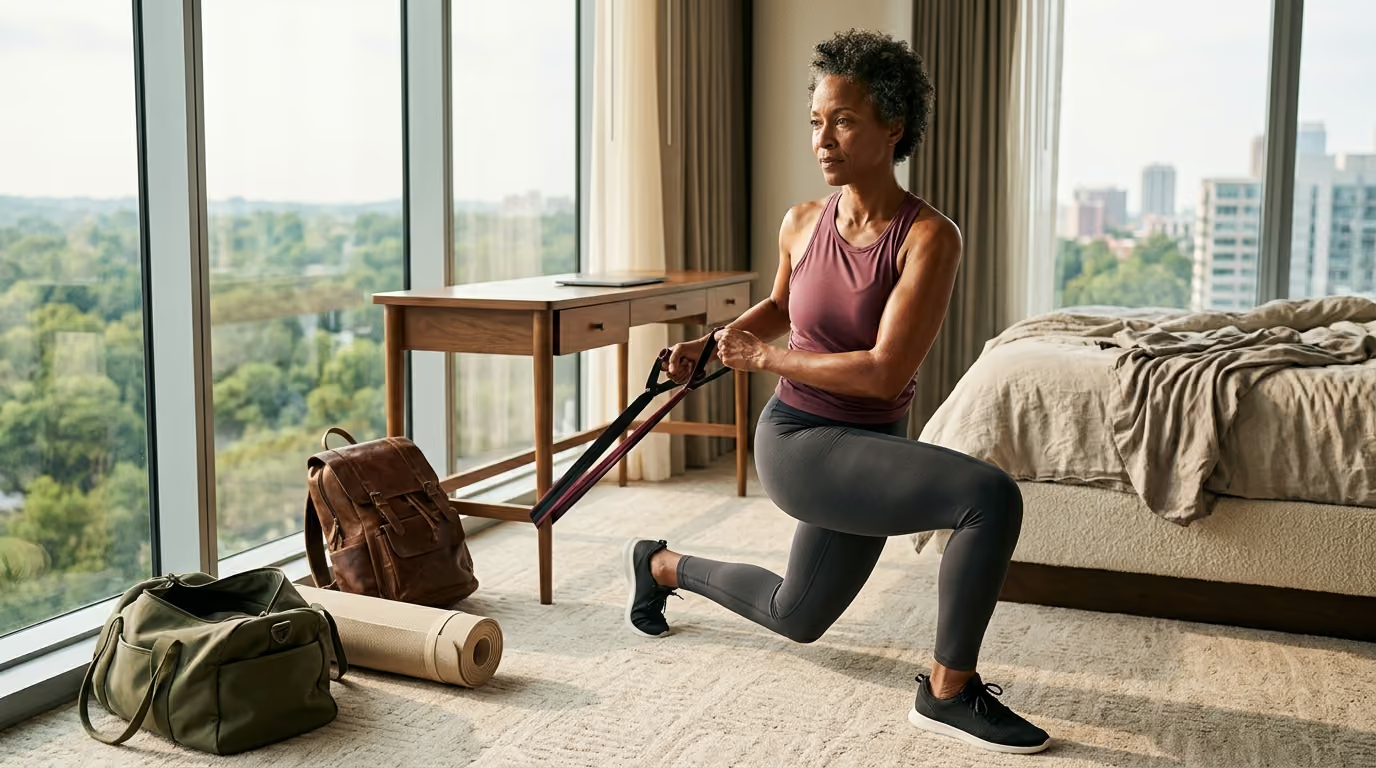
The best travel workout is often the one that looks nothing like your regular gym routine. Most active women assume that travel presents an all-or-nothing choice. You either spend ninety minutes hunting down a commercial barbell setup, or you abandon movement entirely and accept a week of lost progress.
Physiology paints a far more encouraging picture. Your muscles do not recognize whether mechanical tension comes from an Olympic barbell, a heavy suitcase, or a thick elastic resistance band anchored to a bedroom door. Muscle tissue responds to mechanical stress, high effort, and the frequency of physical stimulus.
When you travel, your goal shifts from maximum strength development to active strength maintenance and training continuity. Research confirms that preserving lean tissue and hard-won strength during a travel window requires significantly less volume than building it in the first place. By adopting a minimum effective dose mindset, midlife travelers can preserve physical capacity, protect joint health, and support energy levels without sacrificing their itinerary.
This playbook outlines a practical, evidence-informed system designed for women navigating perimenopause, menopause, and midlife busy schedules. Whether you have access to a fully equipped hotel gym, a quiet corner of a bedroom, or an afternoon set aside for walking through a new city, this guide shows you how to maintain your momentum anywhere in the world.
Understand How Muscle Responds to Disrupted Routines
To build a resilient travel strategy, you must first understand how your body handles temporary changes in training volume. Missing a few structured workouts during a holiday or business trip is not the same as long-term detraining.
Strength Maintenance Versus Strength Development
Strength development requires progressive overload. You intentionally stress the neuromuscular system with increasing loads, complex exercises, or higher volumes to force adaptation. This process expands work capacity, increases neural drive, and stimulates muscle protein synthesis for tissue growth.
Strength maintenance focuses on preserving those existing adaptations. A systematic review of resistance training detraining shows that muscle strength and functional capacity remain largely intact during short-term training interruptions when minimal stimulus continues. A separate physiological analysis indicates that as little as one hard set per movement pattern, performed periodically, can preserve muscle size and force output over weeks of reduced overall volume.
This distinction matters for midlife women focused on maintaining strength and muscle health in midlife. You do not need to spend hours sweating in a windowless hotel basement to keep your strength. You simply need to deliver a clear physical signal to your nervous system and muscles that their capacity is still required.
What Actually Happens During Detraining
Detraining occurs when a physical training stimulus is completely withdrawn over an extended period. The rate of loss depends on several factors, including your training history, age, sleep quality, and overall activity level.
During the first seven to fourteen days of complete physical rest, initial performance drops are usually tied to minor neural changes, glycogen depletion, and reduced water retention inside muscle cells rather than an immediate loss of structural muscle fiber. True muscle tissue atrophy takes longer to develop. In older adults, long-term studies show that skeletal muscle mass and explosive power begin to decline significantly after months of total physical inactivity, rather than days.
A short travel gap is not a biological catastrophe. If you keep moving, perform brief resistance sessions, and avoid total couch rest, your body holds onto its structural strength and athletic foundation.
The Physiology of Mechanical Tension on the Road
Muscles register force through mechanical tension, metabolic stress, and muscle damage. When heavy weights are unavailable, you can generate comparable mechanical tension by manipulating leverage, movement speed, range of motion, and proximity to fatigue.
When you perform a split squat using only your body weight, you can increase tension by lowering yourself over three full seconds, pausing at the bottom, and driving back up slowly. You can also move from bilateral movements, like a standard two-legged squat, to unilateral variations, like a single-leg step-down. These changes recruit high-threshold motor units in your muscles without requiring a rack of heavy iron.
Shift Your Mindset to Training Continuity
Rather than viewing travel as an interruption to your fitness routine, view it as a period of training continuity. Training continuity keeps your habits, movement patterns, and biological signals active, even when your daily structure changes.
- TRAINING CONTINUITY FRAMEWORK
- 1. RESISTANCE CONTINUITY Expose major muscle groups to near
- maximal effort twice per week.
- 2. MOVEMENT CONTINUITY Accumulate functional walking and
- break up long periods of sitting.
- 3. SKILL CONTINUITY Rehearse hinge, squat, push, pull
- and brace patterns consistently.
- 4. RECOVERY CONTINUITY Prioritize hydration, protein intake
- and restorative sleep quality.
The Four Pillars of Continuity
- Resistance Continuity: Expose your leg, back, chest, shoulder, and core muscles to challenging force at least once or twice per week.
- Movement Continuity: Stay active throughout the day by walking, climbing stairs, and avoiding long stretches of unbroken sitting.
- Skill Continuity: Keep your movement skills sharp by rehearsing fundamental mechanics like squatting, hinging at the hips, pushing, pulling, and bracing your core.
- Recovery Continuity: Maintain foundation habits around protein intake, daily hydration, and reasonable sleep patterns despite changing time zones.
Evaluating your travel movement through this four-part lens removes the guilt of missing a scheduled workout. A twenty-minute session with resistance bands paired with ten thousand steps of city exploration provides a strong stimulus that keeps your metabolic and musculoskeletal health moving forward.
What Changes in Midlife Physiology
As women transition through midlife, fluctuating estrogen levels can influence muscle protein synthesis, tissue recovery, and joint lubrication. This physiological shift makes consistent resistance stimulus and smart recovery management especially helpful while traveling.
When navigating hormonal changes during perimenopause, your body benefits from clear, unambiguous signals to maintain muscle mass and bone density. High-effort resistance training provides that signal directly to your bones and connective tissues. Maintaining a baseline of strength work while away from home protects joint stability and helps combat the fatigue associated with altered routines and jet lag.
Build a Three-Tier Travel Operating System
A common flaw in travel fitness planning is relying on a single, rigid workout schedule. When a flight gets delayed or an itinerary fills up, the entire plan collapses. A flexible three-tier operating system allows you to adapt instantly to your daily energy, time, and available equipment.
- TIER 1: FULL TRAVEL SESSION
- (30 to 40 Minutes)
- • Full hotel gym or complete band kit
- • 2 to 3 sets across all 6 core patterns
- TIER 2: COMPRESSED SESSION
- (15 to 20 Minutes)
- • Minimal gear or body weight only
- • 3 supersets targeting legs, push, pull
- TIER 3: MINIMUM VIABLE SESSION
- (5 to 10 Minutes)
- • "Movement snack" in hotel room
- • 1 hard set each: Squat, Push, Pull, Core
Tier 1: The Full Travel Session (30 to 40 Minutes)
Use Tier 1 when you have adequate sleep, lower stress, time to spare, and access to a well-equipped hotel gym or a full set of resistance bands.
- Warm-up: Five minutes of dynamic movement, bodyweight squats, and arm circles.
- Structure: Two to three sets across all six primary movement patterns.
- Intensity: Moderate to high effort, staying one to two repetitions short of technical failure.
- Optional Finish: Ten minutes of light cardio on a treadmill, exercise bike, or outdoor path.
Tier 2: The Compressed Session (15 to 20 Minutes)
Use Tier 2 when your schedule is packed, but you still have a short block of time before a morning meeting or dinner plan.
- Structure: Three paired supersets to maximize time efficiency.
- Movement Pairing 1: Unilateral lower body exercise paired with a horizontal row.
- Movement Pairing 2: Upper body push exercise paired with a hip hinge or bridge variation.
- Movement Pairing 3: Overhead press or pull paired with a core stability exercise.
- Volume: One to two focused sets per pairing with minimal rest between exercises.
Tier 3: The Minimum Viable Session (5 to 10 Minutes)
Use Tier 3 during heavy travel days, long airport layovers, acute jet lag, or demanding family trips. These brief "movement snacks" protect your mental routine and keep your nervous system connected to key patterns.
- Squat Pattern: One high-effort set of split squats or tempo bodyweight squats.
- Push Pattern: One set of push-ups against a desk, wall, or floor, taken close to technical fatigue.
- Pull Pattern: One set of band rows or isometric towel rows held with maximum tension.
- Hinge or Core Pattern: One set of single-leg glute bridges or a sixty-second plank.
The "Menu, Not Calendar" Approach
Abandon the idea that you must train on rigid days like Monday, Wednesday, and Friday. Instead, look at your week as a simple menu of opportunities.
When you encounter a window of free time and good energy, select the highest Tier session that fits the context. If travel disruptions leave you drained, pick Tier 3 or focus entirely on walking. This flexible mindset keeps you moving forward without adding unnecessary stress to your trip.
Master Bodyweight Movements for Maximum Tension
Bodyweight training often gets an unfair reputation as being too easy to preserve real strength. When performed with poor effort, fast momentum, and shallow ranges of motion, bodyweight work can fall short. When executed with precise control, full depth, and smart loading strategies, bodyweight exercises become powerful tools for strength preservation.
How to Make Bodyweight Work Challenging
To challenge your muscles without heavy weights, rely on smart exercise variations and execution variables:
- Shift from Bilateral to Unilateral: Switch from regular squats to split squats, rear-foot-elevated split squats, or step-downs. Unilateral exercises instantly double the relative load on the working leg while training hip stability.
- Extend the Range of Motion: Deepen your movement within a comfortable, pain-free range. Elevate your hands on sturdy books or handles during push-ups to let your chest sink deeper, increasing stretch under tension.
- Control Your Tempo: Lower yourself slowly over three to four seconds on every repetition. This extended lowering phase creates significant muscular tension and controlled effort.
- Incorporate Pauses: Stop moving for two full seconds at the bottom of a split squat or push-up. Pausing removes momentum and forces your muscle fibers to drive the movement from a dead stop.
- Use Mechanical Drop Sets: Start with a challenging exercise variation, like feet-elevated push-ups. When you reach technical fatigue, immediately drop to standard push-ups, then finish with incline push-ups against a desk or bed frame.
Progression Pathways for Key Movement Patterns
Knee-Dominant Patterns
- Easier Variation: Sit-to-stand from a stable chair.
- Moderate Variation: Bodyweight split squat with both feet on the floor.
- Challenging Variation: Rear-foot-elevated split squat with a four-second lowering phase.
Hip-Dominant Patterns
- Easier Variation: Two-legged floor glute bridge.
- Moderate Variation: Single-leg glute bridge with a pause at peak contraction.
- Challenging Variation: Single-leg hip thrust with upper back supported against a stable bed or hotel sofa.
Horizontal Push Patterns
- Easier Variation: Incline push-up with hands placed against a wall or sturdy desk.
- Moderate Variation: Standard floor push-up maintaining a rigid torso plank.
- Challenging Variation: Decline push-up with feet elevated on a room chair.
Horizontal Pull Patterns
- Easier Variation: Doorframe row holding the frame with both hands and leaning back.
- Moderate Variation: Single-arm doorframe row using a controlled tempo.
- Challenging Variation: Inverted row using a heavy, stable desk or a bed sheet anchored safely over a locked door.
Trunk and Core Stability
- Easier Variation: Standard dead bug focusing on slow, deliberate arm and leg extensions.
- Moderate Variation: Forearm plank maintaining active glute and abdominal engagement.
- Challenging Variation: Side plank with top leg elevated, or long-lever forearm plank.
A 20-Minute Hotel Room Bodyweight Workout
Perform three rounds of the following bodyweight circuit. Rest sixty to ninety seconds between exercises, adjusting repetitions to stay within one to two reps of technical fatigue.
- Split Squats: 10 to 15 reps per leg, using a three-second lowering tempo.
- Push-Up Variation: 8 to 15 reps, choosing an incline level that challenges you safely.
- Single-Leg Glute Bridges: 12 to 15 reps per leg, holding for two seconds at the top.
- Doorframe or Sheet Rows: 10 to 15 reps, focusing on pulling your shoulder blades together.
- Side Plank: 20 to 40 seconds per side, keeping your hips elevated and chest open.
Pack Elastic Resistance for Portable Strength
Resistance bands are one of the most practical accessories for active midlife travelers. They are lightweight, take up almost no suitcase space, and provide a versatile resistance challenge that adapts easily to small hotel rooms.
- DOOR ANCHOR SETUP
- STANDING BAND SETUP
- Locked Door Band Under Feet
- █ Door Anchor
- Band Loop ( Body )
- Pulling / \
- Force Band Loop
- Always pull door CLOSED Loop securely beneath
- toward the anchor point. midfoot or both shoes.
The Physiology of Band Resistance
Unlike dumbbells, which provide constant gravitational resistance, elastic bands offer variable resistance that increases as the material stretches. The tension is lightest at the beginning of the movement and strongest near the full contraction.
Research published in peer-reviewed sports medicine journals shows that elastic band training can produce strength gains comparable to conventional weight machines across varied populations. Bands provide a distinct neuromuscular stimulus that demands active stabilization through the entire range of motion.
Essential Band Safety Guidelines
- Inspect Before Use: Check your bands for tiny tears, discoloration, or wear before every session. Never stretch a damaged band.
- Verify Anchor Points: If using a door anchor, always place it on a door that shuts toward you, and lock the door securely. Avoid anchoring bands to towel racks, light fixtures, or lightweight furniture that could give way under tension.
- Control the Return Phase: Never allow the band to snap back after a repetition. Lower the resistance under control over two to three seconds to maximize muscle tension and protect your joints.
High-Yield Resistance Band Exercises
Banded Lat Pulldown
- Setup: Anchor the band high over a locked door or hold it overhead with straight arms.
- Execution: Pull your elbows down toward your ribs, squeezing your back muscles tightly before returning to the start with control.
Banded Pallof Press
- Setup: Anchor the band at chest height to a door or stable post. Stand side-on to the anchor point, holding the band at your sternum.
- Execution: Press the band straight out in front of your chest. Resist the elastic pull trying to twist your torso, pause for two seconds, and bring your hands back to your chest.
Banded Romanian Deadlift
- Setup: Stand on the center of a thick loop band with feet hip-width apart. Grasp the ends of the loop with both hands.
- Execution: Hinge at your hips while keeping your back flat and knees slightly soft. Drive through your heels and squeeze your glutes to stand tall against the band tension.
Banded Seated Row
- Setup: Sit on the floor with your legs extended, looping the band around the arches of your feet. Hold the ends with palms facing each other.
- Execution: Pull your elbows past your torso while keeping your chest tall and shoulder blades drawn down and back.
Adapt Your Strategy to Any Hotel Gym
Hotel gyms vary widely. Some feature modern commercial cable stacks and dumbbells, while others offer only a couple of worn treadmills and a light pair of hand weights. Approaching the facility with a clear audit process helps you build a workout with whatever is on hand.
- HOTEL GYM AUDIT
- FREE WEIGHTS
- CABLE STATIONS
- CARDIO EQUIPMENT
- • Dumbbells • Lat Pulldown • Treadmill
- • Kettlebells • Adjustable Cable • Stationary Bike
- • Adjustable Bench • Functional Trainer • Elliptical
- MATCH MOVEMENT PATTERNS
- Select 1 lower, 1 push, 1 pull, 1 core
The Five-Minute Hotel Gym Audit
Upon entering the room, quickly survey the space across four categories:
- Free Weights: Note the available dumbbell weights and check for adjustable benches.
- Cables and Machines: Look for lat pulldown stations, cable columns, chest presses, or leg press options.
- Open Floor Space: Identify a clean, firm area for floor work, lunges, or stretching.
- Cardio Equipment: Locate functional treadmills, stationary bikes, or stair climbers.
Build your workout around available movement patterns rather than searching for specific equipment. If the dumbbell rack tops out at light weights, shift to single-leg split squats or slow dumbbell presses with extended lowering tempos.
A 30-Minute Hotel Gym Workout Routine
Perform three sets of each paired superset. Rest 60 seconds between supersets to manage work volume and save time.
Superset 1: Lower Body and Upper Pull
- Dumbbell Goblet Squat (or Rear-Foot-Elevated Split Squat): 10 to 12 reps with controlled three-second eccentric lowering.
- One-Arm Dumbbell Row (or Cable Seated Row): 10 to 12 reps per side, focusing on driving the elbow back toward the hip.
Superset 2: Hip Hinge and Upper Push
- Dumbbell Romanian Deadlift: 10 to 12 reps, hinging at the hips until you feel a comfortable stretch in your hamstrings.
- Dumbbell Flat or Incline Bench Press: 10 to 12 reps with smooth, controlled reps.
Superset 3: Unilateral Strength and Core Stability
- Dumbbell Reverse Lunges: 8 to 10 reps per leg, stepping back smoothly.
- Single-Arm Dumbbell Suitcase Carry: Walk 30 paces per side while holding a heavy dumbbell at your side, maintaining a tall, upright torso without leaning.
Accumulate Daily Movement Through Purposeful Walking
While targeted resistance training preserves strength, walking remains the foundation of metabolic health, cardiovascular conditioning, and daily energy expenditure while traveling.
- DAILY MOVEMENT INTEGRATION OPTIONS
- • AIRPORT TRANSITS Walk the concourse during flight delays
- rather than sitting at the gate.
- • CITY EXPLORATION Replace short taxi or subway rides with
- a 15-to-20 minute destination walk.
- • POST-MEAL WALKS Take a light 10-minute walk after lunch
- or dinner to support digestion.
- • TRANSITION MOVES Choose stairs over elevators for up to
- three flights of stairs.
Walking as Moderate-Intensity Aerobic Activity
Public health guidelines from the World Health Organization recommend that adults accumulate 150 to 300 minutes of moderate-intensity aerobic physical activity every week. Brisk walking fits this definition, providing an accessible, low-impact option that blends easily with travel and sightseeing.
Walking helps offset long hours spent sitting in aircraft cabins, trains, buses, and conference halls. Regular walking stimulates venous blood return, supports joint health, and helps regulate blood sugar levels after restaurant meals.
What Research Says About Daily Steps
Large population studies on daily step counts show clear cardiovascular and health benefits as step volumes increase. For adults in midlife, research identifies significant health returns that often level off between 7,000 and 10,000 steps per day.
You do not need to obsess over hitting a precise, rigid step target every single day of a trip. View walking as a flexible way to stay active, explore your destination, and break up sedentary hours.
If you live with joint sensitivity or lower back stiffness, step up your walking volume gradually rather than jumping into twenty-thousand-step days in unsupportive footwear.
Smart Ways to Integrate Walking into Travel
- Airport Transits: Walk through the terminal concourses during layovers instead of sitting at the departure gate.
- Short-Distance Destination Walks: Replace short taxi or ride-share trips with fifteen-minute walks when traveling safely in walkable cities.
- Post-Meal Strolls: Take a brief ten-minute walk after dining to encourage digestion and ease post-meal sluggishness.
- Morning Sightseeing Walks: Start your morning with a brisk twenty-minute neighborhood walk before starting work meetings or group tours.
Protect Recovery, Nutrition, and Midlife Health
Training hard on the road without supporting your body's recovery systems can lead to systemic fatigue, poor sleep, and joint pain. Strategic nutrition, hydration, and sleep management ensure that your travel workouts leave you feeling energized rather than drained.
Prioritize Protein Intake on the Road
Adequate protein intake works alongside resistance exercise to preserve lean muscle tissue. Midlife women often struggle to hit optimal protein targets while traveling due to restaurant menus dominated by refined carbohydrates and convenience snacks.
The International Society of Sports Nutrition recommends a protein intake of 1.4 to 2.0 grams of protein per kilogram of body weight daily for active individuals. For an active woman weighing 65 kilograms (143 pounds), this equals roughly 90 to 130 grams of protein spread across her daily meals.
To review additional educational material and strategies, browse our practical nutrition and protein guidance library.
- TRAVEL-FRIENDLY PROTEIN OPTIONS
- CONVENIENCE / PACKABLE SOURCES RESTAURANT / DINING CHOICES
- • Single-serve whey or plant • Single-portion grilled
- protein packets chicken, fish, or tofu
- • Low-sodium turkey or beef jerky • Egg dishes, poached or
- • Pre-portioned unsalted nuts scrambled breakfasts
- • Shelf-stable lupini beans • Greek yogurt, skyr, or
- • High-protein snack bars cottage cheese cups
Managing Hydration, Sleep, and Jet Lag
Flight cabins feature low ambient humidity, which accelerates fluid loss and can exacerbate headache risks, joint stiffness, and fatigue. Drink plenty of water throughout travel days, and consider adding electrolyte tablets during long flights or warm-climate trips.
Sleep disruption from jet lag and unfamiliar hotel environments increases systemic fatigue and reduces recovery capacity. When severely sleep-deprived, prioritize a Tier 3 minimum viable workout or a light outdoor walk over an intense, high-volume strength session. Exercise should support your overall vitality rather than add to physical exhaustion.
Evaluate Where Travel Research Has Limits
While science supports resistance training and general physical activity, it is helpful to recognize where current evidence has limits.
Gaps and Boundaries in the Evidence
- Short-Term Detraining Studies: Most detraining studies examine healthy young adults or clinical populations over multi-week periods. High-quality data specifically tracking perimenopausal and postmenopausal women across brief three-to-seven-day travel disruptions remain limited.
- Step Count Data Limits: The link between daily steps and health outcomes comes mostly from observational cohort studies. While step counts correlate strongly with better health, they do not establish a strict, universal rule that applies identically to every individual.
- Commercial Travel Trends: Claims that specialized travel supplements, recovery boots, or specific short protocols cure jet lag or rebuild muscle overnight are driven largely by commercial marketing rather than rigorous scientific proof.
Understanding these boundaries allows you to approach travel fitness with calm confidence, focusing on established basics rather than over-complicated travel trends.
Apply Practical Playbooks to Common Travel Scenarios
Different trips present unique challenges. These real-world scenarios show how to adapt your strategy to match your itinerary.
Scenario 1: The Seven-Day Sightseeing Trip
- The Context: High walking volume (15,000+ daily steps), hotel accommodation without a gym, dynamic daily sightseeing schedule.
- The Playbook: Prioritize walking as your primary cardiovascular stimulus. Schedule three twenty-minute Tier 2 bodyweight and band sessions in your hotel room on non-consecutive mornings.
- Day 1: Arrive, short walk, 20-min Tier 2 Bodyweight Session
- Day 2: Full Sightseeing Walk (no structured resistance)
- Day 3: 20-min Tier 2 Resistance Band Session (mornings)
- Day 4: Full Sightseeing Walk & Mobility Work
- Day 5: 20-min Tier 2 Bodyweight & Band Combo Session
- Day 6: Full Sightseeing Walk (no structured resistance)
- Day 7: Travel Home, Tier 3 Minimum Viable Workout
Scenario 2: The High-Stress Four-Day Conference
- The Context: Long seated presentations, early breakfast meetings, full hotel gym, minimal daylight exposure.
- The Playbook: Schedule two 25-minute Tier 2 hotel gym sessions before your morning conference sessions begin. Take ten-minute brisk outdoor walking breaks after lunch to get natural sunlight, clear your mind, and support digestion.
Scenario 3: The Family Holiday with Disruptive Sleep
- The Context: Unpredictable daily routines, fragmented sleep, shared accommodation, busy family schedules.
- The Playbook: Use Tier 3 minimum viable sessions consisting of single-set movement snacks performed whenever a ten-minute window opens up. Focus on stress management, gentle daily movement, and fun family activity rather than hitting specific performance metrics.
Scenario 4: Returning Home After Long-Term Travel
- The Context: Returning home after two to four weeks away with inconsistent training and fatigue from long-distance travel.
- The Playbook: Treat your first week back as a gradual re-entry phase. Work at 70% to 80% of your normal weight loads and training volume to manage post-travel soreness and let your nervous system readjust before testing top-end strength.
Interested in reading more midlife fitness insights? You can explore our research-led approach to midlife wellbeing to learn how we evaluate strength, hormonal health, and longevity research. You can also explore our wider index of strength training resources for women to help support your ongoing routines.
Key Takeaways
- Prioritize Continuity: Travel fitness is about maintaining habits and keeping key movement patterns alive, not setting personal performance records.
- Lower the Required Dose: A short, high-effort session using bands or body weight provides enough physical stimulus to maintain strength and preserve lean tissue.
- Use a Flexible Tier System: Adapt your daily training using Tier 1, Tier 2, or Tier 3 workouts based on your real-time fatigue, schedule, and equipment access.
- Embrace Walking: Accumulating steps through city exploration, airport walking, and post-meal strolls provides reliable, low-impact cardiovascular support.
- Protect Basic Recovery: Focus on hitting baseline protein targets, staying hydrated during long flights, and prioritizing restorative sleep when traveling across time zones.
Maintaining strength during travel does not demand perfection, rigid routines, or hours spent inside a hotel gym. By focusing on mechanical tension, high effort, and movement continuity, you can travel with confidence, knowing your strength and physical capacity will be waiting for you when you return home.
Sources
- Training Session and Detraining Duration Affect Lower ...
- World Health Organization 2020 guidelines on physical ... - PMC
- 2020 WHO guidelines on physical activity and sedentary ...
- One-year cessation following resistance training differently affects neuromuscular, body composition, and functional capacity in older adults
- Use It or Lose It? A Meta-Analysis on the Effects of Resistance ...
- a position paper from the PROT-AGE Study Group - PubMed - NIH