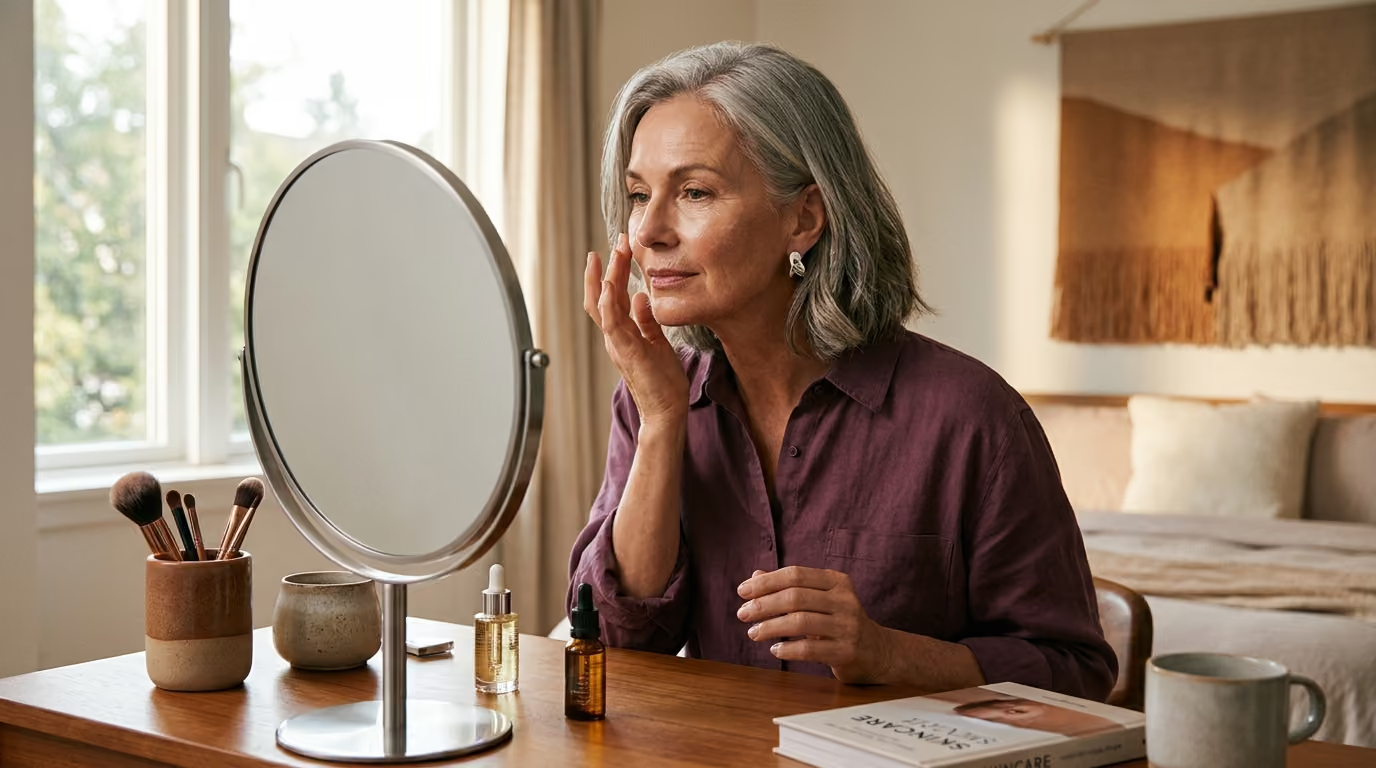

Managing visible skin aging involves evaluating evidence-based topical treatments, navigating hormonal shifts during menopause, and maintaining a practical daily skincare routine.





Managing visible skin aging is not about attempting to erase time or chasing the face of an eighteen-year-old. It is a practical set of personal choices regarding barrier support, comfort, sun protection, cosmetic intervention, and styling. Visible changes in midlife reflect a combination of cellular aging, sun exposure, and the physiological shifts of menopause.
Treating every line as an urgent medical defect creates unnecessary anxiety. Real skin health focuses on barrier integrity, hydration, tissue protection, and cancer surveillance. Aesthetic choices, whether they involve pharmacy creams, laser treatments, or makeup, remain entirely optional tools for your own comfort and confidence.
This guide outlines what clinical research says about how skin changes in midlife. It reviews the evidence behind topical ingredients, office procedures, and cosmetic styling. You will also find a clear decision framework designed to help you choose what fits your life, your budget, and your personal goals.
Skin aging occurs through two primary mechanisms that interact over time. Intrinsic aging involves chronological cellular changes, genetic factors, and the natural decline of reproductive hormones. Extrinsic aging results from environmental exposures, with ultraviolet radiation from the sun acting as the primary driver of photoaging.
Clinical research demonstrates that cumulative ultraviolet exposure causes the majority of visible premature skin changes. Chronic sun exposure breaks down structural proteins, creates mottled pigmentation, and leads to deep wrinkling. The American Academy of Dermatology confirms that daily use of a broad-spectrum sunscreen with SPF 30 or higher helps prevent new wrinkles and can reduce existing signs of sun damage.
Prescription topical treatments also hold robust scientific backing for improving photoaged skin. Systematic reviews of topical tretinoin show clear improvements in fine wrinkles, mottled hyperpigmentation, skin roughness, and lentigines. Clinical trials report measurable improvements starting as early as one month into treatment, with benefits continuing across twenty-four months of consistent use.
Evidence for over-the-counter cosmetic formulations is far more variable. While ingredients like retinol, niacinamide, and specific peptides show biological activity in laboratory models, finished commercial products differ widely in stability, concentration, and actual delivery through the skin barrier. Understanding these differences helps you invest your time and resources into treatments with documented efficacy.
The transition through perimenopause and menopause brings distinct physiological shifts to the cutaneous system. Estrogen receptors exist throughout dermal fibroblasts, epidermal keratinocytes, blood vessels, and sebaceous glands. When circulating estrogen levels decline, these cells alter their structural output and maintenance cycles.
Dermatology reviews show that collagen loss correlates more closely with postmenopausal years than with chronological age alone. Studies indicate that women lose approximately 30 percent of dermal collagen during the first five years following menopause. After this initial drop, collagen levels continue to decrease at an average rate of roughly 2.1 percent per year over the subsequent fifteen years.
Skin thickness also undergoes a steady, measurable change after menopause. Research estimates that skin thickness decreases by approximately 1.13 percent annually during the first two decades following the final menstrual period. At the same time, the synthesis of elastin and glycosaminoglycans declines, reducing natural tissue elasticity and deep hydration.
Estrogen decline also alters the epidermal barrier by increasing transepidermal water loss. The skin produces fewer natural lipids, leaving the surface prone to dryness, flaking, and heightened sensitivity to topical products. If you want to explore more about how midlife shifts influence appearance, our evidence-based guides on skin and hair changes cover these biological mechanisms in greater detail.
These physiological shifts explain why your skin may suddenly feel tight, dry, or reactive to products you used for years without issue. Recognizing that these structural shifts stem from internal biology helps shift the focus away from self-blame toward supportive, barrier-focused care.
Menopausal hormone therapy has documented effects on skin physiology, but its primary purpose remains the management of systemic menopausal symptoms. A comprehensive meta-analysis found that hormone therapy was associated with significant improvements in skin elasticity, dermal thickness, and collagen content. Some studies report measurable increases in dermal thickness within three months of starting treatment.
The same meta-analysis noted that systemic hormone therapy did not produce a statistically significant improvement in surface skin dryness. While systemic estrogens support deeper dermal structures, they do not automatically replace the need for topical barrier hydration and lipid support.
Official clinical guidelines, such as those provided by the National Health Service in the United Kingdom, emphasize that hormone therapy should be prescribed for validated indications. These indications include hot flushes, night sweats, sleep disruption, mood changes, and genitourinary symptoms. You can read more about systemic symptom care in our guide to understanding perimenopause and menopause.
Systemic hormone therapy carries specific benefits and risks that depend on your health history, age, and delivery method. Transdermal estrogens, such as patches and gels, do not increase blood clot risks in the way oral tablets can. Because of these medical variables, clinicians do not recommend starting systemic hormone therapy purely for cosmetic wrinkle reduction.
Navigating the vast market of beauty products and medical aesthetics requires a clear, logical filter. Without a structured plan, it is easy to spend excessive money on conflicting treatments that irritate your skin. A five-step decision pathway helps clarify what you actually want to address.
Start by defining the specific change you want to address rather than attempting a total facial overhaul. Pinpoint whether your main issue is surface dryness, dynamic expression lines, deep volume loss, or brown spots. A targeted routine built around one or two clear goals is easier to assess and far less likely to cause irritation.
Decide whether your objective is prevention, active improvement, simple comfort, or cosmetic camouflage.
Determine which level of intervention aligns with your personal comfort, schedule, and philosophy:
Every cosmetic intervention carries an ongoing cost in time, money, and skin recovery. Neuromodulators require repeat injections every three to four months, while prescription retinoids demand consistent nightly application and sun avoidance. Choose options whose maintenance requirements fit comfortably into your everyday life.
Never attempt to manage unexplained rashes, rapidly changing dark spots, or non-healing sores with cosmetic products. Conditions like rosacea, eczema, and skin cancers require precise medical diagnosis from a dermatologist. Cosmetic choices should only begin once underlying skin health and safety are established.
A supportive daily skincare routine does not require dozens of complicated steps. In fact, layering too many active products often disrupts the fragile skin barrier common in midlife. A grounded, research-backed daily regimen focuses on three core pillars: gentle cleansing, barrier restoration, and photoprotection.
Clean skin should never feel tight, squeaky, or dry after washing. Harsh foaming cleansers and alkaline bar soaps strip away essential surface lipids, worsening transepidermal water loss. The American Academy of Dermatology recommends using a mild, fragrance-free, non-foaming cleanser with lukewarm water.
Wash your face once in the evening to remove sunscreen, makeup, and airborne pollutants. In the morning, rinsing with plain water or applying a gentle cream cleanser is sufficient for most midlife skin types. Avoid abrasive facial scrubs, stiff brushes, and textured cleansing pads, which can cause micro-tears in thinning skin.
An effective moisturizer for mature skin combines three distinct classes of ingredients to support barrier integrity:
Apply your moisturizer while your skin is still slightly damp from cleansing to trap hydration within the tissue. If your skin feels persistently tight during colder months, layering a richer cream over a hydrating serum provides deeper comfort.
Daily sun protection remains the most effective tool for preventing additional skin aging. Ultraviolet A rays penetrate clouds and glass year-round, degrading collagen fibers and triggering irregular melanin production. Apply a broad-spectrum sunscreen with SPF 30 or higher every morning to your face, neck, upper chest, and the backs of your hands.
Tinted sunscreens containing iron oxides offer extra protection against visible light, which can worsen stubborn pigmentation such as melasma. Supplement your sunscreen with wide-brimmed hats and polarized sunglasses during peak outdoor hours.
Retinoids represent the gold standard in topical therapy for collagen production and cellular turnover. However, choosing between over-the-counter retinol and prescription tretinoin depends entirely on your skin tolerance:
Tretinoin binds directly to retinoic acid receptors in skin cells without requiring biochemical conversion. It has decades of clinical evidence showing significant reductions in fine lines, rough texture, and mottled pigmentation. Because of its potency, tretinoin commonly causes initial redness, peeling, and dryness, requiring slow introduction and careful barrier support.
Retinol is a milder precursor that skin enzymes must convert into retinoic acid through a two-step process. A double-blind randomized study found that a specific 0.2 percent retinol formulation delivered rejuvenation outcomes comparable to 0.025 percent tretinoin, with participants reporting superior comfort and fewer side effects. While retinol works more slowly than prescription options, its higher tolerability makes it an excellent choice for sensitive or thinning skin.
When introducing any retinoid, apply a pea-sized amount to completely dry skin twenty minutes after cleansing. You can buffer the product by applying your moisturizer first to reduce irritation. Never rush to use higher concentrations, as consistent use of a milder product produces better long-term results than sporadic use of a harsh one.
Peptides are short chains of amino acids that serve as cellular signaling molecules in the skin. The American Academy of Dermatology recognizes peptides alongside retinoids as topical ingredients that can help support natural collagen pathways. They offer a gentle option for individuals whose skin cannot tolerate retinoids.
Vitamin C (L-ascorbic acid) acts as an antioxidant that neutralizes free radicals generated by sun exposure and pollution. It also serves as a cofactor in collagen synthesis and helps fade surface brown spots. Niacinamide (vitamin B3) strengthens the epidermal barrier, calms redness, and improves elasticity without provoking irritation.
When topical skincare reaches its biological limits, professional in-office procedures offer alternative options for structural changes. These treatments require realistic expectations, financial planning, and an understanding of recovery times. Always consult a qualified medical provider who can evaluate your medical history and anatomy.
Neuromodulators temporarily relax specific facial muscles to soften dynamic expression lines, such as forehead creases, frown lines, and crow's feet. They work exclusively on lines caused by repeated muscle contraction and do not restore lost volume or tighten loose tissue.
Treatments take three to fourteen days to show full effects and typically last between three and four months. Side effects can include localized bruising, swelling, temporary headache, and, rarely, transient eyelid or eyebrow drooping. The American Academy of Dermatology warns against receiving injections in non-medical settings like parties or salons, where unregulated products and improper injection techniques pose serious health risks.
Dermal fillers, most commonly made of hyaluronic acid gels, restore lost volume in the cheeks, temples, jawline, and under-eye area. Unlike neuromodulators, fillers alter facial contours and provide physical support beneath the skin. Results are visible immediately and persist from six months to two years depending on the product and placement.
Soft tissue injections require advanced anatomical knowledge and carries distinct medical risks. Peer-reviewed clinical literature notes that hyaluronic acid fillers can cause vascular complications if product accidentally enters a blood vessel, with high-risk zones including the nose, glabella, and forehead. Always ensure your injector is a licensed medical professional with clear emergency protocols and dissolving agents on hand.
Energy-based treatments use light, radiofrequency, or ultrasound to stimulate collagen production and remodel dermal tissue. Understanding the difference between device categories helps you weigh downtime against expected outcomes:
These systems heat the deeper layers of skin without breaking the surface barrier, making them ideal for mild texture concerns, diffuse redness, and minor pigmentation. Recovery is minimal, usually involving a few days of mild redness and swelling, though multiple treatment sessions are generally required.
Ablative devices remove the outer layers of damaged skin to treat deep wrinkles, pronounced sun damage, and significant texture irregularities. While these lasers produce substantial structural improvements, they require one to two weeks of intensive healing, strict sun avoidance, and carry higher risks of prolonged redness or pigment changes.
Combining aesthetic treatments requires careful medical scheduling. Clinical guidance presented at major dermatology meetings indicates that neuromodulator injections should be completed at least two weeks before ablative laser resurfacing. Disclose all past and planned procedures to your practitioner to avoid adverse interactions.
Professional chemical peels use controlled concentrations of acids to remove dull surface cells and encourage epidermal renewal. Superficial peels require minimal downtime, while medium-depth peels cause visible shedding for several days. Peels must be selected carefully based on your natural skin tone to prevent post-inflammatory hyperpigmentation.
Microneedling uses fine, sterile needles to create controlled micro-injuries in the dermis, stimulating natural wound-healing cascades and collagen production. It offers a low-downtime option for improving skin texture and fine lines across various skin tones. Avoid at-home microneedling rollers, which can introduce bacteria and create irregular tears in delicate midlife skin.
Aesthetic choices extend far beyond clinical treatments and skincare routines. Makeup, hair styling, eyewear, and lighting are effective tools for managing appearance on your own terms. These approaches provide immediate, completely reversible results without medical risks, recovery periods, or high recurring costs.
As skin loses natural oil production and structural firmness, heavy, matte makeup formulations can settle into fine lines and emphasize dry patches. Shifting your products and application techniques creates a fresh, luminous finish:
Visual perception is holistic, meaning that the eye registers your overall balance rather than focusing on individual wrinkles. Thoughtful styling adjustments draw attention to your best features and reflect personal confidence:
A haircut that incorporates soft layers around the cheekbones and jawline adds movement and lifts the visual focus of the face. Subtle dimensional highlights create depth and contrast, softening the appearance of skin tone irregularities.
Well-fitted glasses serve as a stylish accessory while instantly disguising under-eye hollows, fine lines, and uneven pigment. Frames with an upward sweep at the outer corners draw the eye upward, complementing the natural contours of the face.
Wearing colors that harmonize with your skin undertone brightens your complexion and reduces the appearance of tiredness. Open necklines, such as V-necks and scoop collars, elongate the neck and create an open frame for the face.
Taking agency over your appearance through styling allows you to explore personal reinvention on your own terms. For more ideas on cultivating self-assurance during midlife transitions, read our resources on navigating midlife confidence and reinvention.
Every woman experiences midlife skin changes differently. Below are six practical scenarios showing how to apply these principles based on specific skin goals.
The skincare and aesthetic industries generate billions of dollars by promising dramatic transformations. Learning to spot marketing hype protects your financial resources and prevents unnecessary skin irritation.
Product price rarely correlates with clinical efficacy. High-end luxury creams often contain the same basic humectants and emollients as affordable pharmacy brands, with higher costs reflecting elaborate packaging, fragrance, and celebrity endorsements. Look for validated active ingredients and stable formulations rather than prestige brand names.
Marketing terms like "clean," "natural," and "chemical-free" have no formal regulatory definitions in cosmetic science. Plant extracts, essential oils, and botanical fragrances are frequent causes of allergic contact dermatitis and skin irritation in thinning midlife skin. Lab-synthesized ingredients are often purer, more stable, and less allergenic than raw plant extracts.
A persistent stinging, burning, or tingling sensation is a sign of acute barrier irritation, not proof that a product is working. Chronic low-grade inflammation accelerates collagen breakdown and worsens redness and pigmentation. If an active product causes persistent stinging, reduce its frequency or stop using it completely.
Systemic hormone therapy provides established health benefits for vasomotor symptoms, sleep issues, and bone density preservation. While it positively influences skin thickness and elasticity, it carries medical contraindications and specific risk profiles. It should never be initiated solely as an anti-wrinkle treatment.
Many commercial creams advertise marine or bovine collagen on their ingredient lists. Collagen molecules are physically too large to penetrate the stratum corneum and reach the living dermis where structural collagen resides. Topical collagen functions as a good surface humectant to bind water, but it cannot rebuild the skin's structural scaffold.
Certain skin symptoms require formal medical diagnosis and should never be addressed with over-the-counter anti-aging products alone. Schedule an appointment with a board-certified dermatologist if you experience any of the following signs:
If you are exploring broader health adjustments during this stage of life, our midlife aesthetic health resources provide additional guidance. Building a trusting relationship with a physician ensures that aesthetic choices rest on a solid foundation of dermatological health.
Hormonal fluctuations during perimenopause can trigger or worsen rosacea symptoms, including facial flushing, persistent redness, and visible blood vessels. If rosacea develops, stop using harsh exfoliating acids, physical scrubs, and strong retinoids immediately.
Switch to a gentle, non-foaming cleanser and apply a barrier-repair moisturizer containing soothing ingredients like niacinamide or colloidal oatmeal. Use a broad-spectrum mineral sunscreen containing zinc oxide, which is less irritating to reactive skin than chemical filters. Consult a dermatologist for prescription treatments such as topical azelaic acid, metronidazole, or in-office vascular lasers.
Melasma is a chronic pigment condition driven by both hormonal shifts and light exposure, requiring a delicate treatment approach. Aggressive chemical peels or high-heat laser treatments can trigger post-inflammatory hyperpigmentation, making melasma darker.
Focus on strict photoprotection using a tinted broad-spectrum sunscreen with iron oxides to block both ultraviolet and visible light. Incorporate gentle pigment-regulating topicals like azelaic acid, tranexamic acid, or vitamin C. Always consult a dermatologist before undergoing any laser or peel procedure to ensure the device is safe for melasma-prone skin.
A personal or family history of keloids or hypertrophic scarring requires caution when considering aesthetic procedures. Treatments that create controlled dermal injury, including ablative lasers, deep chemical peels, and microneedling, carry a risk of triggering abnormal scar tissue.
Always disclose your scarring history during your initial consultation with a medical provider. Your clinician may recommend non-invasive options, superficial treatments, or perform a small test patch in an inconspicuous area before proceeding with broader therapy.
Sudden skin reactivity in midlife is a common sign of an impaired epidermal barrier caused by declining lipid production. When the protective barrier weakens, everyday ingredients penetrate too deeply, triggering an inflammatory response.
To reset your skin, eliminate all active treatments, including retinoids, vitamin C, and exfoliating acids, for two to four weeks. Use only a mild, fragrance-free cleanser, a basic barrier cream containing ceramides, and a gentle mineral sunscreen. Once your skin feels calm, comfortable, and hydrated, reintroduce active ingredients one at a time, spaced several weeks apart.
Managing visible skin aging is a personal choice centered on tissue health, daily comfort, and your own aesthetic preferences. By focusing on sun protection, barrier support, and evidence-based treatments, you can care for your skin with clarity and confidence on your own terms.

Follow Refemina for research-led resources on hormonal change, strength, metabolism, nutrition, skin, intimate wellbeing and confidence through midlife.


Keep learning about the changes that shape energy, strength, confidence and wellbeing through midlife.
Explore Resources