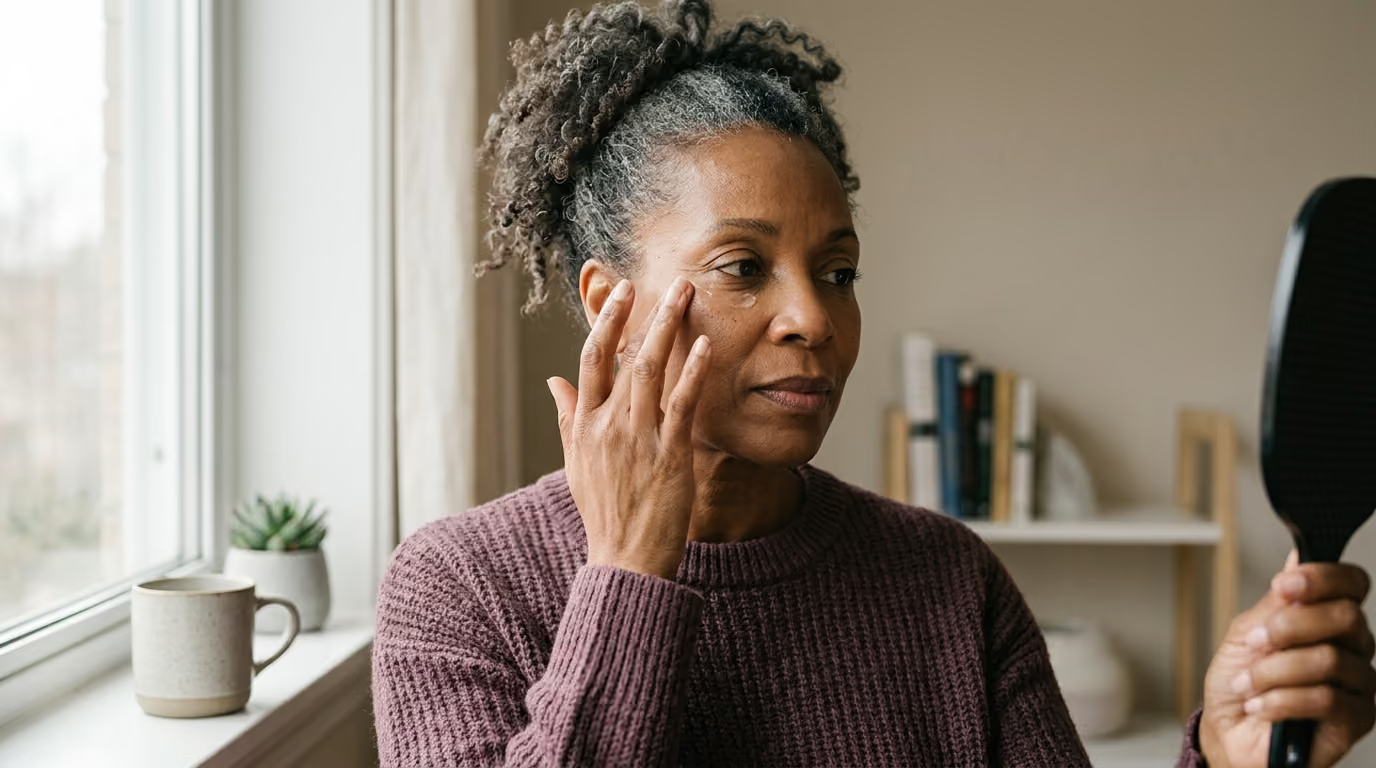

Hormonal shifts during menopause alter delicate periocular skin and tear production, causing noticeable dryness, puffiness, fine lines, and heightened cosmetic sensitivity.





Many women expect midlife eye changes to follow a single script written entirely by estrogen loss. The common assumption suggests that dry eyelids, under-eye bags, deeper creases, and stinging eyes are simply cosmetic symptoms of falling hormone levels.
Clinical research tells a far more nuanced story. The tissues surrounding the eye sit at an intersection where systemic hormones, skin barrier mechanics, tear film dynamics, and facial anatomy converge. Estrogen decline acts as a modifier rather than the sole driver of these shifts.
The skin around your eyes is among the thinnest on your body. It blinks thousands of times each day, faces constant ultraviolet light, and handles repeated product applications. When midlife biological changes begin, this delicate zone shows the impact quickly.
Understanding what is happening requires separating three distinct physical issues that are often confused. By learning how your hormones, skin barrier, and tear glands interact, you can make clear decisions about skincare, daily habits, and medical care. You can learn more about these broader changes in our guide to skin, hair, and aesthetic aging.
To navigate eye changes effectively, you must separate them into three specific clinical domains. Conflating these categories leads to wasted money on ineffective creams or missed medical diagnoses.
The first domain is periocular skin aging. This involves thinning skin, reduced elasticity, structural laxity, fine lines, and moisture loss in the tissue around the orbit. These changes are driven by chronological aging, lifetime ultraviolet radiation, and hormonal shifts.
The second domain includes eyelid and ocular-surface disease. This group covers dry-eye disease, meibomian gland dysfunction, blepharitis, and contact dermatitis. These conditions involve the tear film, the oil glands along your lash lines, and localized inflammation.
The third domain involves vision or deep orbital problems. These issues include changes in visual acuity, corneal infections, nerve problems affecting eye movement, and marked pain or swelling. They require professional clinical evaluation rather than cosmetic adjustments.
Recognizing which domain your symptoms belong to prevents unnecessary frustration. Dry eyelid skin is an external skin barrier problem. Dry-eye disease is an internal ocular surface issue with distinct biological causes.
The menopausal transition brings marked shifts in circulating sex hormones, particularly estrogen and androgens. These hormonal shifts alter the structural foundation of your skin and ocular glands. Our perimenopause and hormonal change resources examine these systemic shifts in detail.
Estrogen receptors are present throughout human skin, including dermal fibroblasts and epidermal keratinocytes. When estrogen declines, fibroblast activity slows down, leading to a measurable reduction in collagen and elastin production. This process reduces the structural matrix that keeps periocular skin firm and resilient.
Skin collagen decreases by roughly 30 percent during the initial five years following menopause. Broader analyses show that skin collagen declines by an average of 2.1 percent per postmenopausal year, while skin thickness drops by roughly 1.13 percent annually over the first 15 to 18 years. These figures represent general skin biology rather than eyelid measurements specifically, but they illustrate the structural transition taking place.
Estrogen decline also reduces the synthesis of glycosaminoglycans, including hyaluronic acid, in the extracellular matrix. Glycosaminoglycans bind water molecules to maintain dermal volume and hydration. When these molecules diminish, the thin skin around your eyes loses its internal cushion, making creasing more visible.
At the same time, epidermal barrier function weakens. The lipid layers that lock in moisture and block irritants become less organized, increasing transepidermal water loss. The eyelid skin becomes more prone to dehydration, flaking, and stinging from products you once used without trouble.
These biological changes explain why menopausal hormone therapy has mixed effects on skin appearance. Systemic hormone therapy can improve collagen density, skin thickness, and elasticity over time. Studies show it does not reliably resolve surface skin dryness, which depends heavily on barrier protection, local humidity, and gentle daily habits.
A central challenge during midlife is identifying whether dryness is happening on the eyelid skin or on the surface of the eye itself. Because these structures sit millimeters apart, their symptoms often overlap.
Dry eyelid skin manifests as external tightness, fine flaking, rough texture, and stinging when applying face creams. It is primarily a dermatological issue caused by a compromised skin barrier, contact irritants, or underlying eczema. The skin feels parched, but the eyeball itself remains comfortable.
Dry-eye disease involves the tear film covering the cornea and conjunctiva. It produces sensations of grittiness, internal burning, scratchiness, redness of the eye, light sensitivity, and fluctuating vision. When you blink, the eye may feel dry or produce reflex tearing that fails to soothe the irritation.
Large epidemiological studies indicate that dry-eye disease affects roughly 7 percent of women over age 50 compared to 4 percent of men in the same age group. Across broader international studies using varying diagnostic criteria, prevalence ranges from 7 percent to 33 percent of adults. This elevated prevalence in women reflects the hormonal sensitivity of the ocular surface.
The tear film relies on three balanced layers: a mucin layer, a watery aqueous layer, and an outer lipid layer. The lipid layer is produced by tiny meibomian glands along the rim of your eyelids. These lipids prevent tears from evaporating too quickly into the surrounding air.
During the menopausal transition, declining androgen and estrogen levels can impair both the lacrimal glands, which make aqueous tears, and the meibomian glands. When the meibomian glands become blocked or inflamed, a condition known as meibomian gland dysfunction, tears evaporate rapidly. This instability leaves the ocular surface unprotected, causing chronic inflammation and blurred vision.
Blepharitis frequently accompanies meibomian gland dysfunction. It is an inflammation of the eyelid margins caused by bacterial overgrowth, Demodex mites, ocular rosacea, or allergic sensitivity to cosmetics. It often presents with crusty lash lines in the morning, red eyelid edges, and recurring irritation that cannot be resolved with skin creams.
Midlife periocular changes generally fall into five distinct symptom patterns. Understanding the underlying mechanisms behind each change helps you choose the right approach.
When eyelid skin loses its structural lipids, water escapes rapidly through the stratum corneum. This barrier breakdown causes the skin to feel tight, especially after showering or using foaming cleansers.
The skin may develop fine, powdery flakes and a rough texture that catches makeup. Applying standard moisturizers can cause a sharp, transient stinging sensation because irritating compounds easily penetrate the compromised barrier.
This issue is primarily external and dermatological. It responds well to removing irritants and using simple, lipid-replenishing balms that restore barrier integrity without introducing allergens.
Midlife creasing around the eyes arises from four distinct mechanical and structural factors. Distinguishing these factors prevents unrealistic expectations about what topical skincare can achieve.
Dehydration lines are superficial, shallow creases that appear when the top layers of skin lack water. They often look worse at the end of the day or after cleansing and soften visibly when hydration is restored.
Dynamic lines result from repetitive muscle contractions when you smile, squint, or blink. Because the skin blinks over 10,000 times daily, these movement lines naturally form along lines of mechanical stress.
Static lines remain visible when your face is completely relaxed. They develop from cumulative sun damage, loss of dermal collagen, and the gradual thinning of the dermis during postmenopausal years.
Laxity-related folds reflect deeper structural shifts. As connective tissues, orbital ligaments, and underlying fat pads shift over time, the skin drapes loosely, creating deep creases that topical skincare cannot physically lift.
Puffiness is a descriptive observation rather than a single medical condition. It has several distinct causes that require different management strategies.
Morning fluid retention often causes symmetrical swelling that improves as you remain upright throughout the day. It fluctuates with sleep position, dietary sodium intake, seasonal allergies, or sinus congestion.
Allergic swelling is accompanied by itching, watery eyes, and redness. It occurs quickly after exposure to airborne allergens, dust, or newly introduced cosmetic products.
Inflammatory swelling arises from localized infections or gland blockages, such as a stye or chalazion. A stye is an acute bacterial infection of an eyelid oil gland that produces a tender, localized red lump. A chalazion is a non-infectious inflammatory granuloma caused by a blocked meibomian gland that forms a firm, swollen nodule.
Structural lower-lid bags are persistent anatomical changes. As the orbital septum weakens with age, normal fat pads around the eye bulge forward. Menopausal skin thinning makes this underlying tissue more visible, creating permanent fullness that does not fluctuate with sleep or diet.
Under-eye darkness is frequently treated as a single issue, yet it stems from four entirely different biological mechanisms. Treating the wrong mechanism leads to disappointment.
Brown pigmentation reflects excess melanin production in the epidermal or dermal layers. It is influenced by genetic background, cumulative sun exposure, and post-inflammatory changes following rubbing or eczema.
Vascular darkness appears as a blue, purple, or reddish hue under the eye. The skin in this area is naturally thin, and postmenopausal collagen loss makes the underlying microvascular network and orbicularis muscle far more visible.
Shadowing occurs when structural hollows develop beneath the orbital rim. Loss of bone density, deep fat absorption, or bulging fat pads create an anatomical groove that casts a shadow under overhead lighting.
Post-inflammatory hyperpigmentation develops after chronic irritation. Rubbing itchy, dry eyelids repeatedly stimulates pigment-producing melanocytes, leaving behind persistent brown discoloration.
Many women find that eye creams, mascaras, and cleansers they used for years suddenly cause burning, redness, or swelling during perimenopause. This heightened reactivity rarely represents a sudden allergy to safe ingredients.
Instead, it reflects a weakened physical barrier. When the stratum corneum thins and loses its intercellular lipids, cosmetic ingredients penetrate deeper and reach cutaneous sensory nerves more quickly.
At the same time, eyelid skin is exposed to multiple external substances daily. Eye cosmetics, sunscreens, fragrances, hair dyes transferred via fingertips, and nail polishes can all provoke irritant or allergic contact dermatitis on sensitive eyelids.
Reviewing how these issues present in daily life can help you understand your own symptoms. These illustrative models describe common clinical scenarios without attaching outcome guarantees.
A 52-year-old woman notices that her upper and lower eyelids feel tight and papery within minutes of washing her face. Her makeup clings to fine flakes, and her eyelid skin stings when she applies her usual anti-aging cream.
Her eyes are clear white, with no internal grittiness, redness, or light sensitivity. This presentation points toward periocular barrier dryness rather than an ocular surface disease.
In this scenario, stopping foaming facial cleansers, eliminating fragranced eye creams, and applying a plain, fragrance-free lipid balm directly onto damp skin addresses the barrier breakdown.
A 56-year-old woman experiences persistent burning, scratchiness, and eye fatigue after working at a computer screen. She buys richer eye creams believing her eyelids are dry, but the stinging worsens.
Her vision fluctuates when reading, and her eyes appear slightly bloodshot at the end of the day. Her symptoms indicate ocular-surface dryness and tear-film instability rather than an eyelid skin problem.
Applying heavy moisturizers close to the eyelid margin can destabilize the tear film further. Her situation warrants an optometric assessment for dry-eye disease, supportive lubricating drops, and regular screen breaks.
A 49-year-old woman develops itchy, red, swollen eyelids three days after switching to a new waterproof mascara and botanical eye serum. The skin on her upper lids becomes red and scaly.
This rapid onset of itching, redness, and swelling following new product use suggests allergic or irritant contact dermatitis. Eyelid cosmetics, botanical extracts, and preservatives are common triggers.
Managing this pattern requires stopping all eye makeup and active skincare immediately. Using cool compresses and a simple, single-ingredient emollient allows the inflammatory response to subside before medical evaluation.
A 61-year-old woman wakes up with crusty debris along her eyelashes, red eyelid rims, and a gritty sensation that lasts throughout the morning. Over-the-counter allergy drops offer no relief.
Her symptoms are consistent with blepharitis and underlying meibomian gland dysfunction. The oil glands along her lash line are inflamed, affecting tear stability.
This presentation requires clinical eye care rather than standard cosmetics. Management typically centers on dedicated eyelid margin hygiene, daily warm compresses, and targeted clinical treatments.
A 58-year-old woman has noticeable fullness beneath both lower eyelids. The puffiness is slightly more prominent upon waking but remains visible throughout the entire day.
She has no itching, pain, redness, or visual changes. This appearance reflects structural changes in the lower eyelid anatomy, including natural fat repositioning and age-related tissue laxity.
Because this is a structural anatomical shift rather than fluid retention or inflammation, topical eye creams cannot eliminate the fullness. Understanding this distinction prevents unnecessary spending on cosmetic treatments.
A 63-year-old woman develops a tender, localized red swelling on her upper right eyelid over two days. The left eye is completely normal.
The focal tenderness, rapid onset, and one-sided presentation indicate a localized eyelid problem such as a stye or chalazion rather than systemic menopausal skin changes.
One-sided swelling with localized pain requires clinical monitoring. If the swelling spreads, pain increases, or vision changes occur, a prompt medical assessment is needed.
Caring for midlife periocular skin requires a gentle, minimalist approach. Aggressive anti-aging routines frequently backfire around the eyes by triggering chronic inflammation and barrier breakdown. For broader evidence-based strategies, explore our skin and aesthetic aging resources.
Begin by cleansing gently. If your skin is dry and unsoiled, rinsing with lukewarm water may be sufficient. If you prefer a cleanser, choose a non-foaming, fragrance-free lotion that preserves skin lipids.
Apply a simple moisturizer to damp skin surrounding the orbital bone. Look for formulas containing physiological lipids like ceramides, cholesterol, squalane, or glycerin. Avoid spreading heavy creams directly onto the eyelid margins where they can clog meibomian glands.
Protect the eye area from ultraviolet radiation. Cumulative sun exposure accelerates collagen breakdown and dynamic creasing. Use a well-tolerated, broad-spectrum facial sunscreen. Mineral formulas containing zinc oxide are often less irritating to sensitive eyes than chemical filters that can sting if they migrate.
Wear sunglasses with ultraviolet protection whenever you are outdoors. Wraparound styles provide the added benefit of shielding the ocular surface from drying wind, dust, and environmental irritants.
Evening care should focus on thorough, non-traumatic cleansing and barrier repair. Never scrub or pull at thin eyelid skin to remove eye makeup.
Use a bland, fragrance-free cleansing balm or pure oil to dissolve makeup gently. Emulsify the product with lukewarm water and rinse cleanly, or wipe away residue using a soft, damp cotton pad without friction.
Follow with your regular gentle face wash if needed. Once the skin is patted lightly dry, seal in moisture with a bland barrier cream or a thin layer of petrolatum ointment on the orbital bone.
Keep potent active ingredients away from the immediate eye area. Strong retinoids, exfoliating alpha hydroxy acids, and high-concentration vitamin C serums can easily migrate into the periocular area, provoking severe peeling, redness, and chronic irritation.
When introducing any new skincare product to your routine, use a systematic testing method. Apply a small amount behind your ear or on your inner forearm for three to five consecutive days. If no redness, itching, or swelling occurs, apply a small amount to the outer corner of one eye before widespread use.
Environmental adjustments provide substantial relief for both eyelid dryness and dry-eye disease. Indoor heating and air conditioning strip moisture from the air, accelerating tear evaporation and skin dehydration. Running a cool-mist humidifier in your bedroom or workspace can help maintain ambient moisture levels.
During prolonged screen work, our natural blink rate drops by roughly 50 percent. Practice the 20-20-20 rule: every 20 minutes, look at an object 20 feet away for at least 20 seconds, and make a conscious effort to complete full blinks. Keep desk fans and car heating vents directed away from your face.
Navigating midlife eye care is as much about what you stop doing as what you start doing. Several common habits routinely worsen eye-area concerns.
The first mistake is over-treating delicate skin with multiple active serums. When fine lines or dark circles appear, it is tempting to layer peptide creams, retinoids, exfoliating acids, and botanical brighteners. This aggressive layering damages the skin barrier, creating chronic low-grade inflammation that accelerates tissue breakdown.
The second mistake is assuming that natural or plant-based products are automatically gentler. Plant extracts, essential oils, and unrefined nut oils contain complex chemical mixtures that frequently trigger contact dermatitis on the eyelids. Fragrances and preservatives are among the most common causes of eyelid cosmetic allergies.
The third mistake is using over-the-counter anti-redness vasoconstrictor eye drops to treat chronic eye irritation. These drops constrict surface blood vessels to temporarily whiten the eye, but they do not address tear film deficiency. With frequent use, they can cause rebound redness and worsen surface inflammation.
The fourth mistake is using leftover topical steroid creams near the eyes without medical supervision. While mild topical corticosteroids are sometimes prescribed for severe eyelid eczema, prolonged or unsupervised use around the eyes carries serious risks, including elevated intraocular pressure, glaucoma, and cataract formation.
The fifth mistake is treating structural lower-lid bags with aggressive lymphatic drainage massage. Firm rubbing or pulling on lax eyelid skin stretches weakened connective tissues and can aggravate inflamed oil glands along the lid margin.
While mild dryness and superficial fine lines can be managed with gentle daily care, many eye-area symptoms require professional diagnosis and treatment. Knowing whom to consult helps you receive targeted care. You can browse our evidence-based health resources to learn more about navigating healthcare decisions in midlife.
Consult a board-certified dermatologist if you develop persistent, scaly, or itchy rashes on your eyelids that do not clear after simplifying your skincare routine. Chronic eyelid dermatitis often requires prescription non-steroidal anti-inflammatory topicals, such as calcineurin inhibitors, which can be safely used around the eyes.
A dermatologist can also perform comprehensive patch testing if allergic contact dermatitis is suspected. Patch testing identifies specific chemical triggers, such as preservatives, acrylates, or fragrance components, allowing you to avoid them entirely.
Schedule an evaluation with an eye care specialist if you experience chronic internal grittiness, persistent burning, red eyes, or fluctuating vision. An eye examination can assess your tear breakup time, measure tear volume, and evaluate meibomian gland health.
Professional dry-eye management extends beyond standard over-the-counter drops. Clinicians can prescribe targeted anti-inflammatory eye drops such as cyclosporine or lifitegrast, perform in-office meibomian gland clearing procedures, or place temporary punctal plugs to slow tear drainage.
Certain periocular and visual symptoms require prompt medical attention to protect your eyesight. Seek immediate emergency eye care if you develop:
A corneal ulcer can develop quickly when a compromised ocular surface becomes infected, posing a direct risk to your vision. The American Academy of Ophthalmology advises immediate evaluation whenever these severe symptoms arise.
Midlife periocular care is filled with bold marketing claims that exceed the scientific evidence. Separating proven facts from preliminary findings helps you maintain realistic expectations.
The relationship between systemic hormones and dry-eye disease is highly complex. While low androgen levels consistently correlate with dry-eye symptoms, the exact role of estrogen remains nuanced. Both low and high estrogen states have been linked to ocular dryness in different clinical contexts.
Systemic menopausal hormone therapy does not serve as a reliable treatment for dry-eye disease. Clinical reviews indicate that hormone therapy provides limited benefit for ocular dryness and may, in some individuals, alter tear-film stability or meibomian gland function. Hormone therapy should be considered for recognized systemic indications with your physician, rather than started as an eye treatment.
Scientific data regarding collagen loss during menopause must also be applied carefully. While studies establish an average 30 percent decline in total skin collagen during the first five postmenopausal years, these measurements represent general body sites rather than eyelid tissue specifically. Eyelid skin thickness varies widely among individuals based on genetics, facial anatomy, and lifetime sun exposure.
Finally, topical cosmetics cannot alter deep anatomical structures. Eye creams can effectively hydrate the stratum corneum, improve surface texture, and temporarily soften superficial dehydration lines. They cannot remove herniated orbital fat pads, tighten stretched orbital ligaments, or replace lost facial bone structure.
Recognizing these scientific boundaries allows you to invest your energy into habits and treatments that provide reliable benefits.
Understanding the distinct biological mechanisms behind eye-area changes allows you to care for this delicate zone with calm confidence and realistic expectations.

Follow Refemina for research-led resources on hormonal change, strength, metabolism, nutrition, skin, intimate wellbeing and confidence through midlife.


Keep learning about the changes that shape energy, strength, confidence and wellbeing through midlife.
Explore Resources