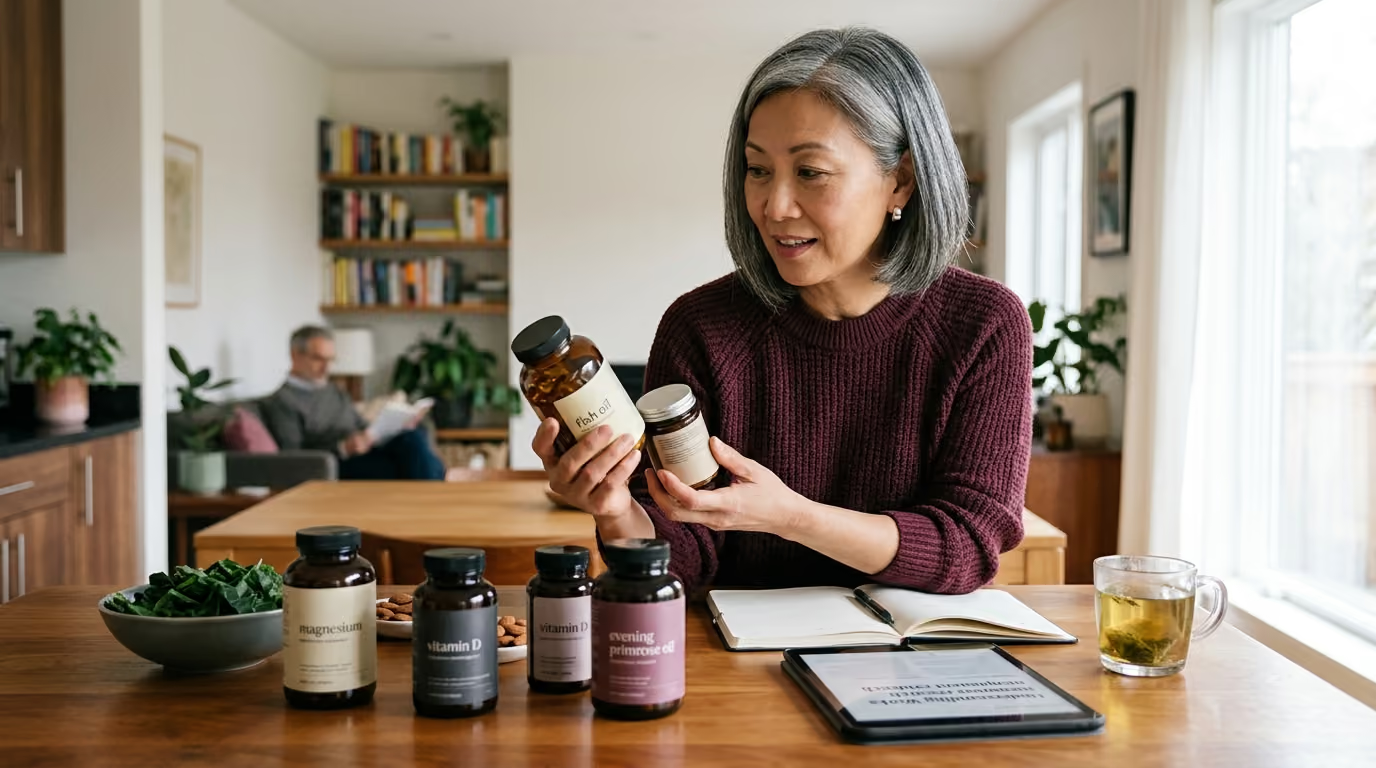

Accurate evaluation of menopause supplements helps you identify proven ingredients like black cohosh while avoiding proprietary blends, deceptive marketing, and unverified relief claims.





You stand in the pharmacy aisle or scroll past social media ads, looking at rows of amber glass bottles. The labels offer enticing promises: hormone balance, calm sleep, steady energy, metabolic resets, and freedom from hot flushes. The packaging looks sophisticated, clinical, and reassuringly natural. When you are waking up drenched in sweat at three in the morning or struggling through brain fog at work, those promises sound like an immediate lifeline.
Yet looking closely at the research reveals a very different landscape. Natural does not mean proven, risk-free, or hormone-free. The 2023 Menopause Society position statement explicitly states that supplements and herbal remedies are not recommended for vasomotor symptoms such as hot flushes and night sweats. The National Center for Complementary and Integrative Health (NCCIH) reports that herbs, phytoestrogens, and other supplements have not been clearly proven to relieve menopause symptoms, while long-term safety and drug interactions remain uncertain.
This guide provides a research-led framework for evaluating menopause supplements. It walks through what the clinical evidence really shows for specific symptoms, how products are regulated, what safety risks exist, and how to have a clear conversation with your healthcare team.
Many women assume that a supplement sold on a major pharmacy shelf has passed rigorous safety and efficacy tests. That assumption is understandable, but it is incorrect. In the United States, dietary supplements are legally regulated as a subcategory of food rather than pharmaceutical drugs.
Under the Dietary Supplement Health and Education Act of 1994, the Food and Drug Administration (FDA) does not review or approve dietary supplements for safety and effectiveness before they reach the market. Pharmaceutical drugs must undergo years of phase one through phase three clinical trials to prove they work better than a placebo and carry acceptable risks. Supplement manufacturers face no such premarket requirement. A company can design a formulation, print a label, and sell it directly to consumers without presenting clinical proof to regulators beforehand.
This regulatory gap creates several specific issues that every consumer should understand:
Marketing materials frequently use misleading language to imply federal endorsement. A brand might advertise that it is made in an FDA-registered facility or that its formula is doctor-approved. Registration is simply an administrative requirement for manufacturing facilities. It does not mean the FDA tested the product, inspected the ingredients, or verified that the supplement relieves hot flushes, fatigue, or mood changes.
Supplement labels often feature proprietary blends, complexes, or matrices. These formulations group multiple herbs, roots, and extracts under a single total milligram weight. While the company lists every ingredient, it conceals the exact amount of each component.
This practice prevents you from knowing whether an ingredient is included at a therapeutic dose or merely in a microscopic amount for marketing appeal. It also makes it difficult for a doctor or pharmacist to evaluate safety, toxicity, or drug interactions. A product might list black cohosh on the label, but provide only a fraction of the dose evaluated in published clinical research.
Because supplements lack mandatory premarket chemical verification, product quality varies widely across the industry. An analysis of FDA warning letters from 2007 through 2016 identified 776 adulterated dietary supplements across 146 companies. These products contained unapproved pharmaceutical ingredients, synthetic drug analogues, or unlisted compounds.
Adulteration is especially common in products marketed for energy, weight loss, and sexual enhancement. The FDA has repeatedly warned consumers about products sold for sexual performance that contained hidden pharmaceutical compounds such as sildenafil, tadalafil, or related synthetic molecules. Heavy metal contamination, pesticide residues, and fungal toxins also appear in low-quality botanical batches. Third-party testing seals can verify that a product contains what is listed on the label, but third-party certification does not prove that the formula treats your symptoms.
Understanding whether a supplement works requires understanding what happens in your body during midlife. The hormonal transition is not an illness, nor is it a single, uniform event that a single pill can fix.
Perimenopause is the transitional phase during which ovarian production of estrogen and progesterone becomes irregular. Ovulation becomes unpredictable, menstrual cycle lengths fluctuate, and hormone levels rise and fall sharply. Menopause is reached retrospectively once you have gone twelve consecutive months without a menstrual period. Postmenopause describes the years that follow this milestone.
Midlife symptoms arise from a combination of shifting biology, natural aging, and life circumstances:
Because these symptoms have distinct biological mechanisms, no single supplement can address all of them at once. When a product claims to balance female hormones while eliminating night sweats, shedding abdominal weight, restoring libido, and lifting brain fog, it is making claims that contradict reproductive endocrinology. Learning more about perimenopause and midlife hormonal shifts helps separate biological transitions from broad marketing claims.
Before spending money on any supplement, you can use a systematic, research-based framework to analyze its marketing claims. This framework helps you separate plausible clinical effects from unverified hype.
Broad terms like menopause support or hormone harmony mean very little. Clarify exactly what you hope to change:
An ingredient with modest data for hot flushes might have zero evidence for energy, sleep, or body composition. Pinpointing your target symptom prevents you from taking complex multi-ingredient formulas that have never been tested for your specific concern.
Advertisements routinely use relative percentage reductions to make modest clinical outcomes sound dramatic. A product might claim to reduce hot flushes by 40 percent. If the study participants started with an average of ten hot flushes a day and dropped to six, that is a noticeable shift.
If participants started with two mild episodes per day and dropped to 1.2 episodes, a 40 percent relative drop represents an absolute change of less than one episode daily. That small absolute difference may not justify the ongoing financial cost, the potential digestive upset, or the unknown long-term safety profile. Look for the absolute change and compare it to the placebo response.
Menopause clinical trials consistently show strong placebo effects. In studies tracking hot flushes, participants in the placebo group frequently report a 20 to 40 percent reduction in symptom frequency and severity.
This occurs because hot flushes naturally fluctuate over weeks and months, while the act of participating in a study, keeping a symptom diary, and receiving supportive attention influences perception. If an uncontrolled study shows that women felt better after taking an herb for eight weeks, that improvement may reflect the placebo response or the natural waxing and waning of symptoms rather than the herb itself. Reliable evidence requires randomized, double-blind, placebo-controlled trials.
Botanical supplements are complex chemical mixtures. The concentration of active compounds depends on the plant species, the specific part used (such as the root versus the leaf), the growing soil, the harvest timing, and the solvent extraction method.
Much of the published positive research on black cohosh, for example, has evaluated a specific standardized isopropanolic extract known as Remifemin. Clinical findings from that specific, highly standardized extract cannot be applied to generic, raw black cohosh root powder packed into a capsule. When evaluating a study, check whether the commercial product you are considering matches the exact extract, standardized marker percentage, and daily dose used in the trial.
Not all scientific publications carry equal weight. Consider where a claim sits on the clinical hierarchy:
Vasomotor symptoms are the primary reason women seek menopause supplements. While dozens of botanical extracts are marketed for temperature spikes, the overall clinical evidence remains weak and inconsistent.
Black cohosh is one of the most widely used botanicals for vasomotor symptoms. A 2023 review of 22 studies evaluated black cohosh preparations and found potential benefits for overall menopausal symptoms and hot flushes. The same review noted that black cohosh did not show meaningful improvements for anxiety or depressive symptoms.
The broader body of research is far from uniform. NCCIH notes that studies evaluating different black cohosh preparations have produced conflicting results, with earlier systematic reviews finding insufficient evidence to confirm clear clinical benefits over placebo.
Safety requires careful attention. Case reports have linked black cohosh use with rare instances of acute liver injury. A comprehensive review identified four documented case reports of possible hepatotoxicity. If you choose to trial black cohosh, you should stop use and consult a physician if you experience signs of liver stress, such as jaundice (yellowing of the skin or eyes), unusually dark urine, severe fatigue, nausea, or pain in the upper right abdomen.
Phytoestrogens are plant-derived compounds that possess a chemical structure resembling human 17-beta-estradiol. The most common varieties are isoflavones, found in soybeans, chickpeas, and legumes. These molecules can bind weakly to human estrogen receptors, particularly estrogen receptor beta.
NCCIH summaries indicate that soy isoflavone supplements or isolated soy protein may produce a modest reduction in hot flush frequency and severity compared to placebo. The magnitude of this improvement is generally small. Some rigorous systematic reviews have concluded that soy foods or concentrated extracts offer minimal benefit over a placebo control.
There is also an important physiological distinction between eating whole soy foods and swallowing high-dose, isolated isoflavone pills. Incorporating edamame, tofu, tempeh, and soy milk into your meals provides high-quality plant protein, fiber, and micronutrients. In contrast, concentrated isoflavone extracts deliver high doses of biologically active compounds without the whole-food matrix. NCCIH warns that the long-term safety of high-dose phytoestrogen extracts remains unproven, with some research noting concerns about potential endometrial thickening with prolonged, unmonitored use.
Red clover contains four main isoflavones: biochanin A, formononetin, genistein, and daidzein. It is widely sold as a natural alternative to hormone replacement.
Clinical trial findings for red clover are inconsistent. NCCIH reports that studies examining red clover for hot flushes and blood lipid profiles have yielded conflicting, inconclusive results. While red clover displays weak estrogenic activity in laboratory assays, that biological mechanism has not translated into predictable symptom relief in well-controlled human trials.
Dong quai (Angelica sinensis), kava (Piper methysticum), evening primrose oil, and chasteberry (Vitex agnus-castus) frequently appear in over-the-counter hormone formulas.
Rigorous randomized trials have repeatedly found no conclusive evidence that dong quai, evening primrose oil, or kava relieve hot flushes or night sweats. Kava also carries significant warnings regarding severe liver toxicity, leading several international regulatory agencies to restrict its sale. Traditional use across centuries provides interesting historical context, but it does not replace modern clinical confirmation of safety and effectiveness.
Midlife fatigue, insomnia, and mood fluctuations are common, distressing, and complex. Supplements targeted at these symptoms frequently overpromise while delivering inconsistent results.
Midlife sleep disruption can stem from multiple overlapping causes. Drenching night sweats can wake you up repeatedly, while primary insomnia, stress, and sleep apnea can prevent deep rest.
A comprehensive 2026 systematic review evaluating plant-derived supplements for midlife women concluded that evidence for sleep improvement remains inconclusive. Many commercial menopause sleep formulas combine sedating botanicals such as valerian root, passionflower, chamomile, and lemon balm with low doses of melatonin.
These herbs may promote mild drowsiness, but they do not alter the underlying thermoregulatory instability that causes night sweats. Taking multi-herb sedatives alongside prescription sleeping medications, sedating antidepressants, or alcohol can increase the risk of daytime grogginess, impaired motor coordination, and falls.
Hormonal fluctuations can affect neurotransmitter systems, contributing to irritability, tearfulness, and anxiety during perimenopause. However, dietary supplements should not be treated as a substitute for evidence-based mental health care.
Black cohosh, despite its popularity for general symptoms, has not been shown to reduce anxiety or depressive symptoms in clinical reviews. St. John's wort (Hypericum perforatum) has demonstrated mild to moderate antidepressant properties in general adult populations, but it carries severe, dangerous drug interaction risks.
St. John's wort induces the cytochrome P450 3A4 liver enzyme and P-glycoprotein drug transporters. This means it can rapidly clear life-saving medications from your bloodstream, dramatically lowering the effectiveness of oral contraceptives, blood thinners, immunosuppressants, statins, chemotherapy agents, and HIV medications. Combining St. John's wort with prescription SSRI or SNRI antidepressants also raises the risk of serotonin syndrome, a potentially life-threatening condition.
Fatigue is a symptom, not an underlying diagnosis. Buying an over-the-counter energy booster or adrenal support formula without medical testing can obscure serious conditions that require targeted treatment. Midlife exhaustion is frequently driven by:
Supplements marketed for energy often hide high doses of caffeine, guarana, green tea extract, or other stimulants. These ingredients can elevate blood pressure, provoke heart palpitations, and worsen midlife anxiety and insomnia. Supplementing with iron, vitamin D, or B vitamins is clinically appropriate only when laboratory blood tests confirm an actual deficiency.
Sexual wellbeing and metabolic health are common areas of midlife concern. Unfortunately, they are also the areas where supplement marketing is most aggressive and adulteration risks are highest.
Declining sexual desire in midlife is rarely caused by a single isolated factor. Painful intercourse caused by vaginal dryness, pelvic floor tension, sleep deprivation, stress, relationship strain, and mood changes all interact to diminish interest in sex.
Oral dehydroepiandrosterone (DHEA) is widely marketed over the counter as a youth-restoring hormone precursor that will revitalize libido and vitality. However, systematic reviews of oral DHEA in menopausal women show no meaningful improvement in overall quality of life, uncertain effects on general menopausal symptoms, and only small, inconsistent effects on sexual function. Oral DHEA is converted systemically into androgens and estrogens, and clinical trials report frequent androgenic side effects, including facial acne, oily skin, and unwanted facial hair growth.
Oral DHEA supplements must not be confused with prescription vaginal prasterone (vaginal DHEA). FDA-approved vaginal prasterone inserts have been studied in rigorous trials for postmenopausal women suffering from moderate-to-severe dyspareunia (painful intercourse) caused by vulvovaginal atrophy. In these clinical studies, local vaginal application improved vaginal tissue thickness, lowered pH, and reduced intercourse pain with minimal systemic absorption. The success of a prescription vaginal medication does not mean that swallowing over-the-counter oral DHEA pills will safely solve systemic menopause issues or low desire.
Furthermore, products marketed online as natural female libido enhancers carry significant contamination risks. The FDA has repeatedly discovered undeclared prescription phosphodiesterase inhibitors, such as sildenafil and tadalafil, in products claiming to be herbal sexual boosters.
As estrogen levels decline, women experience shifts in fat storage patterns, often noticing an increase in abdominal circumference even if their total weight remains stable. Age-related sarcopenia (loss of skeletal muscle mass) further slows basal metabolic rate.
Systematic reviews of plant-derived midlife supplements have found the evidence for body mass index reduction, waist circumference reduction, and metabolic change to be inconclusive. No over-the-counter supplement has been proven to selectively burn menopause belly fat or reset a sluggish midlife metabolism.
Claims of rapid, effortless fat loss are red flags. The FDA's historical review of adulterated supplements revealed that weight-loss formulations are among the most frequently contaminated with banned pharmaceutical stimulants, appetite suppressants, and unlisted laxatives. Sustainable metabolic health relies on progressive resistance training, adequate dietary protein, cardiovascular exercise, and restorative sleep rather than commercial fat-burner blends. Exploring guidance on body composition and metabolic health provides a more reliable foundation than proprietary weight-loss pills.
The widespread belief that botanical supplements are harmless because they grow from the earth can lead to dangerous clinical complications. Plant extracts contain biologically active chemicals that can strain organs and interact with prescription medications.
Women with a personal history of estrogen-receptor-positive breast cancer, ovarian cancer, uterine cancer, or endometriosis must exercise extreme caution with phytoestrogen supplements. While eating moderate amounts of whole soy foods as part of a balanced diet appears safe, swallowing concentrated, high-dose isoflavone or red clover extracts is a different matter.
Because these compounds interact with human estrogen receptors and have unproven long-term safety records, women with hormone-sensitive cancers should never begin phytoestrogen or DHEA regimens without direct clearance from their oncology team.
Botanical extracts must be processed and cleared by the liver. Several herbs popular in menopause formulations, including black cohosh, kava, and high-dose green tea extract, have been linked to documented cases of liver toxicity and elevated hepatic enzymes.
If you have pre-existing liver conditions, hepatitis, or take medications that affect liver enzymes (such as statins, acetaminophen, or certain antifungal drugs), you should avoid multi-botanical hormone blends.
Supplements can change how your body absorbs, metabolizes, and eliminates prescription drugs. Consider these documented interactions:
If you are scheduled for any surgical procedure, inform your surgical and anesthesia teams of every supplement, vitamin, and herbal product you consume. Many anesthesiologists recommend discontinuing all botanical supplements at least two weeks prior to surgery to minimize unexpected bleeding complications, blood pressure swings, and anesthesia interactions.
Navigating the supplement marketplace requires a critical eye. Watch out for these common patterns and misleading sales tactics.
Snake venom, poison ivy, and tobacco are entirely natural, yet none are safe for regular consumption. Natural plant compounds have powerful biochemical actions. Treating herbs as if they carry zero risk leads to accidental overdoses, unmonitored side effects, and missed drug interactions.
Customer testimonials on product websites and social media platforms are not scientific data. Menopause symptoms naturally rise and fall over time. When an online reviewer states that a pill cured her hot flushes within a week, that change could be a normal symptom fluctuation, a strong placebo effect, or the result of other lifestyle changes she made at the same time. Many online supplement reviews are also sponsored, incentivized, or commercially curated.
Consumers often assume that a supplement containing twenty different herbs, vitamins, and minerals must be superior to a single-ingredient product. In reality, combining numerous ingredients into a single capsule usually means each ingredient is present in an underdosed, non-therapeutic amount. If you experience an allergic reaction, digestive distress, or liver irritation from a 20-ingredient blend, identifying which component caused the harm is nearly impossible.
When a supplement brand cites a clinical study showing a statistically significant improvement, read the numbers carefully. In scientific research, statistical significance simply means the observed difference was unlikely to have occurred by pure chance. It does not mean the improvement was large enough to change how you feel in your daily life. A supplement that reduces your hot flushes from eight episodes a day to seven might achieve statistical significance in a large trial, but you may still feel miserable and exhausted.
You do not need to hide supplement use from your doctor. Having an open, evidence-led discussion helps ensure your symptom-management plan is safe, targeted, and effective.
Looking at common clinical scenarios illustrates how to apply this critical framework in daily life:
A 52-year-old woman experiences ten hot flushes a day and buys a popular online supplement containing black cohosh, red clover, and a proprietary hormone-balance blend. Rather than assuming the blend is effective, a careful evaluation examines whether the product discloses exact ingredient dosages and whether it matches studied extracts. Because she takes a daily statin for cholesterol, she reviews the potential liver and metabolic interactions with her physician before starting, setting a six-week trial period with a symptom diary to track whether her hot flushes actually decrease.
A 48-year-old woman suffering from exhaustion and heavy perimenopausal periods starts taking high-dose over-the-counter iron pills. Treating fatigue by assumption is risky. Instead of self-prescribing iron, she visits her clinician for comprehensive bloodwork, including a complete blood count and ferritin panel. The lab work confirms whether iron deficiency is present, while allowing her doctor to evaluate her heavy bleeding and rule out thyroid dysfunction.
A 56-year-old woman experiencing painful intimacy and low sexual desire considers purchasing oral DHEA supplements online. A thorough medical assessment reveals that her primary issue is genitourinary syndrome of menopause, characterized by severe vaginal dryness and tissue thinning. Rather than taking systemic oral DHEA, which shows weak clinical evidence and causes acne, she discusses evidence-based treatments with her doctor, including local vaginal therapies and pelvic floor support. Exploring resources on intimate wellbeing and sexual health helps contextualize these distinct physiological concerns.
When preparing for your next appointment, bring physical bottles or clear photos of the Supplement Facts panels for everything you take. You can structure your conversation around these practical questions:
A structured approach to symptom management pairs lifestyle measures, such as evidence-based midlife nutrition and strength training, with validated medical care. For a wider perspective on navigating midlife transitions, you can review our comprehensive menopause guides and resources.
Clear-headed health guidance requires acknowledging what medical science does not yet know.
The vast majority of supplement clinical trials are small, lasting only eight to twelve weeks and involving fewer than one hundred participants. We have very little high-quality, long-term safety data on what happens when a woman takes concentrated botanical extracts or phytoestrogen pills daily for five, ten, or fifteen years.
Furthermore, the commercial marketplace changes much faster than independent academic research can evaluate it. New proprietary branded ingredients, mushroom complexes, and adaptogenic blends appear on store shelves every month backed by marketing buzzwords rather than peer-reviewed human trials. When a supplement promises comprehensive midlife transformation, the clinical evidence is almost always preliminary, mixed, or entirely absent.
Revisit this framework whenever you are considering a new supplement purchase, when your symptoms change noticeably, or when your doctor prescribes a new medication. You should also return to this guide if a supplement you currently take stops providing noticeable relief or begins causing unexpected physical symptoms.
Understanding menopause supplements means looking past marketing promises and focusing on clear clinical evidence. High-quality research shows that supplements rarely deliver the broad relief their labels suggest, making careful evaluation and open medical guidance your most reliable path forward.

Follow Refemina for research-led resources on hormonal change, strength, metabolism, nutrition, skin, intimate wellbeing and confidence through midlife.


Keep learning about the changes that shape energy, strength, confidence and wellbeing through midlife.
Explore Resources