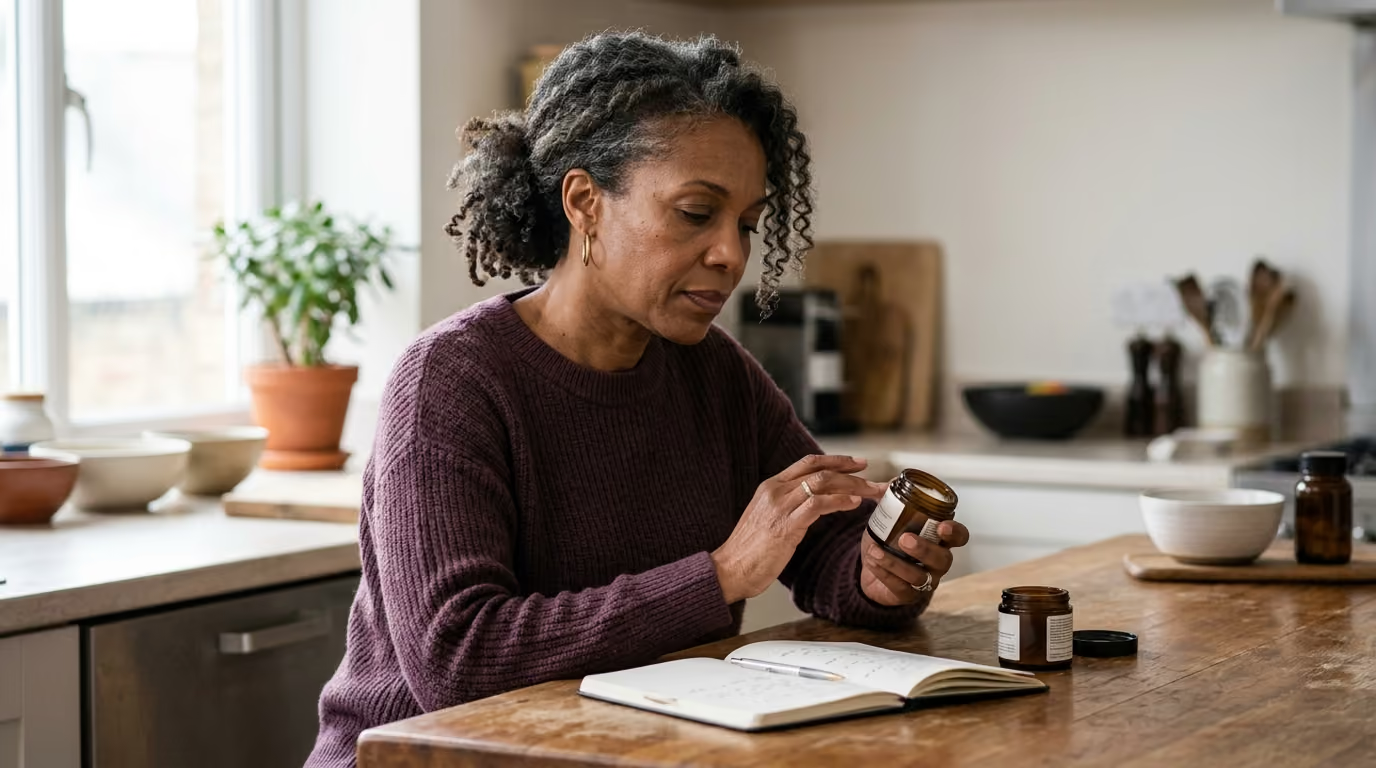

Rich creams often fail to relieve menopausal dryness because restoring mature skin requires matching specific humectants, ceramides, and occlusives to your barrier needs.





You wash your face in the morning, apply a generous layer of cream, and feel comfortable for about an hour. By mid-afternoon, your skin feels tight, looks flat, and catches on powder or collar lines. The rich cream that worked throughout your thirties now seems to sit on the surface without sinking in. At the same time, lighter gels evaporate almost immediately.
This experience is common during perimenopause and postmenopause. Skincare marketing often frames this shift as a sudden deficit that requires exotic botanicals or aggressive anti-aging treatments. Scientific evidence presents a clearer picture. Menopausal skin changes are primarily a barrier management challenge. Declining hormone levels alter the structure of the stratum corneum, reduce natural water-holding molecules, and accelerate moisture loss through the skin surface.
Addressing these changes does not require a dozen separate products or expensive jars. It requires an understanding of formulation logic. Moisturisers are not single-action items. They are functional delivery systems combining humectants, emollients, and occlusives. When you match the specific balance of these three elements to what your skin barrier is lacking, daily comfort and skin flexibility return.
Research demonstrates that skin hydration is determined by two factors. The first is the amount of water moving into the outer skin layer from deeper tissue. The second is the rate at which that water evaporates into the surrounding air. In dermatology, this evaporation rate is measured as transepidermal water loss, or TEWL.
During the menopausal transition, both sides of this equation shift. Estrogen receptors are present throughout skin tissue, including fibroblasts, keratinocytes, and sebaceous glands. When circulating estrogen declines, dermal and epidermal processes slow down. Keratinocyte proliferation decreases, leading to a thinner epidermis. The synthesis of intercellular lipids drops, which weakens the outer protective barrier and causes transepidermal water loss to rise.
At the same time, dermal glycosaminoglycans, which include natural hyaluronic acid, decrease in quantity. These molecules serve as internal water reservoirs. When their levels drop, the skin holds less intrinsic water. Clinical reviews show that nearly one-third of dermal collagen is lost within the first five years following menopause, followed by an average decrease of approximately 2.1 percent each year over the next fifteen years. This loss correlates directly with postmenopausal duration rather than chronological age alone.
A topical moisturiser cannot replace lost dermal collagen or mimic systemic hormones. The evidence shows that a well-formulated moisturiser performs distinct physical functions. It supplies humectants to attract water into the stratum corneum. It delivers emollients to fill spaces between shedding skin cells. Finally, it creates an occlusive seal to prevent moisture from evaporating into the environment.
Understanding these physical actions prevents frustration. When a product fails to relieve dryness, the issue is rarely a lack of luxury ingredients. The formula simply contains the wrong ratio of humectants, lipids, or sealants for your current barrier status.
The skin barrier is often compared to a brick wall. The corneocytes, or dried skin cells, act as the bricks. The intercellular lipids, composed of ceramides, cholesterol, and free fatty acids, act as the mortar. In healthy skin, this lipid matrix keeps irritants out and locks moisture in.
Midlife hormonal shifts alter both the bricks and the mortar. Estrogen deficiency reduces the production of ceramides and alters their chain length. When the lipid matrix becomes irregular, microscopic gaps form between corneocytes. Water escapes rapidly through these gaps, leaving the skin prone to irritation from cleansers, weather, and active ingredients.
Natural sebum production also declines after menopause. Sebum is the skin's native emollient and occlusive coating. As sebaceous gland output drops, the surface loses its natural lubrication. This makes the skin feel rough and fragile.
It is helpful to distinguish between dry skin and dehydrated skin during this stage of life:
Many women experience both conditions simultaneously during midlife. Using a pure facial oil on dehydrated skin will soften the surface without solving water loss. Applying a watery humectant serum to lipid-depleted skin can pull water upward, where it evaporates, leaving the surface drier than before. For deeper insight into these biological shifts, you can read our hormonal transition resources covering midlife physiology.
Dermatological literature categorises moisturising ingredients into three distinct functional classes. Every effective moisturiser relies on a combination of these elements. Understanding how each class works allows you to read an ingredient list and predict how a product will perform on your face or body.
Humectants are hydrophilic substances that draw water into the outer layer of the skin. They can pull water from the deeper dermis as well as from humid ambient air. Common humectants include glycerin, hyaluronic acid, urea, panthenol, sorbitol, and propylene glycol.
Humectants relieve the tight, parchment-like sensation common in menopausal skin. They temporarily plump the upper layers of the epidermis, softening fine dehydration lines. However, humectants cannot hold water permanently on their own. In dry environments, a pure humectant applied without an occlusive layer can increase evaporation from the skin.
Emollients are lipids and oils that slip into the micro-fissures between desquamating corneocytes. They replace missing surface lipids, creating a flexible surface. Common emollients include squalane, caprylic/capric triglyceride, jojoba oil, cetyl alcohol, stearyl alcohol, and ceramides.
Emollients improve skin comfort, flexibility, and light reflection. If your skin feels rough, looks dull, or catches when you blend makeup, emollients are the missing factor. While some emollients provide mild barrier protection, their primary job is textural smoothing rather than water retention.
Occlusives are hydrophobic substances that form a physical film over the stratum corneum. This barrier reduces transepidermal water loss. Established occlusives include petrolatum, dimethicone, mineral oil, paraffin, beeswax, and shea butter.
Occlusives do not add moisture to the skin on their own. Instead, they trap existing water inside. For mature skin with compromised lipid production, an occlusive agent is necessary to ensure that humectant hydration does not evaporate within hours of application.
While all humectants attract water, they differ in molecular weight, barrier interaction, and secondary biological effects. Choosing the right humectant depends on your skin's tolerance and degree of roughness.
Glycerin, also known as glycerol, is a low-molecular-weight compound naturally present in the skin. It serves as an internal humectant and stabilizes the lipid bilayer within the stratum corneum.
Urea is a component of the skin's natural moisturising factor (NMF). It functions as both a humectant and a keratolytic agent depending on its concentration in a formula.
Hyaluronic acid is a large glycosaminoglycan capable of binding significant amounts of water. Topical skincare products often feature various molecular weights to target different levels of the stratum corneum.
As natural lipid synthesis declines in midlife, topical products containing physiological lipids help reinforce the skin barrier. The most studied of these ingredients are ceramides.
Ceramides make up approximately 50 percent of the intercellular lipid matrix in healthy stratum corneum. When applied topically in balanced formulations, ceramides help restore the multi-lamellar structure between corneocytes, reducing transepidermal water loss and soothing irritation.
The presence of the word ceramide on a label does not guarantee results. Research indicates that barrier repair occurs most efficiently when ceramides are formulated alongside cholesterol and free fatty acids. This combination mirrors the natural 3:1:1 or 1:1:1 molar ratios found in human skin.
Selecting an occlusive comes down to balancing protection against cosmetic texture. Heavy occlusives offer the highest moisture retention, while lighter occlusives provide a cleaner aesthetic finish.
Petrolatum remains the standard for reducing transepidermal water loss, blocking up to 98 percent of water evaporation from the skin. It creates an inert, non-reactive physical barrier over damaged tissue.
Dimethicone is a silicone-based polymer that forms a breathable, water-resistant barrier across the skin. It provides a velvety, matte finish while reducing friction and moisture loss.
Facial oils act primarily as emollients with light-to-moderate occlusive properties. Squalane, a saturated derivative of squalene, is light, stable, and mimics natural human sebum. Plant oils such as jojoba, argan, and rosehip deliver fatty acids that soften the skin surface.
Skin needs vary across midlife based on climate, genetics, hormone levels, and current routines. The following profiles outline formulation targets for common presentations.
If your skin feels tight after washing but does not show obvious flaking or redness, your main priority is water binding supported by light occlusion.
When skin feels rough to the touch, looks dull, and shows fine scaling across the cheeks or jawline, you need lipid replenishment alongside humectants.
Body skin has fewer sebaceous glands than the face, making shins, forearms, and elbows vulnerable to severe dryness and scaling during menopause.
Hormonal shifts can lower the skin's irritation threshold. If products cause stinging, itching, or redness, you need a simplified formula focused on barrier recovery.
Some women experience midlife adult acne alongside surface dehydration. Heavy creams can clog pores, while drying acne washes worsen barrier damage.
Topical retinoids support cell turnover and collagen production, but they increase transepidermal water loss and peeling, especially in estrogen-depleted skin.
The performance of any moisturiser depends on the routine surrounding it. Even a well-formulated cream will fail if the skin barrier is stripped by harsh washing or if the product is applied to dry skin.
Cleansing should remove dirt and sunscreen without depleting the intercellular lipids of the stratum corneum. Foaming cleansers that rely on sodium lauryl sulfate strip natural oils, raising skin pH and worsening barrier damage.
Switch to a non-foaming cream, lotion, or oil cleanser. Wash with lukewarm water rather than hot water, which dissolves protective surface lipids. Pat skin gently with a towel, leaving a light film of moisture on the surface.
Humectants bind water most effectively when surface moisture is already present. Applying a glycerin or hyaluronic acid product to dry skin in an arid room can pull moisture from deeper tissue layers.
Apply your hydrating serum or light moisturiser within sixty seconds of cleansing, while your skin remains visibly damp.
After applying humectants, seal that hydration with an emollient-rich cream. The emollient smooths cell edges, while the occlusive agents in the cream stop the water from evaporating.
Your skin's rate of moisture loss changes across seasons and environments:
The beauty industry frequently markets complex claims that obscure simple formulation realities. Understanding these common pitfalls saves time and money.
Price reflects packaging, branding, and marketing budgets rather than humectant concentration or barrier performance. A basic drugstore cream containing glycerin, petrolatum, and ceramides will often protect menopausal skin better than a luxury cream loaded with fragrance and plant extracts.
Topical hyaluronic acid is a humectant. It draws water into the stratum corneum to smooth surface texture temporarily. It does not penetrate into the deep dermis to rebuild structural volume or reverse hormonal collagen decline.
Facial oils provide emollients and light occlusion, but they contain zero water. Applying oil to dehydrated skin softens surface flakes while leaving the underlying tissue dry. Always apply a water-based humectant or cream before applying an oil.
Unrefined plant oils and botanical extracts contain complex chemical mixtures, including natural terpenes and fragrances, that can trigger contact dermatitis in reactive skin. Synthetically derived, purified ingredients like petrolatum, glycerin, and dimethicone have lower irritation rates.
When skin feels rough, the initial instinct is often to use physical scrubs or strong chemical peels. In menopausal skin, roughness is usually caused by impaired barrier function and poor desquamation due to dehydration. Aggressive exfoliation strips the remaining lipid matrix, worsening dryness and redness. Focus on hydration and gentle urea products instead.
Unscented products may contain masking fragrances designed to neutralize the chemical odor of raw ingredients. These masking agents can still trigger reactions in sensitive skin. Always look for products explicitly labeled fragrance-free.
While dryness and increased sensitivity are normal features of the menopausal transition, some skin symptoms indicate underlying dermatological conditions that require professional care. A standard moisturiser cannot resolve inflammatory dermatoses or infections.
Consult a board-certified dermatologist or healthcare provider if you experience:
A dermatologist can prescribe targeted anti-inflammatory treatments, topical calcineurin inhibitors, or non-steroidal barrier creams to resolve inflammation before you resume your regular skincare routine. For broader lifestyle support during midlife, our nutrition and weight management articles cover systemic factors supporting overall wellness.
While the physical mechanics of humectants and occlusives are established in dermatological science, some areas of mature skincare research remain limited:
Viewing product claims through this critical lens helps you avoid paying a premium for unproven ingredient stories.
Managing menopausal skin is an ongoing practice of barrier support rather than a search for an anti-aging cure. When you balance water-binding humectants, smoothing emollients, and protective occlusives, your skin can remain comfortable, supple, and resilient throughout midlife.
When to revisit this resource: Return to this formulation guide when seasons change, when your current cream stops providing lasting comfort, or whenever you are evaluating a new product before buying.

Follow Refemina for research-led resources on hormonal change, strength, metabolism, nutrition, skin, intimate wellbeing and confidence through midlife.


Keep learning about the changes that shape energy, strength, confidence and wellbeing through midlife.
Explore Resources