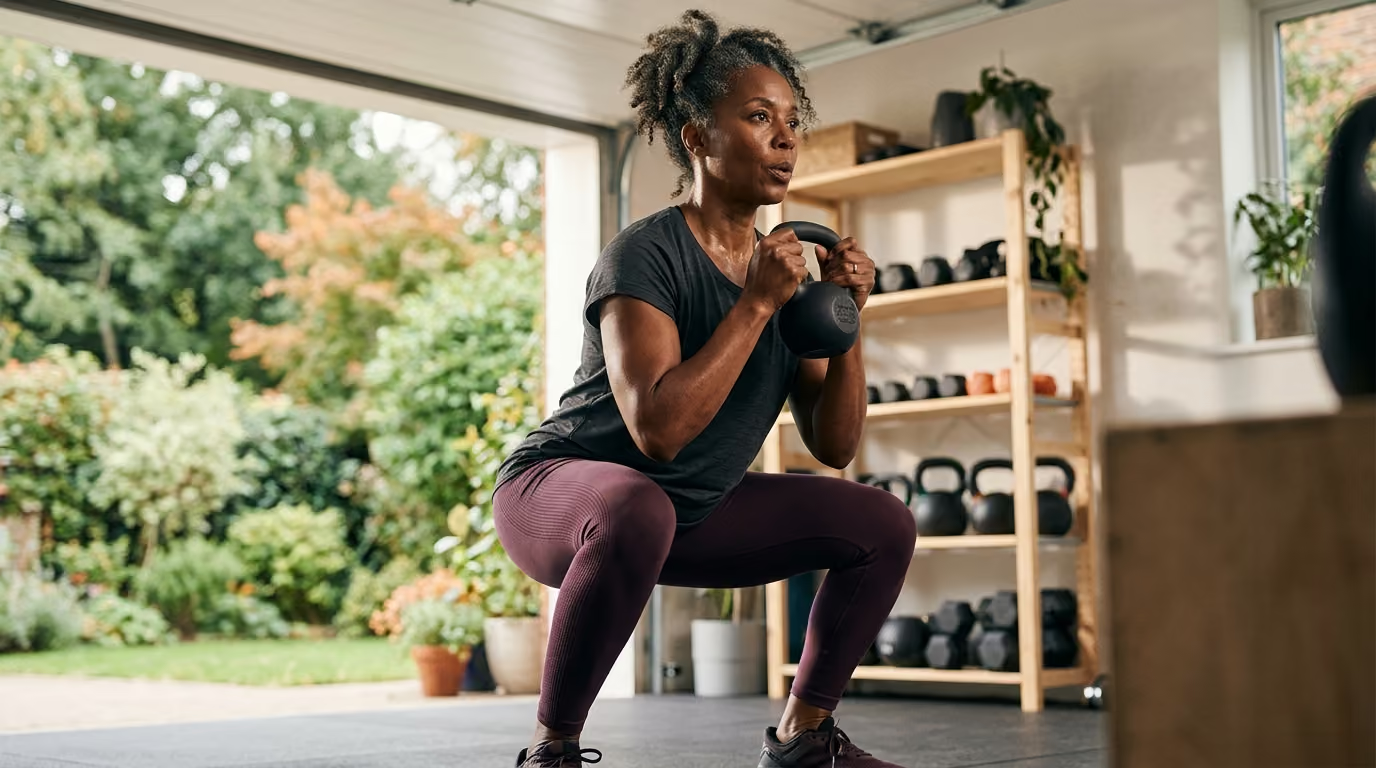

Looking in the mirror during midlife reveals physical changes that targeted strength, aerobic fitness, and posture training can realistically improve.





Many women search online for ways to fix sagging skin, lift their jawline, or reverse midlife body changes through exercise alone. The internet offers countless promises that a specific workout can erase wrinkles, melt away menopausal belly changes, or restore youthful skin elasticity overnight.
The reality is more grounded, yet genuinely encouraging. Regular physical movement creates profound changes in physical capability, body composition, functional posture, and overall presence.
Exercise cannot replace targeted dermatological treatments or reverse intrinsic biological aging. It can build a body that feels capable, resilient, upright, and visibly supported.
Current scientific research offers a nuanced view of how physical activity affects the female body during perimenopause, menopause, and the postmenopausal years. Systematic reviews show that resistance training consistently improves muscular strength, functional fitness, and lean tissue preservation in women aged 45 to 80. Research on postmenopausal women demonstrates clear gains in force production, even when visible muscle enlargement remains modest.
Changes in body composition follow a distinct pattern across the clinical literature. A meta-analysis of resistance training in postmenopausal and older women identified consistent increases in lean body mass. The same data showed that lifting weights alone did not produce statistically significant reductions in total fat mass across all trial groups. Broader exercise interventions combining resistance training and cardiovascular work often yield more noticeable reductions in fat tissue alongside lean mass gains.
The evidence connecting physical activity directly to skin structure is intriguing but early. A landmark 16-week clinical trial examined the effects of aerobic training and resistance training on human skin. The researchers found that both exercise modes improved skin elasticity and upper-dermal structure. Resistance training showed a distinct association with increased dermal thickness, mediated partly by circulating factors and gene expression within dermal fibroblasts.
These structural skin findings represent preliminary evidence rather than a clinical cure for skin aging. The research indicates that systemic physical activity supports the biological environment of connective tissues throughout the body. It does not prove that regular movement can lift deep facial folds, erase established creases, or replace lost facial fat pads.
Physical training produces consistent improvements in functional movement, balance, and motor control. Systematic investigations into exercise programs for mature adults show measurable improvements in gait velocity, chair-rise performance, and joint stability. These functional adaptations alter how a person carries herself throughout the day, creating a visible change in physical presentation.
Midlife brings substantial biological shifts that influence physical form and skin quality. Estrogen receptors exist throughout muscle tissue, bone matrix, blood vessels, and dermal layers. When ovarian hormone production fluctuates and declines, multiple organ systems experience structural changes simultaneously.
The American Academy of Dermatology notes that women lose approximately 30 percent of their dermal collagen during the first five years following menopause. After this initial drop, collagen loss continues at a more gradual rate of about 2 percent per year over the subsequent two decades. This decline leads to thinner skin, reduced tensile strength, increased dryness, and visible slackness across the body and face.
Hormonal shifts also alter lipid distribution and metabolic dynamics. Lower estrogen concentrations often coincide with a redistribution of adipose tissue from subcutaneous peripheral sites to deeper visceral compartments around the abdomen. Subcutaneous fat in the face and extremities may decrease, while central body fat increases. This physiological reality explains why midlife body composition changes can occur even without a major shift on the bathroom scale.
Chronological aging, sun exposure, and genetic factors compound these hormonal events. Decades of ultraviolet light exposure break down elastin fibers and create uneven pigmentation. Tendons and ligaments lose water content, while resting basal metabolic rate declines slightly as muscle mass diminishes with age. Understanding these multiple biological drivers prevents women from blaming themselves for normal physiological transitions.
Learning about midlife skin and aesthetic changes helps separate inevitable hormonal shifts from areas where physical activity can make a practical difference. When physical changes are not viewed as personal failure, choosing effective movement habits becomes far simpler.
Resistance training involves challenging muscles against external resistance using free weights, cable machines, elastic bands, or body weight. For midlife women, this training modality provides the strongest stimulus for maintaining and rebuilding skeletal muscle tissue.
Muscle tissue acts as the physical foundation beneath the skin and subcutaneous fat. When muscle mass declines, limbs can appear less defined and joints lose structural support. Building muscle creates a firmer underlying frame that visibly alters the contours of the upper arms, shoulders, back, glutes, and thighs.
Strength gains often develop well before visible increases in muscle size occur. Initial improvements in physical capability stem from neural adaptations, meaning the brain and nervous system learn to recruit muscle fibers more efficiently. A woman may double the weight she can lift on a leg press without seeing a massive expansion in leg circumference. This adaptation increases muscle density, firming the tissue and improving physical function.
Hypertrophy, or the physical enlargement of muscle fibers, requires specific training parameters. Research in middle-aged and older populations suggests that achieving noticeable muscle growth may require performing roughly six to eight challenging sets per muscle group each week. These sets must be carried out with adequate resistance, bringing the muscles close to momentary fatigue.
Targeted strength work alters the relationship between the torso and extremities. Developing the upper back and shoulder muscles creates a broader upper frame, which can make the waist appear more tapered by comparison. Strengthening the gluteal complex and quadriceps provides lift and shape to the lower body, changing how trousers, skirts, and dresses fit.
Understanding strength and body composition in midlife allows women to focus on progressive training rather than endless calorie burning. Building a robust muscular framework provides functional stability while supporting physical contours throughout the menopausal years.
Aerobic exercise involves rhythmic, sustained physical activity that elevates heart rate and respiratory demand over an extended duration. Common examples include brisk outdoor walking, lap swimming, road cycling, rowing, and low-impact dance.
Cardiovascular exercise stimulates microvascular circulation throughout the entire body. During sustained physical activity, blood flow increases to delivery oxygen and nutrients to contracting muscles and peripheral tissues. The familiar post-exercise skin flush reflects capillary dilation in the dermis, which assists in thermal regulation and delivers temporary nutrient flow to the skin layers.
This circulatory stimulus offers systemic benefits, but it should not be confused with permanent skin rebuilding. Improved blood flow supports cellular waste removal and tissue health across all organs. It does not permanently erase sun damage, tighten loose skin folds, or replace lost facial volume.
Aerobic training plays a meaningful role in daily energy expenditure and metabolic fitness. Regular cardiovascular sessions improve insulin sensitivity, cardiovascular efficiency, and lung capacity. When combined with appropriate nutrition, aerobic conditioning helps manage visceral fat accumulation around the midsection.
The World Health Organization recommends that adults accumulate 150 to 300 minutes of moderate-intensity aerobic physical activity weekly, or 75 to 150 minutes of vigorous-intensity activity. Moderate intensity means breathing faster while still being able to speak in short sentences. Vigorous activity makes full conversation difficult.
Integrating sensible midlife nutrition and weight management alongside cardiovascular exercise supports sustainable body composition changes. Relying solely on cardio while severely restricting food intake often leads to muscle loss and persistent fatigue. Balanced aerobic work builds cardiovascular stamina, which translates into greater physical vitality and ease of movement throughout daily life.
Posture is often misunderstood as a rigid, static pose that a person must hold continuously throughout the day. In sports medicine and biomechanics, posture is better defined as dynamic alignment and postural capacity. This concept refers to the body's ability to organize its joints efficiently across various tasks and positions.
Midlife postural shifts often result from hours spent sitting, working at screens, carrying heavy loads, or adapting to joint discomfort. Common patterns include a forward head position, rounded shoulders, a collapsed thoracic spine, and an anterior pelvic tilt. These alignments alter how clothing hangs, shorten the perceived length of the torso, and create unnecessary muscular strain across the neck and lower back.
Specific movement patterns help restore dynamic alignment:
Improving functional posture creates immediate, visible changes in physical presentation. When the rib cage lifts off the pelvis and the shoulders rest comfortably back, the neck appears longer and the abdominal wall appears flatter without any actual change in body fat.
These adjustments represent mechanical reorganization rather than cosmetic tissue lifting. A stronger upper back and mobile hips allow a woman to move with rhythm, ease, and physical presence. This upright ease changes how a person occupies space far more effectively than rigid, tense posture ever could.
Translating physical activity research into daily life requires looking past idealized fitness marketing. Changes in midlife appearance happen gradually through consistent, repeatable habits rather than dramatic, grueling transformations.
Consider an illustrative model of a 52-year-old woman named Elena who works at a desk and begins lifting weights twice per week alongside daily walking. After four months of consistent training, her bathroom scale shows almost the exact same number as when she started. Her upper back feels stronger, her posture in meetings looks noticeably upright, and her work trousers fit more loosely through the waist and hips.
In this scenario, Elena experienced meaningful body recomposition: she gained functional muscle and reduced subcutaneous fat while maintaining stable scale weight. Her skin on her neck and arms still shows normal signs of midlife change, but her physical presence appears firmer and more energetic.
Consider another illustrative model of a 58-year-old woman named Marcus who increases her running mileage substantially while restricting calories to change her appearance. After several months, she feels constantly exhausted, sleeps poorly due to night sweats, and notices lingering knee discomfort.
Marcus's experience illustrates the limits of excessive cardiovascular training without adequate recovery or strength support. Her plan caused physical depletion rather than vitality. Adjusting her routine toward two strength sessions, moderate walking, and adequate food intake allows her body to recover, improving both her energy and her physical tone.
Physical capability fundamentally shifts internal self-perception. When a woman regularly lifts challenging weights, walks briskly up steep hills, and carries heavy bags with ease, her relationship with her body changes. The body becomes an instrument of strength and action rather than an object evaluated solely on visual flaws.
Building physical capacity fosters genuine confidence and self-perception. Women who feel physically capable often report feeling more comfortable in their clothing and more willing to participate in social and professional settings. This confidence changes facial expression, eye contact, and physical carriage in ways that no cosmetic product can replicate.
Physical changes should never become another source of midlife pressure. Consistency with moderate, enjoyable movement yields far better long-term outcomes than brief periods of extreme, punishing exercise.
Creating an effective movement routine in midlife requires balancing training stimulus with adequate recovery. Sleep disruptions, joint sensitivity, and fluctuating energy levels mean that workouts must build resilience rather than cause physical breakdown.
A balanced program includes multi-joint compound exercises that deliver maximum functional benefit in minimal time.
This adaptable weekly schedule meets established health guidelines while allowing sufficient time for recovery and daily life responsibilities.
Progress should be measured by performance and consistency rather than soreness or sweat volume. Women returning to exercise after a long break can start with just one or two sets per exercise using light weights or resistance bands.
As movements feel comfortable and stable, progressive overload can be applied safely:
Recovery must remain an active priority. Skeletal muscle repairs and grows during periods of rest, particularly during deep sleep. Consuming adequate dietary protein, staying hydrated, and managing stress levels support the physical adaptations generated by your workouts.
Physical activity is remarkably safe for most midlife women, but certain symptoms and conditions warrant professional medical oversight before beginning or progressing an exercise program.
Consult a qualified healthcare provider or physical therapist if you experience any of the following symptoms:
Exercise selection should always reflect your individual medical history:
Movement should always support your broader health. Tailoring exercises to your body's specific needs creates a sustainable practice that builds strength without causing injury or setbacks.
Clear-headed health guidance requires identifying what current science does not support. Separating real physiological adaptations from exaggerated marketing promises protects women from disappointment and unnecessary expense.
Physical training produces systemic health benefits, but it has distinct biological limits:
The wellness industry frequently misinterprets early scientific findings to sell products, programs, and supplements. The 16-week clinical study showing improvements in dermal elasticity after exercise is a prime example. While the trial demonstrated measurable improvements in upper-dermal matrix structure, some fitness brands claimed this proved weight training replaces facelifts or cosmetic dermatology.
Responsible interpretation recognizes that exercise supports the skin's biological environment from within. It operates as one supportive pillar of healthy aging alongside sun protection, proper nutrition, targeted skincare, and evidence-based medical care.
Treating exercise as a tool for strength, capability, and health produces genuine physical satisfaction. When unrealistic aesthetic promises are set aside, movement becomes a rewarding, lifelong investment in your physical wellbeing.
Regular strength training, aerobic activity, and dynamic mobility work rebuild muscle support, refine functional posture, and improve physical vitality during midlife. Exercise cannot reverse all visible aging or erase established wrinkles, but it provides a strong, upright foundation that helps you move through life with confidence.
To translate this resource into meaningful daily habits, consider taking these practical steps:

Follow Refemina for research-led resources on hormonal change, strength, metabolism, nutrition, skin, intimate wellbeing and confidence through midlife.


Keep learning about the changes that shape energy, strength, confidence and wellbeing through midlife.
Explore Resources