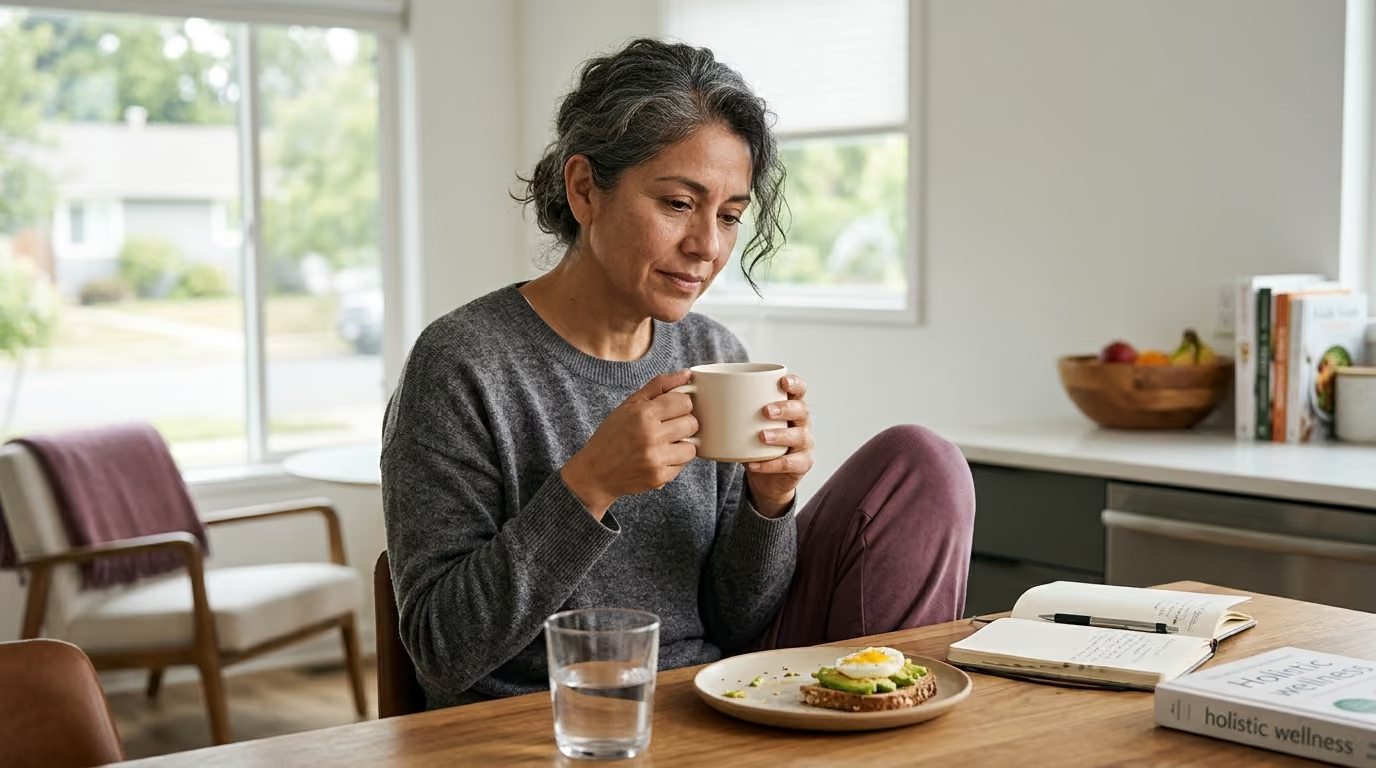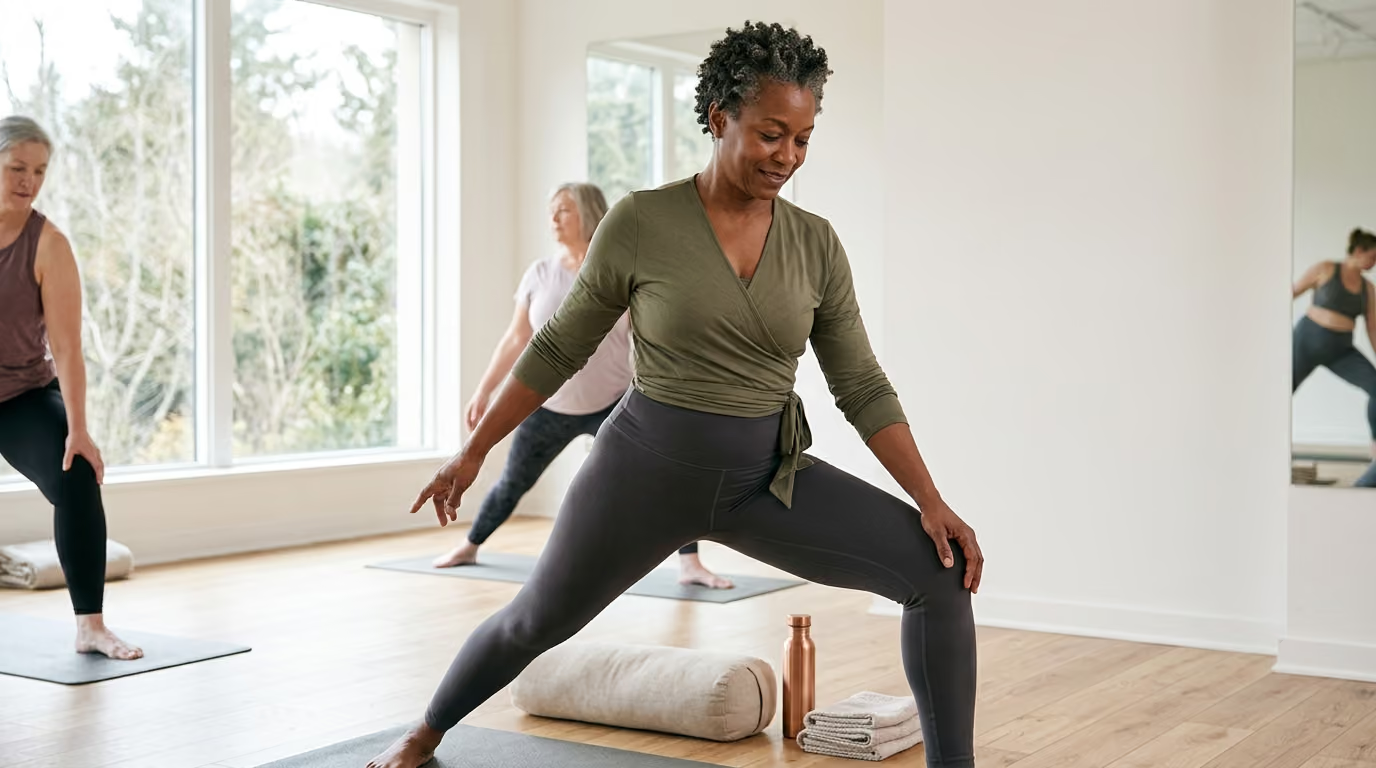

Movement confidence after forty grows through proven self-efficacy strategies, supportive fitness environments, and gradual mastery experiences tailored to midlife physiological changes.





Many women over 40 search online for ways to overcome gym intimidation, class anxiety, or feeling out of place in fitness environments. Stepping into a weight room, a crowded studio, or a public pool can bring an uncomfortable sense of scrutiny. This guide provides a definitive, research-based examination of movement confidence. It details why active environments feel challenging in midlife and outlines practical methods to build comfort in any physical setting.
Movement confidence is not merely the belief that someone is fit enough to complete a workout. Researchers define exercise self-efficacy as a person's trust in their ability to carry out physical activity under specific circumstances. A 2025 study demonstrated a clear positive relationship between exercise self-efficacy and regular physical activity among older adults. Systematic reviews confirm that self-efficacy serves as an influential predictor of whether people adopt and maintain physical activity over time.
Confidence in physical activity involves several distinct dimensions:
Research indicates that confidence is not simply an internal psychological trait. It is heavily shaped by external surroundings. Physical accessibility, clear instructions, supportive interactions, and thoughtful design reduce obstacles that people often mistake for personal inadequacy. A systematic review of social and interpersonal factors showed that wider social networks, social cohesion, and positive interactions correlate with higher activity levels. Feelings of isolation and inadequate support correspond with lower participation.
Psychologists identify four primary mechanisms that build exercise self-efficacy:
Mastery experiences happen when a person completes a manageable task. Setting realistic benchmarks creates clear proof of personal capability. Each completed movement builds trust in the body.
Social modeling involves seeing individuals with similar ages, bodies, and abilities participate in the same environment. When spaces reflect diverse life stages, entering those spaces feels far more attainable.
Social persuasion consists of receiving credible, constructive guidance from coaches, healthcare professionals, or peers. Specific and realistic feedback helps people trust their physical potential without feeling patronized.
Learning to interpret bodily sensations correctly is vital for long-term comfort. Increased heart rates, heavy breathing, and temporary muscle burning are normal responses to exertion rather than warning signs of danger. Distinguishing ordinary fatigue from acute joint pain or medical red flags helps people move with greater security.
The World Health Organization recommends that adults complete 150 to 300 minutes of moderate aerobic activity weekly, or 75 to 150 minutes of vigorous activity. Guidelines also call for muscle-strengthening activities covering all major muscle groups at least two days per week. For older adults, guidelines recommend multicomponent physical activity emphasizing functional balance and strength training on three or more days weekly. These guidelines serve as population targets rather than entrance requirements for entering a fitness space.
Midlife brings genuine physical transitions that alter how the body responds to exertion. Perimenopause and postmenopause introduce fluctuating estrogen levels, shifts in muscle mass, and changes in joint connective tissue. Metabolism and recovery times adjust over the decades. Experiencing these normal changes can make familiar movements feel different.
Changes in thermoregulation can cause unexpected heat intolerance or sudden sweating during moderate exertion. Sleep disruptions can influence morning coordination, energy, and overall stamina. Pelvic floor changes may raise concerns about bladder control during high-impact exercise. These physical changes are normal physiological adaptations rather than evidence of physical decline.
When physical changes coincide with cultural messages about midlife, self-consciousness often follows. Women may worry that changes in balance or recovery mean they no longer belong in vigorous environments. Learning about hormonal transitions and physical changes helps normalize these shifts. Understanding midlife biology transforms unexplained physical signals into manageable data points.
Research shows that beginning or sustaining strength work during midlife protects bone mineral density, preserves joint mobility, and maintains lean tissue. Physical adjustments require modified training approaches rather than complete withdrawal from physical spaces. A well-designed routine accounts for changes in connective tissue by incorporating longer warm-ups and gradual progressive overload.
When people struggle to maintain a movement routine, they often blame personal motivation. Public health researchers study physical activity through the social-ecological model. This framework shows that behavior is influenced by overlapping layers of environment, policy, and culture.
Individual factors include physical symptoms, joint pain, fear of injury, and prior negative experiences with exercise. When someone lacks knowledge about operating specific equipment, hesitation is a logical reaction. Fatigue from caregiving or professional work directly influences personal capacity on any given day.
Interpersonal dynamics include support from partners, family members, coworkers, and friends. A dismissive remark from an instructor or family skepticism can quickly diminish confidence. Supportive training partners and communicative fitness instructors substantially improve consistency.
Organizational elements involve the physical layout, operating policies, and culture of a facility. Inadequate equipment maintenance, crowded weight rooms, confusing class levels, and poorly lit entrances create direct obstacles to participation. When fitness centers prioritize high-volume music and performance-driven floor plans, beginners frequently feel excluded.
Community factors encompass local infrastructure, public transit access, street lighting, and weather conditions. A lack of nearby community centers or safe walking paths prevents people from establishing consistent habits. Transportation barriers often dictate where and how often a person can exercise.
Cultural influences include pervasive media portrayals of fitness as an exclusive pursuit for young, lean individuals. The World Health Organization reports that roughly one in two people globally hold ageist attitudes toward older adults. External ageism includes assumptions that older adults are inherently frail or uninterested in progressive strength training. Internalized ageism occurs when people adopt those beliefs and assume they are too old to start something new.
Systematic reviews confirm that environmental barriers, costs, and fear of injury are among the most frequently cited obstacles for adults over 40. Addressing movement confidence requires assessing these structural dynamics instead of demanding individual willpower.
Psychological safety exists when an individual feels secure asking questions, requesting adaptations, and making mistakes without fear of judgment. In an active space, psychological safety allows participants to step off a machine, select lighter weights, or take a break without scrutiny.
Key indicators of a psychologically safe environment include:
Body neutrality offers a grounding perspective for navigating active spaces. Traditional fitness marketing often insists that participants must love their reflection to feel confident. Body neutrality suggests that the body deserves respect and care regardless of appearance. The body does not need to be admired to be capable of functional movement.
A meta-analysis examining body-image interventions revealed that while exercise can produce small, immediate improvements in body image, these changes are often modest over the long term. Focusing purely on appearance outcomes can perpetuate anxiety. Prioritizing strength, balance, joint freedom, and stamina creates a sustainable relationship with physical activity.
Functional movement values what the body accomplishes. Choosing apparel based on comfort, temperature regulation, and joint freedom supports focus during training. Changing rooms should provide privacy and clear amenities rather than demanding social performance. Shifting attention away from aesthetic evaluation creates mental room for developing physical capability and building mental resilience in everyday life.
Movement confidence builds through gradual, repeated exposure to new settings. Trying to conquer an intimidating fitness space in a single visit often creates unnecessary anxiety. Using a structured progression allows people to build familiarity at their own pace.
Begin by examining facility photos, virtual tours, class descriptions, and schedules from home. Learn about parking layouts, registration rules, and peak operating hours. Knowing the logistical parameters reduces baseline uncertainty before leaving the house.
Visit the facility during a quiet time purely to look around. Walk through the main areas, locate water stations, check the locker rooms, and observe the general flow of traffic. This visit does not require working out. Its purpose is establishing spatial familiarity.
Book an introductory appointment with a staff member or attend with an experienced friend. Ask how to adjust two or three primary pieces of equipment. Write down settings, seat heights, and pin placements for future reference.
Enter the space with a simple, short agenda. Use a single cardiovascular machine or perform a brief mobility sequence in an open area. Focus entirely on navigating the room, completing the chosen movement, and leaving comfortably.
Return several times to repeat the exact same low-stakes routine. Familiarity with the front desk check-in, locker procedures, and basic equipment creates a sense of routine. Repeat exposure turns an unfamiliar environment into an ordinary space.
Gradually introduce new equipment, alternative exercises, or structured group classes. Practice adjusting weights, modifying movements when joints feel stiff, and choosing rest intervals based on internal physical feedback.
Take full ownership of training choices. Select classes, routines, and spaces based on personal preferences and goals. Feel secure modifying movements, asking staff questions, or changing locations when a particular environment no longer fits.
The concept of a minimum viable session protects consistency when motivation or time is low. It defines the smallest unit of physical participation that counts as a success:
The Centers for Disease Control and Prevention recommends that inactive adults begin with short sessions of five to ten minutes and progress gradually. A minimum viable session breaks all-or-nothing thinking. It ensures that showing up always counts.
Navigating physical spaces successfully is an operational skill that benefits from a clear system. The PREPARE framework provides a step-by-step structure for evaluating and approaching any new movement environment.
Examine the physical characteristics of the space. Consider noise levels, lighting intensity, temperature controls, ceiling height, and floor layout. Check whether equipment is packed closely together or spaced with comfortable walking lanes.
Identify operational rules before arriving. Determine footwear requirements, equipment wipe-down expectations, booking windows, and cancellation policies. Knowing basic facility etiquette prevents self-consciousness.
Plan the arrival details carefully. Choose off-peak hours for initial visits when foot traffic is low. Arrange to meet an instructor at the door or arrive with a companion to reduce initial friction.
Give yourself full permission to move at an individual pace. Modify complex exercises, substitute machines, take extra rest between sets, or leave early. Choosing a lighter weight or stepping out of a class reflects intelligent self-regulation.
Identify adjustments for specific joint comfort, balance support, or sensory needs. Locate water stations, rest benches, and clear pathways to exits. Prepare alternative exercises in advance if a preferred machine is occupied.
After each session, evaluate what went smoothly and what felt challenging. Note which times of day offered the best atmosphere and which machines felt comfortable. Keeping a brief log provides tangible evidence of progress over time.
Expand your routine only when the current baseline feels secure. Add an additional exercise, try a different class, or increase training volume gradually. Sustainable progression relies on steady repetition rather than rapid acceleration.
Not all fitness spaces are suitable for every person. When an environment creates ongoing distress, the issue is frequently a poor fit rather than personal failure. Readers can assess active spaces across several key criteria:
If a facility scores poorly on these markers, switching to a different gym, a community center, a specialized clinic, or home training is a sensible operational decision.
Active environments present unique challenges depending on personal history, physical conditions, and social dynamics. Applying specific strategies helps manage distinct scenarios effectively.
Women who were active in earlier decades often struggle when comparing their current capacity to past athletic benchmarks. A previous running pace or lifting volume may no longer suit current joint health or recovery capabilities.
The primary strategy is establishing a fresh baseline. Replace the goal of regaining past performance with building functional capacity for the future. Focus on progressive strength training and joint mobility, measuring success by consistency, energy levels, and movement quality.
Free weight sections in traditional gyms can appear intimidating due to spatial layouts and unwritten social norms. People often avoid strength training because they are unsure where to stand or how to adjust equipment safely.
Address this by selecting two simple resistance movements, such as a dumbbell goblet squat and a supported row. Locate an open area near a wall or bench to establish personal space. Focus on executing planned sets while ignoring surrounding distractions. As spatial familiarity grows, expand to other stations across subsequent weeks.
Locker rooms and changing spaces frequently trigger discomfort regarding privacy, body image, surgical scars, or physical changes. Navigating communal facilities should never feel like a forced performance.
Check if the facility provides private dressing stalls or single-occupancy restrooms. Arriving already dressed in exercise clothing minimizes locker room time. Visiting during off-peak hours provides quiet access to amenities. Treat privacy preferences as valid personal needs.
Entering a group class can create anxiety about keeping pace with complex choreography or being singled out by instructors. Fast transitions between floor work and standing movements can challenge joint comfort or balance.
Introduce yourself to the instructor before class starts. Use a simple statement: "I am working through some joint modifications today, so I will be choosing low-impact options." Position yourself near the back or side of the room near an exit. This placement allows easy access to water, comfortable visibility, and freedom to take breaks.
Loud music, bright fluorescent lighting, whirring machines, and crowded floors can cause sensory fatigue. For individuals with sensory processing differences or anxiety, overstimulation presents a genuine physical barrier.
Use noise-canceling earbuds or acoustic filters to lower volume levels while maintaining situational awareness. Wear a brimmed hat to block harsh overhead glare. Schedule visits during designated low-sensory or off-peak hours. Choosing smaller community studios or clinic-based facilities often provides a calmer training setting.
Physical activity is a primary tool for managing midlife health conditions, including osteoarthritis, osteopenia, cardiovascular risk, and type 2 diabetes. Exercising with chronic conditions requires clear distinction between productive muscular challenge and symptoms requiring medical review.
The Centers for Disease Control and Prevention notes that moderate physical activity is safe for most individuals. However, consulting a qualified healthcare professional or physical therapist is advisable when managing chronic conditions, recovering from injury, or starting vigorous activity after prolonged inactivity.
Key medical contexts require tailored approaches:
Working with certified exercise professionals who understand clinical conditions provides peace of mind. Discussing symptoms openly with instructors ensures modifications are integrated smoothly into every session.
While research supports the benefits of movement confidence and physical activity, existing literature contains important limitations. Understanding these gaps helps readers maintain realistic expectations about their fitness experiences.
Much of the published literature on exercise self-efficacy relies on observational studies. These studies show strong correlations between confidence and activity levels, but they cannot prove that increasing self-efficacy alone will guarantee long-term exercise adherence. External circumstances such as caregiving obligations, financial costs, commute times, and injury risks remain significant barriers that psychological interventions cannot fully solve.
Research examining social support interventions reveals mixed results. While having a broad social network correlates with higher activity levels in older adults, formal programs designed to provide workout partners or group check-ins show inconsistent outcomes. Social support is highly individual. Some people thrive in group classes, while others experience higher consistency and lower stress when exercising independently.
Studies on body image and fitness show that exercise interventions produce small, short-term improvements in body satisfaction, but these gains frequently diminish during long-term follow-up. Physical activity is not a guaranteed remedy for appearance-related distress. Cultural pressure and pervasive aesthetic marketing can undermine body confidence even when physical fitness improves.
Many published studies draw from self-selected populations of adults who already possess baseline motivation to join research trials. These samples often underrepresent individuals navigating complex disabilities, neurodivergence, language barriers, or rural geographic isolation. Recognizing these research boundaries helps prevent treating movement confidence as a simple formula that works identically for every person.
True movement confidence is built through accumulated evidence rather than positive thinking. It grows each time you enter an active space on your own terms, choose modifications that support your body, and define success by personal consistency rather than external validation.

Follow Refemina for research-led resources on hormonal change, strength, metabolism, nutrition, skin, intimate wellbeing and confidence through midlife.


Keep learning about the changes that shape energy, strength, confidence and wellbeing through midlife.
Explore Resources