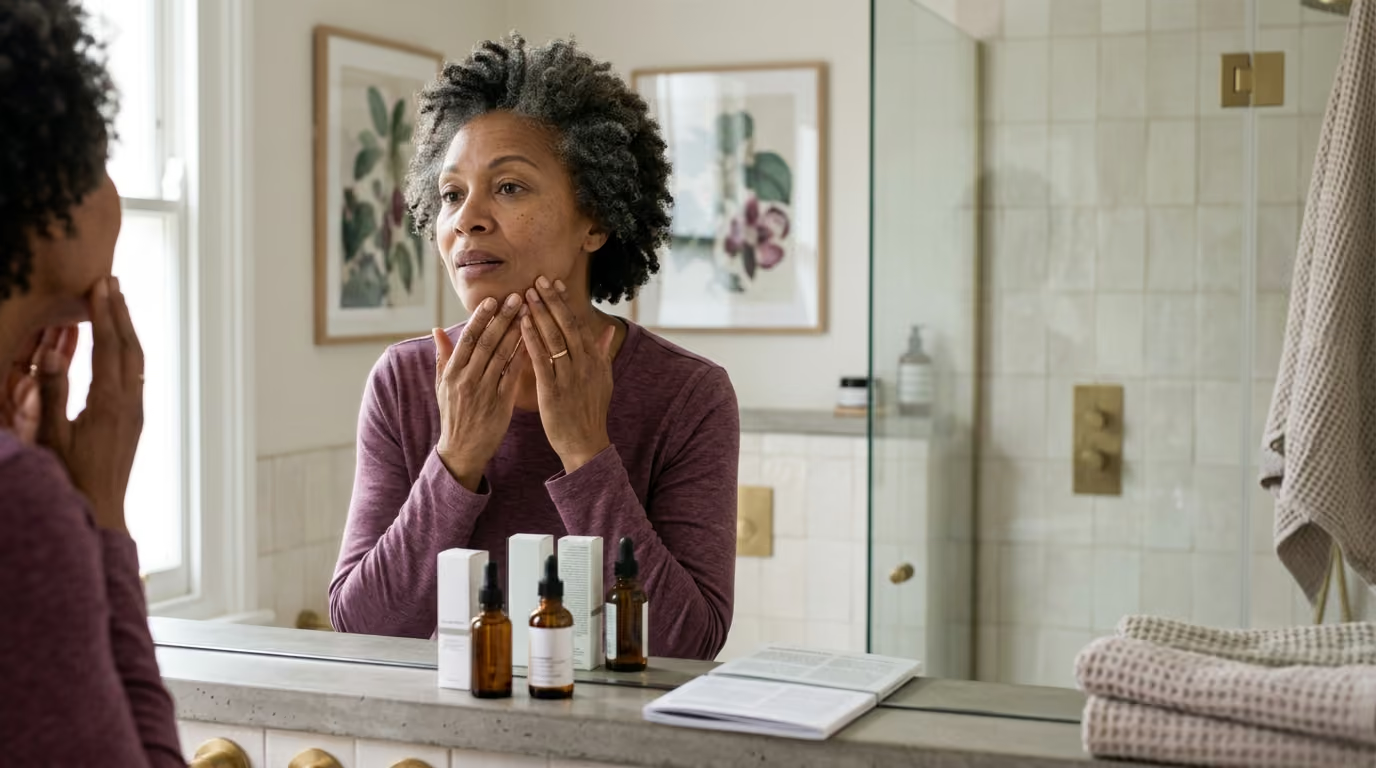

Hormone cosmetic treatments promise youthful rejuvenation, but rigorous clinical evidence separates genuine biological benefits from unproven marketing claims across midlife wellness.





You notice more strands collecting in your brush each morning. The skin on your cheeks feels drier than it did five years ago, and fine lines around your mouth seem deeper. Searching for answers online leads to a flood of promises: hormone-balancing face creams, plant extracts that claim to reset ovarian signaling, and exosome serums that promise follicle regeneration.
Every midlife shift is quickly presented as a single hormonal deficit with a commercial solution. The reality of midlife physiology is far more nuanced.
Hormonal transitions during perimenopause and menopause interact with cumulative sun exposure, genetics, cellular aging, and systemic health. Separating biological plausibility from proven clinical results protects your health, your budget, and your confidence.
Current clinical research confirms that estrogen receptors exist throughout human skin and hair follicles. Estrogens play a measurable role in maintaining skin thickness, dermal collagen levels, hydration, and wound healing. When estrogen levels decline during perimenopause and postmenopause, the rate of collagen breakdown increases, and skin loses structural support.
At the same time, shifting ratios between estrogens and androgens can influence hair follicle miniaturization in women with a genetic sensitivity. These findings prove biological plausibility, which means hormones directly influence tissue behavior.
Biological plausibility is not clinical proof that applying a specific cream or swallowing a supplement reverses aging. Controlled human research evaluating hormone-based cosmetics remains limited, mixed, and variable.
While some small studies show modest increases in dermal collagen after topical estrogen application, large randomized trials evaluating visible cosmetic improvement are sparse. Furthermore, systemic menopausal hormone therapy is not recommended as a primary treatment for hair loss alone, nor is it indicated solely for cosmetic skin rejuvenation.
Medical consensus panels, including the International Menopause Society and the American Academy of Dermatology, draw a firm line between systemic therapy for documented health indications and off-label cosmetic interventions. High-quality evidence supports specific medical treatments for diagnosed hair conditions, but evidence for over-the-counter hormone balancers, custom bioidentical creams, and exotic botanical serums remains weak. Understanding what the evidence actually shows requires examining how midlife tissues change over time.
Midlife physical changes reflect several biological processes occurring simultaneously. Estrogen decline is one part of this transition, but it operates alongside intrinsic chronological aging, cellular senescence, and environmental damage.
Photoaging from lifetime ultraviolet radiation remains the primary driver of facial wrinkling, irregular pigmentation, and loss of elasticity. When lifetime sun damage combines with lower estrogen levels, the skin barrier becomes thinner, and moisture retention decreases.
Hair follicles follow a similar multi-layered path during the midlife transition. Estrogen helps maintain the growth phase of the hair cycle, known as the anagen phase.
When ovarian hormone production becomes irregular, the anagen phase shortens, and more follicles transition into the resting or shedding phases. If an individual carries a genetic predisposition toward female pattern hair loss, circulating androgens exert a stronger relative influence, leading to progressive thinning along the central part.
Understanding these layered influences prevents you from attributing every physical change entirely to hormones. Chronic inflammation, thyroid fluctuations, ferritin levels, nutritional status, mechanical styling damage, and routine aging all shape how your skin and hair look and feel.
Looking at skin changes through a comprehensive lens helps you avoid treatments that target only one theoretical factor while ignoring the rest. To explore broader context on these physical transitions, you can read more in our guide to understanding midlife skin, hair, and aesthetic aging.
Navigating cosmetic marketing requires a structured method to evaluate bold promises. Rather than accepting claims that a product restores youth or balances biology, you can apply a simple six-step evaluation method.
Broad marketing terms like hormone support, anti-aging, or cellular rejuvenation lack scientific precision. A credible claim identifies the exact biological target, the direction of change, and the measurable outcome.
Ask what specific molecule is being altered, in which tissue layer, and by what clinical measure. If a brand cannot define what it alters, the claim is a promotional slogan rather than a scientific statement.
Laboratory studies often measure surrogate endpoints such as procollagen synthesis in a petri dish, fibroblast proliferation, or skin hydration in a small cohort. These surrogate markers are interesting, but they do not automatically produce visible reductions in wrinkles, improvements in skin laxity, or permanent hair regrowth.
High-quality research measures validated cosmetic scales, physician-assessed photographic improvement, standardized hair density counts, and patient satisfaction over extended periods.
Look closely at how a product was tested. The strongest evidence comes from double-blind, randomized, vehicle-controlled human trials where the active ingredient is compared against an inactive base cream.
Many cosmetic studies compare an active cream against no treatment at all, which means simple hydration from the base moisturizer could explain the entire perceived benefit. Split-face studies, where one side of the face receives the active formula and the other receives the base vehicle, provide far stronger insight.
Skin remodeling requires months, and the human hair cycle operates over three to seven years. Any study claiming to prove hair regrowth or dermal restructuring in four to six weeks is measuring temporary surface hydration or short-term fluid retention rather than structural regeneration.
Credible hair studies run for a minimum of six to twelve months to account for natural shedding phases. Dermal remodeling research must demonstrate whether benefits persist and whether tissue health remains stable over time.
An ingredient that shows promise in a medical laboratory may fail completely in a retail bottle. Peptides, hormones, and plant compounds must maintain molecular stability, resist degradation, and penetrate the stratum corneum barrier at an effective concentration.
Evidence supporting a pharmaceutical formulation cannot be transferred to an over-the-counter product containing trace amounts of the same named ingredient.
Every intervention carries a risk-to-benefit profile. A basic barrier moisturizer with glycerin carries low risk, so a modest clinical benefit is entirely acceptable.
A topical hormone, an unregulated biologic, or an unverified oral supplement introduces biological risks, systemic absorption questions, and financial costs. Higher biological or regulatory complexity demands rigorous, peer-reviewed human proof before use.
Topical hormone creams represent one of the fastest-growing segments of midlife beauty marketing. Estriol creams, progesterone serums, and custom compounded preparations are frequently promoted as gentle solutions for thinning skin and facial volume loss. Evaluating these products requires separating tissue biology from safety realities.
Estrogen receptors are distributed across dermal fibroblasts, keratinocytes, melanocytes, and sebaceous glands. When estrogen binds to these receptors, it stimulates gene transcription related to collagen production, hyaluronic acid synthesis, and extracellular matrix integrity.
Small, early studies documented that applying topical estradiol or estriol to aged skin increased procollagen levels and epidermal thickness in biopsy specimens. These laboratory observations confirm that skin responds to estrogen stimulation.
Despite positive tissue markers, broad clinical trials examining visible facial improvement remain inconclusive. Most published studies on facial estrogen creams feature small cohorts, lack rigorous control groups, or rely on subjective investigator scoring.
The evidence confirms that while localized biological activity occurs, dramatic reversal of structural facial aging has not been established in large, independent trials. Systematic reviews consistently highlight that clinical endpoints remain modest and variable across study populations.
The belief that topical application keeps a hormone strictly confined to the face is incorrect. Hormones applied to the skin can absorb into the bloodstream depending on the carrier vehicle, skin integrity, application surface area, and formulation strength.
Unmonitored systemic absorption introduces potential risks, including unwanted stimulation of breast tissue or the uterine lining. Medical guidelines caution against off-label facial use of vaginal estrogen preparations because unchecked absorption can create hormonal imbalances.
Compounded bioidentical hormone creams carry additional considerations. The term bioidentical describes molecular similarity to human hormones, but it does not indicate superior safety, purity, or effectiveness.
The Food and Drug Administration does not review compounded hormone formulations for consistent potency, safety, or manufacturing stability. Independent analyses from the National Academies have documented significant batch-to-batch variations in compounded products, underscoring the value of regulated, standardized treatments.
Phytoestrogens are plant-derived non-steroidal compounds found in foods like soybeans, red clover, flaxseed, and certain legumes. Because their chemical structures resemble 17-beta-estradiol, they can bind to human estrogen receptors, particularly the beta subtype.
This mechanism has led to widespread promotion of phytoestrogen creams and supplements for midlife skin firmness, hydration, and hair density.
Binding to a receptor does not mean a plant compound produces the full biological signal of human estradiol. Phytoestrogens bind with significantly lower affinity, often hundreds to thousands of times weaker than endogenous estrogens.
Their biological activity varies depending on an individual's gut microbiome, metabolic enzymes, and the specific tissue involved. Consuming dietary soy or applying genistein extract cannot be equated with medical hormone therapy.
Clinical evidence for phytoestrogen supplements and topical preparations is mixed. The National Center for Complementary and Integrative Health reviewed extensive trial data and found modest reductions in hot flashes with certain standardized isoflavones, but no reliable, consistent impact on night sweats or tissue remodeling.
In dermatology, small studies using topical genistein reported minor improvements in skin elasticity and moisture content. These changes are similar to the effects produced by standard non-hormonal moisturizers containing humectants and barrier lipids.
Dietary intake of whole soy foods is safe, nutritious, and beneficial for general health. Concentrated isoflavone supplements, however, require a more thoughtful approach.
Long-term use of high-dose phytoestrogen supplements has been linked in some research to changes in endometrial tissue. Women with a personal history of estrogen-sensitive conditions should discuss concentrated phytoestrogen supplements with their medical provider before starting them.
Peptides and oral collagen hydrolysates dominate modern midlife beauty marketing. Promoted as direct builders of structural matrix, these products claim to rebuild dermal thickness from the inside out. Understanding protein digestion and cellular signaling reveals their real-world capabilities.
Peptides are short chains of amino acids linked by peptide bonds. In topical skincare, specific signal peptides, carrier peptides, and neurotransmitter-inhibiting peptides are formulated to support skin appearance.
The proposed mechanism is that these fragments mimic broken collagen strands, signaling dermal fibroblasts to synthesize new structural proteins.
A systematic review published in 2026 analyzed 19 randomized controlled trials with 1,341 participants evaluating topical and oral peptides. The findings showed consistent, statistically significant improvements in superficial skin hydration and overall brightness.
WRinkle depth reduction was modest, while changes in deep dermal density and tissue elasticity were inconsistent. Topical peptides function well as supportive cosmetic hydrators, but they do not rebuild lost facial volume or replace deep structural fat pads.
Oral collagen consists of hydrolyzed animal collagen broken down into small dipeptides and tripeptides. Once swallowed, these peptides are digested in the gastrointestinal tract into free amino acids and small fragments before entering the bloodstream.
Proponents claim these fragments travel directly to the dermis, acting as building blocks and triggers for new collagen formation.
Research on oral collagen presents a nuanced picture. Some randomized, placebo-controlled trials report minor improvements in skin elasticity, epidermal moisture, and superficial roughness after eight to twelve weeks of consistent use.
Other clinical trials show no measurable benefit. For example, a dedicated six-month trial in postmenopausal women with dermatoporosis found no significant structural improvement in forearm skin compared with placebo.
Collagen supplements provide dietary amino acids, but they do not selectively target facial skin over other connective tissues. If you choose to use collagen, expect modest improvements in skin hydration rather than a complete reversal of skin laxity.
Prioritizing dietary protein from diverse whole food sources remains the primary nutritional foundation for tissue repair. You can learn more about balanced midlife nutrition in our nutrition and weight management resources.
Thinning hair is one of the most distressing physical changes a woman can encounter in midlife. Supplement manufacturers frequently market high-dose multivitamins, herbal blends, and mega-dose biotin formulas promising rapid regrowth. Examining the underlying science helps distinguish genuine nutrient needs from commercial hype.
Biotin, or vitamin B7, is a water-soluble coenzyme involved in fatty acid and amino acid metabolism. True clinical biotin deficiency causes noticeable hair shedding, brittle nails, and perioral dermatitis.
True deficiency is rare in people who consume a varied diet, as intestinal bacteria synthesize biotin and dietary sources are widely available.
The American Academy of Dermatology states clearly that taking biotin supplements does not improve hair growth or reduce shedding unless a laboratory-confirmed deficiency exists. Uncontrolled before-and-after photos often capture natural hair recovery after a temporary shedding event rather than a response to biotin.
Taking high doses of biotin can interfere with critical blood tests, including troponin assays used to detect heart attacks and thyroid hormone panels, leading to potentially dangerous misdiagnoses.
Hair follicle matrix cells are among the most rapidly dividing cells in the human body, making them sensitive to metabolic and nutritional shifts. Adequate iron stores are necessary for normal follicular cycling.
Serum ferritin reflects cellular iron storage, and low ferritin levels can trigger diffuse hair shedding, even in the absence of full anemia.
Vitamin D receptors also play a role in hair follicle biology, and low serum vitamin D levels are frequently observed in various non-scarring hair loss presentations.
Supplementing these nutrients is beneficial when blood tests demonstrate a clear deficit. Supplementing blindly without diagnostic testing can lead to mineral toxicity and distract from identifying the true underlying cause of hair loss.
Managing midlife hair loss effectively begins with an accurate dermatologic diagnosis. Hair thinning in women falls into several distinct categories, each requiring a different clinical approach.
Relying on hormone-balancing shampoos or unproven supplements often delays effective, evidence-based care.
The two most common forms of midlife hair thinning are female pattern hair loss, also known as androgenetic alopecia, and telogen effluvium.
Female pattern hair loss is characterized by gradual, progressive miniaturization of hair follicles across the crown and part line, while the frontal hairline is usually preserved. Telogen effluvium presents as sudden, diffuse shedding across the entire scalp, typically appearing two to three months after a physiological stressor, illness, rapid weight loss, or hormonal disruption.
Other patterns include alopecia areata, which produces distinct circular bald patches, and scarring alopecias like frontal fibrosing alopecia, which causes permanent follicle destruction and hairline recession. Scarring alopecias require prompt medical intervention to halt inflammatory destruction.
Clinical guidelines establish topical minoxidil as the primary first-line medical therapy for female pattern hair loss. The European S3 guidelines and the Spanish Hair Disorders Group consensus recommend topical 5% minoxidil foam applied once daily or 2% solution applied twice daily.
Minoxidil works by prolonging the anagen growth phase, enlarging miniaturized follicles, and improving local microcirculation around the hair bulb.
For women who do not respond adequately to topical therapy or who experience local scalp irritation, dermatologists may consider off-label low-dose oral minoxidil.
Oral antiandrogens, such as spironolactone or finasteride, may be prescribed for postmenopausal women under direct medical supervision to block androgenic stimulation of hair follicles. These are prescription medical therapies that require comprehensive evaluation of cardiovascular health, renal function, and individual risk factors.
A frequent misconception is that starting systemic menopausal hormone therapy will cure female pattern hair loss. Clinical consensus reviews emphasize that systemic hormone therapy is not indicated as a standalone treatment for hair loss.
While stabilizing estrogen levels may support general hair fiber quality in some women, it does not reliably reverse genetic follicle miniaturization.
Women using systemic hormone therapy for hot flashes or bone preservation should manage concurrent hair thinning through dedicated, evidence-based dermatologic therapies. Understanding how hormone therapy fits into overall wellness is covered thoroughly across our perimenopause and menopause resources.
The aesthetic wellness market frequently adopts advanced scientific terminology to market unverified procedures. Stem cell serums, exosome scalp injections, and metabolic detox cleanses are heavily promoted with claims of cellular regeneration. Examining their scientific and regulatory status provides needed clarity.
Exosomes are tiny extracellular vesicles secreted by cells that carry proteins, lipids, and messenger RNA to facilitate intercellular communication. In laboratory research, exosomes isolated from stem cells show interesting regenerative and anti-inflammatory properties in cell cultures and animal models.
Applying this laboratory concept to cosmetic products raises serious scientific and regulatory questions. The Food and Drug Administration has issued clear public safety alerts stating that there are currently no FDA-approved exosome products for cosmetic or medical use.
Exosomes marketed for clinical injection or post-procedure application are regulated as biological drugs that require formal premarket review, clinical trial proof of safety, and strict manufacturing oversight.
Over-the-counter creams claiming to contain live stem cells or stable exosomes face major physical hurdles. Human stem cells cannot survive in a cosmetic cream jar on a retail shelf.
Exosomes are fragile biological structures that degrade rapidly unless stored at ultra-low freezing temperatures, and they cannot penetrate an intact skin barrier due to their molecular size. When applied immediately after microneedling or fractional laser, unapproved exosome products carry real risks of contamination, severe inflammatory reactions, and foreign-body granulomas.
Detox cleanses claim that accumulated metabolic toxins cause skin aging, adult acne, hormonal imbalances, and hair shedding. These programs promote restrictive juice fasts, laxative herbal teas, and proprietary cleansing pills as a necessary step to purify the body.
The National Center for Complementary and Integrative Health confirms that there is no compelling scientific research demonstrating that commercial detox diets remove toxins or improve long-term health. The human body possesses a sophisticated, continuous detoxification system managed by the liver, kidneys, lungs, gastrointestinal tract, and immune system.
Commercial cleanses do not enhance these organ systems. Severe calorie restriction and rapid weight loss from detox programs frequently trigger telogen effluvium, causing heavy hair shedding weeks after the cleanse ends.
Sustained skin and hair health is supported by balanced nutrition, adequate hydration, regular physical movement, and sufficient sleep rather than restrictive cleanses. Exploring the connection between muscle mass, metabolic stability, and vitality is detailed in our guide to strength, body composition, and midlife metabolism.
Making confident, grounded decisions about your appearance does not require buying every new product or completely avoiding cosmetic care. It requires focusing your energy and budget on strategies that have proven track records.
An effective, evidence-aligned skincare routine for midlife relies on four core elements:
If you notice increased hair shedding or visible thinning, follow a structured, step-by-step approach:
To see how these principles work in real life, consider three everyday examples.
A 54-year-old woman is encouraged by an online wellness clinic to purchase a custom estriol and progesterone facial cream to lift sagging jowls and erase deep wrinkles. Applying our evaluation framework reveals that while estriol has biological plausibility, clinical proof of deep tissue lifting is lacking.
The custom cream carries financial costs and the risk of unmonitored systemic absorption without FDA manufacturing oversight. A more effective, evidence-grounded approach involves using a daily broad-spectrum sunscreen, a nighttime retinoid, and consulting a physician regarding regulated systemic hormone therapy if she also experiences hot flashes or sleep disruption.
A 48-year-old woman notices diffuse hair shedding after a period of intense work stress and buys an expensive multi-ingredient hair supplement containing 10,000 micrograms of biotin. Our framework highlights that biotin does not stimulate hair regrowth in individuals with normal nutrient levels, and excessive doses can distort routine laboratory tests.
The diffuse shedding pattern is consistent with telogen effluvium, a self-limiting condition that typically resolves once the underlying stressor passes. Checking baseline ferritin and thyroid levels while avoiding mega-dose supplements protects her health and allows her natural hair cycle to recover.
A 51-year-old woman is offered an expensive exosome serum upgrade following an in-office microneedling treatment to boost collagen production. Reviewing the regulatory landscape confirms that the FDA has not approved any cosmetic exosome products, and applying unregulated biologics into punctured skin carries potential infection and inflammatory risks.
Choosing a sterile, standard hyaluronic acid gliding serum alongside proven post-procedure barrier creams delivers reliable healing without unnecessary regulatory or biological risk.
Certain skin and hair symptoms require professional medical evaluation rather than cosmetic experimentation. Midlife is a time when autoimmune disorders, endocrine shifts, and dermatologic diseases can first appear, and distinguishing benign aging from clinical illness is essential.
You should schedule an evaluation with a board-certified dermatologist or primary care physician if you observe any of the following signs:
Seeking a timely, professional evaluation ensures you receive an accurate diagnosis, protects your long-term health, and prevents irreversible follicle damage. If you have questions about how our editorial team reviews health research, you can learn more about Refemina and our clinical standards.
Maintaining scientific integrity means being transparent about what medical science does not yet know. While research into skin biology and midlife endocrinology continues to advance, significant gaps remain across the published literature.
First, human studies on topical hormones for cosmetic skin aging are limited by small participant numbers, short study durations, and a lack of standardized clinical endpoints. Many available studies were conducted decades ago with diverse formulations, making it impossible to recommend topical estrogen creams as a standard anti-aging therapy.
Long-term safety data regarding systemic absorption from chronic facial application are absent.
Second, the field of cosmetic peptides is constrained by high product variability and proprietary formulations. While peptides show clear benefits for surface hydration, independent comparative trials comparing different peptide classes against established retinoids remain rare.
Much of the published literature in this space is funded by ingredient manufacturers, underscoring the need for larger, independent trials.
Third, research on oral collagen supplements suffers from inconsistent dosing protocols, varied collagen sources, and mixed outcome measures. While short-term hydration improvements are frequently documented, long-term structural remodeling of aged or photodamaged skin has not been conclusively established in large, diverse populations.
Finally, regenerative therapies involving stem cell extracts and exosomes remain strictly experimental. High-quality, double-blind, randomized clinical trials demonstrating sustained efficacy and long-term safety in humans are lacking.
Until standardized manufacturing protocols and regulatory approvals are established, these interventions remain unproven.
Navigating midlife skin and hair changes becomes far simpler when you let go of the pressure to find a single hormonal cure. Your body is navigating an intricate, natural transition that is influenced by genetics, lifetime environmental exposure, daily nutrition, and general health alongside shifting hormones.
Focusing on established basics provides reliable results. Protect your skin daily from ultraviolet light, support your moisture barrier with proven ingredients, maintain adequate dietary protein and iron, and seek professional medical guidance for persistent hair thinning or unusual skin symptoms.
Investing in proven practices and clear evidence allows you to care for your appearance with clarity, calm, and lasting confidence.
When to revisit this resource:
Revisit this guide whenever you encounter a new, heavily marketed cosmetic product claiming to balance your hormones, regenerate follicles, or detoxify your cells. Checking the evidence framework will help you evaluate the claims objectively and make informed decisions for your health.
True physical confidence in midlife comes from understanding your body's real physiology rather than chasing unregulated promises.

Follow Refemina for research-led resources on hormonal change, strength, metabolism, nutrition, skin, intimate wellbeing and confidence through midlife.


Keep learning about the changes that shape energy, strength, confidence and wellbeing through midlife.
Explore Resources