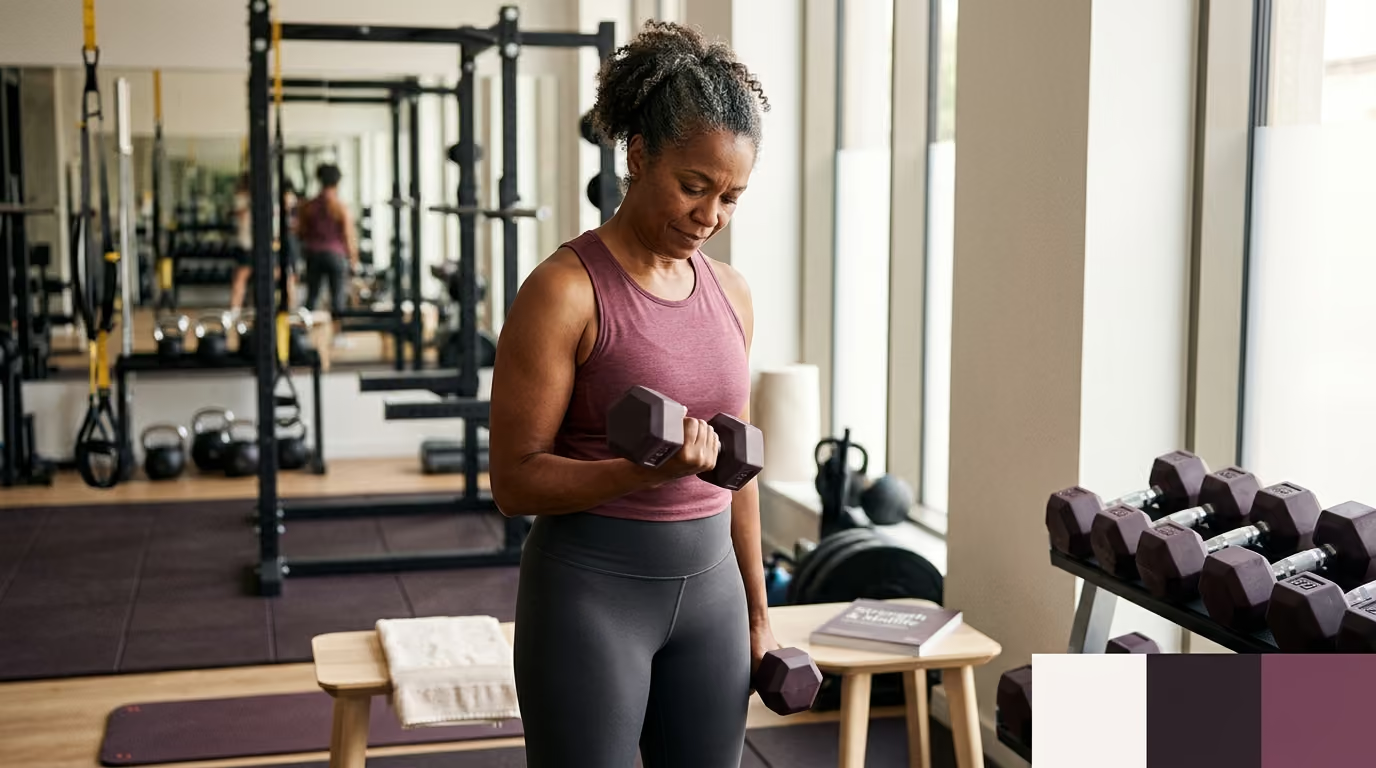

Better physical capacity in midlife comes from matching the right strength training equipment to essential movement patterns and personal fitness goals.





You stand in an aisle of exercise equipment or scroll through an online store, looking at adjustable dumbbells, colorful resistance bands, heavy kettlebells, and high-tech home gym systems. The marketing claims suggest that one specific tool holds the secret to midlife metabolism, lean muscle, and bone density. You wonder whether you need a dedicated room full of iron or if a set of elastic loops can deliver genuine strength.
The reality is far simpler and much more encouraging. Your muscles and bones do not recognize brand names, price tags, or mechanical complexity. They respond to mechanical tension, progressive challenge, and consistent movement across your weekly routine.
Selecting the right equipment comes down to matching your physical goals, joint tolerance, living space, and budget with tools that allow you to progress safely over time. This resource provides a direct comparison of the primary strength training tools, helping you build an effective, sustainable setup for midlife and beyond.
A common belief in fitness culture is that free weights are superior to machines, or that elastic bands only work for physical therapy. Clinical research paints a much more flexible picture. When exercises are performed with adequate effort and progressed systematically, multiple equipment types produce meaningful gains in strength, muscle size, and functional capacity.
A comprehensive network meta-analysis evaluated different resistance training modalities in community-dwelling older adults. The researchers found moderate-to-large strength improvements across all studied tools compared with inactive controls. Machine-based training demonstrated a standardized effect size of 1.34, free weights achieved 1.15, elastic bands reached 0.93, mixed training produced 0.88, and bodyweight training recorded 0.71.
These numbers show that guided machines and free weights provide exceptional loading efficiency. They also confirm that elastic resistance and bodyweight exercises stimulate substantial muscular adaptations. A systematic review comparing elastic resistance to conventional free weights and machines found no significant difference in strength outcomes for upper or lower body muscle groups.
The American College of Sports Medicine emphasizes that progressive overload drives adaptation rather than any specific piece of hardware. Muscular adaptations occur when a muscle works against a demanding resistance, experiences appropriate fatigue, and receives adequate recovery. Strength improvements involve both muscular growth and nervous system adaptations, such as improved motor unit recruitment and faster firing rates.
Guidelines from the World Health Organization recommend that adults perform muscle-strengthening activities involving all major muscle groups on at least two days per week. For older adults, the World Health Organization recommends multicomponent physical activity that emphasizes functional balance and strength training on three or more days per week to enhance capacity and prevent falls.
Current exercise science guidelines outline specific programming targets based on training goals:
No single tool is universally superior across all these categories. The ideal setup allows you to train the fundamental movement patterns safely, consistently, and with sufficient resistance to stimulate progress. You can explore broader perspectives on physical conditioning in our strength and body composition section.
Strength training takes on a distinct role during the midlife transition. Between the late thirties and early fifties, shifts in ovarian hormone production coincide with gradual changes in body composition, joint cartilage, tendon elasticity, and bone mineral density.
Sarcopenia describes the age-related loss of muscle mass, strength, and physical function. Research indicates that sarcopenia prevalence ranges from 11 percent to 50 percent in adults aged 80 and older, depending on the diagnostic criteria used. Muscle loss begins decades earlier if resistance training is neglected. Starting a progressive strength program during midlife builds muscular reserve, preserving mobility and daily independence for future decades.
Hormonal changes during perimenopause and postmenopause also alter tissue recovery and bone metabolism. Estrogen plays a protective role in collagen synthesis, tendon stiffness, muscle protein turnover, and bone remodeling. As estrogen fluctuations occur, women may notice changes in joint comfort, prolonged recovery between sessions, and shifts in visceral fat distribution. You can read more about these physiological changes in our guide to hormonal shifts during menopause.
Resistance training provides a targeted mechanical signal that helps mitigate these shifts:
Systematic reviews examining resistance exercise in postmenopausal women demonstrate significant improvements in upper and lower body strength, functional mobility, and lean mass. Dynamic resistance training has been shown to produce small-to-moderate improvements in bone mineral density at the lumbar spine and femoral neck.
These benefits do not require extreme lifting routines. They require consistent, well-chosen exercises performed with appropriate loads and good technique.
Strength gained in a workout should translate into everyday capability. Gym performance and daily functional capacity overlap, but they are not identical. A leg press machine builds quadriceps strength efficiently, but rising from a low couch also requires hip mobility, foot stability, and balance.
A practical midlife strength program centers on seven fundamental movement patterns. Equipment choices should support these patterns rather than isolating tiny muscle groups in unnatural positions.
Squatting involves bending the knees and hips simultaneously to lower the torso while keeping the feet planted. In daily life, this reflects sitting down, standing up from a low seat, or getting out of a car. Equipment options include bodyweight chair squats, goblet squats with a dumbbell or kettlebell, barbell back squats, and leg press machines.
The hip hinge involves pushing the hips backward with minimal knee bend, engaging the glutes, hamstrings, and lower back. This movement mirrors picking up a laundry basket, lifting a grandchild, or loading luggage into a trunk. Equipment options include Romanian deadlifts with dumbbells, kettlebell deadlifts, barbell pulls, and cable pull-throughs.
Pushing movements develop the chest, shoulders, and triceps by pressing resistance away from the body horizontally or overhead. Daily applications include pushing open a heavy security door, placing a carry-on bag into an overhead bin, or getting up from the floor. Equipment options include push-ups against an incline, dumbbell chest presses, seated machine presses, and resistance band presses.
Pulling movements strengthen the upper back, latissimus dorsi, rear shoulders, and biceps by drawing resistance toward the torso. These muscles support upright posture, counteract prolonged sitting, and assist with opening doors, rowing, or pulling garden tools. Equipment options include resistance band rows, one-arm dumbbell rows, seated cable rows, and lat pulldowns.
Carrying involves moving through space while holding a heavy load in one or both hands. This pattern builds grip strength, shoulder stability, and lateral core control. It directly translates to carrying heavy groceries, moving potted plants, or walking with luggage. Equipment options include farmer carries with dumbbells, suitcase carries with a single kettlebell, or trap bar carries.
Single-leg exercises demand balance, hip stability, and asymmetrical force production. They reflect climbing stairs, stepping over obstacles, or recovering balance after a stumble. Equipment options include step-ups onto a sturdy box, supported split squats, reverse lunges with dumbbells, and single-leg leg presses.
Trunk stability exercises train the abdominal and spinal muscles to resist unwanted rotation, extension, or side-bending. Rather than performing hundreds of crunches, midlife trainees benefit from anti-movement exercises that protect the spine during loaded tasks. Equipment options include front planks, bird-dogs, Pallof presses with resistance bands, and cable chops.
Combining these movements with sensible dietary strategies creates a solid foundation for physical longevity. For further discussion on fueling active bodies, explore our articles on nutrition and metabolic health.
Every piece of training equipment offers distinct biomechanical characteristics, advantages, and limitations. Choosing the right tools requires looking past fitness trends and evaluating how each implement functions in your space and routine.
Resistance bands are elastic loops, flat therapy strips, or tubes with handles that generate increasing tension as they stretch.
Resistance bands are an outstanding starting point for home training, joint rehabilitation, and rotational core work. They work best when paired with bodyweight movements or supplemented by free weights for lower body loading.
Dumbbells are handheld free weights available in fixed-weight pairs or adjustable selectorized systems. They represent one of the most versatile investments for home and gym training.
Dumbbells are arguably the most practical core tool for midlife women training at home or in a gym. They provide adequate loading capacity for strength and hypertrophy while respecting individual joint anatomy.
A kettlebell consists of a cast-iron or steel ball with a top handle, placing the center of mass outside the hand. This unique geometry lends itself to both static strength exercises and dynamic, swinging movements.
A systematic review on kettlebell training noted improvements in functional strength and a 19.8 percent improvement in explosive strength compared to jump-squat control groups. The review reported no adverse training events across the evaluated studies.
Kettlebells are fantastic for women who enjoy fluid, dynamic training and have mastered basic hip hinge mechanics. They serve as excellent tools for deadlifts, squats, and loaded carries, but dynamic swings should be introduced only after building baseline core stability.
Gym machines guide resistance along a predetermined mechanical track, using weight stacks with selector pins or loaded weight plates.
The 2026 network meta-analysis of resistance modalities found that machine-based training produced the highest standardized effect size for strength in older adults. This reflects the ability of machines to provide stable, measurable, high-effort loading in controlled environments.
Machines are valuable tools for building baseline strength, working around acute joint pain, and pushing leg muscles to genuine fatigue without balance risks. Combining machine work with free-weight carries and single-leg exercises provides a balanced training approach.
A barbell is a long steel bar loaded with weight plates on either end, secured with collars. Standard Olympic barbells weigh 20 kilograms (45 pounds), while lighter training bars weigh 10 to 15 kilograms.
Barbells are great tools for midlife women who want to pursue heavy strength milestones and have the space, budget, and mobility to lift safely. They are not mandatory for health, metabolic fitness, or bone density. You can achieve exceptional results using dumbbells, machines, and bands if barbells do not fit your lifestyle.
Home gyms encompass multi-station cable machines, functional trainers with adjustable pulleys, digital motorized resistance units, and compact lever systems.
A systematic review examining unsupervised home-based resistance training in older adults found modest improvements in functional ability and lower-limb power. The authors noted that average adherence was 67 percent, and overall strength gains were smaller than supervised gym programs. The researchers identified insufficient progression, lack of supervision, and reluctance to increase resistance as primary reasons for limited home gains.
A functional cable trainer or quality home gym is a solid investment for those committed to exercising at home who value guided cable resistance. Success depends entirely on applying progressive overload rather than simply owning the hardware. Additional training guides are available in our midlife health resources library.
To help clarify which tool matches your specific circumstances, consider this direct comparison across practical training priorities:
Progressive overload is the fundamental rule of strength development. If the training stimulus remains identical month after month, your muscles and bones have no reason to adapt.
The American College of Sports Medicine recommends that once you can perform one or two repetitions beyond your target repetition goal with good form, you should increase resistance by approximately 2 to 10 percent.
Different equipment types require different progression strategies to maintain this steady challenge:
Midlife bodies often carry a history of minor injuries, joint stiffness, or clinical diagnoses such as osteopenia, osteoporosis, or osteoarthritis. Strength training remains highly recommended for these conditions, but exercise execution must be tailored to individual tolerance.
Osteoarthritis is characterized by cartilage thinning, joint space narrowing, and localized inflammation. Exercise helps lubricate joints by circulating synovial fluid and strengthening the surrounding supportive muscles.
Low bone mineral density increases fracture susceptibility, particularly at the femoral neck, lumbar spine, and distal radius.
Lower back discomfort often arises from poor hip hinge mechanics, prolonged sitting, or reduced core bracing capacity.
Grip fatigue or hand arthritis can prevent you from challenging large leg and back muscles adequately.
The fitness industry frequently markets specific strength tools as miraculous solutions for midlife health. Evaluating the scientific literature helps separate proven physiological principles from commercial enthusiasm.
First, kettlebell training has demonstrated benefits for functional strength and power, but the majority of published trials have evaluated young, athletic cohorts. Research specifically examining kettlebell safety, spine mechanics, and long-term adherence in postmenopausal women remains comparatively small. Applying aggressive ballistic swings without individual screening can aggravate spinal or shoulder issues in untrained adults.
Second, the literature on unsupervised home equipment reveals a persistent gap between owning gear and achieving results. Systematic reviews demonstrate that while home training is convenient, unguided programs often produce small effect sizes. Trainees exercising alone at home frequently fail to apply progressive overload, stop sets far too early, or drop off in consistency due to isolation. Equipment alone cannot generate progress without a clear plan and adequate training effort.
Third, commercial claims often assert that free weights burn dramatically more fat or build significantly more bone than machines or cables. The clinical evidence does not support dramatic superiority of one modality over another. Longitudinal studies show that both free weights and machines improve lean mass, metabolic markers, and functional capacity when relative intensity is matched.
Finally, fitness marketing often pushes complex digital resistance machines with expensive monthly memberships. While these devices offer automated tracking, they do not produce physiological adaptations superior to conventional iron, cables, or elastic resistance. Mechanical tension and consistent effort drive tissue remodeling, not digital screens or Bluetooth connectivity.
Selecting strength equipment should be an organized, stress-free process. Use this seven-step decision model to design a training environment tailored to your living space, budget, and physical goals.
Determine what outcome matters most right now. Are you seeking general functional capacity, metabolic health, improved bone density, joint rehabilitation, or maximal absolute strength? A woman focused on general mobility and joint health needs a very different equipment footprint than someone training for a powerlifting competition.
Measure the floor space you can consistently dedicate to exercise. A set of resistance bands and a mat can fit into any closet. Adjustable dumbbells require a small corner. A full barbell rack, bench, and plate tree demand a dedicated space roughly eight feet by eight feet with adequate ceiling clearance for overhead lifts.
Equipment pricing varies widely. Elastic bands cost very little, quality adjustable dumbbells represent a moderate one-time investment, and high-end functional cable trainers or gym memberships involve higher financial commitments. Buy the highest quality basics you can afford rather than a large collection of flimsy, cheap accessories.
Consider your current musculoskeletal health. If you manage knee osteoarthritis, balance instability, or shoulder impingement, prioritize tools offering high stability and customizable grip angles. Cable pulleys, selectorized machines, and adjustable dumbbells allow joint-friendly adjustments that fixed barbells cannot match.
Ensure your chosen equipment provides room to grow over the next 12 to 24 months. If you buy a pair of fixed five-pound dumbbells, your leg muscles will outgrow them within two weeks. Select systems that allow incremental weight increases, micro-loading, or modular additions as your strength improves.
Start with a focused, highly functional core setup rather than attempting to build a commercial gym on day one. A versatile home starting setup might include:
Keep a simple notebook or digital log to record every training session. Document the exercise, tool used, seat adjustments, weight, repetitions completed, and rating of perceived exertion. Objective tracking ensures you apply progressive overload steadily, regardless of which equipment you use.
To see how these principles apply in real life, consider five distinct equipment setups tailored to different living situations, budgets, and physical profiles.
Revisit this equipment guide whenever your living circumstances change, if you experience a joint flare-up that requires modified loading, or when you notice your current weights no longer provide a challenging stimulus.
The most effective strength equipment is not the most expensive or complicated tool on the market, but the one you can use consistently, safely, and progressively to challenge your muscles through the movements of daily life.

Follow Refemina for research-led resources on hormonal change, strength, metabolism, nutrition, skin, intimate wellbeing and confidence through midlife.


Keep learning about the changes that shape energy, strength, confidence and wellbeing through midlife.
Explore Resources