
Lifelong physical independence and strong bones develop through structured postmenopausal strength training that targets essential movement patterns, muscle power, and smart recovery.





Strength training after menopause is not a cosmetic quick fix, an anti-aging routine, or an intense boot camp designed to exhaust you. It is a systematic method of preserving skeletal muscle, bone density, neuromuscular power, and joint stability so you can move through your life with complete autonomy.
Entering postmenopause brings distinct biological shifts in how your body synthesizes protein, manages inflammation, and maintains bone architecture. Navigating these changes does not mean working out until you collapse. It means using structured resistance to protect your ability to carry heavy objects, climb stairs, react quickly to a stumble, and maintain metabolic health. This guide outlines the physiological evidence, practical programming frameworks, safety adaptations for bone density, and long-term habits that support physical independence for decades to come.
The scientific literature on resistance exercise in postmenopausal women shows clear benefits for physical function, muscular capacity, and general vitality. Systematic reviews demonstrate that progressive resistance training improves overall physical fitness and functional mobility in healthy postmenopausal women. The World Health Organization guidelines on physical activity recommend that older adults engage in muscle-strengthening activities involving all major muscle groups at least two days per week. For older adults, guidelines place a strong emphasis on varied multicomponent training that integrates functional balance and strength at moderate or greater intensity to help prevent falls.
Bone health research provides a realistic picture of how the skeleton responds to mechanical force. Studies show that dynamic resistance exercise and high-intensity loading can help maintain or improve bone mineral density at vulnerable skeletal sites, including the lumbar spine and hip. Meta-analyses indicate that while exercise produces statistically significant improvements in bone mineral density, the magnitude of these skeletal gains is often modest. Resistance training cannot be viewed as a standalone replacement for medical evaluation or pharmacological treatment when severe osteoporosis is present.
The evidence also highlights the critical difference between muscle size and functional performance. While muscle hypertrophy reflects an increase in muscle tissue volume, neuromuscular strength and power dictate how well you navigate physical challenges. Research indicates that power training, which focuses on producing force rapidly during movement, significantly improves functional capacity and reduces fall-related risks more effectively than traditional slow-speed lifting alone.
Scientific evidence firmly refutes the idea that postmenopausal women are too fragile for progressive resistance. When exercises are chosen appropriately and progressed in a systematic manner, lifting weights creates adaptations in the nervous system, tendons, muscles, and bones. The research affirms that purposeful physical loading remains one of the most reliable behavioral strategies to preserve physical autonomy throughout midlife and postmenopause. You can learn more about how physical training affects your physiology in our articles on midlife strength and metabolism.
Postmenopause is formally defined as the life stage following twelve consecutive months without a menstrual period. This transition involves a permanent decline in ovarian production of estradiol and progesterone. These hormonal shifts alter several underlying metabolic, muscular, and skeletal processes across the female body.
Muscle tissue undergoes changes during this period. Pooled research indicates that women may experience reductions in lean muscle mass of roughly 2.5 percent during perimenopause and up to 5.7 percent in postmenopause compared to premenopausal baselines. This loss of muscle tissue and strength with aging is known as sarcopenia. Sarcopenia is not purely driven by declining estrogen. Physical inactivity, inadequate dietary protein, systemic low-grade inflammation, and illness contribute heavily to the rate of muscle loss. A systematic review revealed that the direct relationship between estrogen status alone and postmenopausal muscle mass remains complex and variable.
Bone remodeling also undergoes a distinct shift in the years following menopause. Estrogen plays a key regulatory role in bone metabolism by inhibiting osteoclasts, which are the cells responsible for breaking down bone tissue. As estradiol levels drop, bone breakdown outpaces bone formation, leading to a net loss of bone mineral density. This loss is often most rapid in the initial years after the final menstrual period, increasing the vulnerability of the spine, femoral neck, and wrists to fractures.
Metabolic and connective tissue dynamics change as well. Lower circulating estrogen is associated with an increase in visceral adiposity, which is the accumulation of fat around abdominal organs. Tendons and ligaments experience alterations in collagen turnover, which can affect tissue stiffness, joint comfort, and recovery speed after strenuous physical effort. Recognizing these physiological shifts is not about pathologizing midlife. It allows you to build a structured training plan that supports your changing joints, muscles, and bones. If you are exploring how midlife transitions influence your overall health, review our perimenopause and menopause guides.
A common training mistake is treating every workout as an effort to simply tire yourself out or build larger muscles. Physical independence relies on five distinct but overlapping qualities. Each quality responds to specific training stimuli:
Foundational strength allows you to stand up from a deep chair or lift a heavy suitcase into an overhead compartment. Muscle mass provides the biological reservoir that protects against metabolic disease and supports recovery from illness. Power is what allows you to shoot your foot forward to catch yourself when your toe catches on an uneven sidewalk. Without power, pure strength may not activate quickly enough to prevent a fall.
Dynamic balance is task-specific and relies heavily on sensory integration from your eyes, inner ear, and proprioceptors in your feet and ankles. Standing statically on one foot is a helpful baseline, but real-world balance requires stepping in multiple directions and carrying loads while moving.
Bone loading requires progressive mechanical tension from heavy resistance training or carefully managed impact forces. Low-intensity walking supports cardiovascular health, but it often does not provide enough localized mechanical strain to stimulate bone density improvements in the spine and hips. A well-rounded postmenopausal program balances all five components rather than focusing on only one.
Rather than organizing workouts around isolated body parts, an effective routine centers on foundational movement patterns. These multi-joint patterns mirror the physical demands of daily life and build strength across multiple joints simultaneously.
The squat pattern develops strength in the quadriceps, gluteal muscles, and trunk. It directly translates to rising from low seating, getting into and out of vehicles, and climbing steep inclines.
The hinge teaches you to bend at the hips while maintaining a neutral, supported spine. It recruits the glutes, hamstrings, and lower back muscles, protecting your spine when lifting objects from the floor.
Single-leg exercises build stability in the hips and ankles while addressing strength imbalances between your left and right sides. They replicate the demands of walking up stairs and stepping over obstacles.
Pressing movements strengthen the chest, shoulders, and triceps, while reinforcing stability through the ribcage and shoulders.
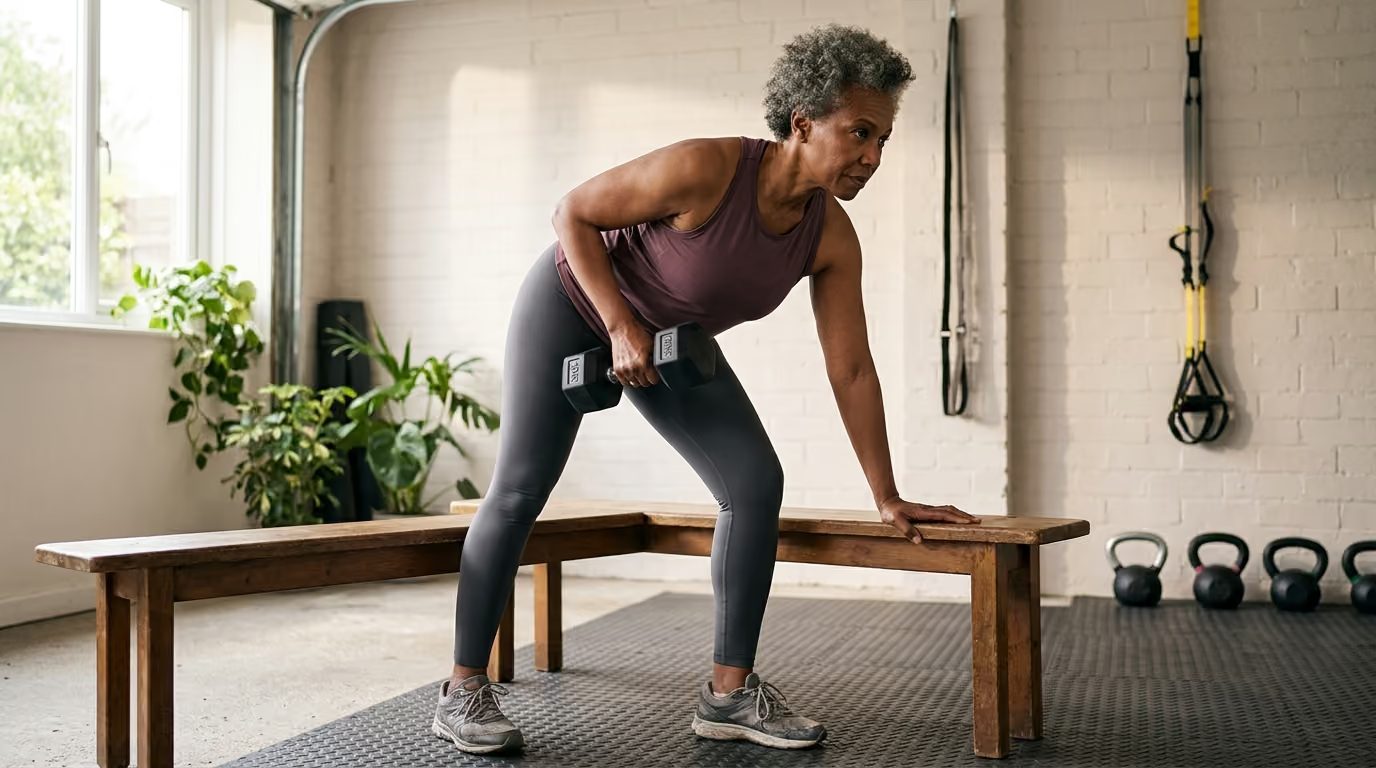
Pulling exercises target the upper back, latissimus dorsi, rhomboids, and biceps. These muscles support upright posture, counteract forward head posture, and help you carry heavy items securely.
Loaded carries build grip strength, shoulder stability, and trunk integrity. Carrying weight while walking challenges your balance and forces your core muscles to resist unwanted rotation and bending.
To explore how these movements fit into a broader lifestyle plan, visit our comprehensive wellness resources.
Progress in strength training does not happen from doing random, exhausting workouts. It occurs when you apply progressive overload, which means gradually increasing the physical demands placed on your muscles over time.
For most postmenopausal women, training two to three non-consecutive days per week produces steady adaptations while allowing sufficient time for joint and muscle recovery. A typical full-body training session should last between 45 and 60 minutes and follow a logical structure:
and carries (10 to 15 minutes):** Unilateral work, rotator cuff stability, and loaded carries.
Intensity in resistance training refers to how heavy a weight is relative to your maximum capability. You do not need to lift to complete muscular failure to see gains. In fact, training to absolute failure often leads to excessive fatigue and compromises your movement mechanics.
A practical way to manage intensity is by using the Repetitions in Reserve (RIR) framework. Aim to complete each set leaving one to three clean repetitions "in the tank." If you are performing a set of eight repetitions, choose a weight where you could safely complete nine or ten repetitions, but stop at eight. When you can comfortably complete all sets and repetitions with good technique, you can slightly increase the weight in your next session.
Recovery capacity can fluctuate after menopause due to night sweats, disrupted sleep, joint stiffness, and life stressors. Autoregulation means adjusting your daily workout intensity based on how your body feels, rather than forcing yourself through a rigid plan when exhausted.
If you had a poor night of sleep or are experiencing a flare-up of joint stiffness, keep the planned movement patterns but reduce the load by 10 to 20 percent. Alternatively, drop one set from each exercise and focus on smooth, high-quality movement. When your energy and recovery are high, you can push the upper boundary of your target weights. Consistency over months and years matters far more than pushing through excessive fatigue in a single workout. Building mental resilience and body awareness is an ongoing practice; you can read more in our articles on midlife confidence and mindset.
A diagnosis of low bone density or osteopenia is not a reason to stop lifting weights. In fact, it makes progressive strength training even more valuable. However, you must implement specific safety modifications to protect vulnerable skeletal structures.
The U.S. Preventive Services Task Force recommends screening for osteoporosis with bone measurement testing in all women aged 65 years and older. The task force also recommends screening postmenopausal women younger than 65 who have an increased risk of osteoporosis based on a formal clinical risk assessment. Important risk factors include a previous fragility fracture, low body weight, parental history of hip fracture, long-term use of glucocorticoid medications, smoking, and excessive alcohol consumption.
If you have risk factors or are entering your mid-fifties and sixties, discussing a dual-energy X-ray absorptiometry (DXA) scan with your physician provides an objective baseline of your bone mineral density.
When training with low bone density, particularly if you have a history of vertebral fractures, your exercise selection must minimize high-risk forces on the spine. Research and clinical guidelines advise the following adaptations:
Impact exercises generate brief mechanical forces that can stimulate bone remodeling, but they must be introduced cautiously. If you have severe osteoporosis, joint degeneration, or poor balance, high-impact jumping can increase injury risk. Instead, use a graded hierarchy of impact based on your individual capacity:
Strength training provides the mechanical stimulus for your muscles and bones to adapt, but nutrition and sleep supply the resources required to rebuild those tissues.
As you age, your muscles experience an increase in anabolic resistance. This means your muscle cells require a stronger stimulus and a higher concentration of amino acids to initiate muscle protein synthesis. Standard dietary guidelines often recommend a baseline of 0.8 grams of protein per kilogram of body weight per day, but research in active midlife and older adults suggests this level may be insufficient to prevent muscle loss.
Consuming approximately 1.2 to 1.5 grams of protein per kilogram of body weight per day helps support muscle repair and recovery in postmenopausal women. For a woman weighing 68 kilograms (roughly 150 pounds), this equates to approximately 80 to 100 grams of protein daily. Distributing this protein evenly across your meals, aiming for 25 to 35 grams per meal, ensures a steady supply of essential amino acids like leucine. Women with pre-existing kidney disease or other specialized medical conditions should consult their physician before significantly increasing their daily protein intake. For more evidence-based eating strategies, explore our nutrition and weight management guides.
Attempting to lift weights while maintaining severe caloric restriction impairs recovery, increases injury risk, and accelerates bone and muscle loss. Ensure you consume adequate total energy to support your training volume.
Pay close attention to key micronutrients that support skeletal health:
Tracking progress solely through body weight can be deeply misleading during postmenopause. As you lift weights, you may simultaneously gain dense lean muscle tissue and lose visceral fat, resulting in little change on the scale despite marked improvements in body composition.
Track your progress using functional, meaningful metrics:
While the benefits of resistance training are well established, it is important to be clear about where the current scientific evidence remains limited, conflicting, or evolving.
First, the impact of resistance training on bone mineral density is often modest in clinical trials. While exercise consistently slows bone loss and can produce small percentage increases in density, it rarely reverses established, severe osteoporosis on its own. Resistance training should not be viewed as an absolute substitute for medical evaluation or bone-preserving medications when fracture risk is high.
Second, research protocols across published studies vary significantly. Some investigations use low-load resistance bands while others use heavy barbell protocols. This variation makes it difficult to pinpoint a single "ideal" training frequency, load percentage, or exercise selection for every postmenopausal woman. Individual response to training is highly variable and depends on genetics, prior activity levels, nutritional status, and underlying health conditions.
Third, the interaction between Menopause Hormone Therapy (MHT) and resistance training remains an area of ongoing study. While hormone therapy helps alleviate vasomotor symptoms and slows bone loss, systematic reviews show that MHT alone does not automatically result in significant increases in lean muscle mass. Hormone therapy should be evaluated with your medical doctor for symptom management and bone health, not treated as a standalone muscle-building intervention.
Finally, exercise does not eliminate all fracture risk. Bone strength depends on internal bone architecture, cortical thickness, and past loading history alongside bone mineral density. A well-designed program builds strength, power, and balance to reduce the likelihood of falling, but falls and fractures can still occur due to environmental hazards, visual changes, or medical events.
Staying strong and independent after menopause is not about pursuing an aesthetic ideal or fighting against your natural aging process. It is about deliberately loading your muscles, bones, and nervous system so you can continue living your life with confidence, stability, and capability.
Walking is an outstanding activity for cardiovascular health, joint mobility, and mental wellbeing, but it is not sufficient on its own to prevent postmenopausal muscle and bone loss. Walking produces repetitive, low-magnitude forces that do not provide enough mechanical tension to stimulate significant bone remodeling in the spine or hips. Progressive resistance training creates the higher muscle forces and structural loading required to preserve muscle mass, build bone strength, and maintain physical power.
You can safely begin resistance training at any age, even if you have never lifted weights before. The key is to start with foundational bodyweight movements, such as sit-to-stand exercises from a chair, supported wall push-ups, and light resistance bands. As your nervous system learns the movement patterns and your connective tissues adapt, you can gradually introduce external loads like dumbbells and kettlebells. Working with a physical therapist or a certified strength coach experienced in working with older adults can provide valuable guidance during your initial weeks.
Joint stiffness and fluctuating recovery are common during the menopause transition due to hormonal shifts and altered collagen turnover. Extend your warm-up by five to ten minutes, using gentle mobility drills and light movement to increase blood flow and lubricate your joints before lifting weights. If you are dealing with hot flashes, train in a well-ventilated space, keep cold water nearby, and wear breathable, layered clothing. On days when fatigue is high, reduce the number of sets or lower the weight by ten to twenty percent while maintaining proper exercise form.
Strength is the maximum force your muscles can generate to move a heavy load, such as standing up while holding a heavy weight. Power is the ability to generate force quickly, such as rapidly stepping forward to catch yourself after tripping over a rug. While strength provides the baseline capacity to move objects, power training trains your nervous system to react quickly under time constraints. A balanced postmenopausal program incorporates both slow, controlled strength exercises and safe, rapid power movements like brisk step-ups or medicine-ball throws.

Follow Refemina for research-led resources on hormonal change, strength, metabolism, nutrition, skin, intimate wellbeing and confidence through midlife.


Keep learning about the changes that shape energy, strength, confidence and wellbeing through midlife.
Explore Resources