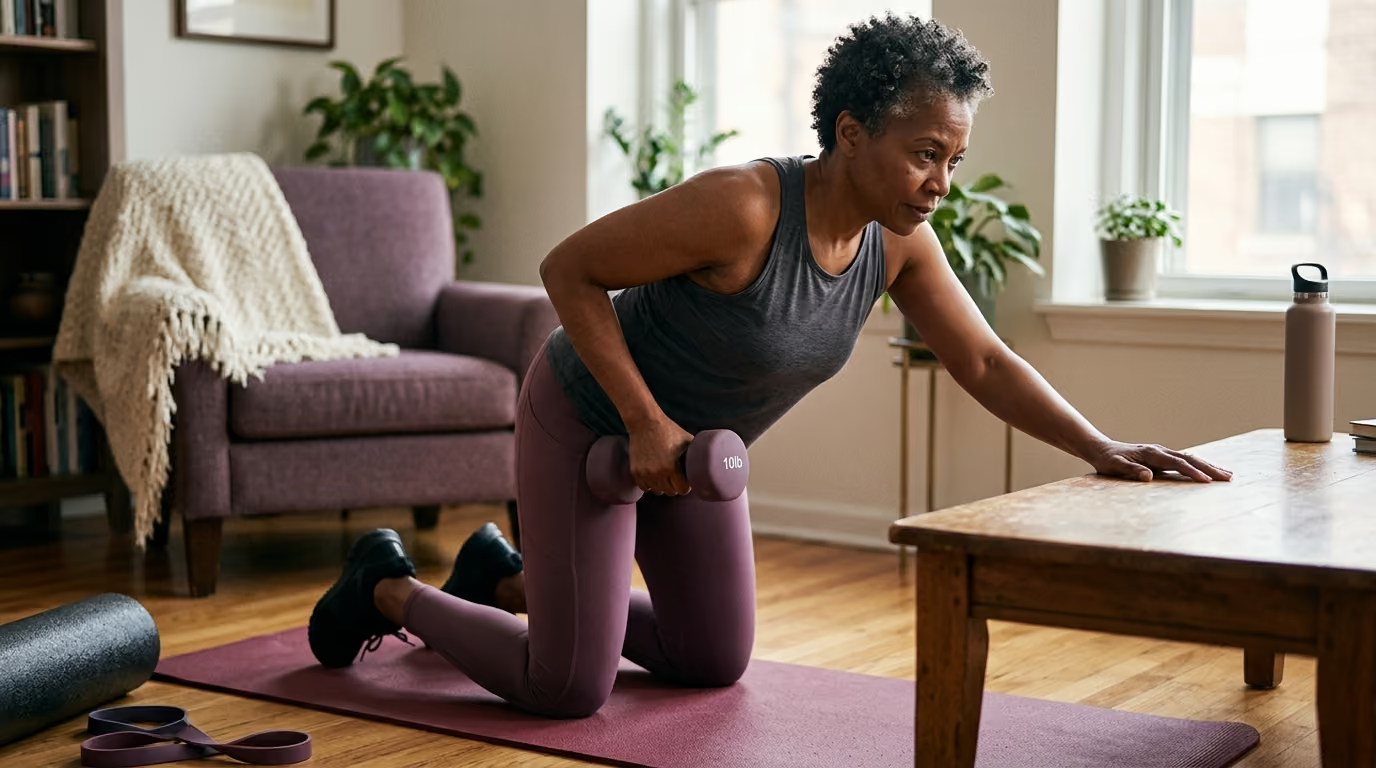

Strength training remains safe and effective for midlife adults managing persistent joint discomfort, knee aches, and low back pain through smart movement modifications.





Strength training with midlife aches is not an all-or-nothing proposition. It is not reckless perseverance through sharp pain, nor is it a mandate for total bed rest. It is the deliberate practice of adjusting exercise parameters to build physical capability while respecting current tissue tolerance.
This guide outlines how women can navigate knee discomfort, low back irritation, shoulder limitations, and pelvic floor changes. It explains what current clinical research shows about exercising with joint changes. It also details practical adjustments for common movements, and outlines clear boundaries for medical evaluation.
Current clinical guidelines firmly reject the idea that joint discomfort or age-associated imaging changes require complete exercise cessation. Global guidance from the World Health Organization recommends that all adults perform muscle-strengthening activities involving major muscle groups at least two days per week. For older adults, guidelines advise multicomponent physical activity that combines balance and strength work on three or more days each week to maintain function.
When discomfort arises, modern orthopedic and physical therapy guidelines favor relative modification over blanket avoidance. Research demonstrates that total rest frequently leads to rapid muscle loss, reduced tendon tolerance, and heightened nervous system sensitivity. In contrast, appropriate physical loading helps maintain cartilage nutrition, bone density, and muscular support around joints.
Major clinical guidelines across several common conditions support this active approach:
The medical consensus indicates that physical activity remains therapeutic rather than harmful for the vast majority of midlife musculoskeletal concerns. Experiencing discomfort does not automatically mean tissue destruction is taking place. Instead, it indicates that current mechanical stress has exceeded the tissue's temporary capacity. Successful training involves finding a tolerable entry point and progressing systematically.
Midlife involves distinct physiological shifts that can change how connective tissues, muscles, and joints respond to physical loading. Understanding these biological shifts helps normalize physical sensations without treating normal aging as a medical crisis.
During the menopausal transition, declining systemic estrogen levels influence collagen synthesis and tissue turnover throughout the body. Estrogen receptors exist in skeletal muscle, tendons, ligaments, joint cartilage, and the pelvic floor. When estrogen fluctuates and declines, tissues may experience slower remodeling rates following strenuous workouts. This shift can manifest as temporary morning stiffness, reduced tendon elasticity, or longer recovery intervals between demanding training sessions.
Muscular architecture also undergoes gradual changes during these years. Without regular resistance training, adults experience a progressive reduction in muscle cross-sectional area and a loss of fast-twitch muscle fibers. This process decreases resting metabolic rate and reduces joint stabilization during sudden or heavy physical tasks. To understand how hormonal shifts interact with muscle retention, explore our educational work on perimenopause and hormonal change.
Structural joint findings become increasingly common on imaging scans during midlife. Radiographs and magnetic resonance imaging frequently reveal degenerative changes, cartilage thinning, meniscal fraying, or spinal disc changes in people who experience zero physical symptoms. These imaging findings represent standard tissue changes over time rather than structural emergencies. Joint health depends heavily on fluid dynamics, where intermittent compressive forces from lifting stimulate nutrient delivery to articular cartilage.
Pelvic floor support structures also adapt to hormonal shifts and prior life events. Connective tissues within the pelvic basin lose some hydration and elasticity over time. When combined with changes in abdominal pressure regulation, some women notice changes in bladder support or sensation during high-demand lifts. Approaching these physical shifts with physiological understanding helps women adjust their routines intelligently rather than withdrawing from exercise out of fear.
Managing midlife joint discomfort requires a clear mental model of how tissues handle mechanical stress. Three core variables govern this relationship: tissue capacity, training load, and tissue irritability.
Capacity represents the total amount of physical stress a muscle, tendon, joint, or nervous system can tolerate without experiencing a symptom flare. Capacity is dynamic and fluctuates based on sleep quality, nutritional intake, systemic stress, and overall conditioning history.
Training load encompasses every mechanical demand placed on the body during a workout. Load is not merely the weight on a barbell or dumbbell. It includes total volume, movement velocity, joint angles, range of motion, exercise selection, and weekly workout frequency.
Irritability describes how easily symptoms are triggered and how long they take to calm down once provoked:
Evaluating whether an exercise variation is appropriate requires monitoring symptoms across a complete 24-hour cycle. Assessing physical sensations solely during a workout gives an incomplete picture.
Track physical responses across four distinct phases:
If symptoms remain stable throughout this 24-hour monitoring window, the training load was within current tissue capacity. If symptoms escalate or linger into the next day, modify one or two training variables during the subsequent workout.
Women who want to build a balanced foundation can review our detailed articles on strength, body composition and metabolism to align training volume with recovery.
Knee discomfort is among the most frequent physical complaints in midlife, yet complete avoidance of lower-body training accelerates functional decline. Strong quadriceps and hamstrings act as active shock absorbers that decrease joint stress during daily tasks.
The knee joint experiences varying compressive forces depending on joint angles, foot placement, and torso position. In deep knee flexion, compressive forces between the patella and the femoral groove increase. When knee symptoms are irritable, training through full flexion under heavy load can aggravate sensitive tissues. Modifying the depth or shifting the center of mass allows continued quadriceps development without excessive irritation.
Squats build leg power, pelvic stability, and bone density. When knee discomfort interferes with standard bilateral squats, consider several evidence-based modifications:
Unilateral exercises expose side-to-side strength discrepancies and improve hip stability. When lunges trigger joint discomfort, adjust the movement pattern:
Balancing knee extensor work with posterior chain training provides joint stability. Exercises such as Romanian deadlifts, elevated hip thrusts, hamstring curls, and glute bridges build support around the knee without placing direct compressive pressure on the patellofemoral joint.
Low back symptoms represent another common midlife challenge that frequently leads to unnecessary exercise avoidance. Clinical practice guidelines consistently emphasize that active movement and trunk conditioning are superior to passive rest for long-term spinal health.
The spine is an inherently robust, well-supported structure surrounded by powerful musculature and resilient ligaments. Persistent back discomfort is rarely a sign of structural failure. It is more often a sign of temporary movement sensitivity, muscular fatigue, or unaccustomed mechanical load.
Clinical guidelines state that back rehabilitation should not focus exclusively on endless abdominal crunches or rigid neutral postures. Instead, training should build broad trunk endurance, hip mobility, and movement confidence across various movement planes.
The hip hinge is an essential movement pattern for preserving independent physical function. If pulling a barbell from the floor aggravates the lower back, apply targeted regressions:
Trunk conditioning should emphasize resisting unwanted motion and maintaining stability under load. Rather than focusing on repetitive spinal flexion, prioritize isometric holds and rotary stability:
For additional strategies on building long-term training habits, browse our strength and metabolism resources.
Shoulder discomfort in midlife often involves the rotator cuff tendons or the subacromial space. Because the shoulder is the most mobile joint in the human body, it relies heavily on coordinated muscular dynamic control rather than bony constraints.
When shoulder pain begins, many women stop all upper-body pressing and pulling. This complete rest leads to rapid deconditioning of the rotator cuff and scapular stabilizers, which worsens movement mechanics over time. The 2025 rotator cuff guidelines support active rehabilitation that includes structured resistance training.
Overhead pressing can cause discomfort when the arm moves through a restricted or painful arc. Instead of eliminating upper-body pressing entirely, adjust joint angles and implement supportive setups:
A stable shoulder blade provides a firm foundation for upper-arm movement. Include targeted pulling and isolation exercises to support joint mechanics:
Pelvic floor symptoms, including stress urinary incontinence and pelvic heaviness, are common among midlife women. Epidemiological data indicates that urinary incontinence affects up to 30 percent of adult women and rises in prevalence after age 60. Experiencing leakage or pressure during heavy exertion should not prompt an immediate withdrawal from strength training.
A common misconception is that all pelvic floor symptoms stem exclusively from weak muscles that require endless Kegel exercises. In reality, pelvic floor dysfunction is multifaceted:
Supervised pelvic floor muscle training that focuses on contraction, relaxation, and coordination remains the gold standard first-line treatment supported by NICE guidelines.
The way you breathe during a lift directly affects pelvic floor loading. Holding your breath and forcefully bearing down creates high intra-abdominal pressure that pushes outward and downward against the pelvic basin.
Implement these pressure-management strategies during resistance training:
If symptoms of leakage or pelvic heaviness appear during a workout, apply immediate practical modifications:
Building physical confidence while managing pelvic health supports overall well-being. For broader perspectives on personal agency and midlife transition, read our pieces on mental fitness and confidence.
Structuring an intelligent resistance training program when managing aches requires a systematic approach. Rather than guessing which exercises will work, follow a structured decision-making process.
Adapting standard gym lifts involves systematically progressing from high support and limited range toward greater independence and full ranges of motion:
Squat Progression Pathway:
Hinge Progression Pathway:
Overhead Press Progression Pathway:
Reviewing realistic training adjustments helps demonstrate how these principles operate in everyday practice:
An illustrative model for knee joint irritation involves a woman who experiences sharp anterior discomfort during deep back squats. Rather than abandoning lower-body training, her routine shifts to high box squats, leg presses with high foot placement, and Romanian deadlifts. Over eight weeks, box height is lowered by two inches as quadriceps tolerance improves, maintaining muscle mass without triggering joint inflammation.
An illustrative model for recurrent lower-back sensitivity involves a lifter who experiences discomfort during conventional deadlifts from the floor. The movement is replaced with a trap bar deadlift elevated on four-inch blocks, paired with bird dogs and suitcase carries. Lower back stiffness subsides over several weeks, allowing consistent weekly training volume without multi-day recovery setbacks.
An illustrative model for shoulder impingement symptoms involves an active adult who feels pain during barbell bench pressing and military pressing. The routine replaces flat pressing with neutral-grip incline dumbbell presses and landmine presses, supported by cable external rotations and face pulls. Shoulder comfort stabilizes, allowing continued chest and deltoid development.
An illustrative model for exertion-related stress incontinence involves a lifter who notices minor leakage at the bottom of heavy squats. The routine introduces an exhale-on-ascent breathing technique, reduces barbell load by twenty percent, and incorporates seated supported rows while she engages in targeted pelvic floor therapy. Leakage ceases during training sessions as coordination improves.
Supporting structural health also requires sound nutritional foundations. To explore protein targets and meal planning that support muscle retention, view our guide on nutrition and weight management.
While most midlife aches respond well to load management and exercise modifications, some symptoms indicate conditions that require prompt professional medical assessment. Recognizing clinical red flags ensures that serious underlying conditions are not overlooked.
Seek prompt medical evaluation from a physician or physical therapist if you experience any of the following symptoms:
Outside of these red-flag situations, a consultation with a sports medicine physician, orthopedic physical therapist, or pelvic floor specialist is valuable whenever discomfort fails to improve after four to six weeks of sensible exercise modification. A qualified professional can provide an accurate diagnosis, assess movement mechanics, and design a customized rehabilitation roadmap.
Maintaining an evidence-informed perspective requires acknowledging areas where scientific research remains incomplete, mixed, or evolving. Recognizing these limitations prevents reliance on oversimplified claims.
Much of the published literature on midlife exercise focuses on broad demographic cohorts or younger athletic populations. High-quality randomized controlled trials specifically evaluating resistance training protocols in perimenopausal and postmenopausal women remain less common. As a consequence, many exercise recommendations are extrapolated from general adult populations rather than female-specific hormonal transition studies.
Research examining dietary supplements for joint health, such as collagen peptides, glucosamine, chondroitin, and turmeric, shows mixed and methodologically variable findings. While some small trials suggest modest subjective pain relief, larger systematic reviews indicate that their structural benefits are limited. Supplements cannot replace progressive mechanical loading and sensible recovery management.
Imaging research also highlights complex boundaries between structural findings and subjective pain. Numerous studies demonstrate that structural abnormalities on MRIs do not reliably predict pain intensity or physical disability. Because joint sensation is influenced by sleep, stress, inflammation, and nervous system sensitivity, relying solely on an imaging report to guide exercise programming is inadequate.
Finally, long-term comparative trials evaluating specific exercise techniques, such as free weights versus resistance machines or low-load versus high-load rehabilitation, often show similar outcomes for pain reduction and functional recovery. No single piece of gym equipment holds a monopoly on safety or effectiveness. Consistency, appropriate dosing, and personal tolerance matter far more than adhering to any single rigid fitness ideology.
Complete rest is rarely necessary or beneficial for non-traumatic joint or muscle flares. Stopping all exercise leads to rapid muscle deconditioning and decreased tissue tolerance. Instead, practice relative rest by temporarily modifying the painful movement, reducing the load, or substituting a supported exercise variation while continuing to train unaffected body areas.
Mild discomfort that stays between a 1 and 3 on a 10-point scale, remains stable throughout the set, and resolves quickly after finishing is generally manageable. If the sensation causes you to limp, grimace, or compensate with poor form, or if symptoms escalate significantly into the next morning, the exercise should be modified or regressed.
Yes, clinical guidelines from major orthopedic organizations strongly support land-based exercise and progressive resistance training for knee osteoarthritis regardless of radiographic severity. Building quadriceps, hamstring, and hip strength improves joint shock absorption and daily function, provided the exercise depth, load, and volume are adapted to your individual tolerance.
Progressive resistance training does not inherently damage the pelvic floor when performed with appropriate loads and sound breathing mechanics. Pelvic symptoms typically arise when intra-abdominal pressure exceeds muscular coordination and tissue capacity. Using an exhale-on-exertion strategy, adjusting set volumes, and working with a pelvic floor physical therapist allows most women to train safely and effectively.
Midlife aches and joint changes are common signals to adjust your training variables, not an order to stop moving. By managing your weekly volume, adapting movement ranges, and progressing with patience, you can continue building strength, confidence, and physical resilience through every decade.

Follow Refemina for research-led resources on hormonal change, strength, metabolism, nutrition, skin, intimate wellbeing and confidence through midlife.


Keep learning about the changes that shape energy, strength, confidence and wellbeing through midlife.
Explore Resources