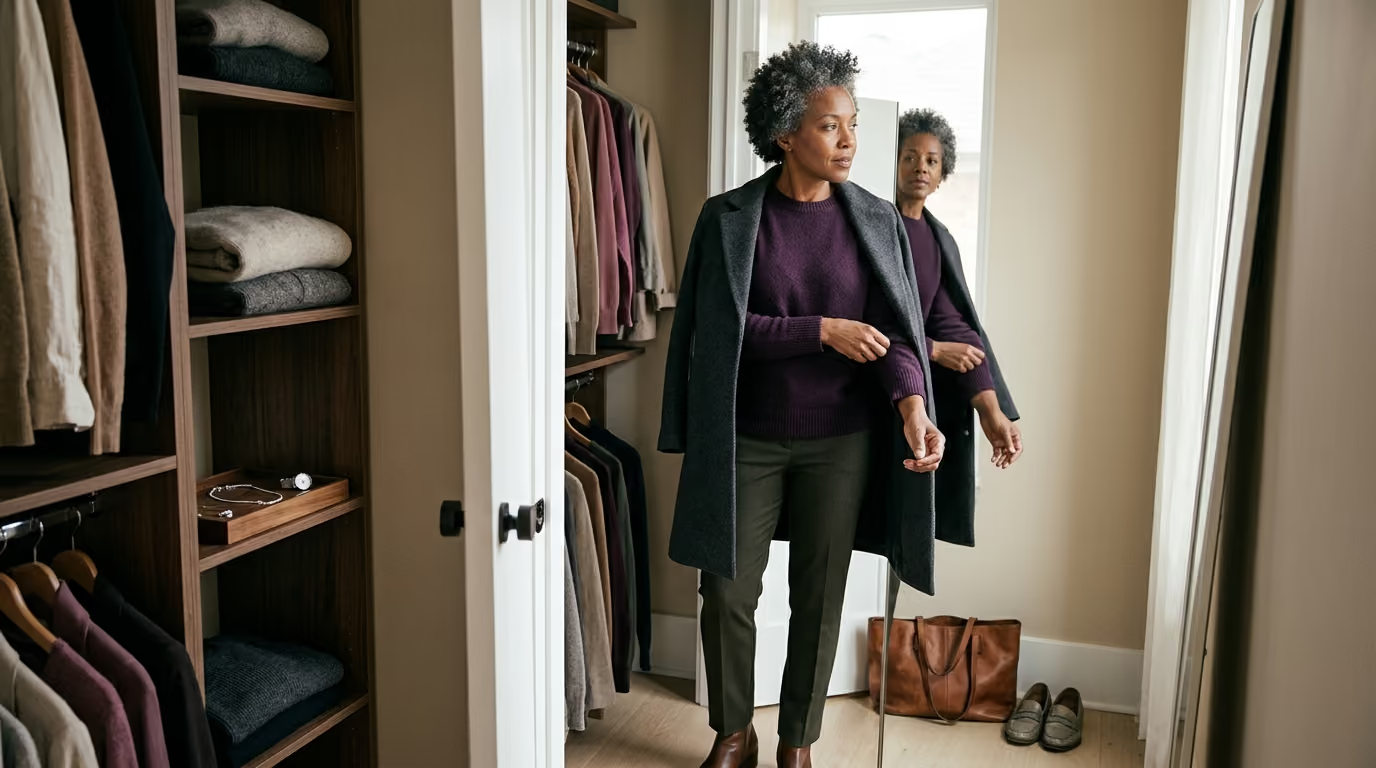

Confident midlife dressing becomes simple by aligning personal style, eyewear, and silhouettes with changing skin, hair, and facial contrast.





Style after 40 is a deliberate practice of alignment rather than an effort to hide age. It is not an obligation to follow restrictive fashion rules, cut hair short, or abandon saturated colour. Real personal style brings eyewear, hair architecture, fabric colour, necklines, jewellery scale, and garment proportions into a balanced relationship with physical features as they exist today.
Clothing, accessories, and grooming cannot alter internal biology, nor should they be expected to do so. What they can do is create visual balance, highlight personal character, and provide physical comfort throughout daily life. Navigating midlife changes in skin texture, hair density, facial contrast, and body proportions becomes much simpler when treated as a design challenge rather than a cosmetic crisis.
This guide examines what scientific research reveals about physiological shifts in midlife skin and hair. It translates those biological facts into clear, practical principles for building an intentional wardrobe. You will learn how optical contrast works, how to choose shapes that balance changing features, and how to create a style that feels authentic and confident.
Dermatological and physiological research confirms that midlife brings measurable changes to skin structure, hair growth cycles, and facial appearance. These shifts are driven by a combination of natural chronological aging, genetic factors, cumulative sun exposure, and the hormonal transitions of perimenopause and postmenopause. Clinical literature distinguishes between chronological age and postmenopausal age. Studies show that cutaneous collagen reduction often correlates more directly with the duration of estrogen decline than with birth year alone.
Research published in dermatological reviews indicates that skin can lose approximately 30 percent of its collagen during the first five years following menopause. After this initial phase, collagen decline is estimated at roughly 2.1 percent per year over the subsequent fifteen years. Skin thickness decreases alongside this collagen reduction, with studies noting an average decline of 1.13 percent per year in the first two decades postmenopause. These biological changes alter skin hydration, elasticity, and dermal density.
Hair growth dynamics shift during the same period. Female pattern hair thinning often involves a gradual reduction in both hair density and individual shaft diameter, particularly across the crown and frontal scalp. Research also observes a lower proportion of hair follicles in the active growth phase. At the same time, changes in near vision related to presbyopia mean that corrective eyewear frequently becomes a daily fixture.
These biological findings describe structural shifts rather than visual flaws. A reduction in collagen or a change in hair diameter alters how light reflects from the skin and how fabrics drape against the body. Understanding these changes helps remove the guesswork from choosing necklines, jewellery weight, frame shapes, and colour palettes. For a broader look at research-backed approaches to physiological changes, visit the Skin, Hair & Aesthetic Aging articles section.
The physical shifts experienced after 40 stem from specific physiological mechanisms. When estrogen levels decline during the menopausal transition, several changes occur across the skin and hair follicles.
Skin changes extend beyond fine lines. Estrogen plays an active role in maintaining skin hydration by stimulating the production of hyaluronic acid and supporting the skin barrier. As hormone levels shift, sebum production drops, which leads to increased surface dryness, sensitivity, and reduced barrier recovery. Reduced dermal thickness means blood vessels and underlying structures sit closer to the surface, which can increase the visual prominence of shadows, fine lines, and uneven tone.
Hair follicles undergo structural adjustments as well. Estrogen generally prolongs the anagen, or active growth, phase of hair. When estrogen decreases relative to androgens, the growth cycle shortens, and individual hair follicles may undergo miniaturization. This process results in finer strands, lower overall density at the scalp, and changes in hair texture. Hair that was once smooth may become coarse, wiry, or prone to dryness and breakage.
Near vision changes also influence appearance during this decade. The crystalline lens inside the eye gradually loses flexibility, making reading glasses or progressive lenses necessary for daily tasks. Eyewear becomes a primary visual feature on the face, altering facial balance and creating a new focal point that interacts with hairstyles, brows, and necklines.
These transitions develop at different rates for every person. Genetics, sun protection habits, lifestyle factors, and overall health all influence how these biological shifts appear. Viewing these adjustments through a factual lens allows you to select clothing, fabrics, and accessories that work with your features instead of fighting them.
Facial contrast refers to the visual difference in value and colour between facial features, such as the eyes, eyebrows, and lips, and the surrounding skin. Perceptual psychology research indicates that facial contrast naturally decreases as people age. Lips often lose some of their natural saturation, eyebrows and eyelashes may become sparser or lighter, and skin tone can develop subtle variations from sun exposure or vascular changes.
Studies investigating visual perception have shown that the human eye uses contrast cues to estimate age and vitality. In laboratory settings, increasing contrast around the eyes and mouth caused observers to perceive faces as younger. Conversely, reducing contrast produced the opposite judgment. While these studies measure visual perception in controlled environments, their true value for everyday dressing lies in understanding how visual contrast functions as a styling tool.
You can think of facial contrast as an adjustable dial rather than a fixed rule. You do not need to wear heavy makeup or dye your hair dark to establish definition. Instead, you can adjust visual contrast through the deliberate placement of accessories, eyewear, necklines, and fabric colours.
A person with silver hair, pale skin, and light eyes naturally possesses low facial contrast. If that person wears a washed-out beige shirt with frameless glasses, the entire upper body may blend together without a clear focal point. Adding a dark tortoiseshell frame, a rich navy collar, or a defined berry lip instantly adjusts the contrast level, providing structure and focus.
Contrast can be applied wherever you want to direct attention. If you want to highlight your eyes, a bold frame or vibrant earrings will draw the viewer's gaze upward. If you prefer to keep your facial framing soft, you can introduce high contrast through a graphic jacket, a structured handbag, or contrasting shoes.
Eyewear and hair structure form the visual frame for your facial features. Because they sit directly adjacent to the eyes, brow line, and jaw, changes in these two elements have an immediate impact on your overall appearance. When chosen with intention, eyewear and hair work together to create balance and definition.
Eyewear should be evaluated as an architectural element rather than just a medical device. A pair of glasses introduces lines, angles, colours, and physical weight across the middle third of the face. The bridge design influences the perceived distance between your eyes, while the frame width defines the outer boundary of your cheekbones.
If your eyebrows have become lighter or sparser, a frame with a defined, structured top line can restore the appearance of brow definition. Translucent acetate frames in amber, olive, champagne, or slate provide colour and structure without overpowering fine features. Bold, opaque frames in black, navy, or tortoiseshell act as a strong design statement that adds high contrast to the face.
Haircut geometry works in tandem with your eyewear. As hair density and individual strand diameter change in midlife, long, heavily layered styles can sometimes make the ends look thin or wispy. Choosing a haircut with a clean, blunt perimeter creates the visual impression of greater density and weight at the baseline.
Shorter bobs, structured lobs, or pixie cuts can direct attention upward toward the cheekbones and eyes. If you wear distinct, architectural glasses, a clean haircut with defined lines prevents the face from feeling cluttered. If your hairstyle features soft curls or natural texture, rounded or softly geometric frames provide a balanced visual dialogue between soft and structured lines.
Hair colour decisions also alter overall contrast. Allowing hair to transition to silver or white changes the background against which your skin and eyes are viewed. Silver hair creates a luminous, cool frame that pairs exceptionally well with saturated jewel tones, charcoal, crisp white, and rich navy. Rather than viewing grey hair as a signal to fade into the background, treat it as a distinct, high-impact design feature that opens up new colour pairings.
The space between the jawline, shoulders, and chest acts as a visual transition zone. Changes in skin thickness, collagen density, and muscle tone around the neck and décolletage can alter how different necklines sit and cast shadows. Understanding garment lines allows you to frame this area comfortably and deliberately.
Necklines govern how the eye travels downward from the face to the torso. Different cuts create distinct visual effects:
Jewellery functions alongside necklines to balance visual weight and establish focal points. As skin becomes more delicate or sensitive, heavy metal chains or rough, scratchy components may feel uncomfortable against the skin. Choosing smooth, lightweight materials ensures you stay comfortable throughout the day.
Scale is an essential consideration when selecting jewellery. Delicate, tiny chains can sometimes get lost against textured knitwear, substantial tailoring, or bold eyewear. Substantial pieces with clean lines, smooth metal surfaces, natural pearls, or sculptural resin can hold their own against structured outerwear and defined frames.
If you choose to wear a high, closed neckline, pair it with bold drop earrings or a graphic brooch placed near the collarbone to keep visual focus centered on the face. If you wear an open V-neck, a pendant that mirrors the angle of the neckline creates visual harmony. The goal is to ensure that your glasses, hair, neckline, and jewellery work together as a coordinated visual system rather than competing for attention.
Midlife often brings subtle or significant changes to body composition, muscle distribution, and posture. The goal of proportion in dressing is not to disguise your body, but to create balanced relationships between garment lengths, silhouettes, and your natural frame. Dressing with confidence involves understanding how fabric weight, cut, and colour placement work together.
A practical rule for styling is to focus on one dominant volume at a time. If you wear an oversized, relaxed garment in one area, balance it with structure or definition in another.
Shoulder definition plays a critical role in garment architecture. A softly padded or well-tailored shoulder creates an anchor point for jackets and dresses, helping fabric drape cleanly over the chest and midsection. Tailored jackets that finish just below the widest part of the hip create a clean, lengthening line down the torso.
Fabric weight and texture also alter how clothes interact with changing body lines. Extremely thin, clinging synthetic fabrics tend to pull, highlight undergarment seams, and feel restrictive during warm moments. Medium-weight natural fibres, such as woven wool, breathable linen, structured cotton, and fluid silk or rayon, drape smoothly over the body while maintaining their own shape.
Colour choices should be based on real-time observation rather than rigid seasonal rules. As hair colour shifts and skin tone changes, colours that worked a decade ago may produce a different effect today.
If your skin appears more translucent or prone to redness, high-chroma colours such as cobalt blue, deep emerald, rich plum, and charcoal often provide clean, flattering definition without emphasizing redness. Saturated neutrals like dark chocolate, rich olive, navy, and soft white provide versatile alternatives to pure black, which can sometimes cast heavy shadows under chin lines in harsh overhead light.
Experiment with fabric finishes near your face. Highly reflective, shiny metallic fabrics can emphasize uneven skin texture, whereas matte, brushed, or subtly lustrous finishes provide a softer, more forgiving reflection. For more perspective on navigating personal identity and physical transitions, read our guide on mental fitness and confidence in midlife.
Building an intentional wardrobe becomes much simpler when you use practical frameworks to evaluate your outfits. Rather than relying on rigid rules, you can apply four functional tools to assemble your daily looks: the Emphasize, Balance, or Redirect framework, the Five-Distance Test, the Contrast Budget, and the Material-Comfort Filter.
For every outfit, decide what you want your clothes and accessories to accomplish:
Evaluate your outfit from five different physical distances to verify that the look works from every angle:
Think of visual contrast as a finite design resource within an outfit. If every element is high contrast, such as bold glasses, bright lipstick, a busy patterned scarf, and large earrings, the look can feel visually overwhelming. If every element is low contrast, the outfit may lack definition. Choose one or two key areas to feature contrast, and allow the remaining elements to provide quiet support.
Midlife changes often involve sudden body temperature shifts and increased skin sensitivity. An outfit is only successful if you can wear it comfortably all day. Filter your clothing choices through four practical questions:
To learn more about managing physical transitions and hormonal fluctuations, consult our perimenopause and menopause resource library.
Examining realistic styling scenarios illustrates how these principles apply across diverse personal styles, skin tones, and hair textures. The following illustrative examples demonstrate how to align changing features with deliberate design choices.
An individual with fine, naturally light skin and newly silver hair notices that their usual beige and cream knitwear makes them look tired and washed out.
This adjustment restores clean definition to the face while allowing the silver hair to serve as a luminous, intentional focal point.
An individual experiences thinning at the crown and temples alongside a new need for strong progressive lenses. They love bold, dark glasses but worry their hair looks diminished by comparison.
The blunt haircut restores the appearance of thickness, while the warm-toned frames provide structure that complements rather than overpowers the hair.
An individual enjoys vibrant, expressive fashion but finds that shifting skin barrier function causes irritation from stiff fabrics, synthetics, and heavy accessories.
This strategy keeps personal style expressive and colorful while protecting sensitive skin from physical irritation.
An individual with deep skin notices uneven post-inflammatory hyperpigmentation across the cheeks and forehead. They want a polished, radiant aesthetic without feeling pressured to apply heavy foundation.
This approach shifts the visual focus to warmth, radiance, and intentional colour harmony, treating hyperpigmentation as a natural biological detail rather than a flaw.
An individual experiencing frequent hot flashes notices shifts in abdominal fat distribution and feels uncomfortable in tight, constricting waistbands and heavy layers.
This ensemble allows for immediate temperature regulation while maintaining a chic, tailored silhouette that flatters shifting body lines. For more information on physical strength and body composition, explore our resources on midlife strength and metabolism.
While changes in skin elasticity, facial contrast, and hair texture are a normal part of midlife biology, certain symptoms indicate underlying medical conditions that warrant professional clinical evaluation. Styling choices can support personal confidence, but they cannot treat dermatological or systemic health disorders.
The American Academy of Dermatology emphasizes that hair thinning should not automatically be attributed solely to menopause. Hair loss can stem from thyroid dysfunction, iron deficiency, autoimmune disorders, medication side effects, or nutritional deficiencies. A board-certified dermatologist can perform a physical examination, scalp dermoscopy, or blood tests to establish an accurate diagnosis and discuss evidence-based medical treatments, such as topical minoxidil, anti-androgen therapy, or specific prescription regimens.
Similarly, severe skin changes, such as sudden flaking, eczema flares, or rosacea, require targeted dermatological care rather than cosmetic cover-ups. Establishing a gentle daily skincare routine that includes a mild cleanser, a barrier-supporting moisturizer, and a daily broad-spectrum sunscreen with SPF 30 or higher helps maintain skin health throughout midlife. For broader medical context on navigating midlife transitions, visit our Perimenopause and Menopause information hub.
It is also important to recognize the distinction between medical therapies and lifestyle practices. While clinical research shows that systemic hormone therapy can increase dermal collagen and skin thickness in some individuals, hormone therapy is a medical treatment prescribed for systemic menopausal symptoms. It carries individual benefits and risks that must be evaluated with a healthcare professional, and it should not be viewed as a routine cosmetic procedure.
While research in dermatology, perceptual psychology, and optical design provides helpful insights, the available evidence has clear limitations that must be acknowledged.
Many studies on facial contrast and perceived age rely on computer-generated models, digitally altered photographs, or controlled laboratory lighting. These artificial settings do not fully replicate real-world environments, where facial expression, body movement, vocal tone, posture, and personality strongly influence how an individual is perceived. Looking rested, engaged, and confident in real life depends on much more than static contrast measurements.
Furthermore, aesthetic perception research often suffers from limited demographic diversity. Many foundational studies have focused primarily on light-skinned, Western populations. As a result, findings regarding colour preferences, contrast dynamics, and visual age cues cannot be generalized as universal rules for all skin tones, hair types, or cultural contexts.
Clinical studies on skin collagen loss and hormone replacement also present limitations. While research establishes averages, such as a 30 percent collagen decline over the initial postmenopausal years, individual variation is substantial. Genetic background, lifetime UV exposure, diet, sleep patterns, smoking history, and physical activity all alter skin outcomes significantly. No statistical average can accurately predict how an individual's skin will evolve.
Finally, styling advice that claims specific silhouettes, colours, or haircuts are universally flattering after 40 lacks scientific grounding. Visual balance depends entirely on an individual's unique bone structure, personal taste, cultural identity, lifestyle, and comfort requirements. Fashion is an expressive medium, not a set of rigid laboratory formulas.
Dressing well after 40 is about aligning your wardrobe with the reality of your current features, using contrast, proportion, and texture to express personal identity with clarity and ease. True style comes from working with your body as it is today, choosing garments and accessories that bring comfort, balance, and quiet confidence to your daily life.
Surgical or early menopause causes a rapid drop in hormone levels rather than a gradual transition over several years. This abrupt shift can trigger sudden changes in skin hydration, barrier sensitivity, and hair texture. Focus first on comfort by choosing soft, breathable natural fabrics and simple, low-irritation accessories. Use adjustable styling tools, like lightweight layers, open necklines, and defined eyewear, to establish visual balance as you navigate physical changes on an accelerated timeline.
Hormonal shifts often reduce natural scalp sebum production and alter hair shaft diameter, which can make curly or coily hair feel drier, coarser, or less defined. Rather than fighting your natural texture with high-heat styling tools that cause breakage, switch to moisture-rich, sulphate-free cleansers and leave-in conditioners. Work with a stylist who understands textured hair to create a haircut that preserves density at the baseline while giving curls room to move naturally.
Style and accessibility can easily go hand in hand. If small buttons, intricate clasps, or stiff zippers cause pain in your hands or wrists, look for adaptive designs featuring magnetic closures, flat-front elasticized waistbands, and pull-on silhouettes. Choose lightweight acetate or titanium eyewear that rests comfortably on the bridge of the nose without pinching, and select slip-on footwear with cushioned support to combine ease with a clean, modern aesthetic.
Managing temperature shifts requires a smart layering strategy based on breathable, natural fibres. Build your outfits around high-quality base layers, like bamboo, silk, or lightweight modal tanks, that breathe well against the skin. Layer them under open-front linen shirts, unbuttoned lightweight cardigans, or unstructured cotton jackets that can be slipped off easily without disrupting your overall silhouette. Avoid heavy, high synthetic turtlenecks and restrictive collars that trap heat around the neck and chest.

Follow Refemina for research-led resources on hormonal change, strength, metabolism, nutrition, skin, intimate wellbeing and confidence through midlife.


Keep learning about the changes that shape energy, strength, confidence and wellbeing through midlife.
Explore Resources