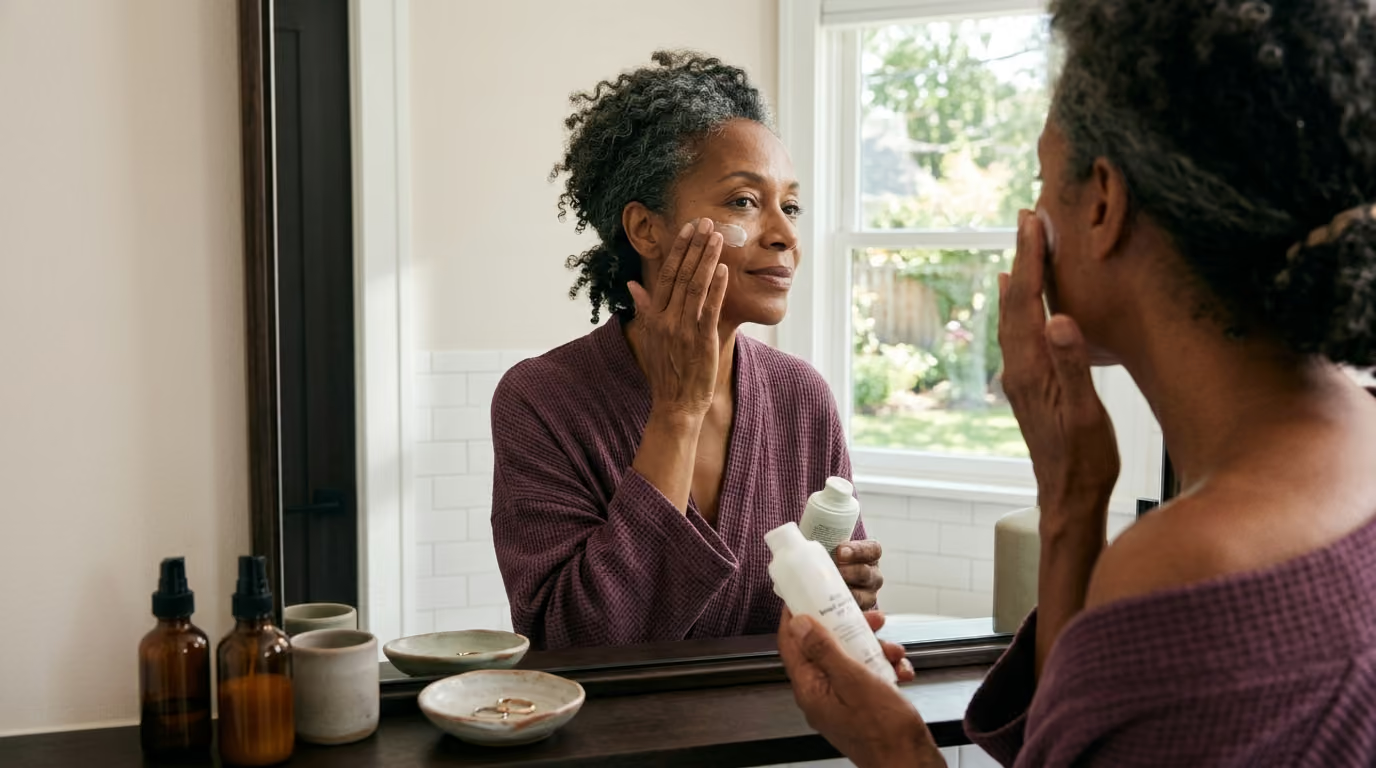

Four and a half years of clinical research proves that broad-spectrum sunscreen protects midlife skin against accelerated aging, pigmentation, and barrier sensitivity when applied correctly.





Sunscreen after 40 is not a magical beauty cream that erases past decades. It is a daily photoprotection tool designed to manage ongoing ultraviolet risk, reduce pigment flares, and preserve skin structure. Understanding how to protect midlife skin means moving past marketing hype and looking at how changing biology interacts with daily light exposure.
This guide provides a comprehensive review of what sun protection can and cannot do for mature skin. You will find clear information on ultraviolet biology, formulation choices, pigment management, proper application, and how photoprotection fits into long-term skin health.
Current clinical evidence demonstrates that consistent ultraviolet protection provides tangible benefits for skin health and appearance. Daily photoprotection is not simply about avoiding a painful summer burn. It is a systematic way to reduce cumulative cellular damage across your lifespan.
Researchers divide skin aging into intrinsic and extrinsic categories. Intrinsic aging reflects chronological time, genetic programming, and hormonal shifts. Extrinsic aging, often called photoaging, reflects cumulative environmental exposure dominated by ultraviolet radiation.
A landmark randomized controlled trial published in the Annals of Internal Medicine tracked daily sunscreen use over four and a half years. The researchers found that participants assigned to daily broad-spectrum sunscreen use had no detectable increase in skin aging over the study period. Those daily users were 24 percent less likely to show increased skin aging compared to discretionary users.
This research confirms that photoprotection helps limit ongoing collagen degradation and epidermal thinning. However, the evidence also shows clear boundaries. Sunscreen cannot rebuild fat pads, reverse deep expression lines, or restore structural bone loss in the face.
A realistic photoprotection strategy serves three distinct purposes:
Viewing sunscreen through this threefold framework helps you make clear decisions without falling for anti-aging promises that no topical product can deliver.
Midlife brings physiological changes that alter how skin reacts to both sunlight and topical skincare products. Many women notice that formulas they tolerated easily in their thirties suddenly cause burning, itching, or flaking after 40.
Much of this shift links directly to hormonal transitions. During perimenopause and menopause, declining estrogen levels influence several structural layers of the skin. Estrogen receptors in dermal fibroblasts help maintain collagen production, skin thickness, and moisture retention.
Dermatological research shows that women lose approximately 30 percent of their skin collagen during the first five years following menopause. After that initial drop, collagen decreases at an average rate of about 2.1 percent per year over the next 15 years. Elastic fibers also lose organization, which reduces the skin's natural snap and bounce.
At the same time, sebum production declines and epidermal lipid synthesis slows down. The stratum corneum, which acts as the skin's protective moisture barrier, becomes more permeable and prone to trans-epidermal water loss. When the moisture barrier is compromised, ultraviolet radiation and environmental irritants penetrate more easily, sparking low-grade inflammation.
These biological changes explain why sun protection needs to shift in midlife:
Understanding these biological changes allows you to choose products that support your barrier rather than fighting against it. You can review broader skin and hair changes in midlife to understand how hormones influence everyday grooming routines.
Decoding a sunscreen label requires understanding the precise testing standards used by regulatory agencies like the U.S. Food and Drug Administration. Marketing claims often blur these terms, creating confusion about what a product actually does.
SPF measures protection against UVB radiation, which is the primary driver of epidermal sunburn. SPF does not measure UVA protection directly. The number indicates how much longer protected skin can resist UVB-induced redness compared to unprotected skin under laboratory conditions.
An SPF of 30 blocks approximately 97 percent of UVB rays, while an SPF of 50 blocks about 98 percent. Higher numbers offer incremental gains rather than massive leaps in defense. Relying on an exceptionally high SPF number can create a false sense of security, leading people to stay in direct sun too long or skip reapplication.
Broad-spectrum testing confirms that a formula protects against UVA radiation in proportion to its UVB defense. UVA rays have longer wavelengths that penetrate deeply into the dermis, damaging structural proteins and driving both photoaging and skin cancers.
A sunscreen must pass a critical wavelength test to earn the broad-spectrum label. This confirms that the protection extends across the UVA spectrum rather than stopping at the UVB boundary.
Regulatory standards prohibit brands from claiming a product is waterproof or sweatproof. Formulas can only be labeled water resistant for 40 minutes or 80 minutes based on standardized immersion testing.
Even a high-performance water-resistant formula begins to rinse away with friction, swimming, or heavy perspiration. Reapplication remains mandatory after toweling off or leaving the water.
Sun protection conversations traditionally focus on invisible ultraviolet rays. However, dermatological research highlights visible light, particularly high-energy visible blue light, as a major trigger for pigmentation disorders.
Visible light penetrates deeper into the skin than UVB and even some UVA rays. While visible light does not cause standard sunburns, it stimulates melanocytes to produce melanin. This reaction is pronounced in individuals with darker skin phototypes and anyone prone to melasma or post-inflammatory hyperpigmentation.
Standard untinted mineral and chemical sunscreens are formulated to be transparent. They reflect or absorb UV radiation, but they let visible light pass straight through to the skin.
This is where tinted sunscreens containing iron oxides play a vital role. Iron oxides are mineral pigments that provide color while absorbing and blocking visible wavelengths.
A randomized controlled trial evaluated 68 participants with melasma using hydroquinone alongside either a standard broad-spectrum sunscreen or an iron-oxide tinted sunscreen. After eight weeks, the group using the tinted visible-light protective formula achieved:
A separate study on darker skin tones found that untinted mineral sunscreen performed similarly to untreated skin against visible-light pigment triggers. Formulations containing iron oxides significantly blocked that pigment response.
If you are managing midlife melasma, age spots, or uneven tone, switching to a tinted formula provides an added layer of defense that standard sunscreens miss.
Choosing between mineral and organic sunscreen active ingredients often comes down to skin comfort, tolerability, and personal preference. Neither category is universally superior, but each has specific characteristics that matter for mature skin.
Mineral sunscreens rely on zinc oxide, titanium dioxide, or a combination of both. These natural minerals sit on the surface of the stratum corneum, where they absorb and reflect incoming ultraviolet radiation.
Organic sunscreens use carbon-based compounds such as avobenzone, octisalate, octinoxate, and homosalate. These compounds absorb ultraviolet rays and convert them into harmless trace amounts of heat.
If your skin is prone to redness or flushing during perimenopause and menopause, a fragrance-free mineral product is a sensible starting point. If you struggle with chalky residue or heavy textures, a modern organic lotion designed for dry skin may provide better daily compliance.
A high-performing sunscreen cannot protect your skin if it is applied too thinly or skipped entirely. The real-world efficacy of photoprotection depends directly on application volume and daily habits.
Laboratory testing relies on an application density of two milligrams of product per square centimeter of skin. In practice, most people apply only one-third to one-half of the tested amount, drastically reducing their real-world protection.
For the entire adult body, you need roughly one ounce of sunscreen, which is equivalent to a full shot glass. For the face, neck, and upper chest, aim for approximately one-third of a teaspoon. Many dermatologists recommend the two-finger method: dispensing two solid strips of sunscreen along the length of your pointer and middle fingers to cover your face and neck.
When applying your morning sunscreen, pay close attention to areas that receive chronic sun exposure yet are frequently missed:
To avoid pilling and ensure an even protective film, follow a logical morning layering sequence:
When you are spending extended time outdoors, reapplication is necessary every two hours, as well as immediately after swimming, heavy sweating, or towel drying. Sunscreen does not stop working on a set timer, but physical movement, facial oils, and friction gradually wear the protective film away.
Reapplying over makeup presents practical hurdles. If you are sitting in an office away from windows, a thorough morning application is generally sufficient for the workday.
If you are outdoors for lunch or an afternoon walk, consider these reapplication options:
Sunscreen is a powerful tool, but it should never be your sole line of defense. Relying entirely on topical lotion while staying in direct midday sun creates unnecessary ultraviolet exposure.
Dermatological and cancer prevention guidelines recommend a tiered approach to sun safety.
The simplest way to reduce ultraviolet exposure is to stay out of direct sunlight during peak UV hours, typically between 10 a.m. and 4 p.m. Use trees, umbrellas, canopies, and covered walkways whenever possible.
Clothing offers consistent protection that does not rub off, sweat away, or require reapplication. Look for garments with an Ultraviolet Protection Factor (UPF) rating. A UPF rating of 50 blocks 98 percent of ultraviolet radiation. Tightly woven fabrics, dark colors, and unbleached cotton also provide strong physical barriers against light.
A hat with a brim of at least three inches protects the forehead, eyes, nose, ears, and back of the neck. Baseball caps leave the ears and neck completely exposed, which are common sites for skin cancers.
Chronic ultraviolet exposure contributes to cataract formation, macular degeneration, and thin-skin photoaging around the eyes. Choose sunglasses labeled UV400 or certified to block 99 to 100 percent of UVA and UVB rays. Large lenses or wraparound styles provide the best peripheral protection.
You can explore further skin care and aesthetic resources to see how lifestyle habits connect with topical care.
Sun protection should be viewed as a strategy of preservation rather than an anti-aging cure-all. Approaching midlife skincare with realistic expectations helps you invest in habits that deliver real returns while avoiding overpriced trends.
Consistent photoprotection protects the collagen and elastic tissue you currently have from premature breakdown. It stops the rapid accumulation of solar lentigines and keeps midlife melasma from flaring into dark, widespread patches. Furthermore, if you invest in clinical skincare procedures like chemical peels, laser resurfacing, or microneedling, daily sunscreen protects that financial investment by preventing post-inflammatory hyperpigmentation.
However, sunscreen cannot rebuild facial fat pads that naturally diminish with age. It cannot lift sagging tissue caused by ligament laxity or soften deep expression lines created by muscle movement.
A mature skincare routine combines photoprotection with other grounded habits:
For a grounded look at physical vitality, browse our resources on strength and metabolism in midlife to see how total-body wellness supports healthy aging.
While adjusting your sunscreen routine is a great step for skin health, regular professional skin checks remain essential. Skin cancers become more prevalent with age due to cumulative lifetime ultraviolet exposure.
You should perform monthly self-examinations and schedule an annual full-body check with a board-certified dermatologist.
In addition to the ABCDE criteria, watch for non-healing sores that bleed, ooze, or crust for more than three weeks. These can indicate basal cell or squamous cell carcinomas.
You should also consult a dermatologist if:
A medical specialist can provide accurate diagnoses and prescribe targeted medical therapies when over-the-counter options are insufficient.
Clear-headed health guidance requires distinguishing established facts from early research and marketing claims.
The strongest evidence supports the use of broad-spectrum sunscreen with an SPF of 30 or higher to lower the risk of squamous cell carcinoma, melanoma, and photoaging. The randomized trial data showing a 24 percent reduction in skin aging progression over four and a half years provides solid confirmation of these benefits.
There is also strong peer-reviewed evidence confirming that iron oxides protect against visible-light-induced pigmentation, providing measurable benefits for melasma management.
Evidence is mixed regarding the added benefit of luxury anti-aging ingredients mixed directly into sunscreen bottles. While antioxidants, peptides, and plant stem cells sound appealing on a label, they are often included in tiny concentrations.
Some antioxidants degrade quickly when exposed to sunlight, while other active ingredients can destabilize the sunscreen filters themselves. You are usually better served by relying on your sunscreen for photoprotection and using a separate, stable serum for targeted actives.
Recent pharmacokinetic studies showed that certain organic sunscreen filters can be absorbed through the skin into the bloodstream at levels above FDA testing thresholds. The FDA has stated clearly that absorption does not mean these ingredients are unsafe or harmful.
These findings simply indicate that additional safety studies are warranted. If you prefer to avoid systemic absorption entirely, mineral active ingredients like zinc oxide and titanium dioxide remain recognized as safe and effective without systemic uptake.
To understand our editorial philosophy, you can read about Refemina and our commitment to research-informed health guidance.
If you work in a windowless space, you do not need heavy sunscreen indoors. However, standard window glass blocks UVB rays while allowing UVA rays to pass through.
If you sit near a sunny window, drive for your commute, or step outside during lunch, applying a broad-spectrum sunscreen in the morning provides valuable protection against cumulative UVA exposure and visible light.
Makeup with SPF provides some incidental protection, but it rarely delivers the full protection stated on the label. To achieve the tested SPF rating, you would need to apply a thick layer of foundation, which few people do.
It is far more effective to apply a dedicated broad-spectrum sunscreen first, let it set, and then apply your makeup over it.
Zinc oxide is a natural astringent that can absorb surface oils, making the skin feel tight or powdery. If your mineral sunscreen feels drying, switch from a matte lotion to a hydrating cream base containing glycerin, squalane, or ceramides. Applying a rich moisturizer two minutes before your sunscreen will also help prevent dryness.
Eye stinging is commonly caused by organic chemical filters or added fragrances migrating into the tear film. Try using a fragrance-free mineral sunscreen stick or a pure zinc oxide formula around the orbital bone. Pair this with UV400 sunglasses to protect the eye area without relying on heavy topical creams near the lash line.
Sunscreen after 40 is a foundational health practice that preserves your skin's collagen, prevents stubborn pigment flares, and lowers lifetime disease risk. Focus on choosing a comfortable, broad-spectrum formula that you enjoy wearing every morning, and support it with shade, protective clothing, and regular dermatological care.

Follow Refemina for research-led resources on hormonal change, strength, metabolism, nutrition, skin, intimate wellbeing and confidence through midlife.


Keep learning about the changes that shape energy, strength, confidence and wellbeing through midlife.
Explore Resources