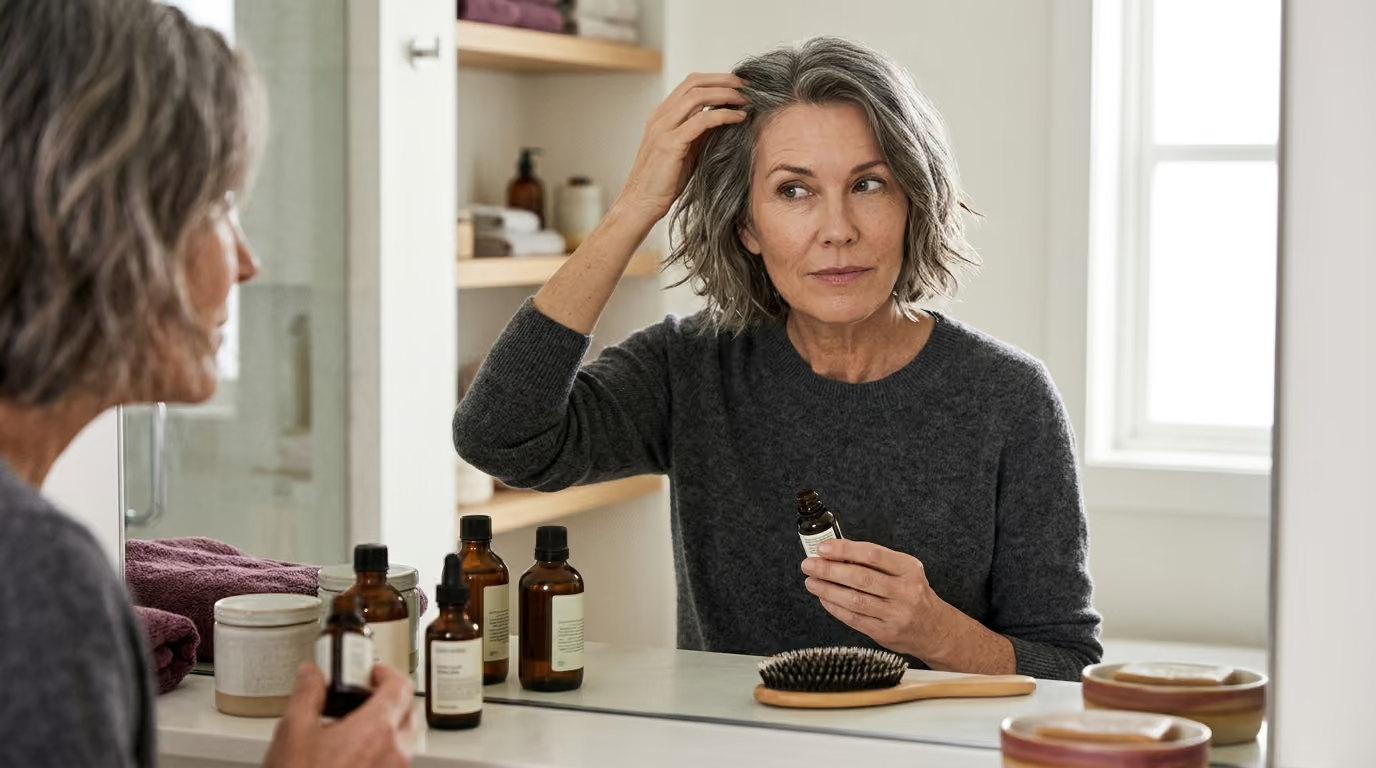

Five targeted assessment steps help you evaluate hormonal scalp changes and select the ideal cleansing, conditioning, and styling products for midlife hair.





You step out of the shower and gather your hair into a towel. Lately, your routine feels out of sync with your reflection. The shampoo that worked for ten years leaves your crown flat and your scalp oily by mid-afternoon, yet your ends feel dry, coarse, and prone to snapping. When you comb through the lengths, small broken strands scatter across the counter.
Many women notice shifting patterns in their hair between the late thirties and mid-sixties. The common reaction is to buy a heavy repair mask or a bottle of biotin gummies. Yet midlife hair does not fit a single mold. Hair care during this stage works best when you separate your scalp needs from your fiber needs, while checking for true medical thinning.
Understanding midlife skin, hair, and aesthetic changes allows you to build a reliable regimen. The goal is not to fight normal aging, but to support the hair you have with practical, evidence-based care.
Hair biology operates on two distinct levels. The hair shaft is the visible fiber above your scalp. It is composed of non-living, keratinized protein cells. Because the hair shaft is dead tissue, it cannot biologically heal or regenerate once damaged. Shampoos, conditioners, and leave-in products work by temporarily coating, lubricating, and smoothing the surface cuticles to minimize friction and prevent physical breakage.
The hair follicle is the living structure rooted within the dermis. It relies on a rich blood supply, hormonal signals, cellular energy, and a balanced scalp environment to produce hair. Changes in follicle activity dictate growth cycles, hair caliber, and shedding rates. When midlife changes occur, they reflect shifts in the follicle, mechanical wear on the shaft, or a combination of both.
Research demonstrates that hair follicles contain estrogen and androgen receptors. During midlife, declining ovarian estrogen and progesterone alter the ratio of circulating hormones. This shift influences follicular signaling pathways. A systematic review published in medical literature highlights that postmenopausal hair changes are multifactorial. Estrogen withdrawal interacts with genetic predisposition, microvascular alterations, and local biochemical factors around the follicle.
These biological shifts alter the growth cycle. The anagen (growth) phase shortens, while the telogen (resting and shedding) phase lengthens. Individual hair fibers often grow back with a smaller diameter, a process known as follicular miniaturization. A cross-sectional study cited in dermatological reviews estimated that female-pattern hair loss affects roughly 52.2% of postmenopausal women, with variable prevalence across different ethnic backgrounds and diagnostic criteria.
Cosmetic products cannot alter follicle genetics or reverse medical hair thinning on their own. Recognizing the difference between follicle health and fiber conditioning is the foundation of an effective midlife hair routine.
Midlife brings gradual shifts across multiple physiological systems. The changes you observe in your hair often stem from hormonal, structural, and environmental factors interacting over time. Navigating perimenopause, menopause, and hormonal change helps clarify why your scalp and hair may feel completely different than they did a decade ago.
The hormonal transition affects sebum production and follicle structure in several ways:
Normal aging is not a disease or a failure of self-care. Rather, your hair fiber simply requires different mechanical support and moisture management than it did in earlier decades.
Before buying new products, assess your hair systematically. Treating midlife hair as a single category leads to product buildup, scalp irritation, and wasted effort. Use this five-step framework to determine your exact needs.
The scalp is specialized skin requiring appropriate hygiene. Ask yourself:
An oily or flaky scalp requires clarifying or active clarifying cleansers. A dry, sensitive scalp requires gentle, fragrance-free formulations and fewer wash cycles.
Examine the lengths of your hair away from the roots:
Check the hairs you find in your brush or shower drain:
Observe your hair under consistent, bright lighting:
Gradual, patterned loss of density suggests follicular thinning rather than basic shaft damage.
Review your daily styling habits honestly:
Addressing mechanical tension and thermal stress is often enough to resolve persistent frizz and broken ends.
A reliable hair routine does not require an overwhelming shelf of bottles. The American Academy of Dermatology recommends focusing on scalp hygiene, cuticle lubrication, and gentle handling. By structuring your core wash day around a few targeted steps, you protect both the living follicle and the fragile fiber.
Shampoo is designed for the scalp, not the lower lengths of your hair. Sebum, sweat, dead skin cells, environmental pollutants, and styling residues accumulate at the roots.
To cleanse effectively:
Wash frequency should match your scalp oiliness. Straight, fine hair with an oily scalp may need daily or every-other-day washing. Thick, curly, or dry hair may only require washing once or twice a week. The American Academy of Dermatology notes that textured hair can be washed as needed, with a broad baseline of every two to three weeks for very dry types. Adjust your schedule based on oil, sweat, and product use.
Conditioner is designed for the hair shaft, not the skin of your scalp. It deposits fatty alcohols, quaternary ammonium compounds, and light silicones or plant oils onto the cuticle layer. These ingredients neutralize negative electrical charges, smooth the cuticle, and reduce friction between strands.
Apply conditioner after every single wash. Focus the application from the mid-lengths down to the ends. If you have fine hair or an oily scalp, keep rinse-out conditioner at least two inches away from the roots to prevent weighing down your hair. For coarse or textured hair, work the conditioner through in sections, using the slip of the product to gently separate knots with your fingers. Leave the product on for two to three minutes before rinsing with cool or lukewarm water.
Leave-in conditioners, detangling sprays, and light hair lotions serve as a protective shield against daily grooming friction. Wet hair swells, stretching the cuticle and leaving the shaft vulnerable to snapping.
The American Academy of Dermatology recommends leave-in conditioners or detanglers to reduce breakage, split ends, and frizz in fragile or thinning hair. Fine hair benefits from a fine, water-based spray that distributes evenly without greasy residue. Coarser, dry, or curly textures benefit from a light cream or lotion applied to damp ends. Distribute the leave-in product evenly, paying extra attention to the ends and face-framing areas that experience the most friction.
The physical process of drying and combing is where most avoidable breakage occurs. Wet hair has significantly lower tensile strength than dry hair.
Follow these protective drying principles:
Selecting hair-care products becomes straightforward when you match ingredients and formulas to your specific profile. Avoid chasing vague marketing claims like "anti-aging" or "miracle repair." Focus on functional formulas that address your scalp state and hair caliber.
Fine hair has a narrow diameter and is easily weighed down by heavy butters and dense oils. The goal is to maintain a clean scalp environment, minimize weight, and reduce mechanical breakage.
Coarse gray hair and chemically lightened or relaxed hair often suffer from cuticle erosion and severe moisture loss. The objective is to restore surface slip, soften rough cuticles, and prevent snapping.
Midlife hormonal shifts often alter the uniformity of natural curl patterns, creating unpredictable frizz or dry patches. The goal is to enhance curl definition, retain moisture, and minimize disruptive brushing.
Frizz occurs when a damaged, porous, or rough cuticle absorbs ambient humidity, causing the individual hair fiber to swell and buckle outward. Frizz can also result from short, broken hairs standing up along the part.
A sensitive scalp often reacts to environmental allergens, synthetic fragrances, essential oils, and harsh preservatives. The priority is barrier restoration and soothing irritation.
Flaking on an oily scalp is frequently caused by seborrheic dermatitis, an inflammatory reaction to the proliferation of Malassezia yeast that naturally lives on the skin. The solution requires active medical ingredients rather than heavy cosmetic oils.
The American Academy of Dermatology and Mayo Clinic recognize specific active ingredient categories for managing dandruff and seborrheic dermatitis:
Use a targeted dandruff shampoo two to three times weekly. Apply the product directly to the wet scalp, massage gently, and let it sit for three to five minutes before rinsing. Follow with a standard cosmetic conditioner on the lengths to keep your ends from feeling dry. If over-the-counter active shampoos fail to control the flaking, a dermatologist can evaluate your scalp and prescribe targeted treatments, such as prescription-strength ketoconazole or ciclopirox shampoo.
One of the most critical steps in midlife hair care is knowing when products are no longer the answer. Cosmetic products improve the appearance of the hair shaft, but they cannot treat follicular medical conditions. Exploring menopause resources and research offers helpful perspective on when body changes require clinical guidance.
Female-pattern hair loss is the most prevalent form of permanent, progressive hair thinning in adult women. It is driven by a genetic predisposition combined with hormonal shifts. Follicles gradually shrink, producing shorter, finer hairs until some follicles stop producing visible hair altogether.
The pattern typically presents as a diffuse reduction in hair density over the crown and a widening of the central part, while the frontal hairline is usually preserved. British Association of Dermatologists guidelines highlight that early diagnosis and consistent intervention are key to slowing progression.
Topical minoxidil is the primary evidence-based, nonprescription medical treatment for female-pattern hair loss. The American Academy of Dermatology identifies topical minoxidil as an established option, typically used as a 2% solution applied twice daily or a 5% foam applied once daily. Minoxidil works by prolonging the anagen growth phase and increasing blood flow to miniaturized follicles.
When considering topical minoxidil:
Telogen effluvium is a form of nonscarring, diffuse hair shedding that occurs when a physiological or emotional stressor pushes a large number of growing follicles into the telogen phase prematurely.
Common triggers include:
Visible shedding typically begins two to four months after the triggering event. This delay often leads women to blame their current shampoo or a recent haircut. Telogen effluvium is generally self-limiting once the underlying cause resolves, with hair density gradually recovering over six to twelve months.
Scarring (cicatricial) alopecias are inflammatory conditions where the immune system attacks and permanently destroys the hair follicle, replacing it with fibrous scar tissue.
An increasingly recognized form in midlife women is frontal fibrosing alopecia. This condition causes a progressive, symmetrical recession of the frontal and temporal hairline, leaving behind a band of pale, smooth, shiny skin. It is frequently accompanied by the thinning or complete loss of eyebrow hair.
Other conditions include alopecia areata (which causes discrete, round, smooth bald patches) and central centrifugal cicatricial alopecia. These disorders require prompt evaluation by a board-certified dermatologist. Prescription anti-inflammatory therapies, topical corticosteroids, or immunomodulatory treatments are essential to halt follicular destruction.
The supplement market heavily targets midlife women with promises of thick, youthful hair. However, scientific evidence regarding hair supplements requires careful, realistic evaluation. For broader evidence on metabolic wellness, explore nutrition and weight management guidance.
Biotin (vitamin B7) is widely marketed as a mandatory hair supplement. Yet a comprehensive 2024 review in dermatological literature concluded that high-quality evidence does not support routine biotin supplementation for hair growth in healthy individuals. True biotin deficiency is exceptionally rare in people consuming a balanced diet.
Furthermore, high-dose over-the-counter biotin supplements can interfere with critical clinical laboratory tests. The FDA has warned that biotin supplementation can cause falsely normal or abnormal results on cardiac troponin tests (used to diagnose heart attacks) and thyroid hormone panels.
Hair follicles are among the most metabolically active structures in the body. If your body experiences a genuine micronutrient deficit, the hair cycle can be disrupted. Rather than taking random supplements, request targeted blood tests from your primary care provider.
Key markers relevant to hair health include:
Correcting an identified deficiency under medical supervision can support hair regrowth. However, taking high doses of vitamins when your levels are already normal offers no cosmetic benefit and carries potential risks.
Caring for midlife hair requires minimizing mechanical, thermal, and chemical stress. Because midlife hair caliber is often finer and less resilient, gentle handling preserves your natural volume and prevents avoidable breakage.
Excessive heat strips the hair shaft of internal moisture, denatures the structural keratin proteins, and damages the protective lipid layer of the cuticle.
To protect your hair:
Physical tension on the hair root can cause mechanical damage to the shaft and contribute to traction alopecia over time.
Adopt these low-tension habits:
Covering gray hair or adding dimensional highlights is a personal choice, but chemical processing alters the hair's physical architecture. Permanent hair dyes and bleaches lift the protective cuticle scales using alkaline agents (like ammonia) to deposit or remove pigment from the inner cortex.
To maintain fiber integrity:
Many women struggle with their hair simply because they follow outdated advice. Below are four common mistakes, along with practical alternatives based on hair biology.
The scenario: A woman notices hairs in the shower drain, becomes frightened, and cuts her washing schedule from three times a week to once every ten days.
The reality: Shampooing does not cause hair to shed from the follicle. It simply dislodges hairs that have already detached from the follicle base and were resting loosely in the follicular canal. Delaying washing allows sebum, dead skin cells, and yeast to build up on the scalp, potentially causing seborrheic dermatitis and worsening hair shedding.
The solution: Wash your scalp as often as needed to keep it clean, comfortable, and free of greasy buildup. Trust that washing dislodges only hairs that were already detached.
The scenario: A woman experiences a dry-feeling, itchy scalp with flakes. She rubs pure coconut oil, castor oil, or olive oil directly into her roots.
The reality: If the flaking is caused by seborrheic dermatitis, applying plant oils provides a direct lipid food source for Malassezia yeast. This accelerates yeast proliferation, intensifies inflammation, and worsens both itching and scaling.
The solution: Cleanse the scalp with a dedicated active dandruff shampoo containing zinc pyrithione, ketoconazole, or selenium sulfide. Reserve pure plant oils strictly for the lower two inches of your hair shafts to soften dry ends.
The scenario: A woman notices her center part widening and buys an expensive "follicle-boosting" cosmetic shampoo, expecting it to restore lost hair.
The reality: Thickening shampoos work cosmetically. They use polymers to coat the hair shaft or strip away natural oils to make individual hairs stand apart. They do not stimulate the follicle or halt progressive female-pattern hair loss.
The solution: Enjoy volumizing shampoos for temporary cosmetic fullness, but seek a professional medical evaluation from a dermatologist to discuss evidence-based treatments like topical minoxidil.
The scenario: A woman uses a stiff-bristled brush to vigorously stroke her scalp 100 times before bed, believing it stimulates circulation and hair growth.
The reality: Aggressive brushing does not meaningfully increase follicular blood flow, but it causes significant friction against the cuticle. This practice chips away at the outer protective scales, leading to split ends and breakage.
The solution: Brush gently using a flexible, ball-tipped brush or a wide-tooth comb only as needed to detangle and style. Treat your hair fiber like a fine, delicate fabric.
The midlife hair-care space contains many commercial claims that lack robust clinical backing. Maintaining a clear, skeptical view helps protect your time and resources:
Cosmetic adjustments should never delay medical care when red flags appear. The American Academy of Dermatology recommends consulting a board-certified dermatologist if you experience any of the following symptoms:
Early medical assessment allows for accurate diagnosis via scalp dermoscopy or small punch biopsies, helping you protect your follicles before permanent loss occurs.
Revisit this framework whenever you encounter a major routine change, such as adjusting your hair color, noticing new seasonal dryness, or recovering from a major illness or stressful event. You can also return to this guide to reassess your products if your scalp becomes uncomfortable or if you notice changes in your hair texture.
Caring for midlife hair is not about reversing the clock. It is about matching clean scalp care, lubricating conditioning, and gentle styling to your changing hair.

Follow Refemina for research-led resources on hormonal change, strength, metabolism, nutrition, skin, intimate wellbeing and confidence through midlife.


Keep learning about the changes that shape energy, strength, confidence and wellbeing through midlife.
Explore Resources