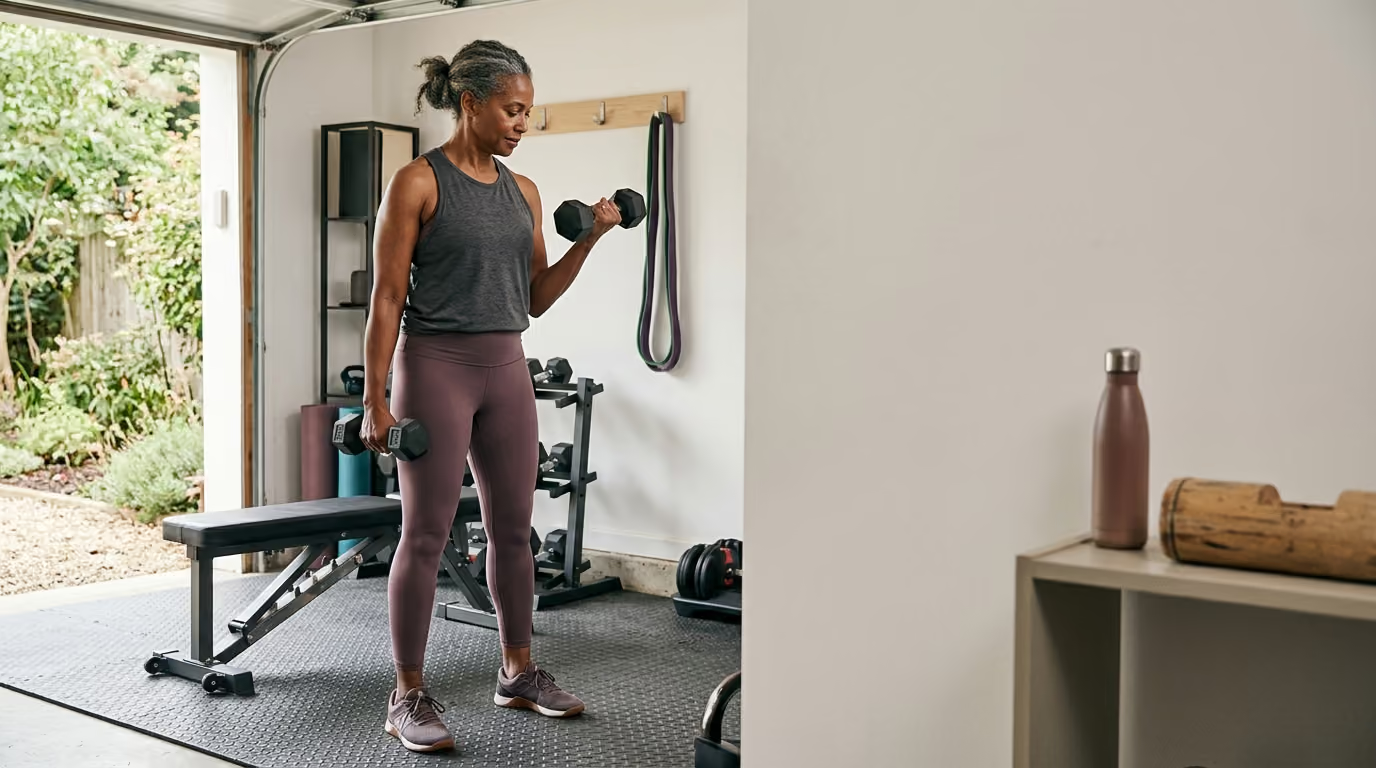
Many women search online for an answer to a simple question: how do I maintain muscle and strength after 40 without breaking my body? As decades pass, physical changes can make previous workout routines feel less effective or harder to recover from. Conflicting fitness advice often suggests that aging requires either grueling high-intensity workouts or fragile, lightweight movement. Neither extreme serves women well across the midlife transition.
This guide provides a practical planning framework for maintaining strength, muscle, balance, and aerobic fitness from your late 30s through your 70s and beyond. Instead of treating aging as a disease to defeat, this framework frames physical change as a process of continuous adaptation. The goal is not to preserve a fixed physique from your younger years. The real priority is maintaining the physical capacity that supports independence, daily energy, confidence, and long-term health.
By focusing on functional capability rather than brief cosmetic trends, you can adjust your training through perimenopause, menopause, and later life. This long-term approach protects your joints, supports your bones, and builds physical resilience for decades to come.
Biological Foundations of Midlife Strength
Understanding how the human body changes over time allows you to make informed decisions about your training. Research shows that muscle mass and muscle function naturally change as the decades progress. The medical term for the age-related loss of muscle mass and physical function is sarcopenia. Published estimates show that sarcopenia affects roughly 1% to 29% of community-dwelling older adults, depending on the specific diagnostic criteria used. In long-term care settings, prevalence estimates range from 14% to 33%.
Population-level estimates suggest an overall decline of approximately 40% in skeletal muscle mass between the ages of 25 and 80. This average decline is not an inevitable outcome for every active individual. Studies reveal that muscle strength often declines faster than muscle mass itself. Because strength drops more rapidly than muscle size, tracking your functional performance in daily life is far more useful than relying on body weight or body circumferences alone.
To build an effective training plan, it helps to distinguish between distinct physical capacities:
- Muscle Mass: The total volume of skeletal muscle tissue in your body.
- Muscle Strength: The maximum amount of force a muscle group can produce against resistance.
- Muscle Power: The ability of your neuromuscular system to produce force quickly.
- Physical Performance: How strength and power are expressed in everyday tasks like rising from a low chair or climbing steps.
- Aerobic Capacity: The capacity of your heart, lungs, and blood vessels to sustain physical effort and recover after exertion.
- Balance and Coordination: The ability to control your body position over your base of support while still or moving.
- Bone Strength: The structural density and capacity of bone tissue to handle mechanical loading without fracturing.
- Body Composition: The relative proportion and distribution of fat tissue, lean muscle tissue, and bone structure across the body.
These physical capacities overlap, but they are not identical. A person can maintain muscle size while losing movement speed, or possess solid aerobic endurance while struggling to carry heavy packages up stairs.
A reliable method for organizing your midlife training is the three-layer capacity model:
- Structural Capacity: The physical resilience of your muscle tissue, tendons, bone density, and joint surfaces.
- Neuromuscular Capacity: Your brain's ability to recruit muscle fibers quickly for strength, power, and rapid reaction time.
- Functional Expression: Your real-world ability to walk at a brisk pace, carry heavy loads, step over obstacles, get up from the floor, and catch your balance after a trip.
Training should not automatically shrink down to light weights or gentle toning as you age. Older adults can continue to build strength and lean tissue effectively. Higher-intensity resistance training creates stronger adaptations in maximal strength than low-intensity training. Functional capability can improve across a range of training loads, making consistent resistance exercise valuable at every stage of life. You can learn more about these physical adaptations through our guide on strength, body composition, and metabolism articles.
Physiological Stages of the Midlife Lifespan
Chronological age alone is a poor indicator of how a person should train. Two women who are both 52 years old may require completely different training plans based on their exercise history, joint health, sleep quality, and current menopause status. A practical lifespan framework categorizes training by life stage, functional capability, and physical history rather than age alone.
Stage 1: Late 30s to Early 40s (Building Reserve Capacity)
The primary goal during this stage is establishing a deep structural and neuromuscular reserve. Establishing consistent exercise habits early creates a physical cushion that protects against future muscle loss or periods of forced rest.
Key priorities for Stage 1 include:
- Establishing consistent resistance training habits 2 to 4 times per week.
- Developing solid technical mastery across fundamental movement patterns like squats, hinges, pushes, pulls, and loaded carries.
- Building a strong aerobic baseline through low-intensity cardiovascular work.
- Incorporating low-impact jumping or bounding movements to support long-term bone loading capacity.
- Preventing work stress, family demands, or minor injuries from causing long interruptions in training.
During this stage, training focuses on expanding overall capacity rather than simply maintaining existing fitness. Exercise routines should normalize heavy resistance work as a standard part of self-care rather than a temporary program for short-term weight management.
Stage 2: Perimenopause (Managing Variability and Adapting Volume)
Perimenopause brings fluctuating hormone levels, which can lead to unpredictable changes in recovery, energy, sleep, and mood. Menstrual variability, hot flashes, joint aching, and increased fatigue can disrupt training consistency. This stage requires physical flexibility rather than an all-or-nothing mindset.
Key priorities for Stage 2 include:
- Maintaining consistent resistance training while adjusting workout volume during high-symptom weeks.
- Using auto-regulated programming where workout intensity matches daily energy and sleep quality.
- Preserving regular aerobic conditioning for cardiovascular health without using exercise as a punishment for midlife body composition changes.
- Protecting night sleep and prioritizing recovery strategies between intense physical efforts.
- Tracking changes in performance, joint comfort, and perceived effort rather than panicking over short-term weight changes.
Research confirms that midlife women who engage in progressive resistance training experience significant improvements in muscular strength and body composition. Decreasing hormone levels do not eliminate your ability to build strength and adapt to training stimulus. When sleep is disrupted or joint soreness flares, reducing overall training sets while maintaining moderate resistance keeps your routine intact. You can review detailed physiological shifts in our collection of perimenopause and menopause articles.
Stage 3: Menopause and Early Postmenopause (Prioritizing Lean Tissue and Bone)
The transition into postmenopause is characterized by lower estrogen levels. This hormonal shift is frequently accompanied by a redistribution of body fat toward visceral stores and a gradual loss of lean muscle tissue. Scientific reports show average postmenopausal loss rates of approximately 0.6% in muscle mass and 1.5% in muscular strength per year, though individual trajectories vary widely.
Key priorities for Stage 3 include:
- Engaging in progressive resistance training at least 2 to 3 days per week to preserve skeletal muscle mass and functional strength.
- Including weight-bearing impact exercises or heavy loading to provide a direct mechanical stimulus for bone density.
- Consuming adequate dietary protein across the day to support muscle protein synthesis and recovery.
- Maintaining structured cardiovascular training to protect metabolic and heart health.
Systematic reviews show that exercise improves postmenopausal body composition. Aerobic training effectively targets body fat reduction, while resistance training drives improvements in lean muscle mass and muscular strength. Resistance training also improves peak oxygen consumption and overall functional output in postmenopausal women.
Hormone replacement therapy (HRT) requires balanced consideration during this stage. Scientific evidence suggests that hormone therapy may offer supportive benefits for muscle mass, strength retention, and muscle recovery, especially when combined with active strength training. Hormone therapy is not a replacement for physical exercise, nor does it generate muscle mass on its own without exercise stimulus.
Stage 4: The 60s and Early 70s (Expanding Functional Capacity and Power)
During this phase, the focus of training shifts from purely pursuing gym performance toward building a broad range of everyday physical skills. Training must support demanding real-world tasks while accommodating joint wear, historical injuries, or emerging health conditions.
Key priorities for Stage 4 include:
- Maintaining enough muscular strength to comfortably lift, push, pull, and carry household items.
- Developing muscular power to support rapid balance corrections during stumbles or trips.
- Practicing static and dynamic balance drills across varied ground surfaces.
- Preserving joint mobility to ensure full movement access for stairs, low seating, and floor activities.
- Building sufficient physical recovery reserves to handle unexpected illnesses, travel, or periods of inactivity.
The National Strength and Conditioning Association recommends individualized, periodized resistance training programs for older adults. An effective template includes 2 to 3 sets of multi-joint exercises at 70% to 85% of one-repetition maximum perform 2 or 3 times per week. Including speed-focused power exercises using lighter resistance (40% to 60% of one-repetition maximum) helps maintain rapid muscular reflexes.
Stage 5: The 70s and Beyond (Protecting Independence and Adaptability)
In later decades, training directly supports continued independence and active participation in daily life. The goal is protecting your functional freedom and avoiding reliance on external assistance for basic life activities.
Key priorities for Stage 5 include:
- Preserving lower-body strength to ensure easy chair rises and toilet transfers without using hands.
- Maintaining stair-climbing capacity, stepping ability, and safe walking speed.
- Building upper-body and grip strength for holding bags, opening containers, and carrying groceries.
- Practicing controlled floor transfers to ensure you can safely get down to and up from the ground.
- Improving reactive balance to reduce fall risks and prevent fall-related injuries.
The World Health Organization recommends that adults perform 150 to 300 minutes of moderate-intensity aerobic physical activity weekly, or 75 to 150 minutes of vigorous-intensity activity. Adults should also perform muscle-strengthening activities involving all major muscle groups at least two days a week. For adults aged 65 and older, guidelines specifically call for varied multicomponent activity emphasizing functional balance and strength training at least three days per week.
For frail older adults, structured resistance training significantly improves physical function. Research indicates that completing at least two weekly resistance training sessions improves physical performance test scores, while three weekly sessions yields optimal functional gains.
Translation of Physical Capacity into Daily Life
Translating physical training into everyday movement requires training physical capacities rather than isolated muscle groups. Training five core movement capacities guarantees that gym workouts translate directly into real-world capabilities.
Capacity 1: Maximum Strength
Maximum strength makes daily life feel physically easier. When your baseline strength is high, lifting a heavy suitcase uses a much lower percentage of your maximum capacity. This reduces fatigue and protects against acute muscle strains.
Essential movement patterns for maximal strength include:
- Squat Patterns: Goblet squats, leg presses, box squats, or step-ups to build quad and glute power.
- Hinge Patterns: Dumbbell deadlifts, Romanian deadlifts, or hip thrusts to strengthen the hamstrings, glutes, and lower back.
- Push Patterns: Dumbbell chest presses, push-ups, or overhead presses to maintain chest, shoulder, and arm strength.
- Pull Patterns: Supported dumbbell rows, cable rows, or lat pulldowns to preserve upper back structure and posture.
- Carry Patterns: Farmer carries, suitcase carries, or chest-supported loaded carries to strengthen grip and core stability.
- Foot and Lower Leg Work: Standing calf raises and foot-strengthening exercises to support ankle stability and balance.
Higher-intensity training effectively drives maximal strength adaptations in older adults, but meaningful functional gains can be achieved across a broad range of resistance levels.
Capacity 2: Hypertrophy and Lean Tissue
Maintaining muscle mass supports your metabolic rate, helps manage blood sugar levels, and provides an important physiological reserve during periods of medical recovery or forced bed rest. Body composition management should focus on functional capacity rather than restrictive cosmetic targets. A person can gain substantial real-world strength through neural and movement adaptations even without visible changes in muscle size.
Guidelines from exercise science organizations suggest working with loads around 80% of one-repetition maximum for strength goals. Targeting roughly 10 weekly workout sets per major muscle group serves as a balanced benchmark for hypertrophy. Moderate loads (30% to 70% of one-repetition maximum) moved at higher speeds build explosive power. For busy midlife women, completing two well-designed full-body workouts per week yields far better long-term outcomes than attempting an unrealistic four-day program that gets abandoned. You can explore balanced approaches in our nutrition and weight management articles.
Capacity 3: Power
Muscular power reflects how quickly your muscles can exert force. Power drops faster with age than absolute strength. Power is essential for rapid protective movements, such as catching your balance when slipping or stepping up quickly onto a curb.
Practical power exercises include:
- Brisk, intentional sit-to-stand movements from a firm chair.
- Fast step-ups onto a low, secure box or stair step.
- Medicine ball chest passes against a wall.
- Standing heel raises performed with rapid concentric effort and controlled lowering.
- Light kettlebell or dumbbell deadlifts moved briskly with intentional speed.
- Low-impact marching intervals or fast walking bursts.
Power training should be stopped before severe fatigue sets in. Avoiding concentric failure preserves movement speed and protects nervous system recovery.
Capacity 4: Aerobic Fitness
Cardiovascular fitness supports heart health, endurance, recovery capacity, and overall stamina. Aerobic training complements strength work without detracting from functional performance when managed properly.
A well-rounded aerobic routine can include:
- Brisk outdoor walking across varied incline terrain.
- Stationary cycling or road biking.
- Low-impact rowing or elliptical training.
- Swimming or water resistance exercise.
- Hiking or trail walking with light daypacks.
- Low-impact cardiovascular intervals.
Targeting the World Health Organization recommendation of 150 to 300 moderate-intensity minutes weekly provides clear cardiovascular protection. Inactive individuals can build toward this recommendation gradually through frequent 10-minute walking sessions throughout the day.
Capacity 5: Balance and Movement Confidence
Balance relies on a complex network involving vision, inner ear signals, sensory feedback from the feet, joint strength, and brain coordination. Balance is a skill that improves through targeted practice across various movement settings.
Effective balance exercises include:
- Tandem standing and heel-to-toe walking along a straight line.
- Single-leg standing near a sturdy counter or support surface.
- Side-stepping and step-over drills across low floor obstacles.
- Controlled direction changes and multi-directional stepping patterns.
- Floor transfer practice to safely move down to the floor and back up to standing.
- Loaded asymmetrical carries that challenge balance during movement.
Community fall-prevention research demonstrates that structured balance and functional training programs can reduce overall fall rates by up to 40% and lower fall-related injuries by approximately one-third in older adults.
Real-World Training Adaptation Frameworks
Understanding how to tailor workout frameworks across different midlife circumstances helps maintain long-term momentum:
- Busy Schedule Adjustments: When work demands or family care limits your available time, focus on two 35-minute full-body sessions per week combined with daily walking. Prioritize core multi-joint exercises like squats, rows, overhead presses, and deadlifts rather than complex, isolated routines.
- Perimenopausal Fatigue Adjustments: During weeks marked by high stress or sleep loss, maintain your routine by cutting total workout sets in half while keeping resistance moderate. Lowering exercise volume preserves your movement habits without adding physical exhaustion.
- Midlife Body Composition Shifts: When facing midlife body composition shifts, avoid overemphasizing cardio while neglecting strength work. Pair progressive resistance training with regular walking and adequate daily protein intake to preserve lean muscle tissue.
- Balance and Coordination Needs: If you feel strong in gym machines but unsteady on uneven ground, integrate asymmetrical carries, single-leg stance practice, dynamic direction changes, and outdoor trail walking into your weekly plan.
- Functional Floor Transfer Recovery: When recovering floor agility after illness or inactivity, begin with supported sit-to-stands from a firm seat, progress to elevated step-ups, and practice supported knee-downs using a couch or stable chair for balance.
- Bone Loading Adaptations: When training with low bone density, focus on progressive resistance exercises, loaded carries, spinal alignment drills, and gradual, controlled impact training tailored to your current physical capacity.
Sustainable Weekly Programming Protocols
An effective training plan should be practical, simple to follow, and adaptable to real-world schedule disruptions. The following templates show how to organize your training across the week.
Two-Day Weekly Minimum Template
This structure provides an effective workout split for busy schedules or recovery-focused phases:
Day 1: Full-Body Strength Baseline
- Leg Press or Goblet Squat: 2 to 3 sets of 8 to 10 repetitions
- Dumbbell Chest Press or Incline Press: 2 to 3 sets of 8 to 10 repetitions
- Supported Dumbbell Row or Cable Row: 2 to 3 sets of 8 to 10 repetitions
- Romanian Deadlift or Hip Extension: 2 to 3 sets of 8 to 10 repetitions
- Farmer Carry: 3 sets of 30-second carries
- Balance Practice: Single-leg stance near support (3 sets of 20 seconds per side)
Day 2: Full-Body Power and Stability
- Step-Up or Split Squat: 2 to 3 sets of 8 to 10 repetitions per leg
- Standing Dumbbell Overhead Press: 2 to 3 sets of 8 to 10 repetitions
- Lat Pulldown or Assisted Pull-Up: 2 to 3 sets of 8 to 10 repetitions
- Fast Sit-to-Stand or Medicine Ball Pass: 3 sets of 6 to 8 quick repetitions
- Trunk Anti-Rotation or Cable Paloff Press: 2 to 3 sets of 10 repetitions per side
- Calf Raises and Foot Exercises: 2 to 3 sets of 12 to 15 repetitions
Incorporate daily brisk walking or outdoor movement throughout the remaining days of the week.
Three-Day Weekly Template
This plan offers an expanded structure for those with more time for exercise:
- Day 1: Lower-body strength focus, horizontal chest pushing, and core bracing work.
- Day 2: Aerobic conditioning (30 minutes of low-impact cardiovascular work) plus balance drills.
- Day 3: Upper-body pulling, hip-hinge patterns, loaded carries, and explosive power movements.
- Day 4: Rest, light recreational walking, or dedicated mobility practice.
- Day 5: Full-body integrated strength session using moderate loading.
- Days 6 and 7: Low-intensity walking, outdoor recreation, or active rest.
The Minimum Viable Week Protocol
During periods of severe fatigue, illness recovery, work stress, or travel, switch to a reduced routine. A minimum viable week includes two brief 20-minute resistance sessions, daily 10-minute walks, and one session practicing balance drills. A reduced workout week is not a failure. It serves as an effective maintenance strategy that keeps your training habits alive until full energy returns. Explore practical training templates in our midlife health resources library.
Nutrition and Protein Context for Midlife Strength
Exercise recommendations work best when paired with sound nutritional support. Protein intake plays an important role in preserving lean muscle tissue, supporting recovery, and maximizing strength training adaptations.
International clinical groups, including PROT-AGE and the European Society for Clinical Nutrition and Metabolism (ESPEN), recommend a baseline protein intake of 1.0 to 1.2 grams per kilogram of body weight daily for healthy older adults. Active individuals engaging in regular resistance training benefit from intakes ranging between 1.2 and 1.5 grams per kilogram daily. For those recovering from illness or managing significant physical strain, protein intakes up to 1.5 grams per kilogram daily may be appropriate.
Scientific meta-analyses show that adding dietary protein during resistance training yields modest increases in lean muscle mass and lower-body strength. In healthy active adults, muscle-building benefits peak at daily protein intakes around 1.6 grams per kilogram of body weight, with no significant added muscle growth observed above that threshold.
Key nutritional guidelines include:
- Distributing protein intake across 3 to 4 meals daily to support muscle protein synthesis.
- Pairing adequate protein intake with progressive strength training, as protein intake alone without training stimulus will not build or maintain strength.
- Avoiding severe calorie-restricted diets, which accelerate muscle and bone density loss during midlife.
- Supporting bone health with adequate dietary calcium, vitamin D, and regular weight-bearing exercise.
Clinical Assessment and Specialized Adaptation
Certain midlife health considerations require thoughtful modification of exercise plans. Modifying your workouts allows you to train safely and protect joint health while continuing to build strength.
Osteoporosis and Fracture Risk Management
Low bone density or osteoporosis requires intentional movement selection rather than total avoidance of exercise. Bone responds positively to mechanical loading, but exercises must avoid unassisted rapid spine twisting and heavy forward spinal flexion under load.
Recommended modifications include:
- Emphasizing upright posture during squats, presses, and rows.
- Choosing loaded carries, leg presses, box squats, and wall push-ups to deliver safe axial loading.
- Avoiding weighted sit-ups, deep forward bends with weights, or sharp twisting under load.
- Including slow, deliberate balance training to lower fall risks.
Osteoarthritis and Joint Tolerance
Joint pain and arthritic changes do not mean you should stop lifting weights. Muscle strength around affected joints reduces joint stress, improves mobility, and lowers overall pain levels.
Recommended modifications include:
- Selecting joint-friendly movement ranges that do not cause sharp pain during or after workouts.
- Using smooth, controlled movement tempos rather than fast drops or jerky transitions.
- Swapping barbell movements for dumbbells, cables, or exercise bands to allow natural joint pathways.
- Reducing training weight while increasing repetitions during joint flares.
Cardiovascular and Metabolic Conditions
Women with elevated blood pressure, cardiovascular risks, or type 2 diabetes benefit directly from combined strength and aerobic training.
Recommended modifications include:
- Avoiding prolonged breath-holding (Valsalva maneuver) during heavy lifts to prevent blood pressure spikes.
- Exhaling during the exertion phase of lifts and inhaling during the lowering phase.
- Monitoring effort levels using the Rate of Perceived Exertion (RPE) scale rather than relying solely on heart rate monitors.
- Building aerobic capacity gradually through low-impact walking, cycling, or swimming.
Sarcopenia Screening and Frailty Interventions
When experiencing significant physical weakness, unexplained weight loss, slow walking pace, or frequent balance loss, seek a comprehensive medical evaluation. Sarcopenia screening uses strength testing, grip strength measurements, and walking speed evaluations to identify physical decline early.
Training for individuals showing signs of frailty should start with supported sit-to-stands, firm-surface standing balance practice, light resistance band work, and frequent walking intervals. The primary focus is restoring daily functional performance and movement confidence.
Staged Return Framework After Illness or Surgery
Returning to exercise after surgery, medical recovery, or an extended break requires a gradual rebuild. Following a structured staged plan prevents setback or injury:
- Stage 1: Focus on daily walking and basic floor mobility drills.
- Stage 2: Introduce bodyweight movement patterns with light support.
- Stage 3: Reintroduce moderate resistance training using light dumbbells or bands.
- Stage 4: Resume standard progressive overload, increasing weights systematically.
- Stage 5: Reintroduce power drills, dynamic balance challenges, and higher-intensity efforts.
To support mental wellbeing during physical transitions, review our mental fitness, confidence, and reinvention articles.
Evidence Boundaries and Common Misconceptions
Understanding the limits of midlife health research helps you avoid unrealistic trends and stay focused on proven strategies.
Research Gaps in Midlife Women's Health
While research on midlife strength training continues to grow, several clear evidence boundaries exist:
- Hormone Therapy and Muscle Mass: Clinical studies show mixed outcomes regarding how hormone replacement therapy affects muscle size and strength gains. HRT may offer supportive benefits alongside resistance training, but current evidence does not support using hormone therapy as a replacement for strength exercise.
- Home Exercise Equipment vs. Heavy Weights: Home-based workouts using bands or body weight improve functional health, but research shows that heavy gym equipment drives higher strength and bone density adaptations over time.
- Nutritional Supplements vs. Whole Foods: While protein supplements can help meet daily intake goals, scientific reviews confirm that protein powders do not offer performance advantages over quality whole foods.
Misconceptions in Midlife Strength Training
Disproving persistent myths clears the way for safe, productive training:
- Myth: Midlife women should use only very light weights.
Fact:* Progressive overload using moderate to heavy weights is safe for midlife women and drives far greater improvements in maximal strength, muscle mass, and bone density than light weights alone.
- Myth: Muscle loss is unavoidable, making exercise useless.
Fact:* Age-related muscle decline is workable. Clinical studies show that women across perimenopause, menopause, and late postmenopause build significant muscle strength and functional capacity when engaging in resistance training.
- Myth: Aerobic exercise alone provides complete health maintenance.
Fact:* Aerobic fitness supports heart health, but it cannot replace resistance training for preserving muscle mass, explosive power, or bone strength.
- Myth: Muscular strength and muscle size are identical.
Fact:* Strength gains result from neural adaptation, motor unit coordination, and movement skill as well as muscle size. You can build strength without dramatic changes in muscle volume.
- Myth: Balance training simply means standing on one leg.
Fact:* Effective balance training requires dynamic movement, stepping practice, direction changes, core stability, and carrying loads across various environments.
- Myth: Hormone therapy replaces strength training.
Fact:* Hormones provide systemic support, but they do not create physical force or overload bone structure. Physical resistance exercise remains necessary for building muscle and bone density.
- Myth: Consuming extra protein automatically builds muscle tissue.
Fact:* Protein provides the building blocks for muscle repair, but skeletal muscle builds only when triggered by physical resistance training.
- Myth: Workouts must reach total muscle failure to be effective.
Fact:* Training to total muscular failure increases joint strain and lengthens recovery time. Stopping sets 1 to 3 repetitions short of failure yields excellent strength gains while protecting recovery.
- Myth: Taking a month off resets all your physical progress.
Fact:* Studies on exercise detraining demonstrate that while some strength and muscle mass decrease during extended breaks, individuals retain substantial baseline strength above pre-training levels. Re-entering training with moderate weights rebuilds capacity quickly.
Long-Term Principles and Weekly Action Steps
Aging is a continuous process of biological adaptation. Strength, power, balance, and endurance are trainable physical capacities that respond positively to exercise at every age. A successful midlife strength plan is not a rigid program that remains unchanged for decades. It is an adaptable framework that evolves alongside your changing physical needs, energy levels, and personal goals.
By shifting your mindset away from anti-aging trends and focusing on long-term physical capability, you can protect your health, retain your physical freedom, and feel strong in your body through every stage of life.
Action Steps to Take This Week
To turn these research-backed guidelines into a practical routine, use this simple action checklist to guide your week:
- [ ] Assess Your Weekly baseline: Map out your current exercise schedule to ensure you are completing at least two resistance training workouts and 150 minutes of moderate movement weekly.
- [ ] Select Core Compound Movements: Choose one squat option, one hinge pattern, one push, one pull, and one loaded carry exercise to form your primary weekly strength routine.
- [ ] Integrate Fast Movement Power Drills: Add 3 sets of brisk sit-to-stands or fast step-ups to the beginning of your strength workouts to build rapid muscle reflexes.
- [ ] Add Functional Balance Practice: Spend 5 minutes twice a week practicing single-leg standing, tandem walking, or controlled floor transfers near a stable support surface.
- [ ] Review Your Daily Protein Distribution: Estimate your daily protein intake to confirm you are consuming 1.0 to 1.5 grams of protein per kilogram of body weight across your daily meals.
- [ ] Establish Your Minimum Viable Option: Outline a simplified 20-minute bodyweight routine to keep your momentum going during high-stress, fatigue, or travel weeks.
Sources
- World Health Organization 2020 guidelines on physical ... - PMC
- 2020 WHO guidelines on physical activity and sedentary ...
- The prevalence of sarcopenia in community-dwelling older adults, an exploration of differences between studies and within definitions: a systematic review and meta-analyses
- Epidemiology of Sarcopenia: Determinants Throughout the Lifecourse
- Prevalence of sarcopenia in the world: a systematic review ...
- Resistance training effects on healthy postmenopausal ...
- It's never too late: The impact of resistance training on strength and ...
- The Role of Resistance Training in Managing Menopause ...
- A Novel Low-Impact Resistance Exercise Program Increases ...
- A systematic review, meta-analysis and meta-regression of the effect of protein supplementation on resistance training-induced gains in muscle mass and strength in healthy adults
- Resistance Training for Older Adults: Position Statement From the National Strength and Conditioning Association
- Are dose-response relationships of resistance training reliable to improve functional performance in frail and pre-frail older adults? A systematic review with meta-analysis and meta-regression of randomized controlled trials
- One-year cessation following resistance training differently affects neuromuscular, body composition, and functional capacity in older adults
- Resistance training for older adults: Position statement from the national strength and conditioning association
Sources
- World Health Organization 2020 guidelines on physical ... - PMC
- 2020 WHO guidelines on physical activity and sedentary ...
- The prevalence of sarcopenia in community-dwelling older adults, an exploration of differences between studies and within definitions: a systematic review and meta-analyses
- Epidemiology of Sarcopenia: Determinants Throughout the Lifecourse
- Prevalence of sarcopenia in the world: a systematic review ...
- Resistance training effects on healthy postmenopausal ...
- It's never too late: The impact of resistance training on strength and ...
- The Role of Resistance Training in Managing Menopause ...
- A Novel Low-Impact Resistance Exercise Program Increases ...
- A systematic review, meta-analysis and meta-regression of the effect of protein supplementation on resistance training-induced gains in muscle mass and strength in healthy adults
- Resistance Training for Older Adults: Position Statement From the National Strength and Conditioning Association
- Are dose-response relationships of resistance training reliable to improve functional performance in frail and pre-frail older adults? A systematic review with meta-analysis and meta-regression of randomized controlled trials
- One-year cessation following resistance training differently affects neuromuscular, body composition, and functional capacity in older adults
- Resistance training for older adults: Position statement from the national strength and conditioning association