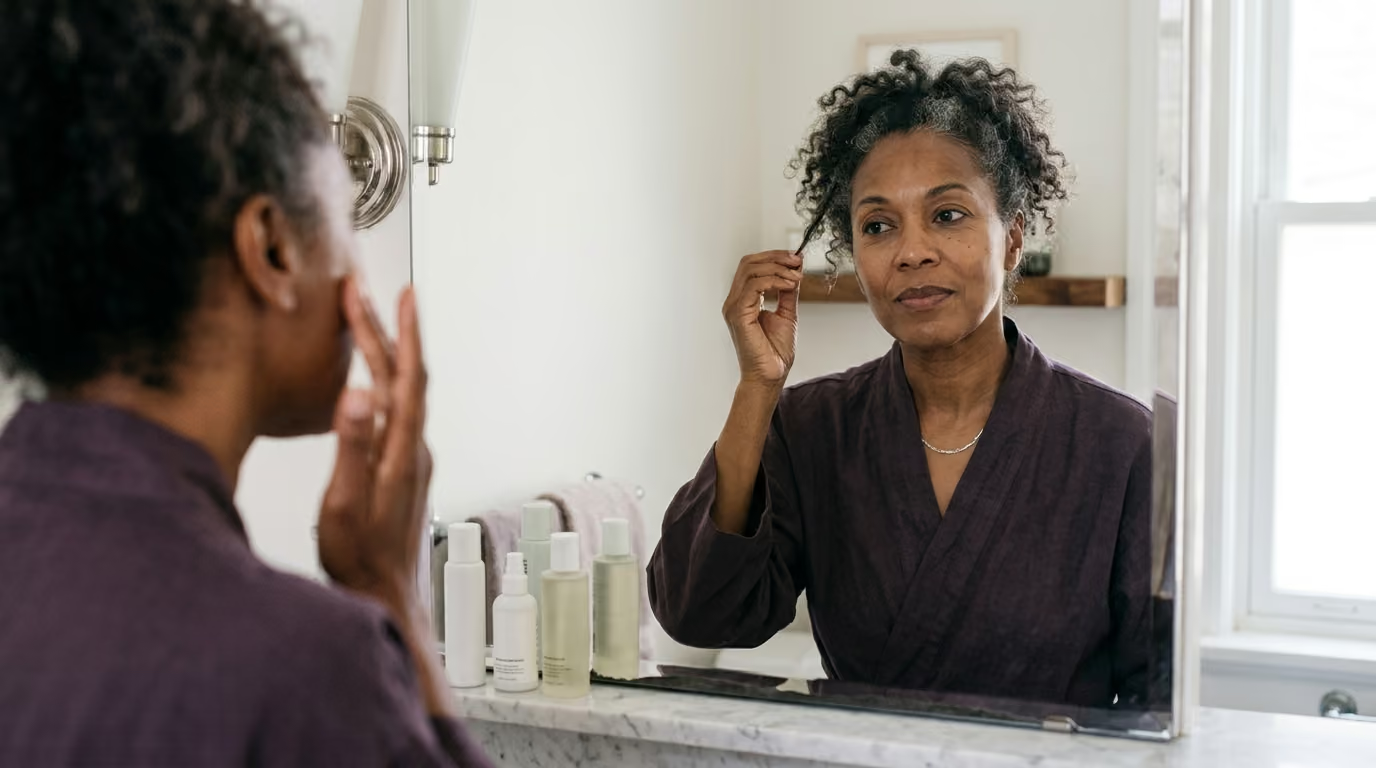

Midlife beauty is often marketed through quick fixes, but a grounded step-by-step framework targeting collagen loss and follicle health restores lasting confidence.





You look in the bathroom mirror under bright morning light and notice your moisturizer no longer seems to sink in. Your forehead feels tight by midday, a cluster of dark spots has deepened across your cheekbones, and your hair part looks wider than it did five years ago. You might wonder if you need a ten-step skincare routine, an expensive scalp serum, or a complete cosmetic overhaul.
Navigating midlife changes in your appearance does not require frantic product switching or chasing aggressive promises. A sustainable approach relies on understanding what is happening beneath the surface, protecting your skin barrier, and choosing evidence-backed strategies that fit your life.
Clinical research demonstrates that midlife changes in appearance reflect a blend of biological processes. Dermatological reviews show that the transition through perimenopause and menopause involves a sharp drop in ovarian estrogen and progesterone production. These hormonal shifts directly alter dermal thickness, skin hydration, wound healing, and collagen density.
Studies estimate that women may lose approximately 30 percent of cutaneous collagen during the first five years following menopause. After this initial decline, collagen content decreases by an average of 2.1 percent each year over the subsequent fifteen years. Skin thickness also decreases by roughly 1.1 percent per postmenopausal year in the early stages of the transition.
Hair follicles also respond to shifting endocrine signals. Research on female pattern hair loss shows that midlife hormone fluctuations can alter the ratio between circulating estrogens and androgens. This change contributes to progressive follicle miniaturization in genetically susceptible women. Clinical studies indicate that female pattern hair loss affects roughly a third of adult women, with prevalence rising significantly after age fifty.
At the same time, the evidence makes clear that hormones are only one piece of the puzzle. Photoaging caused by cumulative ultraviolet radiation remains the primary driver of deep wrinkles, rough texture, and mottled pigmentation. Intrinsic chronological aging, genetics, thyroid status, iron levels, and chronic stress also shape how skin and hair change over time. Credible evidence supports simple, consistent interventions over elaborate, expensive regimens.
Understanding how your body changes during this phase helps you choose effective support without viewing normal biology as a disease. The skin and scalp undergo distinct structural adjustments as hormone levels decline.
Estrogen receptors are located throughout the epidermis, dermis, and blood vessels. When estrogen levels fall, fibroblasts produce less collagen and fewer glycosaminoglycans like hyaluronic acid. Glycosaminoglycans hold water in the extracellular matrix, so their reduction leads to a noticeable loss of bounce and volume.
Reduced estrogen also slows epidermal cell turnover and diminishes sebum production from sebaceous glands. This process weakens the lipid matrix of the stratum corneum, which is the outermost protective layer of the skin. Transepidermal water loss increases, leaving the skin prone to dehydration, irritation, and sensitivity. Products that your skin tolerated easily in your thirties may suddenly cause burning, stinging, or redness.
The elastic fiber network in the dermis degenerates with age and sun exposure. Estrogen deficiency accelerates this degradation, causing skin laxity and crepiness on the neck, chest, and arms. Microvascular circulation within the dermis also slows down. Decreased blood flow limits nutrient delivery and impairs the skin's capacity to heal quickly after injury or inflammation.
Hair changes during midlife follow distinct biological paths. Follicles move through growth, regression, and resting phases. Falling estrogen levels shorten the active growth phase and prolong the resting phase. This leads to reduced hair diameter, slower growth rates, and gradual shedding.
In female pattern hair loss, follicles on the crown and central part miniaturize over time. These follicles produce finer, shorter strands until some stop producing visible hair altogether. The scalp itself produces less protective sebum, which can result in dry, itchy, or tight scalp skin. You can read more about navigating these physical shifts in our dedicated skin, hair, and aesthetic aging resources.
Translating biological changes into a daily routine requires looking past marketing claims. In real life, skin with reduced structural support requires protection before correction.
If your skin barrier is compromised, applying strong exfoliating acids or potent serums will cause irritation rather than improvement. You may notice that makeup settles into dry patches or that your skin feels tight after washing. The practical solution is not buying more products, but stepping back to rebuild barrier moisture.
Hair changes often carry an emotional weight that exceeds their physical impact. Finding more hair in your brush or seeing your scalp under bathroom lighting can spark anxiety. Daily scrutiny often exaggerates normal day-to-day shedding. Establishing a consistent, low-stress care routine helps restore a sense of control and self-trust.
Midlife appearance care is about supporting the body you have today. It is about feeling comfortable in your skin, preserving tissue health, and maintaining confidence without feeling pressured to conform to unrealistic anti-aging ideals. You can find thoughtful perspectives on self-assurance in our mental fitness and confidence articles.
A successful appearance plan works like an organized management system. It unfolds across distinct steps to help you avoid common mistakes and unnecessary spending.
Vague goals like wanting to look younger lead to impulsive purchases. Instead, identify specific, observable objectives categorized by purpose:
Focusing on one or two goals at a time prevents product overload and makes it easy to track what works.
Before introducing new treatments, document where you are starting. Take three clear photographs in natural, indirect daylight: one facing forward, one from a three-quarter angle, and one of your hair part.
Record your current products, daily habits, hair styling practices, and any recent stressors or dietary changes. This baseline prevents self-doubt later, because gradual improvements in skin texture and hair density are difficult to notice day to day.
Your foundational routine creates a stable environment for your skin and hair to thrive. It should be gentle, consistent, and easy to maintain.
The American Academy of Dermatology emphasizes that daily broad-spectrum sun protection prevents further breakdown of collagen and elastin while stopping dark spots from darkening.
Once your foundational routine feels comfortable for four consecutive weeks, you can consider adding a targeted active ingredient.
Topical retinoids, including prescription tretinoin and over-the-counter retinol, are well-supported by dermatological research for improving the appearance of fine lines, rough texture, and uneven pigmentation. Systematic reviews confirm that tretinoin stimulates epidermal renewal and promotes collagen synthesis in photodamaged skin.
Because retinoids can cause dryness and peeling, start slowly:
For stubborn sun spots and uneven tone, consider evidence-aligned ingredients such as azelaic acid, niacinamide, tranexamic acid, or stabilized vitamin C. Introduce only one pigment-targeting active at a time to monitor your skin's tolerance. Fading pigmentation takes several months of consistent application combined with rigorous sun avoidance.
Midlife hair concerns fall into two main categories: shedding from the root and breakage along the strand. Addressing hair changes requires identifying the underlying cause before starting treatment.
Female pattern hair loss involves progressive miniaturization of hair follicles on the top of the scalp. Clinical guidelines identify topical minoxidil as a primary, evidence-backed treatment for this condition. A Cochrane systematic review found that topical minoxidil significantly increases hair count and patient-reported regrowth compared to placebo.
When considering topical minoxidil:
It is common to confuse telogen effluvium with female pattern hair loss. Telogen effluvium is an abrupt, diffuse shedding event triggered by physiologic stress, rapid weight loss, severe illness, surgery, iron deficiency, or thyroid disruption.
Unlike pattern hair loss, telogen effluvium usually resolves once the underlying trigger is identified and corrected. You can explore broader hormonal influences in our perimenopause and menopause articles.
Midlife hair fibers are often drier and more fragile due to reduced scalp sebum production and years of heat styling or chemical processing. Breakage makes hair appear thin at the ends even when root density is healthy. Protect your hair fibers by:
Menopausal hormone therapy is a prescribed medical treatment designed to manage systemic menopausal symptoms. It is not approved or intended as a cosmetic anti-aging intervention.
Position statements from The Menopause Society confirm that systemic hormone therapy is the most effective intervention for vasomotor symptoms like hot flashes and night sweats, as well as the genitourinary syndrome of menopause. Clinical research and meta-analyses show that systemic estrogen therapy can improve skin hydration, increase collagen content, and improve skin elasticity.
These physical changes represent secondary physiological effects rather than a primary reason to start medication. Clinical decisions regarding hormone therapy require an individualized assessment with your doctor.
This assessment weighs your age, time since menopause, cardiovascular health, and personal medical history. Cosmetic goals alone do not justify systemic hormone therapy.
While a thoughtful home routine can accomplish a great deal, certain skin and scalp changes require evaluation by a board-certified dermatologist or physician.
Schedule a medical evaluation promptly if you notice:
Seek prompt medical assessment for:
Frontal fibrosing alopecia is a scarring hair loss condition that permanently destroys follicles if left untreated. Early clinical diagnosis is critical to arrest progression.
The midlife beauty market is filled with exaggerated claims, expensive proprietary ingredients, and aggressive anti-aging messaging. Developing a discerning eye protects your budget and helps you focus on what truly works.
In-office treatments such as chemical peels, non-ablative fractional lasers, radiofrequency microneedling, and neuromodulators offer targeted improvements for skin texture, laxity, and dynamic expression lines. However, these procedures carry risks, downtime, and substantial ongoing costs.
Aesthetic procedures should be viewed as optional enhancements rather than mandatory steps. They cannot replace a solid foundation of daily sun protection, gentle barrier care, and a healthy lifestyle.
These real-world examples illustrate how to apply the framework across different circumstances and budgets.
A 52-year-old woman noticed her skin becoming dry and tight. In response, she layered an exfoliating glycolic acid toner, a vitamin C serum, a retinol cream, and an anti-aging mask. Within two weeks, her face developed burning, redness, and flaky patches.
The Plan:
A 57-year-old woman noticed her central part widening over two years. She felt distressed by the cost of salon treatments and unproven hair supplements.
The Plan:
A 61-year-old woman wanted to soften mottled brown spots across her cheeks and forehead but had a strict monthly budget for skincare.
The Plan:
A sustainable appearance routine fits naturally into your morning and evening habits without creating stress or breaking your budget. Simplicity promotes consistency, and consistent daily care produces the best long-term skin health.
If your time or energy is limited, focus entirely on this core regimen:
This basic system provides thorough protection, stimulates cellular renewal, and preserves structural hydration without unnecessary steps.
Return to this framework whenever your skin or scalp experiences a noticeable shift. Good times to review your routine include seasonal transitions when humidity drops, after a major change in medical health, or when a product causes unexpected irritation. You can explore our wider collection of evidence-informed guides in our midlife resources library.
Caring for your appearance in midlife is a long-term practice of supporting your body with patience, biological understanding, and realistic care. When you focus on barrier health, sun protection, and a few proven ingredients, you can care for your skin and hair with confidence.

Follow Refemina for research-led resources on hormonal change, strength, metabolism, nutrition, skin, intimate wellbeing and confidence through midlife.


Keep learning about the changes that shape energy, strength, confidence and wellbeing through midlife.
Explore Resources