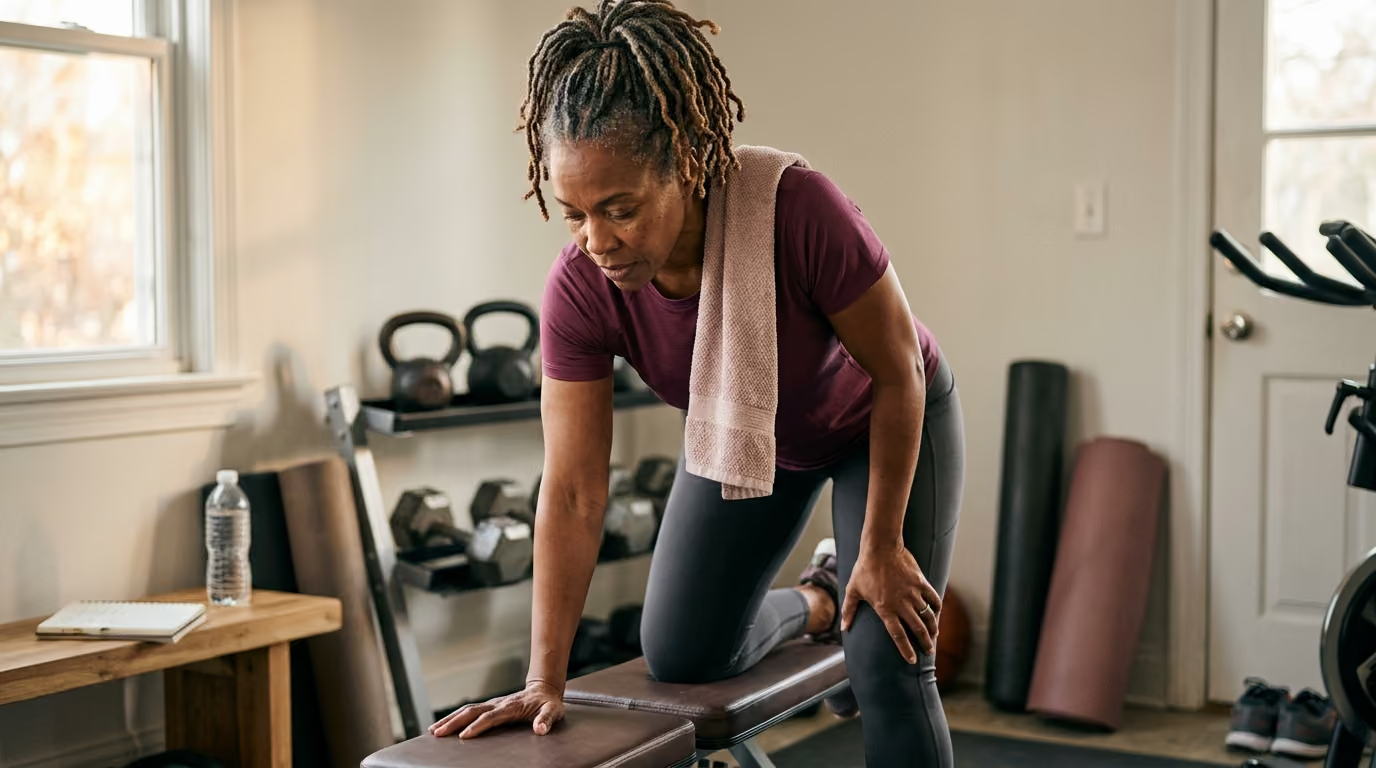

Midlife exercise delivers optimal longevity and physical resilience when you combine targeted strength training, aerobic conditioning, and mobility into a sustainable weekly routine.





A balanced midlife exercise program is not an all-or-nothing test of endurance. It is not an unyielding seven-day schedule, nor is it a rigid contest between lifting weights and logging cardiovascular miles.
Instead, a sustainable midlife exercise plan is a coordinated training system. It methodically builds muscular strength, cardiorespiratory capacity, joint mobility, balance, and nervous system recovery. The goal is not exhaustion. The goal is to build a body that feels capable, resilient, and energetic for decades to come.
Many women between 38 and 65 receive conflicting fitness advice. One expert insists that heavy lifting is the only thing that matters. Another claims that running ruins joints, while a third recommends gentle stretching alone.
This guide examines what peer-reviewed exercise science actually shows. It outlines how to integrate resistance work, aerobic conditioning, mobility drills, and active recovery into a weekly routine that fits your actual schedule.
The strongest scientific consensus on adult physical activity comes from major public health bodies and sports medicine organizations. Global health guidelines establish clear minimum targets for long-term health, physical independence, and disease prevention.
According to the World Health Organization, adults should accumulate 150 to 300 minutes of moderate-intensity aerobic physical activity each week. They can also perform 75 to 150 minutes of vigorous-intensity aerobic physical activity, or an equivalent combination of both.
In addition to aerobic exercise, public health guidelines state that adults should perform muscle-strengthening activities at moderate or greater intensity on two or more days per week. These resistance sessions must involve all major muscle groups.
Data from the American College of Sports Medicine expands on these targets. ACSM guidance emphasizes that regular flexibility training should occur at least two to three days per week. ACSM also highlights that neuromotor exercise training, which incorporates balance, agility, and motor coordination, provides meaningful functional benefits for midlife and older adults.
The health associations connected to these exercise habits are substantial. Systematic reviews examining resistance training and longevity show that regular strength work is associated with a 15 to 21 percent reduction in all-cause mortality.
When researchers evaluate the combined effects of strength training and aerobic activity, the risk reduction is even larger. Cohort analyses demonstrate that adults who meet both aerobic and muscle-strengthening guidelines have up to a 40 percent lower risk of all-cause mortality compared to sedentary individuals.
The evidence is clear that strength and cardiovascular fitness provide complementary health protections. Cardiovascular conditioning supports endothelial function, mitochondrial density, and cardiac output. Resistance training preserves motor unit recruitment, bone mineral density, tendon stiffness, and lean muscle tissue.
A complete exercise plan does not force you to pick a side. It organizes these modalities so they support one another rather than compete for your finite recovery reserves.
Midlife brings real physiological shifts that influence how your body adapts to exercise, recovers from hard efforts, and maintains structural integrity. Recognizing these shifts helps you design a smarter program without viewing normal biological aging as a disease.
During perimenopause and postmenopause, fluctuating and declining estradiol levels alter musculoskeletal and metabolic function. Estrogen receptors are present throughout skeletal muscle, bone cells, tendon matrix, and joint cartilage.
Research indicates that the hormonal transition across menopause is accompanied by an average decline in lean muscle mass. Studies observe reductions in lean mass of approximately 2.5 percent in perimenopause and up to 5.7 percent in postmenopause when compared to premenopausal baseline levels.
Metabolic dynamics also evolve during this stage of life. Resting metabolic rate can decline slightly as lean tissue mass drops, and visceral fat storage often increases. At the same time, changes in sleep architecture, thermoregulation, and vasomotor symptoms can undermine overnight recovery.
Connective tissues, including tendons and ligaments, become less hydrated and slightly stiffer as collagen synthesis rates slow down. This biological change means that midlife tendons tolerate sudden, unaccustomed spikes in training volume less gracefully than they did twenty years earlier.
These physiological shifts do not mean midlife women are fragile. Systematic reviews demonstrate that middle-aged and postmenopausal women achieve significant increases in muscular strength and lean mass when exposed to progressive resistance training.
Hormonal changes simply mean your margin for training error becomes narrower. You cannot out-train chronic sleep deprivation, erratic nutrition, or reckless intensity. You need adequate warm-ups, structured progression, sufficient dietary protein, and intentional rest periods to thrive. You can learn more about these biological dynamics in our dedicated guide to perimenopause and menopause changes.
Translating exercise physiology into daily habits requires an understanding of what exercise accomplishes beyond calorie expenditure. Training in midlife is an investment in functional capacity, mental clarity, physical self-trust, and freedom of movement.
When you train all three pillars, strength, cardio, and mobility, your daily experience changes in specific ways:
Balancing these qualities does not require spending two hours in the gym every day. It requires building a routine around structural priorities, or anchors, and filling the remaining space with functional accessories. Exploring midlife strength, body composition, and metabolism reveals that consistency always beats sporadic, heroic workouts.
Resistance training is the non-negotiable anchor of midlife physical health. Muscle is an active metabolic and endocrine organ. If you do not actively give your neuromuscular system a reason to maintain muscle tissue, your body will slowly shed it over time.
To build an efficient strength routine, you do not need complex bodybuilding splits. You need a foundation built around fundamental human movement patterns.
Every well-rounded strength session should emphasize multi-joint compound movements that train your body as an integrated unit:
For general strength and muscle retention, the American College of Sports Medicine suggests that performing sets of 8 to 12 repetitions at moderate-to-heavy loads serves as an effective baseline for novice and intermediate lifters. As you gain lifting experience, using varied loading ranges provides distinct adaptations.
Working in the 6 to 12 repetition range per set stimulates muscle hypertrophy. Working in the 3 to 6 repetition range with heavier loads builds absolute force production and bone density. Moving moderate loads with explosive intent develops rate of force development, which is critical for balance recovery and preventing falls.
Aim for a total weekly volume of roughly 8 to 12 challenging sets per major muscle group. For midlife women, research indicates that volume should be accumulated across two or three weekly full-body sessions rather than single high-volume body-part days.
To stimulate adaptation without joint breakdown, keep most working sets at a Rate of Perceived Exertion of 7 to 9 on a 10-point scale. This means stopping each set with approximately one to three technically clean repetitions left before muscular failure.
Cardiovascular conditioning trains your heart, vascular network, lungs, and cellular mitochondria. While strength training builds the engine, aerobic fitness provides the fuel delivery system and clears cellular waste products.
To avoid burnout and excessive fatigue, cardiovascular training should be divided into distinct intensity zones based on clear physiological targets.
Moderate aerobic exercise, often described as Zone 2 conditioning, occurs at an effort level where you can speak full sentences without gasping, but cannot comfortably sing.
During moderate-intensity work, your heart rate remains elevated for 30 to 60 minutes. This level of exertion stimulates mitochondrial biogenesis, expands capillary networks in skeletal muscle, improves fat oxidation, and lowers resting blood pressure.
Because moderate steady-state cardio places minimal strain on the central nervous system, it can be performed frequently throughout the week. Examples include:
Vigorous cardiovascular training challenges your maximum oxygen uptake, or VO2 max, which is one of the strongest clinical predictors of cardiorespiratory health in aging adults. During vigorous exercise, you can speak only a few words before needing to pause for breath.
High-intensity intervals generate rapid cardiovascular adaptations in less time. However, vigorous conditioning creates substantial systemic fatigue and elevates cortisol levels.
Midlife women should treat vigorous interval training like an expensive spice rather than the main course. One short session per week, lasting 15 to 25 minutes, is sufficient to capture the metabolic and cardiorespiratory benefits without undermining your recovery from strength sessions.
Running and high-impact jumping provide valuable bone-loading stimuli, but they also expose joints and tendons to repetitive ground reaction forces. If you experience joint stiffness or pelvic floor symptoms, low-impact conditioning modalities are exceptionally valuable.
Cycling, rowing, incline walking, and swimming deliver identical cardiovascular benefits to running without repetitive joint pounding. Sports science meta-analyses show that when concurrent strength and endurance training are combined, cycling creates significantly less interference with lower-body strength and hypertrophy gains than running.
Mobility is frequently misunderstood as passive stretching on a mat. Passive flexibility is simply the total range of motion available at a joint when an external force moves you. Mobility, on the other hand, is your active ability to control, stabilize, and produce force through that entire range of motion.
As connective tissues change in midlife, maintaining active mobility preserves movement quality and protects joints from uneven mechanical stress.
Rather than attempting to stretch every muscle in your body, focus your daily mobility work on three major anatomical zones that frequently become restricted:
You do not need separate 60-minute yoga or mobility classes to maintain supple joints. Instead, use a distributed model that embeds mobility directly into your existing exercise sessions:
The World Health Organization explicitly advises that midlife and older adults incorporate multicomponent physical activity that emphasizes functional balance and strength. Balance is a complex motor skill managed by your visual system, vestibular apparatus in the inner ear, and proprioceptive sensors in your feet and joints.
Incorporate balance challenges directly into your workouts. Practice standing on one leg while brushing your teeth, perform single-leg Romanian deadlifts, walk heel-to-toe along a straight line, and include single-leg step-downs in your strength sessions.
These exercises strengthen the stabilizer muscles around your ankles and hips while sharpening your brain's ability to correct sudden stumbles.
When you train both strength and endurance within the same weekly schedule, you are engaging in concurrent training. For decades, athletes worried that endurance exercise would cancel out strength gains through an acute interference effect.
Current exercise science paints a much more reassuring picture. Meta-analyses demonstrate that well-designed concurrent training programs produce robust increases in both aerobic capacity and muscular strength. A recent systematic review discovered that small interference effects in lower-body strength adaptations occurred primarily in men, while women showed minimal negative interference.
To avoid interference and manage systemic fatigue, apply these practical programming rules:
If building strength, bone density, and muscle mass is your primary objective, perform your resistance training session first when your nervous system is completely fresh. If completing a 10K running event or long cycling tour is your main goal, perform your cardiovascular workout first. The physiological quality you train first in any given workout receives the strongest adaptive signal.
If you must perform a heavy lower-body lifting workout and a vigorous interval cardio session on the same day, separate them by at least six hours whenever your schedule allows. If you must perform them back-to-back, complete your heavy lifting first, take a brief rest, and finish with low-to-moderate intensity aerobic work.
The most common midlife training error is turning every cardiovascular session into a moderate-hard grind. When your easy aerobic work drifts into a breathless pace, it generates deep systemic fatigue that bleeds into your next strength workout. Keep your moderate cardio strictly conversational so it aids recovery rather than stealing from it.
There is no single exercise schedule that fits every midlife woman. Your weekly plan must reflect your personal work demands, family commitments, training background, and recovery capacity.
The following six templates provide practical roadmaps for combining strength, cardio, and mobility across different lifestyles.
Best for: Busy professionals, beginners, or women returning from an exercise hiatus.
Best for: Women seeking an equal distribution of strength, aerobic fitness, and body composition benefits.
Best for: Women whose primary objective is muscle hypertrophy, bone density, and maximal force production.
Best for: Women training for a hiking expedition, charity run, cycling trip, or endurance event.
Best for: Women managing joint discomfort, osteoarthritis, excess weight, or connective tissue sensitivity.
Best for: High-pressure workweeks or travel phases when long gym sessions are impossible.
Progressive overload is the fundamental biological principle governing all physical adaptation. Your muscles, bones, and cardiovascular network will only adapt if you systematically challenge them beyond their current capacity.
In your twenties, progression often meant adding weight to the barbell every single week. In midlife, sustainable progression requires a multidimensional approach that accounts for daily biological readiness.
Your recovery capacity in midlife fluctuates based on sleep quality, hormonal shifts, emotional stress, and professional workloads. Rather than forcing yourself to hit rigid, pre-planned weights on days when you are exhausted, use autoregulation.
On days when your energy and recovery feel high, challenge yourself with heavier resistance or higher volume. On days following poor sleep or high hot-flash frequency, keep your exercise appointment, but reduce your training loads by 10 to 15 percent and focus on crisp movement mechanics.
Consistency of habit matters far more than hitting personal records in every individual session.
If your weekly training volume exceeds your recovery capacity, your body will send clear biological warning signals. Watch for these indicators:
When three or more of these signs appear simultaneously, your body does not need a harder workout. It needs a deload week.
During a deload week, reduce your total sets and cardio volume by 40 to 50 percent while maintaining light-to-moderate movement. This gives your connective tissues and neuroendocrine system the recovery runway they need to adapt and rebuild. Combining this with supportive nutrition strategies provides the building blocks for tissue repair.
Avoiding common pitfalls helps you stay uninjured, energetic, and consistent over months and years.
Many women in midlife attempt to manage shifting body composition by doing more and more cardiovascular exercise while slashing calories.
While cardiovascular exercise burns calories during the session, chronic high-volume cardio combined with severe caloric restriction accelerates the loss of lean skeletal muscle. Losing lean muscle lowers resting metabolic rate and compromises functional stability.
Always anchor your routine with strength training to preserve muscle mass, and use cardio primarily for cardiorespiratory fitness.
Severe delayed-onset muscle soreness and total exhaustion are not badges of honor. They are markers of unmanaged tissue damage and excessive inflammatory load.
A high-quality workout should leave you feeling energized, accomplished, and physically capable. If you need two hours on the sofa to recover from a workout, your training intensity is too high for your current recovery reserves.
Sitting passively in deep splits or stretching ligaments without muscular engagement does not produce lasting mobility.
If a muscle feels chronically tight, it is often weak or attempting to stabilize a joint that lacks motor control. Replace passive stretching with active mobility drills that strengthen muscles throughout their full ranges of motion.
Dividing your week into isolated chest days, back days, leg days, and arm days is inefficient for most midlife women.
If you miss one workout in a body-part split, an entire muscle group goes untrained for two weeks. Full-body routines performed two to three times weekly provide more frequent muscle stimulation, higher motor learning frequency, and complete schedule flexibility.
A common mindset trap is believing that if you cannot achieve the full 150 minutes of cardio and two full strength sessions, your efforts are pointless.
Epidemiological research demonstrates that the largest relative drop in chronic disease risk occurs when moving from completely sedentary behavior to doing even 60 minutes of physical activity per week. Every single brisk walk, mobility session, and set of goblet squats contributes positively to your long-term health trajectory.
While regular physical activity is exceptionally safe and protective for the vast majority of midlife adults, certain symptoms and clinical histories warrant personalized medical guidance before initiating or aggressively advancing an exercise routine.
The American College of Sports Medicine recommends that adults seek formal medical evaluation prior to beginning vigorous exercise programs if they experience any of the following signs or symptoms:
Beyond cardiovascular symptoms, individualized adjustments are necessary for specific midlife musculoskeletal conditions:
If a DEXA scan shows low bone mineral density, high-impact jumping and heavy spinal flexion under load require careful modification. Progressive resistance training and weight-bearing impact exercises are essential to stimulate bone remodeling, but spinal alignment must remain neutral during lifting.
Symptoms such as urinary stress incontinence, pelvic heaviness, or prolapse should not be ignored or accepted as a normal consequence of aging. High-impact jumping and heavy breath-holding during lifts can increase intra-abdominal pressure and aggravate symptoms.
Working alongside a pelvic health physical therapist helps you learn proper diaphragmatic breathing and core bracing techniques while lifting.
Sharp, stabbing, or escalating joint pain is different from muscular fatigue. If a specific exercise produces sharp joint discomfort that lingers for hours after your session, modify the exercise range of motion, change the load, or swap the movement for a low-impact alternative. For more practical strategies, explore our library of practical midlife health resources.
A responsible analysis of exercise science must acknowledge where current clinical research remains incomplete.
For decades, exercise physiology studies focused predominantly on young male athletic populations. While research on female athletes and midlife populations has grown rapidly over the past fifteen years, several critical knowledge gaps remain:
Approaching your training with this understanding protects you from fitness fads and keeps your focus locked on the proven foundations of movement.
A balanced midlife exercise routine is not about pushing your body to exhaustion every day. It is about consistently executing the smallest, most repeatable combination of strength, cardiovascular conditioning, and mobility work that keeps you strong, capable, and confident in your everyday life.
Cultivating this habit is a key element of mental fitness and reinvention. When you honor your recovery and prioritize consistency over intensity, movement becomes a lifelong source of strength and vitality.
Yes, combining strength and cardio in a single workout is practical and effective. If building strength is your primary goal, perform your resistance training first while your energy levels are high, then follow with moderate cardiovascular conditioning. Keep the cardio segment at an easy, conversational pace to avoid excessive fatigue.
Short workouts are highly effective when structured properly. A 20-minute full-body strength circuit using compound movements such as squats, push-ups, and dumbbell rows maintains muscle mass and elevates your metabolic rate. Consistency across several 20-minute sessions throughout the week provides meaningful physiological benefits.
Brisk walking is a phenomenal cardiovascular baseline that improves metabolic health, lowers blood pressure, and reduces all-cause mortality. However, walking alone does not provide sufficient mechanical tension to preserve upper-body muscle mass, grip strength, or bone density in the hips and spine. Combining daily walking with two weekly resistance training sessions creates a complete exercise foundation.
Joint stiffness in midlife can stem from declining estrogen levels, which affect cartilage hydration and collagen synthesis, as well as mechanical strain from training. If stiffness improves within five to ten minutes of gentle movement or a warm shower, it is often a systemic hormonal or lifestyle factor. If pain is sharp, located within a specific joint, swells, or worsens during exercise, it is likely a mechanical issue that warrants exercise modification or physical therapy evaluation.

Follow Refemina for research-led resources on hormonal change, strength, metabolism, nutrition, skin, intimate wellbeing and confidence through midlife.


Keep learning about the changes that shape energy, strength, confidence and wellbeing through midlife.
Explore Resources