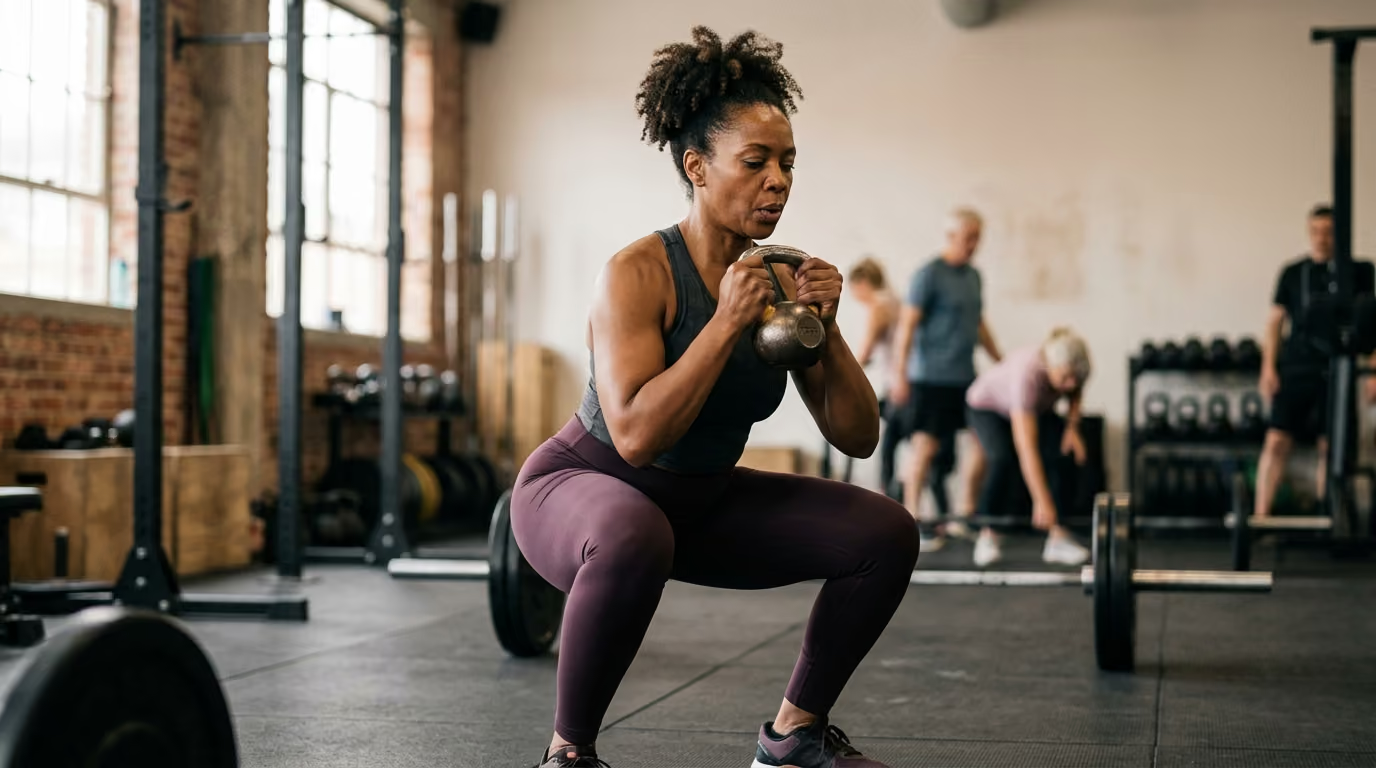

Three traffic-light training zones help midlife women adapt heavy lifts, manage intra-abdominal pressure, and protect pelvic floor health with total confidence.





Many women in midlife type variations of the same search into Google late at night. They ask whether heavy deadlifts will cause a prolapse. They ask why they experience a small leak of urine during a heavy back squat. They wonder if the physical effort required to build lean muscle mass is silently damaging their pelvic floor.
The search results often present two unhelpful extremes. One side warns that women over forty should avoid lifting anything heavier than a hand weight to protect their pelvic organs. The other side claims that any symptom is simply a sign of weak abdominal muscles that can be solved by squeezing harder during every movement. Neither perspective offers an accurate explanation of how human anatomy responds to load.
This guide provides a comprehensive analysis of pelvic floor function during progressive resistance training. Building strength in midlife supports bone density, metabolic health, joint stability, and muscle mass. You do not need to choose between protecting your pelvic health and lifting weights that build true physical resilience.
By understanding pressure management, muscle coordination, and appropriate movement modifications, midlife women can train with clarity. Symptoms are not a personal failure or proof that your body is broken. They are information that helps you refine your training strategy, adjust your load, and select the right clinical support when necessary.
Understanding how to lift without provoking pelvic symptoms begins with the structure of the pelvic floor itself. The pelvic floor is not an isolated muscle strip running front to back. It is a dynamic, multi-layered hammock of muscles and connective tissue spanning the base of the pelvis.
These muscles attach to the pubic bone at the front, the tailbone at the back, and the sit bones on each side. They form the base of a deep structural canister. The top of this canister is the diaphragm, the back is the spine, and the front and sides are formed by the deep abdominal wall.
The pelvic floor performs several continuous and demanding duties:
A healthy pelvic floor must be both strong and flexible. A muscle that cannot lengthen fully cannot generate optimal force when contracted. Many women assume that pelvic symptoms stem purely from weakness. In reality, a pelvic floor can be overactive, tight, poorly timed, fatigued, or uncoordinated.
The midlife hormonal transition introduces distinct changes to these supportive tissues. As estrogen levels decline during perimenopause and menopause, collagen production decreases and muscle tissue loses some of its natural elasticity. Connective tissues that support the pelvic organs become less resilient, while mucosal linings in the urinary tract become thinner.
These physiological shifts do not mean that midlife women are destined to experience prolapse or leakage. They mean that the threshold for handling sudden increases in abdominal pressure may change. Resistance training offers a powerful stimulus to maintain muscle mass and connective tissue stiffness. The goal is to match training loads to your current tissue capacity while building system strength over time.
Women seeking broader context on navigating physical changes during perimenopause and postmenopause can read our comprehensive perimenopause and hormonal transition guidance to better understand these bodily shifts.
The assertion that strength training inherently damages the female pelvic floor is not supported by population research or clinical trials. While extreme physical demands can provoke symptoms in vulnerable individuals, regular resistance exercise does not automatically cause pelvic dysfunction.
A study tracking overweight women engaged in structured strength training showed no statistically significant increase in new-onset urinary incontinence compared to non-lifting controls. Seven of sixty-seven women in the lifting intervention group reported new symptoms compared to zero of twenty-one controls, a difference that fell within normal statistical variance. The researchers concluded that general resistance exercise did not cause urinary incontinence.
Research examining trained female athletes lifting heavy loads reveals additional nuance. A study evaluating young, nulliparous women performing back squats and deadlifts at eighty-five percent of their one-repetition maximum showed no immediate negative impact on pelvic floor resting pressure, force output, or muscle endurance. Heavy lifting was well tolerated in the short term by women without pre-existing tissue damage or symptoms.
However, data from competitive strength sports shows that symptoms are widespread among women pushing maximal absolute loads. An abstract presented at the International Continence Society reported that urinary incontinence affected forty-one to forty-eight percent of powerlifters and thirty-six to fifty-four percent of weightlifters. Leakage occurred predominantly during maximal squat and deadlift efforts, particularly near complete physical fatigue.
These findings demonstrate that pelvic symptoms depend on load, volume, fatigue, and individual history rather than the act of lifting itself. Heavy exertion can exceed tissue threshold, but strength training can also be adapted to improve pelvic function.
A twelve-week progressive resistance training trial in previously untrained women demonstrated a reduction in the frequency of urinary incontinence episodes alongside gains in pelvic floor force production. Ten out of twelve women who entered the study with pre-existing leakage reported significant improvements after completing the supervised exercise program.
Another clinical trial found that progressive resistance training was safely performed by women with established stress urinary incontinence when preceded by direct pelvic floor muscle instruction. Participants learned to coordinate their pelvic muscles before applying load, allowing them to gain physical strength without aggravating bladder symptoms.
Specific clinical interventions also show dramatic efficacy for pelvic conditions. A major randomized trial published in The Lancet demonstrated that individual pelvic floor muscle training delivered by a specialist clinician was highly effective in reducing pelvic organ prolapse symptoms and preventing condition progression.
To understand how targeted exercise preserves physical function through every decade, you can explore our collection of midlife strength resources designed for active women.
Navigating pelvic health requires distinguishing between symptom descriptions, formal clinical diagnoses, and daily physical sensations. Knowing what a symptom signifies allows you to adjust your training without unnecessary fear.
Urinary incontinence is generally divided into three major categories:
A midlife lifter with stress incontinence may notice a few drops of urine during the bottom portion of a squat, during high-repetition kettlebell swings, or late in a workout set when fatigue sets in. The presence of leakage indicates that the combined pressure of the exercise and the load has temporarily exceeded the pelvic floor's ability to resist that force.
Pelvic organ prolapse involves the descent of one or more pelvic structures toward or beyond the vaginal opening. These structures include the bladder, the uterus, or the rectum. Prolapse is classified clinically by anatomical stage, but anatomical position does not always correlate directly with physical discomfort.
A woman may have an anatomical prolapse noted during a routine pelvic exam yet remain entirely symptom-free during daily life and heavy lifting. Another woman may present with minor anatomical changes yet report significant heaviness, dragging, or a bulge sensation after standing or lifting heavy weights.
Epidemiological data shows how widespread these conditions are among women. A population-based cohort study found that thirty-three percent of middle-aged and older women reported at least one pelvic floor condition. Within this group, twenty-nine percent reported weekly urinary incontinence, while six percent experienced symptomatic prolapse.
Data from the National Health and Nutrition Examination Survey (NHANES) revealed that overall pelvic floor disorder prevalence rises dramatically with age. Symptomatic disorders affected six percent of women in their twenties, thirty-one percent of women in their fifties, and over fifty percent of women over eighty. Furthermore, a 2025 systematic review estimated the prevalence of stress urinary incontinence specifically at twenty-seven percent among middle-aged and older women.
Despite these high figures, pelvic symptoms frequently cause women to withdraw from physical activity entirely. Systematic review data shows that urinary incontinence reduces exercise participation in approximately fifty percent of symptomatic women. This withdrawal accelerates muscle loss, reduces bone density, and increases cardiovascular risk, creating far worse health outcomes over time than the symptoms themselves.
Women who want to maintain lean muscle mass while preserving joint and tissue integrity can read our dedicated midlife strength and body composition articles for detailed programming strategies.
Managing pressure inside the abdomen is the foundational skill for lifting safely with pelvic symptoms. Intra-abdominal pressure is not an inherent danger to be eliminated. It is a necessary physical mechanism that stabilizes the spine and transfers force efficiently between the lower and upper body during heavy exercise.
When you take a breath, the respiratory diaphragm moves downward into the abdominal cavity. The abdominal wall and pelvic floor expand slightly to accommodate the organs being displaced. When you contract your trunk muscles against this expansion, internal pressure rises, creating a supportive cylinder around the spine.
Problems arise when intra-abdominal pressure rises higher or faster than the pelvic floor can counter. If the pelvic muscles are weak, fatigued, or poorly coordinated, high internal pressure will push downward onto the bladder neck or pelvic organs, provoking leakage or heaviness.
The standard technique for moving maximum weight in competitive powerlifting is the Valsalva maneuver. This involves taking a large breath, closing the glottis in the throat, and bearing down forcefully against sealed airways. While this maximizes spinal rigidity for near-maximal efforts, prolonged breath-holding significantly increases downward pelvic force.
For midlife women managing pelvic symptoms, alternating breathing strategies offer a way to train effectively while keeping internal pressure within manageable limits.
The most widely useful strategy is exhaling through exertion. Instead of holding your breath throughout a repetition, you prepare your posture, initiate the movement, and exhale slowly through an open glottis during the hardest part of the lift. Exhaling allows the respiratory diaphragm to rise, reducing peak abdominal pressure while the pelvic floor naturally lifts upward in synergy.
Clinical guidance on exercise mechanics suggests adopting an expiratory motor pattern combined with synergistic abdominal and pelvic contractions to protect soft tissue during heavy training. This strategy prevents continuous downward bearing-down while preserving trunk stability.
A practical technique known as "The Knack" reinforces this protective timing. The Knack involves performing a voluntary pelvic floor squeeze and lift immediately before a predictable pressure spike occurs, such as initiating a deadlift pull or standing up out of a squat.
To practice pressure coordination during resistance exercises:
This cycle ensures that the pelvic floor is actively supporting the internal organs during peak effort without remaining locked in continuous, fatiguing tension across the entire set.
Every fundamental strength movement creates a unique pressure profile within the body. By understanding how different exercises load the pelvic floor, you can modify movements to keep training without triggering leakage or pressure.
Squats require deep hip and knee flexion, placing the pelvic muscles in a stretched position at the bottom of the movement. For women with prolapse symptoms or stress incontinence, the deepest portion of a squat often represents the most vulnerable angle.
If deep back squats provoke heaviness or leakage, consider these practical adjustments:
Deadlifts generate high torque across the posterior chain and demand high spinal stability. Downward pelvic pressure can spike dramatically as the weight leaves the floor.
If deadlifting causes symptoms, apply these technical modifications:
Carries, such as farmer walks or suitcase carries, build immense grip strength, shoulder stability, and lateral core endurance. However, walking with heavy weights requires continuous pelvic floor tone and rapid pressure adjustments with every step.
If loaded carries trigger symptoms, adjust the carrying variables:
Traditional abdominal training often involves continuous trunk flexion, such as sit-ups and crunches. These movements push abdominal contents downward against the pelvic floor, making them provocative for women with prolapse symptoms.
Client educational materials from NHS trusts often recommend avoiding traditional crunches and heavy deadweight lifting when symptomatic prolapse is present. Replacing crunches with neutral-spine core stability exercises provides superior trunk strength without pushing downward into the pelvis.
Effective neutral-spine core alternatives include:
Training with pelvic symptoms requires a systematic method for tracking bodily responses. Rather than treating any sensation as a reason to stop exercise entirely, you can categorize your daily experience using a clear traffic-light model.
A green light indicates that your pelvic floor is handling the training stimulus effectively.
Action: Continue training as planned. Progress weight, repetitions, or complexity gradually over time.
An amber light indicates that your current volume, load, or movement selection is approaching your tissue capacity threshold.
Action: Do not abandon the exercise. Modify a single variable to lower overall pressure while keeping the movement in your program. Reduce the load by ten to fifteen percent, shorten the set length, increase rest periods between sets, or adjust your breathing strategy.
A red light indicates that the training stimulus is exceeding your current structural capacity or that an underlying medical issue requires attention.
Action: Stop performing the specific exercise that triggers these responses. Switch to supported, lower-pressure variations while seeking a comprehensive assessment from a qualified pelvic health healthcare professional.
When adjusting your resistance training program under an amber light, adjust one variable at a time so you can clearly identify what caused the improvement:
Knowing when to seek professional care ensures that you manage your pelvic health safely without delaying necessary medical attention. Pelvic floor issues are highly treatable, and a thorough assessment provides personalized guidance for long-term strength.
A consultation with a pelvic health physiotherapist or specialized medical provider is appropriate if you experience any of the following continuous symptoms:
National clinical guidelines from the National Institute for Health and Care Excellence (NICE) recommend a thorough history and physical examination for any woman presenting with urinary incontinence or suspected prolapse. Assessment includes evaluating symptom severity, impact on quality of life, baseline pelvic floor strength, and structural tissue support.
Certain medical signs require urgent evaluation by a physician or urogynecologist rather than simple exercise modifications:
During a specialized pelvic floor evaluation, a clinician will assess direct muscle performance. They measure voluntary contraction strength, muscle endurance, quick-release speed, and crucially, the ability of the pelvic floor to relax completely back to baseline.
Clinicians also evaluate your standing posture, breathing mechanics, hip strength, abdominal wall integrity, and movement patterns under load. This comprehensive perspective ensures that rehabilitation targets your entire kinetic chain rather than treating the pelvic floor as an isolated muscle group.
Women interested in reviewing our broader library of evidence-aligned guidance can browse our complete collection of Refemina health resources covering midlife physical wellbeing.
Examining real-world midlife scenarios illustrates how pressure management, load adaptation, and clinical assessment apply in daily life.
A fifty-two-year-old woman has been lifting weights for three years. She experiences no daily incontinence, but during her final set of heavy deadlifts at eighty-five percent of her maximum capacity, she notices a small leak of urine.
A forty-eight-year-old woman attends a high-intensity group resistance class involving fast-paced squats and lunges. She feels fine during the first ten minutes, but by the end of the forty-five-minute class, she experiences a dragging, heavy sensation in her vagina that lasts for several hours.
A fifty-five-year-old woman experiences ongoing pelvic discomfort and occasional bladder urgency. Assuming her pelvic floor is weak, she spends weeks doing maximum-effort Kegel squeezes every day. Her symptoms worsen, and she develops difficulty emptying her bladder smoothly.
A fifty-eight-year-old woman who recently increased her resistance training load notices new urinary urgency accompanied by a pink tinge in her urine. She assumes the effort of lifting caused a minor muscle strain in her bladder.
While clinical research provides clear direction for managing pelvic symptoms, specific gaps in scientific literature remain. Recognizing where evidence is early, limited, or narrow prevents over-generalizing study results to every midlife woman.
Much of the research examining heavy strength training and pelvic floor function has been conducted on younger, nulliparous female athletes. Results showing that heavy squats and deadlifts do not alter pelvic floor resting pressure in twenty-four-year-old weightlifters cannot be directly applied to sixty-year-old postmenopausal women with pre-existing tissue laxity or prior birth trauma.
Conversely, traditional pelvic floor clinical trials often evaluate isolated muscle contractions performed lying down in quiet clinical settings. These trials rarely assess how the pelvic floor responds during high-intensity, multi-joint resistance training like loaded step-ups, heavy carries, or barbell pulls performed under fatigue.
Additionally, studies involving female powerlifters and CrossFit participants rely heavily on self-reported surveys and conference abstract data rather than long-term, prospective clinical trials tracking anatomical changes over decades. Survey studies demonstrate high symptom reporting among heavy lifters, but they cannot establish whether lifting caused structural changes or simply unmasked pre-existing weaknesses.
Current evidence clearly proves that pelvic floor muscle training improves stress urinary incontinence and prolapse symptoms. However, exact guidelines for combining heavy resistance training with pelvic floor rehabilitation remain individualized. Exercise selection must be guided by symptom tracking, individual clinical history, and progressive load testing rather than rigid, one-size-fits-all prescriptions.
To learn more about our commitment to research-led midlife women's health guidance, you can read about Refemina and our evidence-based editorial standard.
Building strength while protecting your pelvic health requires a calm, practical approach. Apply these practical steps this week to establish a sustainable lifting routine with complete confidence.
Keep a brief three-day training log tracking any pelvic sensations during daily movement and exercise. Note down:
Practice exhaling through exertion on every main resistance exercise this week:
If any lift triggers an amber light response, modify one training variable immediately:
If you experience persistent leakage, vaginal heaviness, pelvic pain, or red light symptoms, book an assessment with a licensed pelvic health physiotherapist. A specialist evaluation will clarify your internal muscle function, teach precise contraction and relaxation timing, and assist you in safely progressing your lifting program.
Strength training remains one of the most powerful investments a midlife woman can make for her health, energy, muscle mass, and independence. By managing intra-abdominal pressure, listening to symptom feedback, and adapting your training stimulus, you can lift heavy weights safely through midlife and beyond.

Follow Refemina for research-led resources on hormonal change, strength, metabolism, nutrition, skin, intimate wellbeing and confidence through midlife.


Keep learning about the changes that shape energy, strength, confidence and wellbeing through midlife.
Explore Resources