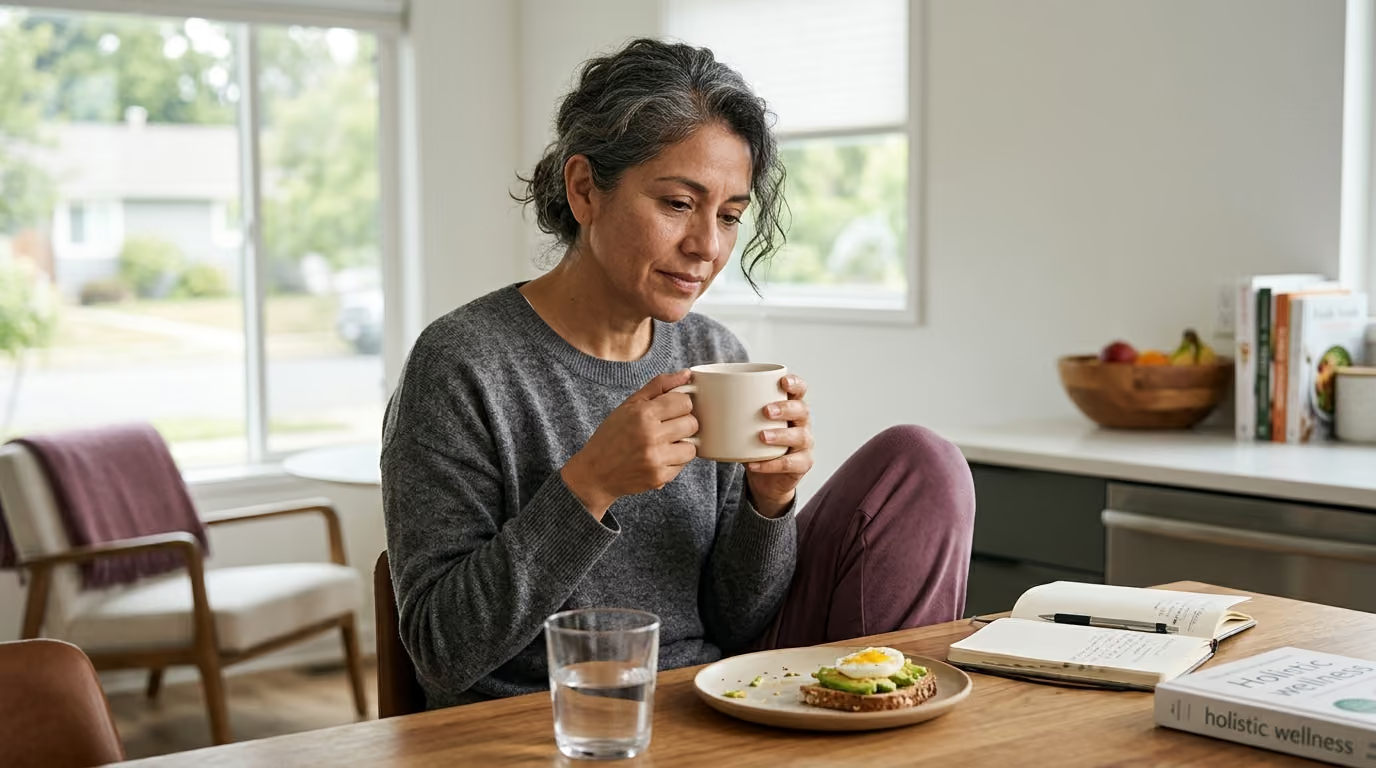

Four psychological frameworks explain why visible aging challenges midlife self-image and provide practical body neutrality tools for navigating workplace ageism and relationships.





You catch your reflection in the glass of a shop window or glance at your thumbnail on a video call. For a split second, the face looking back does not match the internal image you carry of yourself. The jawline looks softer, the skin under your eyes carries a different shadow, or silver strands catch the overhead lighting. This sudden jolt is a common midlife experience. It is not vanity, nor is it a personal failing. It is the complex psychological intersection where biological change meets cultural messaging and personal identity.
Visible aging is far more than a cosmetic shift. It influences how we move through professional spaces, how we approach dating, and how we relate to our own bodies. When culture equates female worth with youthful smoothness, changes in skin, hair, and body composition can feel destabilizing. Navigating this stage with clarity requires understanding the psychology of self-image. You do not have to force yourself to celebrate every single wrinkle to live with confidence, agency, and peace.
Academic research confirms that midlife body image is distinct and multifaceted. Midlife is broadly defined in adult development research as the years between 40 and 65. During this window, physical changes often accelerate alongside significant life transitions. A systematic review published in the journal Women's Health examined the associations between menopause and body image. The researchers found consistent links between menopausal physical changes and heightened body image dissatisfaction. However, the evidence showed that direct reproductive hormone levels alone do not fully explain how a woman feels about her appearance.
Instead, body image in midlife is shaped by a combination of biology, psychological coping styles, and social environment. A review in the journal Body Image noted that appearance dissatisfaction often remains stable across adulthood rather than fading away with maturity. In one cited study of middle-aged women, 47 percent reported dissatisfaction with their overall appearance. Furthermore, 73 percent expressed dissatisfaction with their weight. A separate study examining midlife women found that nearly 80 percent expressed a desire to lose weight, even when their body mass fell within standard health parameters.
Social and developmental psychologists have also studied appearance investment, which is the degree to which a person's self-worth depends on looking attractive or youthful. The findings are mixed. Some midlife women experience a release from appearance surveillance, while others feel an increased pressure to conceal physical changes. Research examining adult women and social media found that visual comparison online strongly predicts appearance anxiety and habitual body surveillance. When self-worth is heavily tied to appearance, physical changes can trigger significant distress.
Understanding these findings provides relief. If you struggle with visible changes, you are responding to documented psychological and cultural pressures. Your distress is not proof of weakness. It is a predictable response to navigating an image-focused culture while undergoing genuine biological evolution.
The physical changes of midlife are real, measurable, and varied. During perimenopause and menopause, shifting hormone levels directly influence several bodily tissues. Clinical guidance from the American Academy of Dermatology highlights that declining estrogen reduces collagen production. This biological shift leads to thinner skin, decreased elasticity, increased dryness, and impaired barrier function.
Hair changes are also common during the midlife transition. The Menopause Society notes that hair shedding, altered hair texture, and female-pattern hair loss frequently emerge in the peri- and postmenopausal years. Changes in follicular density can happen alongside increased facial hair growth. In one observational study tracking women through menopause, 62.73 percent of participants reported a loss of skin firmness. Additionally, 53.14 percent experienced dry skin, and 66.05 percent reported shifts in body composition.
These biological developments do not happen in a vacuum. To understand self-image, we must separate physical reality from cultural interpretation and personal meaning.
The biological event is neutral tissue change. Genetics, sun exposure, systemic health, stress, and nutrition all shape how these physical traits manifest. The cultural standard, however, is not neutral. Western cultural models frequently equate female beauty with young, unlined skin and abundant scalp hair. This cultural lens creates a double standard. Women are often judged for looking older, yet they are also mocked if their attempts to look younger appear obvious.
Finally, personal interpretation determines how you feel. One woman might view silver hair as a marker of authority and hard-won wisdom. Another might perceive it as an uncomfortable sign of fading professional relevance. Psychological well-being does not require denying biological reality. It comes from examining the personal meanings you assign to those changes.
Several established psychological models explain why visible changes can trigger disproportionate emotional stress. Understanding these models helps demystify your internal reactions.
Objectification theory suggests that women are socialized to view their physical bodies from the perspective of an external observer. Instead of experiencing the body as an instrument for living, a person learns to monitor how she looks to others. This habit is known as body surveillance.
Body surveillance requires tremendous cognitive energy. When you constantly check your reflection, adjust your posture, or worry about how your neck looks on camera, you carry a heavy mental load. Research involving women aged 50 to 68 demonstrated that high levels of body surveillance directly correlate with aging anxiety and lower body esteem. Surveillance turns you into a spectator of your own life. Shifting from self-monitoring to active participation allows you to reclaim that mental bandwidth.
Human beings naturally compare themselves to others to gauge social norms and standards. In previous decades, comparison was limited to immediate peers and neighbors. Today, midlife women encounter curated, digitally altered images every day.
Social comparison becomes harmful when the comparison target is unrealistic. You might compare your unretouched morning face to an image of a celebrity who has access to professional lighting, skilled styling, and cosmetic dermatology. You might also compare your current face to a photograph of yourself from twenty years ago. Studies on visual social platforms consistently link frequent appearance comparison with lowered self-esteem and reduced self-compassion. The mind treats the curated image as the baseline, leaving your authentic face feeling inadequate.
Psychologist Edward Tory Higgins proposed that emotional distress arises from gaps between different self-representations. Visible aging often activates sharp tensions between these internal identities:
The ought self is especially influential for midlife women. You might not personally desire unlined skin, but you may worry that looking older will reduce your authority at work or your desirability in dating. Clarifying the difference between what you genuinely want and what you feel you ought to do is a core step in building authentic self-regard.
Appearance is closely tied to personal history. Your face is connected to memories of romance, athletic milestones, career achievements, and family roles. When your external appearance changes quickly, it can disrupt your sense of identity continuity. You feel young, capable, and energetic inside, yet the world begins reflecting back an older persona.
This disconnect can create genuine grief. Acknowledging that grief is healthy. You can value the face that carried you through your twenties and thirties while developing a grounded relationship with the face you inhabit today.
Visible changes influence daily routines, career trajectories, social interactions, and private thoughts. Addressing these dynamics directly brings relief and clarity.
Appearance anxiety in professional settings is rarely just vanity. It is often a realistic response to structural workplace biases. Research documented by the National Center for Biotechnology Information indicates that older workers face persistent stereotypes regarding adaptability and energy. Crucially, studies confirm that women encounter more severe age discrimination than men.
A study from the Federal Reserve Bank of San Francisco investigated hiring callback rates across different age groups. The researchers found that older female applicants for administrative positions received a 47 percent lower callback rate than younger female applicants. For male applicants, the age-related drop was substantially smaller. National Bureau of Economic Research working papers have highlighted that visible markers of aging, such as silver hair or deep wrinkles, are sometimes unfairly perceived as signs of declining energy.
Women in the workplace often find themselves managing a delicate balance:
If you update your professional wardrobe or color your hair to support your career, you are making a practical, strategic choice. You do not need to feel guilty for navigating workplace realities. At the same time, maintaining boundaries is vital. If colleagues make inappropriate comments about your age or appearance, you can use a clear script: "I prefer to keep our conversations focused on project outcomes and professional goals."
Visible aging can bring up deep vulnerability in romantic relationships and dating environments. Culturally, men's physical aging is often romanticized, while women's natural maturation is frequently framed as a loss of value. Sociological studies on dating platforms reveal that male preferences tend to skew toward younger age brackets over time, creating a challenging dynamic for midlife women seeking partners.
Research evaluating dating profiles for older adults shows that women are significantly more likely to use cosmetics and soft lighting to disguise their age. This pressure can create a cycle of anxiety. Using heavily filtered or outdated photographs may increase initial matches, but it creates intense dread before meeting in person.
Healthy romantic confidence in midlife involves separating compatibility from universal appeal. You are not trying to attract everyone. You are looking for partners who value maturity, wit, character, and genuine presence. Using current, honest photographs eliminates the anxiety of hiding. It acts as an efficient filter, screening out individuals whose values do not align with yours. Exploring sexual wellbeing and intimate confidence during this transition helps ground your sense of personal desirability in lived pleasure rather than external validation.
Smartphone cameras and video meetings have fundamentally altered how we see ourselves. In everyday life, we catch fluid, moving reflections in mirrors. Cameras, however, freeze micro-expressions under harsh angles and wide-angle lenses that can distort facial proportions.
Research has examined the psychological impact of digital self-images. One study found that taking and reviewing personal photos led participants to feel more anxious and less confident afterward. These negative effects persisted even when individuals were permitted to retake and edit the pictures. Frequent photo checking increases body surveillance, pulling your focus away from the social moment and into self-criticism.
When looking at a photograph you dislike, remember that an image is a flat technical artifact. It is shaped by sensor size, focal length, overhead lighting, and shutter timing. It is not an objective measurement of your human worth or beauty.
Modern culture often swings between two exhausting extremes. On one side is aggressive anti-aging marketing demanding that you fight every fine line. On the other side is compulsory body positivity, which insists that you must find every physical change gorgeous and empowering.
For many women, being told to love their sagging skin feels like another impossible performance standard. If you feel frustrated or sad about a changing jawline, being ordered to love it simply adds guilt to your existing distress. A more grounded approach relies on body neutrality and self-compassion.
Body neutrality shifts the focus away from aesthetic evaluation entirely. Instead of asking whether your body looks beautiful, you focus on what your body does and how it feels. Your skin is an organ that protects you from pathogens and regulates your temperature. Your legs carry you through daily tasks. Your face expresses affection, humor, and determination.
When you practice body neutrality, you stop treating your appearance as a continuous public performance. You can care for your physical health without needing to judge your reflection every hour.
Pioneered by psychological researchers like Dr. Kristin Neff, self-compassion offers an effective alternative to self-criticism. Studies have linked self-compassion with higher body satisfaction and reduced appearance anxiety. In experimental research, viewing content centered on self-compassion produced better body appreciation than viewing idealized fitness imagery.
Self-compassion consists of three practical elements:
Developing mental fitness and midlife confidence means learning to quiet your internal critic without demanding forced optimism.
Translating psychological principles into everyday habits requires concrete tools. These exercises help disrupt spirals of self-criticism and restore perspective.
When a specific trigger causes appearance distress, writing down your thoughts helps disarm them. Use this structured format:
Midlife women are constantly offered cosmetic procedures, expensive skincare lines, and aesthetic treatments. Deciding what to pursue can be confusing. Before booking a procedure or buying an expensive regimen, ask yourself these diagnostic questions:
If you notice your self-image dipping after spending time online, run a one-week comparison audit. Track when you feel dissatisfied and identify the source.
Once you identify the sources, take immediate action. Mute, unfollow, or close accounts that leave you feeling diminished. Curate your digital environment to include varied representations of age, capability, and lifestyle.
Taking and viewing photographs does not have to cause dread. You can adopt a few protective guidelines:
Caring for your skin and hair in midlife is a normal, healthy aspect of self-tending. The goal is to pursue routines grounded in biological science rather than anti-aging anxiety.
The hormonal transition in perimenopause changes what your skin and hair require. You do not need twenty-step routines or miracle creams to maintain healthy tissues. Practical, research-informed choices include:
You can explore our midlife skin and hair changes guides for detailed, evidence-based dermatological overviews.
Managing self-image also involves setting clear boundaries with others. People often make casual comments about aging, weight changes, or grey hair without realizing the impact. You have every right to protect your mental space:
Taking charge of your visual diet and conversations reinforces that your worth is not up for public debate.
The experience of visible aging is not uniform. A woman's relationship with her changing reflection is shaped by race, culture, sexual orientation, disability, and socioeconomic standing.
Beauty standards in Western society have historically centered Eurocentric features, smooth textures, and specific aging patterns. Women of color navigate unique dynamics during midlife. Melanin-rich skin experiences photoaging differently, often retaining firmness longer while being more prone to hyperpigmentation and uneven tone.
Hair experiences also vary significantly across ethnic backgrounds. Black women navigating midlife hair thinning, for example, must balance hormonal shifts with styling practices, protective routines, and cultural expectations surrounding natural versus straightened hair. Furthermore, racialized workplace expectations can place added pressure on women of color to maintain a highly polished appearance to counter bias.
For women living with chronic conditions or visible disabilities, midlife changes arrive on top of an already complex relationship with physical function. Changes in mobility, surgical scars, joint stiffness, or the need for assistive devices intersect with traditional markers of aging. In these cases, body neutrality is an especially valuable framework. It honors the body's resilience without demanding that it meet conventional, ableist aesthetic ideals.
Cultural norms around aging differ across social communities. Research indicates that queer and lesbian subcultures often maintain more diverse, flexible standards regarding female aging, body size, and natural hair compared to heterosexual dating markets. However, queer women are not entirely immune to societal ageism. Understanding your subcultural context helps you identify which beauty pressures originate from broader commercial culture and which reflect your chosen community.
The modern aesthetic industry presents looking young as an individual moral responsibility. In reality, maintaining an unlined appearance past fifty often requires substantial financial resources. In-office dermatological procedures, high-end hair appointments, and specialized personal trainers are luxuries.
Treating youthfulness as a baseline standard for midlife dignity is an exclusionary economic metric. Self-respect, style, and personal presence are available at every income level. They require thoughtful self-possession, not an endless cosmetic budget.
While appearance changes are a natural part of growing older, some physical and emotional symptoms warrant formal evaluation. It is important to distinguish normal development from treatable health issues.
Not every physical change should be casually dismissed as normal aging. Consult a board-certified dermatologist or primary care physician if you experience:
Appearance concerns can sometimes cross the line from common midlife frustration into debilitating psychological distress. Consider reaching out to a licensed mental health professional if you notice:
Working with a therapist trained in cognitive behavioral therapy, acceptance and commitment therapy, or self-compassion models can help you break painful cycles of body surveillance and self-rejection.
Maintaining a clear-headed, evidence-led approach requires recognizing where research remains incomplete, mixed, or limited.
First, evidence regarding the cosmetic effects of menopausal hormone therapy remains nuanced. While systemic hormone therapy can support skin hydration and bone density, clinical guidelines from The Menopause Society note that current evidence does not justify prescribing hormone therapy solely as a cosmetic intervention for skin aging or hair loss. Hormones influence tissues, but they do not halt natural genetic aging.
Second, a large portion of body image and aesthetic psychology research relies on self-report questionnaires and cross-sectional surveys. These study designs show correlations between factors, but they cannot prove direct cause and effect. Additionally, many foundational studies have used predominantly white, middle-class, Western cohorts. More diverse, long-term research is needed to fully understand how women across different socioeconomic backgrounds, races, and cultures experience visible aging over time.
Finally, the commercial beauty and wellness sector routinely overstates findings from small, industry-funded clinical trials. A study showing slight improvements in skin hydration from a topical ingredient or supplement does not translate into stopping the physical aging process. Approaching commercial claims with healthy skepticism protects both your emotional well-being and your finances. You can browse our practical aesthetic aging resources for balanced, hype-free evaluations of midlife health topics.
Bookmark this guide and return to its frameworks whenever you navigate sudden changes, such as:
Visible aging is a profound, natural developmental transition that invites you to trade external surveillance for grounded self-possession. You do not need to fight your face, nor must you perform compulsory adoration for every change. You can inhabit your body with dignity, agency, and steady self-respect throughout every decade of life.

Follow Refemina for research-led resources on hormonal change, strength, metabolism, nutrition, skin, intimate wellbeing and confidence through midlife.


Keep learning about the changes that shape energy, strength, confidence and wellbeing through midlife.
Explore Resources