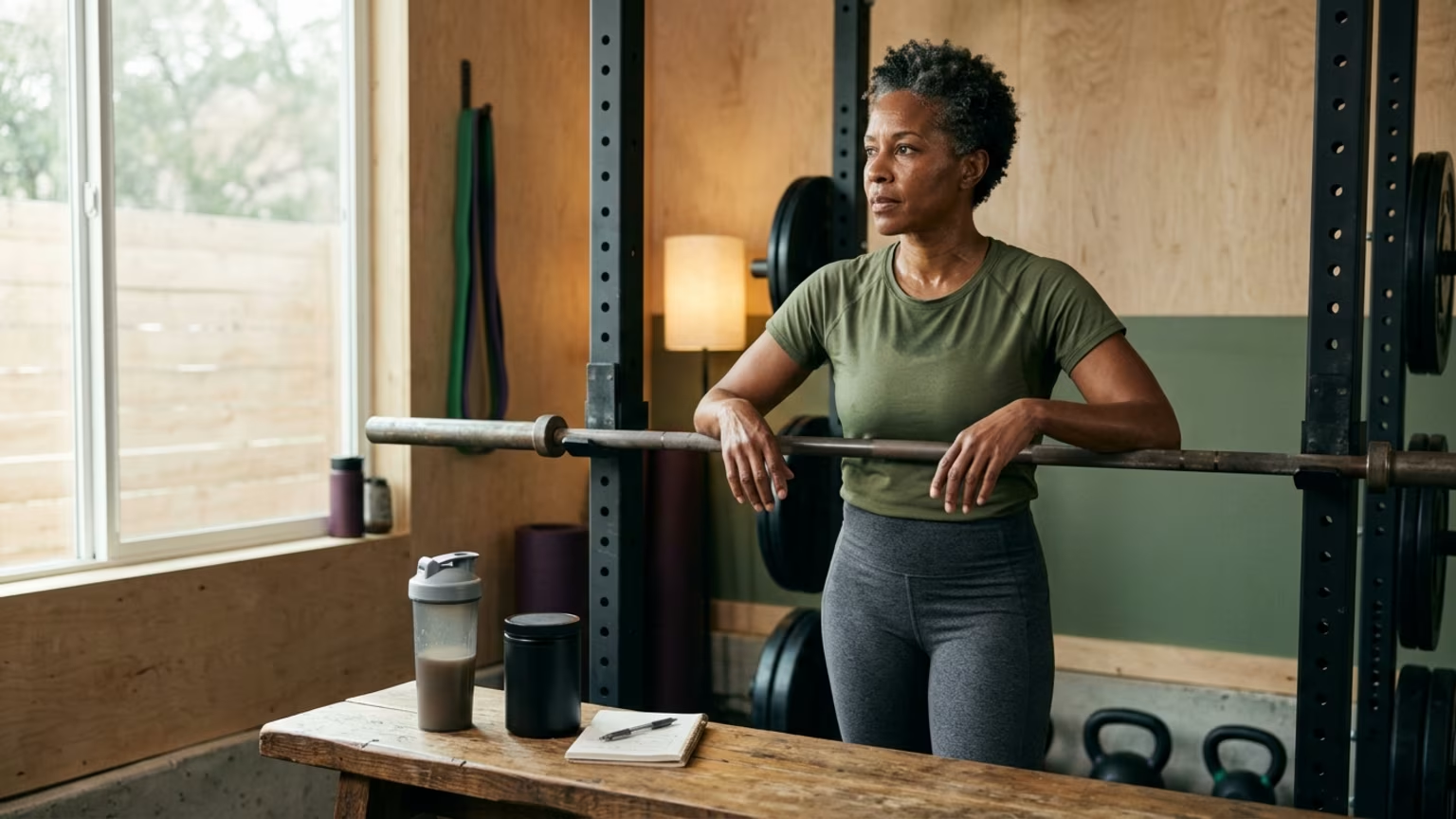

A new 12-week trial from Texas A&M explores whether creatine supplementation impacts lean tissue and physical strength in healthy adults aged 45 to 65.





In September 2026, Texas A&M University reported on a new study published in the Journal of the International Society of Sports Nutrition that examined creatine use in healthy adults aged 45 to 65 over 12 weeks.
Previously, the medical consensus viewed this supplement primarily as an athletic performance aid that required a heavy resistance training routine to produce physical benefits. Clinicians largely assumed that healthy adults would not see meaningful changes in body composition or strength from the compound without simultaneously lifting weights.
For women dealing with physical shifts in their forties and fifties, maintaining capability is a frequent priority. The physical changes associated with midlife often prompt a search for reliable support strategies outside of restrictive wellness trends. Finding clear guidance on strength and body composition requires objective facts rather than commercial marketing claims. Studies focusing on older adults provide valuable insight into how different physiological interventions operate in daily life.
Evaluating clinical data carefully is a necessary step for anyone researching health strategies. Navigating hormonal changes during perimenopause and menopause naturally raises questions about changing metabolism. When new research evaluates a popular fitness supplement in an older demographic, it offers a chance to separate medical reality from internet hype. A measured approach helps readers understand what these studies actually observe in their participants.
When evaluating physical health, the structural design of a clinical trial dictates how its results should be interpreted. In the Texas A&M University study, 64 adults completed the three-month intervention. Participants made a personal choice about whether to enter a structured exercise and diet program or remain outside it. After this choice was made, they were randomly assigned to take 10 grams of creatine monohydrate or a placebo daily.
The exercise program itself required steady commitment over the duration of the trial. Participants in this structured group completed resistance and aerobic training three times weekly. They also followed a dietary plan intended to create a modest calorie deficit. This balanced approach mirrors standard recommendations for adults seeking to manage their physical condition.
Because participation in the exercise program was a personal choice, the exercise and non-exercise groups were not randomly assigned. This design detail is highly relevant when comparing the people who exercised with those who did not. It allows researchers to observe the supplement in a standard lifestyle setting alongside a controlled athletic environment.
The researchers recorded several specific outcomes at the end of the 12-week period:
Understanding the reported increase in lean tissue requires careful clinical interpretation. Lean tissue is a broad biological category that includes muscle, water, and other non-fat body mass. A gain of 2.4 pounds is an interesting observation, but it is not strictly interchangeable with newly built contractile muscle fiber. The compound often increases water retention within cells, which contributes to overall lean tissue measurements.
Monitoring these metrics over time helps clinicians understand how the aging body utilizes different nutritional compounds. When adults step away from intense athletic training regimens, their physiological responses often shift in measurable ways. Observing these subtle shifts in lean mass provides a baseline for future metabolic studies. Clinical understanding deepens only when researchers track these changes across a wide demographic spectrum.
The observed improvements in physical strength without a specific training protocol certainly challenge older assumptions. This finding remains a study-specific result rather than a guarantee that every person will see identical changes. The relatively short duration of the trial provides a limited window into how the body adapts over the long term. Extended periods of observation are needed to see if these initial strength gains persist or eventually plateau.
For adults managing changing body composition, these results offer a preliminary look at metabolic support. Reading about midlife health and wellness research helps contextualize these early findings against a broader physiological backdrop. Keeping expectations realistic prevents frustration when applying clinical data to everyday routines.
While this research provides valuable data for adults aged 45 to 65, applying it to specific life stages requires care. The available university summary does not provide a women-only result or establish that the findings apply exclusively to perimenopause or postmenopause. It is premature to present these findings as a targeted menopause treatment or a guaranteed metabolic intervention for this specific transition. Clear medical guidance relies on studies that isolate the female hormonal experience.
Understanding the limits of a single study helps women make informed choices about their physical health. Browsing comprehensive resources for midlife wellbeing can help readers build a broader picture of what true physical resilience looks like. The goal is to build capability over decades, rather than seeking quick physiological fixes. Maintaining strength involves balancing nutrition, daily activity, and adequate rest.
Evaluating clinical safety profiles remains a primary concern when considering any daily health regimen. Texas A&M University notes that Richard Kreider, the principal investigator of the study, is a professor and director of its Exercise and Sport Nutrition Lab. The university adds that he has studied the compound for more than 30 years. His deep involvement in this specific field provides significant context for the surrounding safety analysis.
Texas A&M summarizes a separate 2025 analysis by Kreider and his colleagues that reviewed 685 clinical trials. This extensive review found no significant difference in reported side-effect rates between participants taking the compound and those taking a placebo. While this analysis supports a favorable safety profile, it does not confirm absolute suitability for every medical circumstance. Consulting a primary care physician is a practical step before beginning new supplement habits.
Meeting specific physiological targets through whole foods alone often presents a distinct logistical challenge. Texas A&M reports Kreider's observation that obtaining 10 grams of the compound from food could require eating about five to 10 pounds of meat or fish daily. Consuming such an enormous volume of animal protein is obviously not a realistic dietary habit for an ordinary adult. This practical constraint highlights why trials utilize isolated supplements to study metabolic effects.
The conversation around midlife capability frequently connects physical vitality with mental clarity. The paper's title indicates that the researchers also assessed specific cognitive markers during the trial. According to Women's Health UK, some memory and cognitive measures improved among the study participants. These particular findings are strictly exploratory and represent an early look at potential cognitive impacts.
Such exploratory data should not be misconstrued as definitive proof that the supplement prevents cognitive decline. It suggests a potential area for future, highly focused research in older adult populations. Women dealing with shifting energy often look for concrete solutions, but medical science moves through cautious observation. Tracking these preliminary findings while waiting for more robust clinical validation is a sensible approach.
The framework supporting scientific research also provides helpful context for interpreting these specific trial outcomes. Texas A&M says the study was funded by the WoodNext Foundation through the Texas A&M Foundation. Transparent funding structures are a routine and expected part of modern scientific literature. This specific trial offers an interesting look at adult physiology over a controlled, short-term timeframe.
Approaching any metabolic supplement as an adjunct to a healthy lifestyle yields the most realistic personal expectations. The 64 healthy adults who completed this study provide a helpful snapshot of potential physiological responses outside the gym. The most defensible takeaway for readers is that this compound is being investigated as a possible addition to a strength routine. The trial results do not establish that supplementation is a direct replacement for intentional daily movement.
This preliminary evidence suggests clinical practice may eventually evaluate creatine as a broad metabolic adjunct for midlife adults, rather than treating it solely as a sports performance supplement.
Interpreting early clinical studies on supplementation requires careful separation of actual measured results from commercial fitness marketing, and Refemina anchors this emerging data in practical reality. By addressing the broader confusion about which midlife changes are hormonal and which have multiple causes, the publication equips women to make informed choices about their physical longevity.

Follow Refemina for research-led insights on menopause, strength, metabolism, nutrition, skin, intimacy and confidence through midlife. New articles turn complex topics into clear, useful context.





Keep learning about the changes that shape energy, strength, confidence and wellbeing through midlife.
Explore Resources