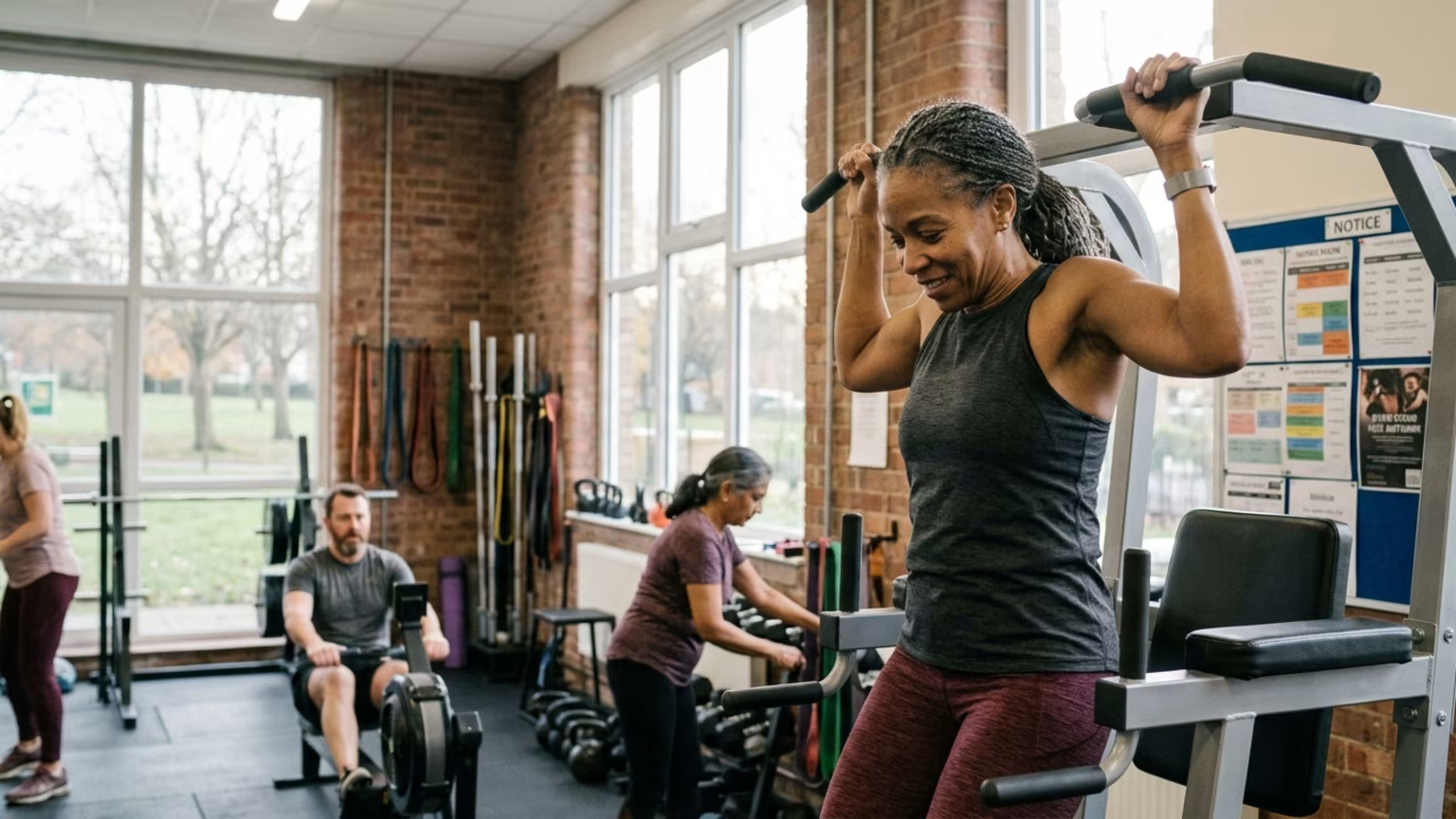

A practical framework for building midlife confidence through physical capability. Explore clinical data on exercise modalities, self-efficacy, and realistic habits.





A 2026 study of young and middle-aged female nurses evaluated the various factors that contribute to osteoporosis self-efficacy. The researchers found several factors associated with a woman's confidence in managing her bone health. These included objective osteoporosis risk, osteoporosis knowledge, specific training and milk-consumption frequency. Yet the study model explained only 18.40 percent of the variance in self-efficacy.
The 18.40 percent figure indicates that self-trust cannot be reduced to a single behaviour, one specific food or a solitary hormonal variable. While education and specific habits matter, they leave a large portion of a woman's confidence unexplained by standard clinical markers. This finding supports a framework where self-efficacy grows through repeated, varied evidence of capability over time. Attempting to build confidence on a single metric often leads to frustration when that metric inevitably fluctuates.
The limitations of the 18.40 percent variance highlight a common frustration in midlife health advice. When experts promise that a single supplement or a strict nutrition habit will restore complete confidence, they ignore the multifactorial nature of female psychology. The available evidence does not establish that strength training directly produces a durable global feeling of confidence in every woman. The more defensible claim is that training can improve physical function, vitality and mental health.
These improvements may provide the credible experiences needed to cultivate genuine self-trust. Appearance-based goals can be legitimate personal preferences, but they are fragile foundations for confidence. The evidence assembled here supports writing about function, vitality, mental health and sustainable habits rather than promising a younger-looking body.
Menopause is not only a reproductive transition. The World Health Organization describes it as relevant to women's physical, emotional, mental and social wellbeing, including sexual health across the life course. A single health marker rarely captures this entire experience accurately. The drive to optimise every physiological variable often misses the broader picture of functional capacity and daily resilience.
Building self-trust requires a foundation much deeper than appearance or youthfulness. When clinical studies evaluate psychological wellbeing, they frequently look at functional outcomes rather than subjective feelings of attractiveness. Repeated evidence of capability provides a far more stable base for mental fitness. Women often find that self-trust expands when they focus on what their bodies can achieve rather than how they look.
Clinical understanding of menopause relies on specific study parameters and rigorous evidence grading. A 2026 narrative review identified nine randomised controlled trials to examine how movement affects midlife health. These trials involved 589 postmenopausal women and compared different exercise modalities. The researchers aimed to understand how resistance training and multicomponent exercise influenced health markers.
They also evaluated yoga, qigong and dance-based activities. The review found that different forms of movement produced notably different benefits for the participants. Resistance training showed the most consistent improvements in sleep quality and vasomotor symptoms within the studied groups. Meanwhile, multicomponent exercise generated broader benefits across both physical and psychological domains.
The same review reported that yoga and qigong were associated with improved psychological wellbeing, sleep and menopause-specific quality of life. Trials using dance-based exercise recorded improvements in anxiety, depression, perceived stress and mood in the included studies. Recent menopause exercise research is moving away from treating physical activity as one undifferentiated intervention. Clinical trials are actively comparing resistance training, multicomponent exercise, Pilates, yoga and dance.
This methodological shift allows healthcare providers to see exactly which modalities target specific concerns. The sector is showing greater caution about symptom-specific claims as a direct result of these targeted studies. The Menopause Society’s 2023 nonhormone-therapy position statement reviewed lifestyle measures and prescription therapies. The organisation also evaluated mind-body approaches, acupuncture and supplements.
The organisation graded evidence on a scale from Level I down to Level III. Level I represents good and consistent evidence, while Level III relies on consensus or expert opinion. This rigorous grading provides a useful corrective to exaggerated wellness messaging. Applying this rigorous grading system sets realistic expectations for any new health routine.
The position statement did not support exercise as a specific evidence-based treatment for menopausal vasomotor symptoms at the level required for a formal recommendation. This distinction is vital for women navigating midlife changes. A woman might become stronger, fitter or more capable through training without exercise necessarily eliminating her hot flushes. A separate review echoed this highly measured approach.
It concluded that resistance training can improve functional capacity, vitality and physical functioning. The review also noted improvements in mental health and some menopause-related symptoms. The researchers noted that not every study found an improvement in overall quality of life. The clinical methodology clearly supports exercise as a potentially useful part of a health plan, but not as a universal treatment for every symptom.
Understanding clinical data requires looking closely at the specific populations studied by researchers. The 2026 narrative review focused exclusively on 589 postmenopausal women across its nine randomised controlled trials. By isolating this specific demographic group, researchers could observe how different exercise modalities affected symptoms and quality of life. This targeted focus helps clinicians understand the precise impacts of movement on postmenopausal physiology.
Other research segments participants by specific professional or medical backgrounds. The 2026 self-efficacy study specifically surveyed young and middle-aged female nurses. This demographic detail is highly relevant because healthcare professionals often possess different baseline knowledge about health risks than the general population. Their responses about osteoporosis risk, training and milk-consumption frequency reflect a specific level of health literacy.
Studies examining targeted interventions often select much narrower demographic profiles to test safety and efficacy. A preliminary randomised trial investigated heavy resistance and impact training specifically in 28 women with low or very low bone mass. This small cohort underwent a brief, supervised programme to see if such loading was well tolerated. The findings improved some measures of stature and bone density compared with the control groups.
Because the trial involved a small demographic under strict clinical supervision, it requires careful interpretation. It supports supervised, appropriately selected loading rather than a blanket instruction for all postmenopausal women to lift heavily. Women with different medical histories, including significant pain or cardiovascular symptoms, may need individual assessment and programme modification before starting a new routine.
The statistical data points toward defining confidence as accumulated evidence of capability rather than forced optimism. You can track what your body and mind can actually do instead of making confidence depend on looking younger. Useful markers include how easily you rise from a chair, carry groceries or climb stairs. You might also monitor how quickly you return to normal activity after a difficult week.
The NHS provides accessible exercise materials with low-barrier examples to help build this baseline capability. These resources suggest movements like sit-to-stands, mini-squats and heel raises. They also include marching and supported leg movements. The NHS instructs people to work within a comfortable range and use a stable support where needed.
There is a parallel movement toward these accessible entry points for people who are deconditioned, symptomatic or anxious about starting. You can begin building this capability with a minimum-viable plan rather than an exhausting overhaul. Two short, manageable strength sessions each week may be more psychologically useful than an ambitious programme that repeatedly collapses. The sources do not establish one universal dose for confidence, making this approach a practical starting point rather than a rigid clinical prescription.
Small acts of self-trust create a more durable sense of mental resilience over time. You might keep a realistic training appointment, stop when pain signals a need to modify or protect your sleep schedule. NHS guidance states that physical activity can help people manage symptoms, improve recovery and build confidence. These repeated actions provide credible experiences on which true self-trust can grow.
Boundaries serve as a practical extension of this self-trust. The assembled sources do not directly test a specific boundary-setting programme in perimenopausal women. Setting limits is simply a reasoned behavioural application of the evidence. Saying no to unnecessary commitments protects your sleep time, preserves your energy for focused training and reinforces your sense of agency.
While building physical strength and improving body composition are valuable goals, the clinical evidence requires careful application. The Menopause Society’s 2021 position statement on osteoporosis cautioned against the unfounded belief that exercise reliably induces new bone formation in postmenopausal women with osteoporosis. The organisation still recommends regular exercise for general health. They advise women with vertebral fractures to avoid activities involving lifting or pulling with forward spinal flexion or rotation.
Persistent or unusual symptoms always warrant a conversation with a qualified clinician. The NHS describes physical activity as complementary to talking therapies rather than a replacement for targeted medical care. NHS guidance also notes that NICE recommends physical activity as part of treatment for adult depression. Managing your health effectively means using exercise for its broader benefits while seeking appropriate care for specific conditions.
A routine that accommodates fluctuating energy, poor sleep or pain is far more sustainable than a rigid programme. The evidence supports exercise as a potentially useful part of a broader plan, not as a substitute for clinical assessment. Choosing movement that feels safe and defining success through consistency allows you to navigate perimenopause and menopause with realistic expectations. By focusing on functional capability, you can develop mental fitness and lasting confidence that relies on tangible strength rather than an impossible standard of perfection.
While accumulating evidence of physical capability builds lasting self-trust, translating clinical exercise studies into a daily routine requires clear perspective. Refemina addresses the confusion surrounding changes in strength, muscle, body composition, metabolism or weight, helping you develop a resilient approach to midlife without symptom panic.

Follow Refemina for research-led insights on menopause, strength, metabolism, nutrition, skin, intimacy and confidence through midlife. New articles turn complex topics into clear, useful context.



Keep learning about the changes that shape energy, strength, confidence and wellbeing through midlife.
Explore Resources