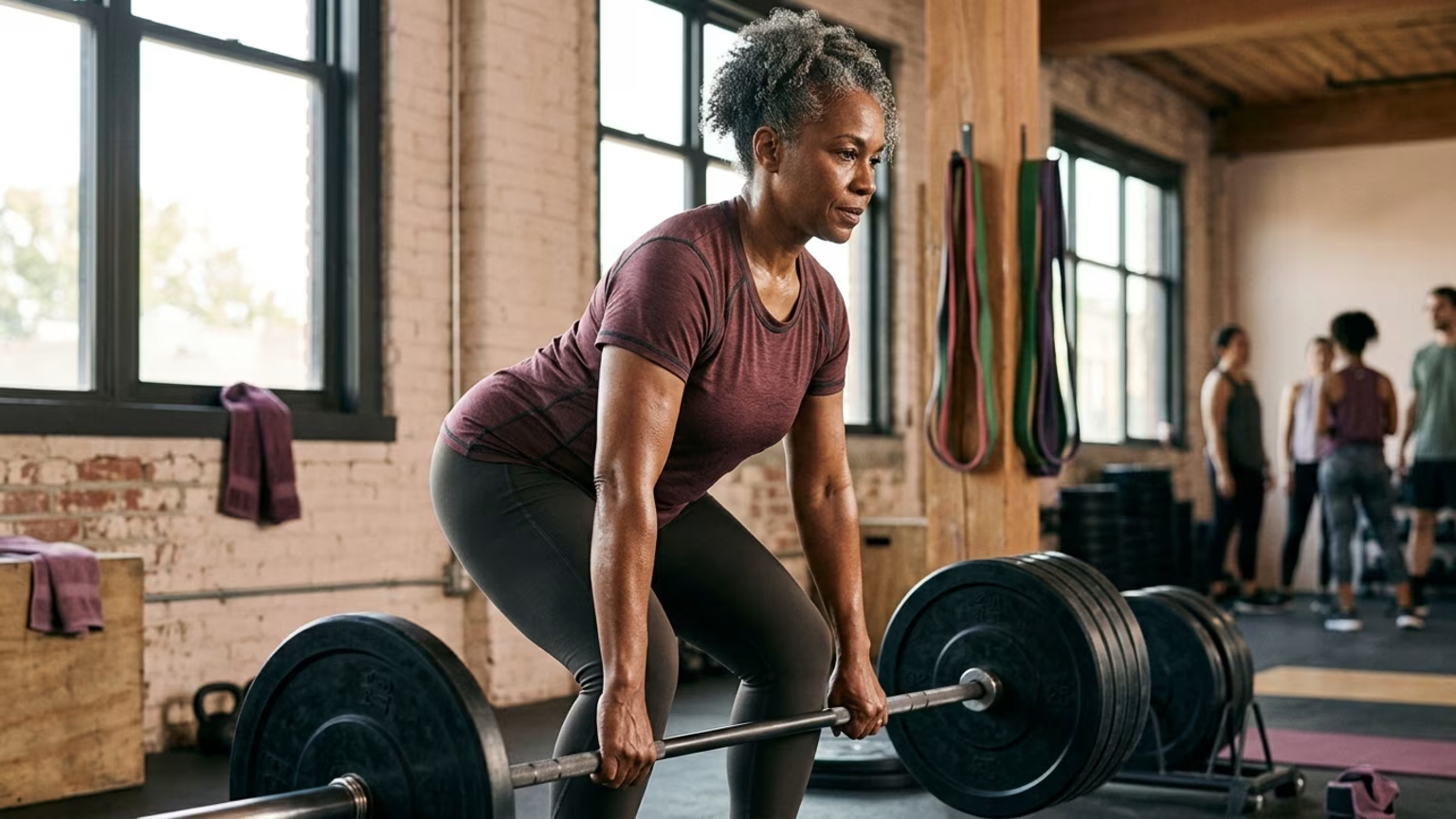

Evaluates updated guidance on progressive resistance training for midlife women. Examines the clinical evidence connecting structured lifting to muscle preservation, shifting fat distribution, and long-term bone density after menopause.





In September 2026, the National Academy of Sports Medicine published updated guidance on strength training for women. The organization outlined how progressive resistance work supports muscle and bone health during midlife body composition changes.
Historically, fitness advice for women in midlife focused heavily on cardiovascular exercise and calorie restriction to manage weight changes. Medical and fitness professionals frequently treated resistance training as an optional aesthetic pursuit. Many popular programs suggested using very light weights and high repetitions to tone muscles without adding physical size. This approach often framed midlife body changes solely as a calorie problem.
Women were rarely prescribed structured resistance protocols to protect their skeletal and metabolic health. Consequently, many women approached their fitness routines with the goal of shrinking rather than building physical capability. The prevailing standard of care largely overlooked the specific physiological shifts that happen during midlife.
Recent guidance provides a different clinical and practical framework. Updates to fitness programming and clinical literature identify specific protocols for protecting physical capability.
The National Academy of Sports Medicine article, authored by Heather Hamilton, connects midlife body composition changes to several overlapping factors. Declining estrogen levels play a significant role in these physical shifts. During perimenopause and postmenopause, fat distribution often changes, with storage moving toward the midsection and visceral areas. These hormonal shifts happen alongside a separate, age-related decline in lean muscle tissue.
These combined factors can change how the body looks and feels, independent of whether a person's total weight changes. The guidance clarifies that midlife body changes are not simply the result of eating too much or moving too little. Understanding these biological mechanisms helps women contextualize changes in their strength, body composition and metabolism.
It is easy to assume that declining estrogen is the single cause of midlife weight gain. However, the available evidence does not establish that hormones alone dictate every change in body composition. Muscle loss plays a distinct and measurable role in this complex biological process. Muscle tissue requires continuous energy to maintain, meaning a reduction in muscle mass can influence your baseline metabolic rate.
The loss of lean mass contributes heavily to what many clients perceive as a slowing metabolism in midlife. Recognizing muscle loss as a key variable offers a practical target for physical intervention. Understanding these mechanisms helps women navigate these physical shifts with significantly better context. Approaching midlife health as an adult requires separating established facts from commercial noise.
Addressing these physiological changes requires a highly specific approach to exercise programming. The National Academy of Sports Medicine recommends progressive overload as the primary method for building real strength. This technique involves increasing the physical demand on muscles in planned, gradual increments. Lifting the exact same light weights indefinitely will not stimulate continued muscle growth or strength gains over time.
Instead, individuals must steadily add more weight, increase their weekly training volume, or perform more repetitions. Extending the total time under tension during a set is another practical way to increase the challenge. These incremental adjustments signal the body to adapt and grow stronger over consecutive training cycles. Maintaining a consistent progression plan is more effective than constantly changing routines.
The guidance explicitly cautions against treating light weights and high repetitions as the only route to a defined physique. Sets with different repetition counts can produce similar muscle growth, provided the sets are taken close to physical fatigue. However, true strength development calls for heavier loads and lower repetitions over an extended period. Women often worry that lifting heavier weights will automatically make them look physically bulky.
The article clarifies that substantial muscle growth requires sustained, highly specific effort. It takes significant training volume, adequate nutrition, and consistent dedication to build a highly muscular physique. For most women in midlife, regular resistance training simply supports dense muscle and improved daily function. The goal is to build a capable body that handles everyday physical demands with ease.
Starting a structured strength routine does not require daily workouts or exhausting physical intensity. For beginners, the National Academy of Sports Medicine suggests a simple full-body program. This routine should be performed two to three times per week. Taking at least one full rest day between sessions is critical for physical recovery and muscle repair.
Proper recovery periods allow the nervous system and muscle fibers to adapt to the new physical stimulus. This accessible schedule provides a solid foundation for women looking for reliable midlife health and menopause resources. It balances the need for consistent training stimulus with adequate time for tissue regeneration. Establishing a sustainable routine is far more beneficial than attempting an overly aggressive starting plan.
The programming advice centers on foundational movements like squats and hinges, which recruit multiple large muscle groups simultaneously. Individuals should choose challenging loads that allow them to maintain excellent form throughout the entire exercise. The standard recommendation is to complete approximately three sets of 8 to 12 repetitions for each movement. These specific parameters provide a highly useful starting point for women navigating perimenopause and postmenopause.
Readers can adapt this baseline guidance to match their personal training experience, physical recovery rate, and access to equipment. Proper form should always take precedence over adding additional weight to the bar. Mastering the basic mechanics of squats, hinges, and presses creates a safe platform for future progression. Consistency with these core movements builds profound strength and physical stability over time.
Muscle mass is not the only bodily tissue affected by the midlife hormonal transition. Bone health becomes a significant medical priority during the years following menopause. Clinical literature continues to evaluate targeted exercise as a central component of comprehensive bone health management. A 2026 clinical review in the Journal of Clinical Endocrinology & Metabolism assessed the impact of resistance exercise on skeletal health.
The review indicates that resistance training, often combined with impact exercise, may improve bone mineral density. These potential improvements were noted at critical anatomical sites like the lumbar spine, hip, and femoral neck. Maintaining bone density at these locations is crucial for long-term mobility and skeletal resilience.
Additional clinical reviews strongly support the role of exercise in protecting skeletal integrity. A 2026 review in Frontiers in Endocrinology summarized findings from a detailed network meta-analysis of 49 trials. The review reports that combined resistance and impact training demonstrated the largest bone-density effects among the exercise approaches evaluated. The same clinical review highlighted an 80-trial meta-analysis conducted in postmenopausal women.
This larger analysis found small positive standardized effects on bone mineral density at the lumbar spine and femoral neck. These findings suggest that structured physical stress helps signal the body to maintain its bone mineral content. The cumulative data reinforces the idea that bone, like muscle, responds favorably to progressive mechanical loading.
While the data is promising, women should thoroughly understand that bone density improvements vary widely from person to person. The available clinical reviews do not promise a specific positive outcome for every individual reader. Furthermore, increasing bone mineral density is not medically identical to absolute fracture prevention. Resistance training offers highly practical, possible benefits, but it does not replace individualized medical care or specific prescriptions.
The pooled findings support resistance exercise without specifying a single universal prescription for every postmenopausal woman. Health content that oversimplifies these clinical realities often sets unrealistic expectations for physical outcomes. A more balanced perspective views resistance work as one fundamental pillar of a broader health strategy.
Many popular fitness programs judge success entirely by visual changes or absolute scale weight. The National Academy of Sports Medicine advises tracking functional strength and exercise consistency instead. Strength progress may not be immediately visible in the mirror during the first few months of training. Because body weight cannot distinguish between fat, muscle and bone, the scale remains an incomplete measurement tool.
Recording specific lifts and tracking the exact amount of weight moved provides objective data on physical capability. This recorded data helps women see tangible improvements in their physical capacity over long periods of time. Shifting the focus to measurable strength metrics can also support better mental fitness and confidence during a period of significant physical change. True fitness progress often happens far out of sight from the bathroom scale.
Resistance training deserves a prominent place in midlife fitness, but it is not the only valuable form of exercise. The guidance frames strength training alongside cardiovascular workouts, rather than treating resistance work as the only useful option. Cardiovascular training plays a distinct, necessary role in maintaining heart health and circulatory function. Meanwhile, resistance work provides targeted mechanical support for muscle preservation and bone maintenance.
Balancing these different exercise types optimally supports overall physical function and long-term capability. Ignoring cardiovascular conditioning in favor of lifting heavy weights creates an incomplete approach to midlife wellbeing. An effective program incorporates both modalities to build a highly resilient body.
Every woman brings a distinctly unique physical history to her exercise routine. Readers with existing symptoms, health conditions, or injury concerns may need individualized advice rather than a generic fitness plan. The National Academy of Sports Medicine advises screening for physical readiness and reviewing health history before beginning a new program. Assessing movement quality before adding heavy loads helps prevent unnecessary joint strain and injury.
If a training program causes persistent physical pain, the guidance supports seeking an appropriately qualified professional before progressing. Connecting physical physiology with realistic exercise programming helps women find clarity among conflicting nutrition and weight management claims. Midlife strength training should ultimately improve daily quality of life, not detract from it through excessive fatigue or discomfort.
Going forward, clinicians will increasingly prescribe structured, progressive resistance training as a fundamental metabolic and skeletal intervention rather than a secondary aesthetic option.
Applying progressive exercise protocols to a pre-existing joint condition requires direct clearance from a physical therapist, while understanding the broader physiological mechanisms driving midlife body changes remains Refemina's primary editorial focus. Refemina clarifies conflicting information about perimenopause, menopause and postmenopause by translating credible evidence into clear adult guidance without symptom panic, anti-aging pressure or wellness hype.

Follow Refemina for research-led insights on menopause, strength, metabolism, nutrition, skin, intimacy and confidence through midlife. New articles turn complex topics into clear, useful context.






Keep learning about the changes that shape energy, strength, confidence and wellbeing through midlife.
Explore Resources