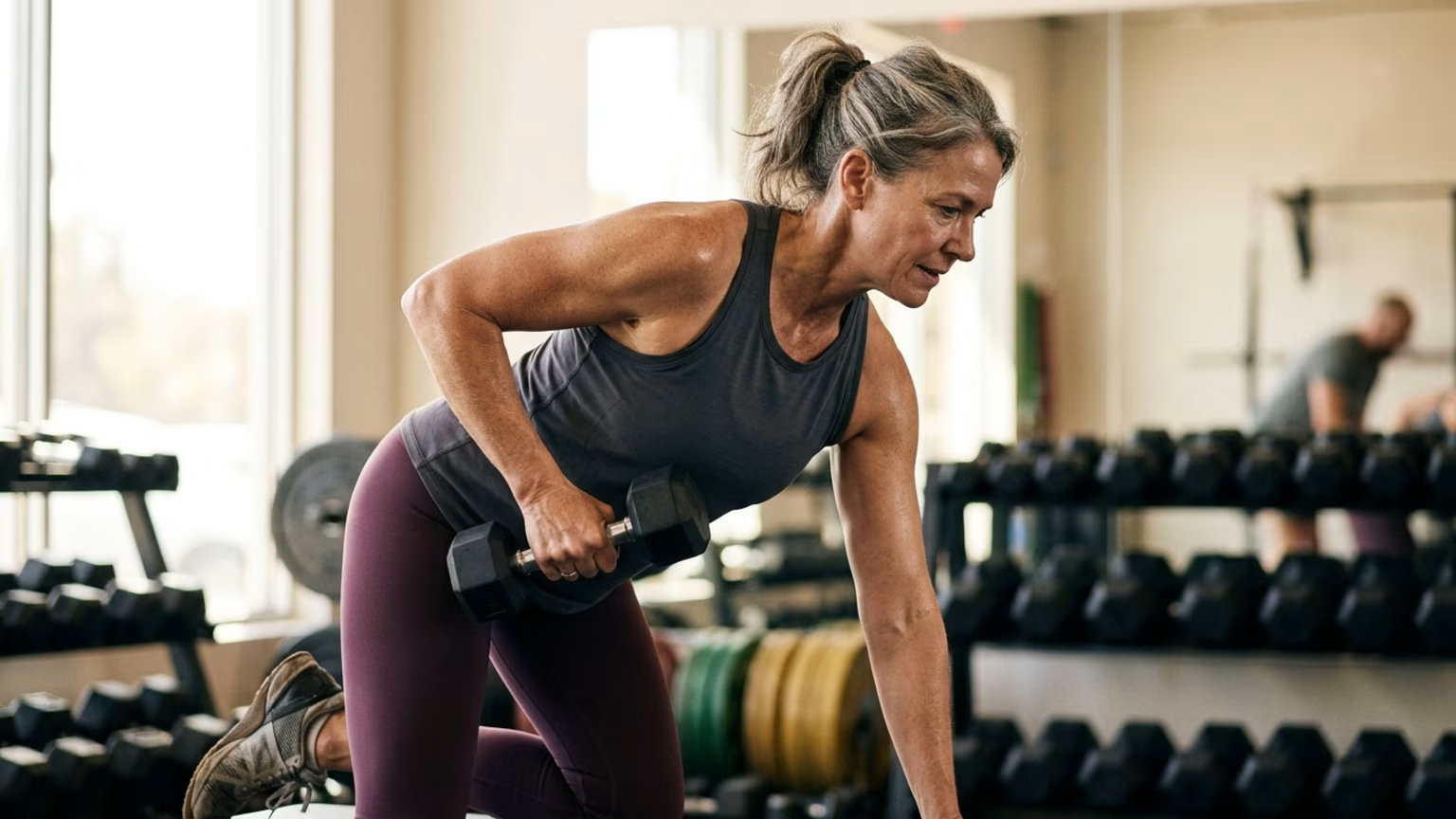

Jennifer Aniston’s shift to strength training in her 50s highlights the clinical importance of progressive resistance work for midlife muscle and bone health.





On September 22, 2026, Good Housekeeping reported that Jennifer Aniston has shifted her fitness routine in her 50s away from a historically cardio-focused model toward targeted strength training. This public update highlights a broader movement away from strict calorie counting toward building long-term functional capacity.
For decades, the standard medical and fitness advice for women prioritized cardiovascular endurance above all else. The old paradigm encouraged women to perform long bouts of steady-state aerobic exercise to manage their health. Resistance training was treated as a minor addition rather than a central pillar of physical care. Weight lifting was rarely presented as a critical tool for maintaining physical independence during the aging process.
Aniston’s earlier approach to exercise mirrored this broader cultural messaging perfectly. She previously believed that an exercise session had to include at least 45 minutes of continuous cardio to truly count as a workout. According to TODAY, her older routine typically involved long cardiovascular sessions first. She would then add a mere five to 10 minutes of lifting to the very end of her workout, relying on very light five- to eight-pound dumbbells.
This reluctance to lift heavier weights was incredibly common among women seeking to stay active. Aniston told Good Housekeeping that she previously worried that lifting weights would make her bulk up. She now wishes she had understood much earlier that resistance training does not automatically produce a bodybuilder physique. The amount of muscle a woman actually gains is influenced by her genetics, hormones, nutrition and the specific type of resistance used.
The shift in midlife exercise guidelines directly challenges this older cardio-heavy model. Newer clinical protocols and practical updates position mechanical loading as a non-negotiable requirement for aging bodies. The latest discoveries and updated safety protocols reflect a much deeper understanding of female physiology:
Aerobic exercise provides undeniable benefits for the heart and lungs, but it lacks the mechanical load needed to stimulate bone remodeling. When bones are subjected to the tension of lifting weights, they respond by reinforcing their internal structure. This biological process becomes incredibly critical as natural estrogen levels decline over time.
Women in perimenopause and postmenopause experience significant shifts in how their bodies repair skeletal tissue. The 2026 review highlights that targeted resistance work directly impacts the areas most vulnerable to age-related density loss. Preserving the femoral neck and lumbar spine requires consistent mechanical stress to trigger cellular rebuilding. Readers wanting to understand the broader physiological shifts of this stage can read our perimenopause and menopause articles.
Aniston has actively connected her current weight-lifting habits with the goal of preserving bone density. TODAY reported that she now promotes a 30-day strength-training program designed to support these exact functional needs. Addressing skeletal health through progressive exercise offers women a tangible way to manage their long-term physical resilience.
Understanding how muscle responds to resistance requires looking beyond the exercise itself. Good Housekeeping noted that training, nutrition, genetics and the specific type of resistance used all play significant roles in structural adaptation. Hormonal shifts during midlife also change how efficiently the body repairs and builds new muscle tissue.
Aniston openly discussed her own experience with these midlife hormonal changes. She noted that she went through menopause earlier in life. At the time, she felt she lacked sufficient information about what was happening to her body. She also lacked clear guidance on how those physiological changes might affect her long-term physical health.
The feeling of navigating physical changes without adequate information is incredibly common among women. Midlife body composition shifts are often treated as purely cosmetic issues rather than functional medical concerns. Relying on verified clinical evidence helps women separate genuine physiological needs from aggressive wellness marketing.
Many women experience a sudden shift in how their body responds to exercise during perimenopause. Routines that previously maintained their fitness levels suddenly stop working effectively. This plateau occurs because declining estrogen levels change how the body processes mechanical stress and stores metabolic energy. Incorporating resistance training provides a new physiological stimulus that actively signals the body to preserve its lean tissue.
The realization that exercise does not require endless hours of cardio has transformed how many women approach their weekly schedules. When women believe that a workout must be exhausting and lengthy, they often struggle to maintain consistency. Aniston’s shift away from the strict 45-minute cardio rule demonstrates a much more sustainable mindset. Freeing yourself from arbitrary time requirements makes daily movement feel significantly more manageable.
Shorter sessions that focus on quality movement often yield better long-term compliance. Aniston observed that an efficient workout can sometimes take as little as 10 minutes. While this is her personal observation rather than a universal clinical threshold, it highlights the value of concentrated effort. When her schedule is demanding, her trainer Dani Coleman adapts the routine into a rigorous 20-minute session.
Finding a manageable rhythm is the key to maintaining muscle mass over the years. Aniston considers four weekly workouts to be her personal sweet spot for balancing physical effort and necessary recovery. Her typical training sessions last approximately 40 to 50 minutes on average. This measured approach prevents the physical burnout that often accompanies high-volume aerobic training plans.
The trunk muscles perform a far more complex job than simply creating visual abdominal definition. Aniston identified the core as the most critical priority for women over 50, describing it as the body’s center of everything. This functional perspective aligns perfectly with how the human body actually navigates the physical world.
A capable core stabilizes the spine and allows force to transfer safely between the upper and lower body. Every time you carry heavy groceries or walk up a steep flight of stairs, your trunk muscles must engage. Training these smaller stabilizing muscles alongside larger muscle groups reduces the risk of joint pain and imbalance. Women looking for realistic advice on supporting their changing bodies can find more in our strength and body composition resources.
On days when she is not lifting weights, Aniston incorporates walking, Pilates or yoga to add movement variety. These complementary activities support mobility and balance without overloading the central nervous system. However, they are treated as helpful additions rather than direct substitutes for her primary resistance work.
The fitness industry frequently markets resistance training to midlife women purely as an aesthetic tool. This narrow focus ignores the profound functional benefits that lifting weights provides for an aging skeleton. Prioritizing visible muscle tone over actual physical capacity sets unrealistic expectations for women managing natural body composition shifts. A more mature approach recognizes that strength training is fundamentally about maintaining your independence and physical resilience.
Aniston’s own realization about the bulk myth reflects a necessary unlearning process for many women. The fear of getting too muscular stems from a deep misunderstanding of female hormonal profiles. Without high levels of testosterone, women simply do not build massive muscle tissue from standard resistance training. Recognizing this biological reality allows women to lift adequately heavy loads without unnecessary hesitation.
While the ACSM recommends specific parameters for intensity and volume, beginners must start slowly. The ACSM guidelines should never be presented as a universal starting prescription for every woman. Attempting to lift high-intensity loads without mastering the underlying movement patterns can quickly lead to painful injuries.
Women who are new to strength training can begin with highly accessible forms of resistance. Body-weight exercises, resistance bands, light hand weights and machines all provide an excellent initial stimulus. The focus should remain on performing full-body functional movements like chair sit-to-stands or controlled pulling motions.
PEOPLE reported that Aniston became a Pvolve partner and investor in 2023. Her current training approach deliberately combines natural movements with specialized resistance equipment. Integrating resistance into familiar movement patterns makes the transition to strength training feel much less intimidating. Readers wanting to better understand midlife physical changes can read our skin, hair and aesthetic aging resources for a complete perspective.
The most practical lesson from Aniston’s updated routine is the importance of broadening our definition of physical fitness. Success should be measured by improvements in balance, mobility, structural strength and confidence in daily movement. Calorie expenditure is simply one minor variable in a much larger equation of midlife health.
Midlife is often characterized by a shifting sense of physical identity. Women who previously defined their fitness by how far they could run may feel lost when those activities no longer produce the same results. Transitioning to a routine that prioritizes joint stability and muscular strength requires a significant mental adjustment. Finding a new rhythm often dramatically improves a woman's overall outlook on the aging process, a topic we cover deeply in our mental fitness and confidence articles.
Readers should remember that Aniston’s routine is a personal celebrity account, not a verified clinical menopause treatment. Her access to a personal trainer and specialized equipment makes her specific schedule difficult for many to replicate perfectly. However, the underlying principle of prioritizing functional muscle over endless cardio remains entirely valid for the general public.
Women with a history of fractures or known low bone density should seek qualified clinical guidance before increasing their training intensity. A physical therapist can help scale impact and resistance exercises safely to accommodate specific medical concerns. Exercise is a powerful tool, but it cannot substitute for individualized medical assessment and care. For broader context on fueling the body properly during these changes, we recommend our nutrition and weight management resources.
This growing clinical recognition that maintaining functional muscle mass and skeletal resilience must become a central priority will fundamentally change how midlife care is prescribed in the future.
While adapting to unfamiliar resistance exercises requires learning new mechanical skills and letting go of outdated calorie metrics, establishing a sustainable routine feels much more manageable when Refemina clarifies the evidence. We address changes in strength, muscle, body composition, metabolism or weight, translating credible evidence into clear adult guidance without symptom panic, anti-aging pressure or wellness hype. Explore Resources

Follow Refemina for research-led insights on menopause, strength, metabolism, nutrition, skin, intimacy and confidence through midlife. New articles turn complex topics into clear, useful context.




Keep learning about the changes that shape energy, strength, confidence and wellbeing through midlife.
Explore Resources